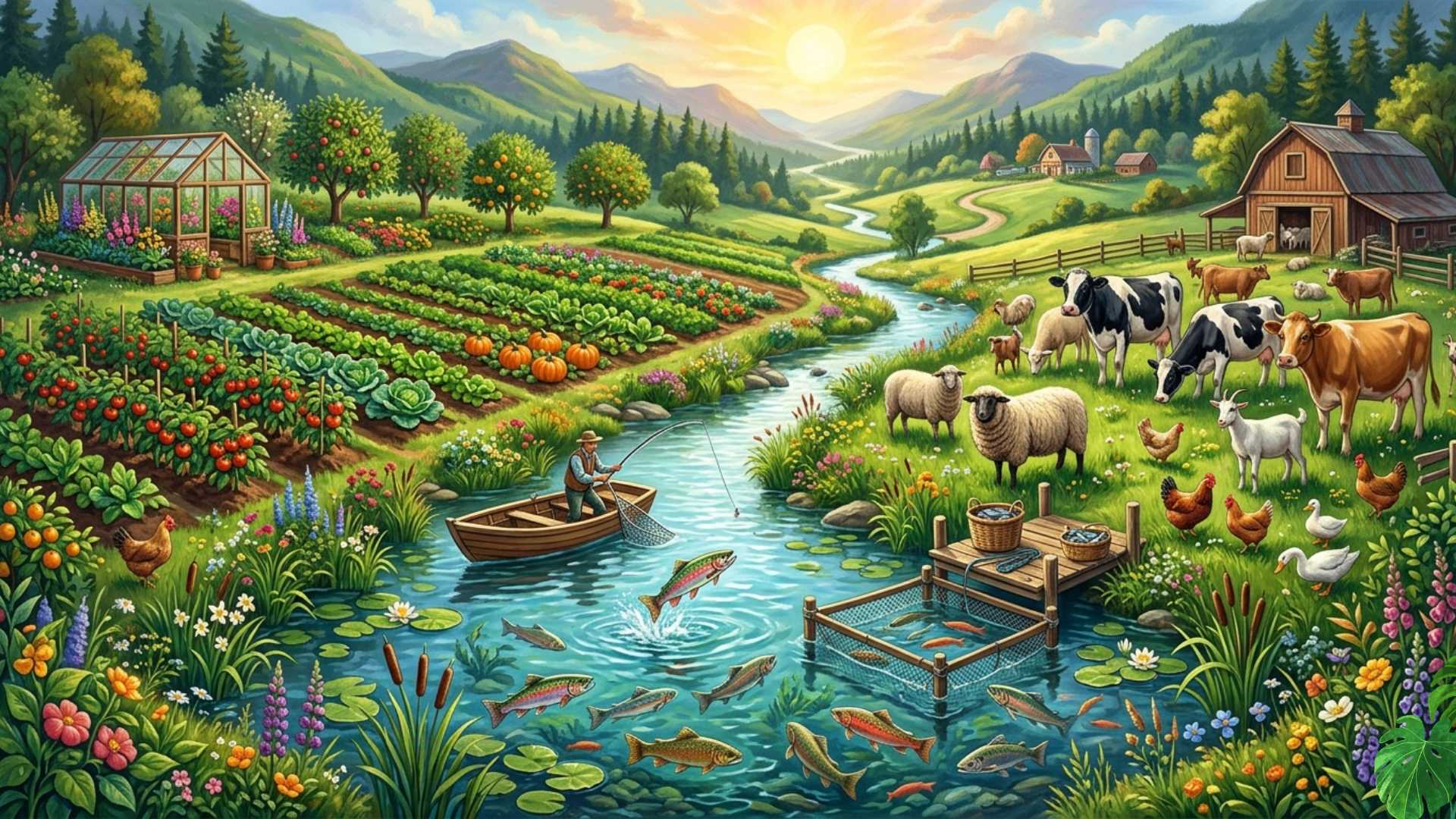
Livestock and Fisheries: New Powerhouses of Indian Agriculture

Discover how livestock and fisheries are transforming India's agricultural landscape and boosting rural incomes beyond traditional crop farming.
G
Gopi
4 mins read
Indian agriculture is shifting towards high-value allied sectors for higher growth and incomes

Introduction

Indian agriculture is undergoing a structural transformation from traditional crop farming towards high-value allied activities such as horticulture, livestock, fisheries, poultry, and beekeeping. According to the Economic Survey 2024-25, the crop sector grew at only 3.5% annually during the last decade, while livestock grew at 7.1% and fisheries at 8.8%. Horticulture production has crossed 360 million tonnes, surpassing food grain output of about 330 million tonnes. This shift indicates a gradual diversification of agriculture towards more remunerative and resilient sectors, which are increasingly important for farm income, rural employment, and nutritional security.


Background: Structural Transformation in Agriculture

Since the Green Revolution (1960s), Indian agriculture has primarily focused on cereal production, especially rice and wheat, supported by:

  • Minimum Support Price (MSP)
  • Public procurement
  • Input subsidies

However, over time:

  • Crop sector growth remained modest (2–3.5%)
  • Allied sectors expanded faster due to rising demand for high-value food products such as milk, meat, fish, fruits, and vegetables.

This reflects the evolution of agriculture from subsistence cereal production to diversified commercial agriculture.


SectorAverage Annual Growth (Last Decade)Key Observation
Crop sector~3.5%Slower growth
Livestock~7.1%Major income contributor
Fisheries~8.8%Fastest growing sector
HorticultureHigher than cerealsHigh-value production

Key Insight: Allied sectors are growing at more than double the rate of crop farming, making them new growth engines of Indian agriculture.


Rise of Horticulture in Indian Agriculture

Horticulture includes fruits, vegetables, flowers, spices, medicinal plants, and plantation crops.

Production Statistics (2024-25)

CategoryProduction
Food grains~330 million tonnes
Horticulture>360 million tonnes
Fruits114.51 million tonnes
Vegetables219.67 million tonnes

Global Position

  • 2nd largest producer of fruits and vegetables globally
  • Accounts for about 13% of global production

Major Crops where India is a Leading Producer

  • Banana
  • Mango
  • Papaya
  • Ginger
  • Okra

Economic Importance

  • Horticulture contributes ~33% of Agricultural Gross Value Added (GVA).

Livestock Sector: Backbone of Rural Economy

The livestock sector has emerged as the fastest-growing component of Indian agriculture.

Growth Performance

IndicatorValue
GVA growth (2014-15 to 2023-24)195% increase
CAGR (current prices)12.77%

Milk Production

CommodityProduction (2024-25)
Milk248 million tonnes
Rice~150 million tonnes
Wheat~118 million tonnes

Milk has become the largest food commodity in India in both volume and value.

Importance for Farmers

Livestock provides:

  • Regular income flow
  • Nutritional security
  • Risk diversification

This is especially crucial for small and marginal farmers (85% of farm households).


Growth of Fisheries Sector

The fisheries sector has also expanded significantly, driven by:

  • Inland aquaculture
  • Coastal fisheries
  • Rising domestic and export demand

Economic Growth

IndicatorValue
GVA growth (2014-15 to 2023-24)140% increase

Fisheries contribute to:

  • Export earnings
  • Employment generation
  • Nutritional security (protein source)

Drivers of Agricultural Diversification

Rising Demand for High-Value Foods

Economic growth and urbanisation have increased consumption of:

  • Milk
  • Eggs
  • Meat
  • Fruits and vegetables

Higher Profitability

High-value sectors offer:

  • Better price realization
  • Export potential
  • Value addition opportunities

Risk Mitigation

Diversification reduces climate and market risks associated with monocropping.

Government Initiatives

Key policies supporting diversification:

SchemeObjective
National Livestock MissionImprove livestock productivity
Pradhan Mantri Matsya Sampada Yojana (PMMSY)Fisheries development
Mission for Integrated Development of Horticulture (MIDH)Horticulture expansion
Rashtriya Gokul MissionIndigenous cattle improvement

Livelihood Importance for Small Farmers

Livestock and fisheries are crucial for smallholder resilience because:

  • Income from crops is seasonal
  • Livestock income is continuous

Additional benefits include:

  • Drought resilience
  • Nutritional benefits (milk, eggs, fish)
  • Employment for women

Economist Ashok Gulati notes: "Allied sectors are becoming the real drivers of agricultural income growth in India."


Symbiotic Relationship Between Crops and Livestock

Crop farming and livestock are mutually supportive systems.

Crop Farming OutputUsed in Livestock
Crop residuesAnimal feed
Agricultural by-productsFodder
Livestock OutputUsed in Agriculture
ManureOrganic fertiliser
Draught powerTraditional farm operations

This circular bio-economy strengthens sustainable agriculture.


Key Challenges in Allied Agricultural Sectors

1. Fodder and Feed Shortage

TypeEstimated Shortage
Green fodder~30%
Dry fodder~40%
  • Feed accounts for ~70% of milk production costs.

2. Poor Fisheries Infrastructure

Problems include:

  • Inadequate cold chains
  • Poor transportation
  • Lack of processing facilities
  • Post-harvest losses

3. Limited Institutional Support

Compared to cereals, allied sectors lack:

  • Price support mechanisms
  • Market infrastructure
  • Insurance coverage

4. Climate Vulnerability

  • Heat stress affecting livestock productivity
  • Coastal ecosystem degradation affecting fisheries

Way Forward

Strengthening Fodder Systems

  • Promote fodder cultivation
  • Develop silage and feed technologies

Improving Fisheries Infrastructure

  • Cold storage
  • Fish landing centers
  • Modern processing units

Market Reforms

  • Strengthen value chains and farmer producer organisations (FPOs).
  • Promote export-oriented production.

Technology Adoption

  • Precision livestock farming
  • Aquaculture technologies
  • Genetic improvement of breeds

Policy Support

Greater focus on allied sectors in agricultural policies, subsidies, and insurance schemes.


Conclusion

Indian agriculture is gradually shifting from cereal-centric production to diversified, high-value allied sectors such as horticulture, livestock, and fisheries. These sectors offer higher growth rates, better income stability, and improved nutritional outcomes, particularly for small and marginal farmers. However, addressing fodder shortages, infrastructure gaps, and market inefficiencies is essential to unlock their full potential. Strengthening allied sectors will be crucial for doubling farmers’ incomes, achieving nutritional security, and ensuring sustainable rural development.


UPSC Mains Question

“Diversification towards high-value allied sectors is transforming Indian agriculture.” Examine the growth trends, opportunities, and challenges associated with this shift. (250 words, 15 marks)

Quick Q&A

Everything you need to know

Diversification of Indian agriculture refers to the gradual shift from traditional crop-centric farming to high-value allied activities such as horticulture, animal husbandry, poultry, fisheries, beekeeping, and agro-forestry. This transformation has been occurring since the Green Revolution but has accelerated in recent decades as farmers seek more stable and remunerative sources of income.

Evidence from the Economic Survey highlights this structural shift. While the crop sector recorded an average annual growth of only about 3.5% in the decade ending 2024–25, the livestock sector grew at 7.1% and the fisheries sector at 8.8%. Historically too, crop agriculture has grown modestly between 2–3.5%, whereas allied sectors have expanded at more than double this rate. Within crops, horticulture has emerged as a dominant segment, producing high-value commodities like fruits, vegetables, flowers, and spices.

The scale of this shift is evident from production data. In 2024–25, horticultural output exceeded 360 million tonnes, surpassing foodgrain production of about 330 million tonnes. India is now the second-largest producer of fruits and vegetables globally, accounting for roughly 13% of global output. Moreover, horticulture contributes nearly one-third of the Gross Value Added (GVA) in agriculture. This transition reflects a broader movement towards market-oriented, nutrition-sensitive, and income-enhancing agriculture in India.

Allied sectors like livestock and fisheries have become crucial for improving farm incomes because they provide regular, diversified, and resilient income streams for rural households. Unlike crop farming, which is seasonal and highly dependent on monsoons, these sectors generate continuous income through products such as milk, eggs, meat, and fish.

A major reason for their growing importance is their strong economic performance. The livestock sector’s Gross Value Added increased by about 195% between 2014–15 and 2023–24, with a compound annual growth rate of nearly 12.77%. Similarly, the fisheries sector recorded a growth of about 140% in GVA during the same period. Significantly, these sectors have expanded even without the extensive fiscal and procurement support that cereals like rice and wheat receive under government policies such as Minimum Support Price (MSP) and public procurement.

Another critical factor is their role in supporting small and marginal farmers, who constitute more than 85% of India’s farming population. Livestock ownership—such as cattle, poultry, goats, and sheep—allows farmers to generate daily or weekly income and provides nutritional security through milk, meat, and eggs. For instance, India’s milk production reached about 248 million tonnes in 2024–25, making it the largest food commodity in both volume and value, surpassing rice and wheat. Thus, allied sectors act as key drivers of rural livelihoods, economic stability, and nutritional security.

Horticulture plays a transformative role in Indian agriculture by shifting production from low-value staple crops to high-value, market-oriented commodities. This sector includes fruits, vegetables, spices, flowers, and medicinal plants, which generally provide higher returns per hectare compared to cereals.

One key contribution of horticulture is its growing share in agricultural output and value addition. In 2024–25, India produced over 360 million tonnes of horticultural produce, surpassing the production of food grains. Within this, fruit production stood at 114.51 million tonnes and vegetable production at about 219.67 million tonnes. This expansion has made India the second-largest producer of fruits and vegetables globally. Furthermore, horticulture contributes nearly 33% of the Gross Value Added in agriculture, highlighting its economic significance.

Beyond production, horticulture supports employment generation, export potential, and nutritional security. Crops such as mangoes, bananas, papayas, ginger, and okra—where India is the global leader—offer significant export opportunities. Additionally, horticultural farming is more labor-intensive, creating jobs in cultivation, harvesting, processing, and marketing. For example, states like Maharashtra (grapes), Himachal Pradesh (apples), and Andhra Pradesh (mangoes) have built strong regional economies around horticulture. Thus, horticulture not only enhances farmer incomes but also contributes to diversified and nutrition-sensitive agricultural growth.

The relatively slow growth of the crop sector in India is influenced by structural, environmental, and policy-related factors. Historically, crop farming has grown at an average rate of about 2–3.5% despite technological interventions such as improved seeds, fertilizers, and irrigation introduced during the Green Revolution.

One key reason is the high dependence on climatic conditions. Crop production is heavily influenced by rainfall patterns, droughts, floods, and other climate-related uncertainties. Such vulnerabilities lead to fluctuations in productivity and income. In contrast, sectors like livestock and fisheries offer relatively stable outputs because they are less dependent on seasonal climatic variations.

Another factor is the policy bias towards a few staple crops, particularly rice and wheat. Government procurement and MSP mechanisms have encouraged farmers to focus on these cereals rather than diversifying into high-value crops. While this policy ensured food security in the past, it has also led to stagnation in productivity and income growth. Additionally, small landholdings and limited mechanization restrict economies of scale in crop farming.

These factors collectively explain why allied sectors have emerged as more dynamic growth engines. Their higher market demand, better value realization, and income stability make them increasingly attractive alternatives for farmers.

Crop farming and livestock rearing share a symbiotic relationship in traditional and modern agricultural systems. Each sector provides inputs and benefits to the other, creating a mutually reinforcing cycle that enhances productivity and sustainability.

For example, crop residues such as straw, husk, and bran are commonly used as fodder for cattle and other livestock. In return, livestock produce manure and organic waste, which are used as natural fertilizers to improve soil fertility and reduce dependence on chemical inputs. This nutrient recycling system is especially important for small and marginal farmers who cannot afford expensive fertilizers.

Another example is the role of livestock in providing financial resilience. In years when crops fail due to drought or floods, farmers can rely on livestock products such as milk, eggs, or meat to maintain income and food security. For instance, dairy farming in states like Gujarat through the Amul cooperative model demonstrates how integrating livestock with agriculture can significantly improve rural livelihoods.

Thus, the integration of crops and livestock enhances resource efficiency, income diversification, and ecological sustainability, making it a vital feature of India’s agricultural economy.

Despite their impressive growth, the livestock and fisheries sectors face several structural and infrastructural challenges that limit their full potential. Addressing these issues is essential for sustaining the diversification of Indian agriculture.

In the livestock sector, the most critical constraint is the shortage of feed and fodder. According to estimates by the Indian Council of Agricultural Research (ICAR), India faces a deficit of about 30% in green fodder and 40% in dry fodder. Since feed and fodder account for nearly 70% of the cost of milk production, this significantly raises production costs for farmers. Additionally, issues such as inadequate veterinary services, poor breed quality, and limited cold-chain infrastructure further constrain productivity.

The fisheries sector, on the other hand, struggles with weak post-harvest infrastructure. A large portion of fish catch is lost due to inadequate facilities for storage, preservation, transportation, and processing. The absence of modern cold chains and refrigerated transport leads to spoilage and economic losses for fishermen. Coastal pollution, overfishing, and climate change also pose emerging threats.

Therefore, while these sectors have strong growth potential, a holistic policy approach involving improved infrastructure, better supply chains, technological innovation, and institutional support is necessary to unlock their full economic and social benefits.

For small and marginal farmers with limited landholdings, diversification into allied agricultural activities can significantly enhance economic resilience and livelihood security. Since more than 85% of Indian farmers fall into this category, integrated farming systems have become increasingly important.

Consider a farmer owning less than one hectare of land. If the farmer depends solely on seasonal crop cultivation, income will arrive only after harvest and will remain vulnerable to climatic shocks such as droughts or pest attacks. However, by integrating dairy farming, poultry rearing, or fish farming, the farmer can generate regular income throughout the year. For example, selling milk daily or eggs weekly provides a steady cash flow that can support household expenses and agricultural investments.

A practical example is the adoption of integrated farming systems in states like Kerala and Tamil Nadu, where farmers combine crops with fish ponds, poultry units, and dairy animals. Crop residues feed livestock, while livestock manure fertilizes crops and fish ponds. This system reduces waste, increases productivity, and spreads risk across multiple activities.

Thus, diversification into allied sectors strengthens income stability, nutritional security, and climate resilience, making it a sustainable strategy for small farmers in India.

Attribution

Original content sources and authors

Sign in to track your reading progress

Comments (0)

Please sign in to comment

No comments yet. Be the first to comment!