
1. Monsoon Performance and Agricultural Context in Tamil Nadu
Tamil Nadu experienced a normal Northeast Monsoon (October–December) in 2025, despite an official forecast of above-normal rainfall. This outcome assumes significance because the State’s agriculture, unlike most of India, is heavily dependent on the Northeast Monsoon rather than the Southwest Monsoon.
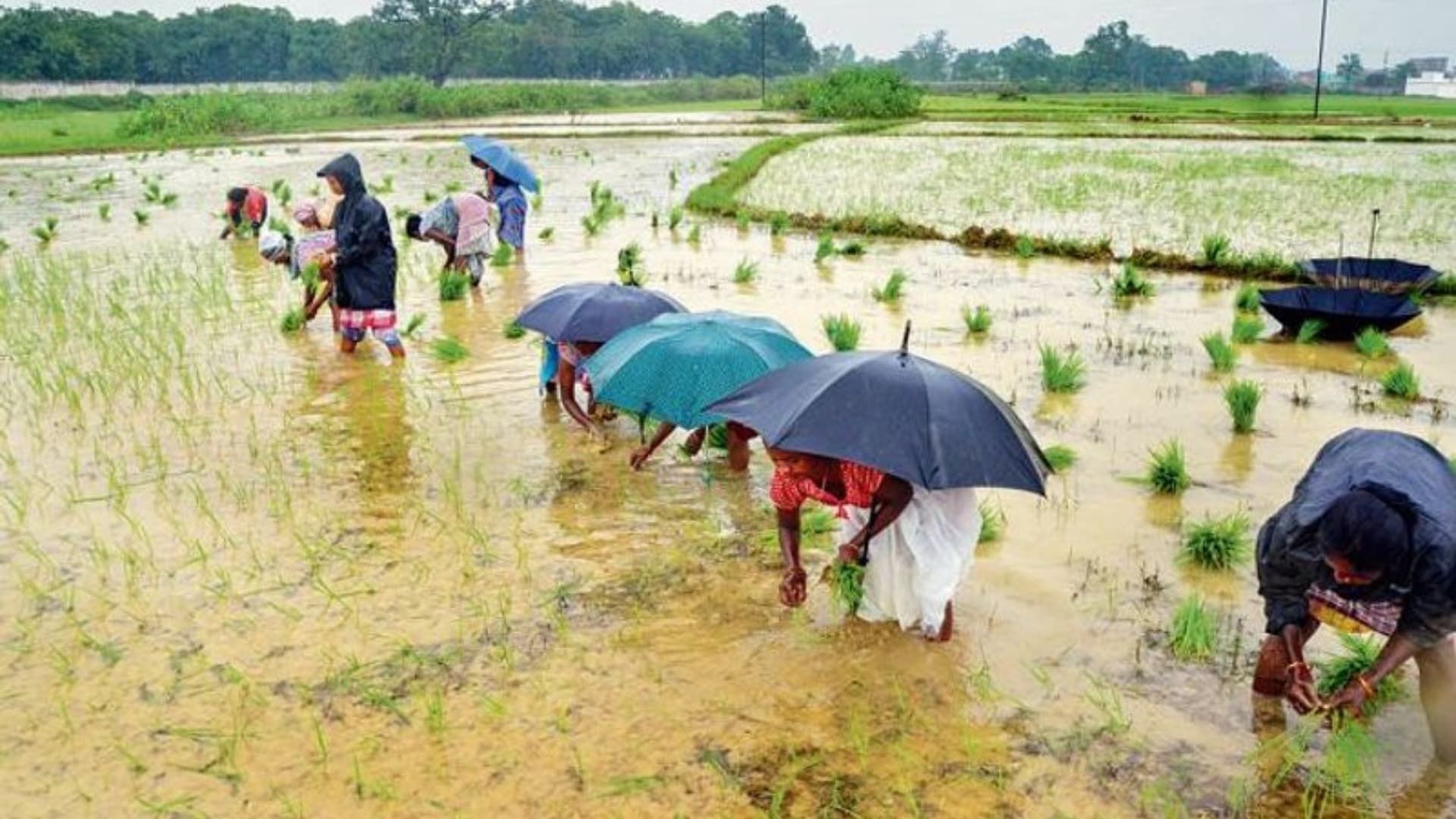
The normal monsoon outcome did not translate into agricultural stress. Instead, paddy cultivation during the long-term Samba–Thaladi–Pishanam season nearly achieved its planned scale. This indicates that rainfall adequacy alone does not determine agricultural outcomes; temporal distribution and pre-monsoon water availability also matter.
From a governance perspective, this underscores the importance of water management beyond monsoon dependence, especially in a climate-variable region like Tamil Nadu. Ignoring this linkage could lead to flawed planning that overemphasises seasonal rainfall while neglecting storage and groundwater resilience.
Italicised reasoning:
The agricultural outcome demonstrates that cumulative and well-distributed water availability can offset a normal or slightly deficient monsoon. If policy focuses only on headline monsoon figures, it risks underestimating actual irrigation security and misdirecting resource allocation.
2. Paddy Coverage Achievement and Regional Distribution
Against an overall paddy cultivation target of 33.9 lakh acres, the State achieved 33.8 lakh acres, nearly meeting the planned coverage. This performance is notable given that the five-year average stands higher at 34.8 lakh acres, suggesting relative stability rather than expansion.
The Cauvery delta accounted for around 13 lakh acres, with the remaining coverage spread across other regions. The near-target achievement reflects effective utilisation of available water resources rather than expansion of cultivated area.
From a development standpoint, stable paddy coverage helps maintain food security and farmer incomes. Failure to sustain such coverage, especially in delta regions, could have spillover effects on procurement, public distribution, and rural livelihoods.
- Key statistics:
- Target paddy area: 33.9 lakh acres
- Actual coverage: 33.8 lakh acres
- Cauvery delta share: ~13 lakh acres
- Five-year average: 34.8 lakh acres
Italicised reasoning:
Maintaining near-target coverage ensures predictability in foodgrain supply chains. If such stability is disrupted, procurement planning and price support mechanisms become vulnerable to shocks.
3. Role of Continuous Water Availability
A critical factor behind the successful cultivation season was continuous water availability across multiple months. The State received 58 cm of rainfall during March–September, creating a strong hydrological base before the main cultivation season.
Unusually heavy summer rainfall of 25 cm in March–April, nearly double the normal, significantly improved soil moisture and groundwater recharge. The Southwest Monsoon delivered 33 cm, meeting expectations, further strengthening water availability.
Although the Northeast Monsoon delivered 43 cm against an expected 44 cm, slightly below forecast, the cumulative water balance remained comfortable. Ignoring the role of pre-monsoon and summer rainfall would lead to an incomplete understanding of agricultural resilience.
- Rainfall data:
- March–September rainfall: 58 cm
- Summer rainfall (March–April): 25 cm
- Southwest Monsoon: 33 cm
- Northeast Monsoon: 43 cm (expected 44 cm)
Italicised reasoning:
The case illustrates that agriculture responds to cumulative hydrological conditions rather than a single monsoon event. If planners overlook this, they may misjudge vulnerability and overreact to marginal seasonal deficits.
4. Groundwater Status and Cauvery Delta Advantage
Despite uneven rainfall distribution—only four districts (Tirunelveli, Tenkasi, Virudhunagar, Ranipet) receiving excess rain—the overall groundwater position remained comfortable. This points to effective recharge from earlier rainfall phases.
Additionally, the Cauvery delta benefited from another year of surplus Cauvery water, ensuring uninterrupted irrigation during the major cultivation season. This reduced dependence on rainfall timing and mitigated intra-seasonal risks.
For governance, this highlights the strategic value of inter-state river flows and reservoir management. Neglecting basin-level planning could undermine even favourable rainfall conditions.
Italicised reasoning:
Groundwater and river-basin stability act as buffers against climatic variability. If these buffers weaken, agricultural output becomes far more sensitive to short-term weather fluctuations.
5. Paddy Procurement Surge and Storage Implications
Tamil Nadu witnessed a glut in paddy harvest even during the short-term Kuruvai season, prompting preparations for higher procurement arrivals, especially post-Pongal (January 15). This reflects both production strength and procurement readiness.
During the current season, 14.8 lakh tonnes of paddy were procured, significantly higher than the normal 5 lakh tonnes. Authorities expect to procure around 38 lakh tonnes more over the next eight months, including the lean season.
In 2024–25, total foodgrain procurement stood at about 48 lakh tonnes, indicating a sustained upward trend. While positive for farmers, such surges require robust storage and fiscal planning; otherwise, inefficiencies and wastage risks increase.
- Procurement figures:
- Current season procurement: 14.8 lakh tonnes
- Normal procurement level: 5 lakh tonnes
- Expected additional procurement: ~38 lakh tonnes
- 2024–25 total procurement: ~48 lakh tonnes
Italicised reasoning:
Higher procurement supports farm incomes but strains storage, logistics, and finances. If institutional capacity does not keep pace, the benefits of higher production may erode.
6. Reservoir Storage and Water Security Ahead
As many as 90 irrigation reservoirs currently hold water at three-fourths of their combined capacity, placing the State in a strong position to meet upcoming irrigation and drinking water demands.
This buffer reduces the risk of water stress during the lean season and provides flexibility to respond to incremental irrigation demand. It also has political economy implications, as water shortages ahead of the April–May Assembly elections could have posed serious governance challenges.
The current situation suggests that such risks are remote for now, but it also reinforces the need for continuous monitoring rather than complacency.
Italicised reasoning:
Adequate reservoir storage underpins both development outcomes and political stability. If such reserves are mismanaged or depleted, the resulting shortages can quickly escalate into governance crises.
Conclusion
Tamil Nadu’s 2025 agricultural performance highlights the importance of cumulative water management, groundwater resilience, and institutional preparedness rather than reliance on monsoon forecasts alone. Sustaining these gains will require continued focus on reservoir management, procurement infrastructure, and climate-adaptive planning to ensure long-term food and water security.