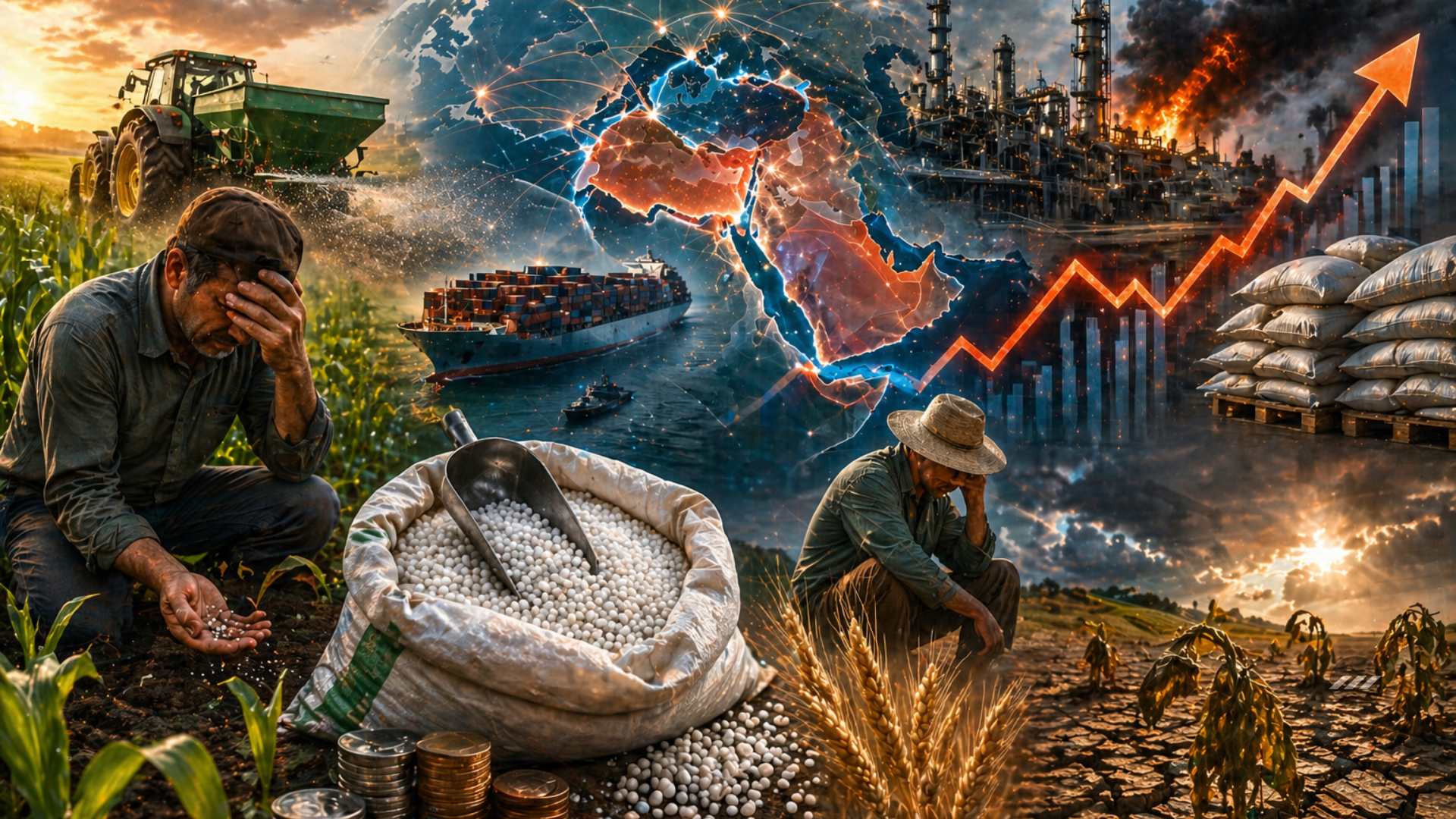
Iran War Triggers Fertiliser Price Surge Affecting Global Harvests

Introduction
- Fertilisers are critical for global agriculture, influencing nearly 50% of global food production (FAO estimates).
- The ongoing West Asia conflict has triggered a second major fertiliser price shock in four years, with urea prices sharply rising.
- Food security today is deeply linked to geopolitics and supply chains.
“Food security is not just about production, but about access to critical inputs like fertilisers.”
Background / Context
-
The conflict involving Iran has disrupted:
- Fertiliser production hubs in the Gulf
- Trade routes via the Strait of Hormuz
-
Key disruptions:
-
Halt in urea exports from Qatar
-
Reduced supply of:
- Ammonia
- Sulphur
-
👉 This has created a global fertiliser supply crunch
Key Concept: Role of Fertilisers in Agriculture
| Type | Role | Importance |
|---|---|---|
| Urea (Nitrogen) | Plant growth & yield | Essential every season |
| Phosphate | Root development | Medium-term impact |
| Potash | Disease resistance | Soil health |
👉 Nitrogen fertilisers (urea) are indispensable for annual crop productivity
Supply Chain Disruption: Causes
1. Geopolitical Conflict
-
Disruption in Gulf region:
- Major fertiliser production hub
2. Trade Route Blockage
-
Strait of Hormuz:
- Key global shipping route
-
Fertiliser shipments stalled
3. Production Shutdowns
-
Loss of:
- ~2 million metric tons of urea production (~3% of global trade)
4. Logistics Delays
- ~1 million tons of fertiliser stuck in transit
Price Trends & Economic Impact
| Indicator | Trend |
|---|---|
| Urea prices | Sharp increase |
| Grain prices | Declining |
| Farmer income | Reduced |
👉 Unlike 2022:
- Farmers cannot offset costs due to low crop prices
Impact on Farmers
1. Rising Input Costs
- Fertilisers becoming unaffordable
2. Reduced Application
-
Farmers may:
- Use less fertiliser
- Switch to cheaper alternatives
3. Cropping Pattern Changes
-
Shift away from:
- Fertiliser-intensive crops (e.g., wheat)
4. Financial Stress
-
Particularly affects:
- Small and marginal farmers
Global Food Production Risks
1. Declining Yields
-
Reduced fertiliser use leads to:
- Lower productivity
- Reduced crop quality
2. Reduced Cultivation Area
-
Example:
- Western Australia wheat area ↓ 14%
3. Long-Term Soil Impact
-
Nutrient deficiency affects:
- Future productivity
4. Regional Vulnerability
-
High-risk regions:
- East Africa
- Southeast Asia
👉 Risk of food insecurity and hunger
Case Studies
1. India
-
Largest rice producer, major wheat producer
-
Imported urea at:
- Nearly double price
2. Brazil
-
Farmers shifting to:
- Cheaper fertilisers
-
Possible yield decline
3. Europe
-
Farmers reducing:
- Nitrogen use
- Corn cultivation
Comparative Insight: 2022 vs Current Crisis
| Aspect | 2022 Ukraine War | Current Crisis |
|---|---|---|
| Grain Prices | High | Low |
| Farmer Cushion | Strong | Weak |
| Supply Disruption | Moderate | Severe |
| Impact | Manageable | Potentially worse |
Implications
1. Food Security
- Threat to global food availability
2. Inflation
- Rising food prices
3. Supply Chain Fragility
-
Overdependence on:
- Few regions
4. Geopolitical Risk
-
Conflict impacts basic needs:
- Food
Challenges
- Limited alternative fertiliser sources
- High import dependency
- Climate stress on agriculture
- Weak global coordination
Way Forward (Expanded Analysis)
1. Diversification of Fertiliser Supply Chains
Countries must reduce dependence on specific regions like the Gulf by developing alternative sourcing arrangements. This includes building partnerships with multiple supplier nations and encouraging regional production hubs to minimise disruption risks.
2. Strengthening Domestic Fertiliser Production
Governments should incentivise domestic manufacturing of fertilisers through subsidies, technology transfer, and infrastructure support. This reduces import dependence and ensures supply stability during global crises.
3. Promoting Efficient Fertiliser Use
Adopting techniques such as:
- Precision agriculture
- Nano-fertilisers
- Organic alternatives
can reduce fertiliser consumption while maintaining productivity.
4. Strategic Reserves & Policy Support
Maintaining buffer stocks of fertilisers and providing targeted subsidies to farmers can help absorb price shocks and ensure continued agricultural activity.
5. Global Cooperation
International organisations like the UN must:
- Facilitate trade routes
- Ensure fertiliser access for vulnerable countries
Conclusion
The fertiliser crisis triggered by geopolitical conflict highlights the deep interdependence between global supply chains and food security. While immediate impacts may be cushioned by existing stocks, prolonged disruptions could significantly affect global agricultural output. Ensuring resilient supply systems, sustainable farming practices, and coordinated global action will be essential to safeguard future food security.
Attribution
Original content sources and authors
.png)

Syllabus classification
How this article maps to GS papers
Main syllabus
GS3AgricultureQuick Q&A
What is the significance of fertilisers in global agriculture, and why are they critical for food security?
Importance for food security:
- Yield enhancement: Fertilisers significantly increase per-hectare productivity.
- Consistency: They stabilise production across varying climatic conditions.
- Support for high-demand crops: Essential for cereals, oilseeds, and cash crops.
For example, countries like India rely heavily on urea to sustain rice and wheat production, which form the backbone of food security for millions.
Broader implications: Any disruption in fertiliser supply can lead to reduced crop yields, increased food prices, and heightened risk of hunger, particularly in developing nations. Thus, fertilisers are not merely agricultural inputs but strategic commodities that underpin global food systems and economic stability.
Why has the Iran war triggered a sharp rise in fertiliser prices and supply disruptions globally?
Key causes of price surge:
- Supply shocks: توقف of urea exports from Qatar, one of the largest producers.
- Logistical bottlenecks: Fertiliser shipments stuck in the Gulf region.
- Production shutdowns: Facilities across the Middle East, India, and other regions have halted operations.
For instance, around 3% of global seaborne urea trade has already been lost due to plant shutdowns.
Economic implications: The disruption comes at a time when farmers lack the financial cushion of high crop prices, unlike in 2022. This makes the current crisis more severe. The situation highlights how geopolitical conflicts can directly impact agricultural input markets, leading to cascading effects on global food production and prices.
How do rising fertiliser prices influence farmers’ decision-making and agricultural output?
Key adjustments by farmers:
- Reduced fertiliser usage: Particularly nitrogen, leading to lower yields.
- Crop switching: Moving away from fertiliser-intensive crops like wheat and corn.
- Use of cheaper substitutes: Switching to less effective fertilisers such as ammonium sulphate.
For example, in Western Australia, wheat planting area is expected to decline by 14% due to high fertiliser costs, while Brazilian farmers may reduce fertiliser intensity in soybean cultivation.
Consequences for output: These decisions can lead to reduced agricultural productivity and lower crop quality. Over time, this may tighten global food supplies and increase price volatility. The situation illustrates how input cost shocks translate directly into food security challenges, particularly when farmers lack financial resilience.
What are the reasons behind the heightened risk to global food production in the current fertiliser crisis compared to 2022?
Key reasons for increased risk:
- Low agricultural prices: Wheat and soybean prices are significantly lower than in 2022.
- Deeper supply crunch: More severe disruptions in fertiliser production and trade.
- Limited financial buffers: Farmers lack sufficient income to offset rising costs.
For instance, Chicago wheat prices are लगभग half of their 2022 levels, making it harder for farmers to sustain input-intensive cultivation.
Implications: The combination of high input costs and low output prices creates a ‘cost-price squeeze’, leading to reduced fertiliser usage and lower yields. This could result in a more prolonged and widespread impact on global food production, making the current crisis potentially more severe than the previous one.
Critically analyse the impact of fertiliser price shocks on developing countries and global inequality.
Key challenges:
- Import dependence: Countries in Africa and Asia rely on external suppliers.
- Limited subsidies: Governments may struggle to support farmers financially.
- Food insecurity: Reduced yields can exacerbate hunger and malnutrition.
For example, East African nations experienced heightened food insecurity during the 2022 fertiliser crisis, and similar risks are emerging again.
Counterarguments and mitigation: Some countries, like India, have managed to secure supplies through bulk imports and subsidies, demonstrating resilience. However, such measures are not universally feasible.
Conclusion: Fertiliser shocks amplify existing inequalities in the global food system. Addressing this requires international cooperation, targeted subsidies, and diversification of supply sources. Without these measures, vulnerable populations will continue to bear the brunt of global disruptions.
Provide examples of how different regions are responding to the fertiliser crisis.
Examples:
- India: Secured record volumes of urea through imports, even at higher prices, to protect domestic food production.
- Australia: Farmers are reducing wheat acreage and fertiliser usage.
- Brazil: Shifting to cheaper fertilisers and reducing application rates.
- Europe: Moving away from fertiliser-intensive crops like corn and cutting nitrogen usage.
These responses highlight both adaptation and vulnerability.
Implications: While some countries can absorb higher costs or adjust cropping patterns, others face severe constraints. The varied responses underscore the uneven capacity to manage crises and the need for coordinated global action to ensure food security.
Analyse the Strait of Hormuz disruption as a case study to understand the link between geopolitics and food security.
Impact analysis:
- Trade disruption: Fertiliser shipments are stranded, delaying global supply.
- Price escalation: Reduced availability has driven up global prices.
- Production impact: Farmers worldwide face shortages and higher costs.
For example, nearly 1 million tons of fertiliser already loaded on vessels remain stuck in the Gulf.
Lessons learned: The case highlights the vulnerability of global supply chains to geopolitical tensions. It underscores the importance of diversifying trade routes and reducing dependence on critical chokepoints.
Conclusion: The Strait of Hormuz disruption demonstrates how geopolitical risks can directly threaten food security. Building resilient supply chains and enhancing international cooperation are essential to mitigate such risks in the future.
Practice questions
1 question for mains preparation