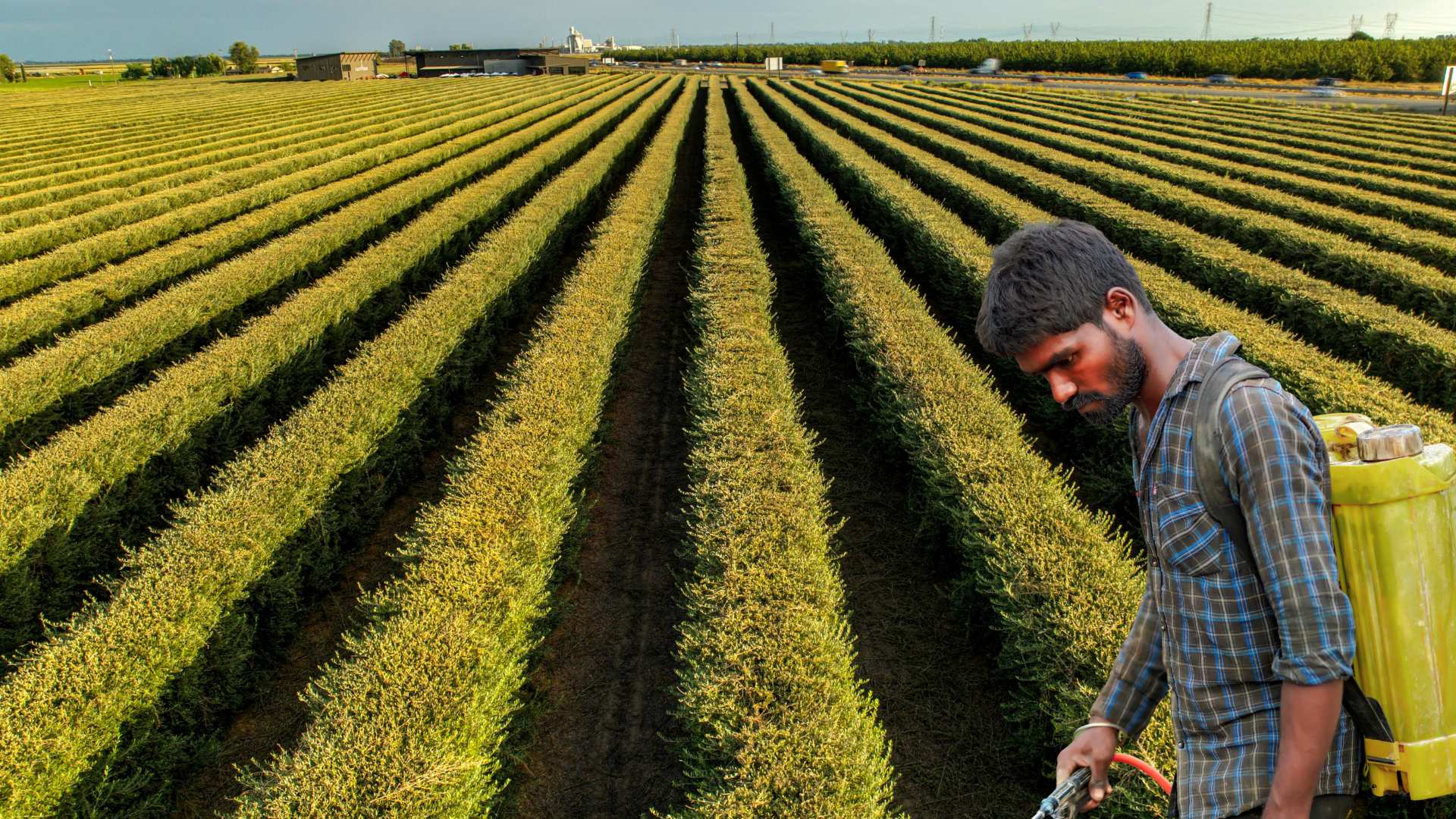
The Shift from Subsidies to Sustainability in Agriculture

Experts discuss India's agricultural strategy towards productivity and sustainability during the Business Standard Manthan summit.
PT
pocketias team
5 mins read
Experts debate India’s future as food factory
Not Started

1. India’s Agricultural Growth and Export Strength

India is already a major player in global agricultural trade, particularly in rice exports, where it commands a dominant position. Over the past decade (up to 2025), Indian agriculture has recorded an average annual growth rate of 4.6%, one of the highest historically for the sector and reportedly faster than China among major agricultural economies.

Despite this progress, experts caution against equating export dominance with sustainable leadership. The ambition to become the “world’s food factory” must be evaluated against environmental, nutritional, and long-term developmental consequences.

“So should we acquire this title of being a world power by making our own people water insecure?” — Ramesh Chand

Export-led growth without ecological safeguards may generate short-term gains but impose long-term resource costs that undermine food and water security.


2. Virtual Water Exports and Ecological Stress

India’s rice exports come with hidden ecological costs. Exporting 1 kg of rice effectively exports about 3,000 litres of water, making India the largest exporter of “virtual water.”

Intensive rice cultivation in states like Punjab and Haryana has contributed to falling groundwater levels — estimated at about 1.5 feet annually in some regions — along with rising contamination and biodiversity loss.

This model links procurement incentives and minimum support prices (MSP) to water-intensive cropping patterns.

Environmental Concerns:

  • Groundwater depletion: ~1.5 feet per year (Punjab, Haryana)
  • Soil nutrient depletion
  • Air pollution from stubble burning
  • Biodiversity loss

“Business as usual has given us food security, not nutritional security.” — Ashok Gulati

If current cropping incentives persist, ecological degradation could erode the very foundation of long-term agricultural competitiveness.


3. Subsidy-Driven Model and Productivity Paradox

The most subsidised and protected segment of Indian agriculture—field crops (cereals, pulses, oilseeds)—has recorded the weakest growth, around 1.5% (excluding maize).

This raises a policy paradox: the segment receiving maximum government support shows minimal productivity growth. Heavy fertiliser subsidies and MSP-driven procurement may have created perverse incentives.

The political economy has tilted toward free or near-free inputs, particularly urea, with limited structural reform in fertiliser pricing or targeting.

“If the segment where you are putting in so much money is showing minimal growth, that is a serious policy challenge.” — Ramesh Chand

Persistent input subsidies without efficiency gains risk locking agriculture into low-productivity equilibria and fiscal strain.


4. Nutrition and Sustainability Constraints

Although India remains a net agricultural exporter, experts argue that the country may still be 10–20 years away from full nutritional security.

Child stunting among under-five children remains around 35%, indicating that food availability has not translated into nutritional adequacy.

Additionally, soil degradation has reduced nutrient density in produce. Thus, food security has not evolved into nutritional security.

“It is health that is real wealth and not pieces of gold and silver.” — Mahatma Gandhi

Agricultural policy must transition from calorie sufficiency to nutrient sufficiency, aligning production systems with public health goals.


5. Trade Opportunities and Competitiveness

Large trade negotiations with the European Union and the United States offer export opportunities. However, only products meeting sanitary and phytosanitary (SPS) standards can access such markets.

India’s agriculture remains partially shielded from competition. Some argue that competitiveness is untested due to policy protectionism.

Trade deals are viewed by some as reactive tools; the deeper challenge is improving domestic productivity and environmental resilience.

Without global-standard quality compliance and competitiveness, India’s aspiration to be a global food supplier may stall.


6. AgriStack, Digital Reform and Fertiliser Rationalisation

AgriStack, envisioned as digital public infrastructure for agriculture, could enable precise targeting of subsidies by triangulating land records, cropping patterns, nutrient requirements, and purchase histories.

Better targeting of fertiliser subsidies alone could potentially save ₹30,000–40,000 crore annually, according to estimates cited in the discussion.

Digital and space technologies could identify actual cultivators in tenancy-plagued systems, enhancing efficiency and transparency.

Reform Potential:

  • Targeted fertiliser delivery
  • Reduced leakages
  • Resource reallocation toward R&D
  • Improved environmental compliance

“Agriculture is the backbone of the Indian economy.” — Mahatma Gandhi

Digital infrastructure can convert subsidy-driven models into productivity-driven systems, improving both fiscal and ecological sustainability.


7. Role of the State: Withdrawal or Nuanced Intervention?

One view emphasises that government intervention often creates artificial market distortions, followed by further intervention to correct them, leading to entrenched subsidy architectures.

Another perspective calls for nuanced state intervention that avoids price distortions while addressing genuine market failures.

International experience shows that all major economies intervene in agriculture; the difference lies in the design and efficiency of intervention.

“Governments intervene almost everywhere. The difference is that they intervene in ways that do not impose prices on the market.” — Ramesh Chand

The policy choice is not between state versus market, but between distortionary and efficiency-enhancing interventions.


Conclusion

India’s aspiration to become the “world’s food factory” must be anchored in productivity growth, nutritional outcomes, and ecological sustainability rather than subsidy-driven expansion.

Reforms in fertiliser targeting, digital infrastructure through AgriStack, trade competitiveness, and environmentally sound cropping patterns can shift the model from input-heavy support to outcome-oriented development.

Balancing export ambition with water security, environmental resilience, and nutritional adequacy will determine whether India’s agricultural growth translates into sustainable global leadership.

Quick Q&A

Everything you need to know

India’s agriculture has historically been shaped by subsidies, minimum support prices, and procurement-driven policies, particularly for cereals, pulses, and oilseeds. While this model has ensured food security, it has created several structural challenges. First, the most subsidised crops, despite heavy government backing, show minimal growth—around 1.5% annually once maize is excluded—indicating inefficiencies in policy design.

Second, intensive cultivation of crops like rice and wheat has contributed to environmental stress. For example, exporting 1 kg of rice effectively transfers about 3,000 litres of water out of the country, exacerbating groundwater depletion in Punjab and Haryana. Soil nutrient depletion and declining nutritional quality of produce further compound the problem. Third, the sector faces risks from climate variability, air pollution, and biodiversity loss.

Thus, the key challenges are:

  • Reducing dependence on subsidies without destabilising farmer incomes
  • Enhancing crop productivity and nutritional content
  • Ensuring environmental sustainability through resource-efficient practices
  • Building resilient systems capable of absorbing shocks from climate and market volatility
Addressing these challenges requires a nuanced policy approach that balances growth, sustainability, and farmer welfare.

Food security ensures that the population has access to sufficient calories, but nutritional security guarantees access to diverse and nutrient-rich foods critical for health and productivity. India has made significant strides in cereal production and exports; however, malnutrition and stunting remain pervasive, with nearly 35% of children under five affected.

Soil nutrient depletion, environmental degradation, and excessive focus on water-intensive crops reduce the micronutrient content of staple foods, leading to 'hidden hunger'. Without shifting policy emphasis, increased production alone may not translate into improved health outcomes.

Focusing on nutritional security also has long-term economic benefits. Healthier populations are more productive, reducing healthcare costs and enhancing human capital. Integrating nutrition-sensitive policies into agricultural planning, promoting crop diversification, and investing in biofortification can create a resilient and balanced food system.

AgriStack is India’s initiative to develop a digital public infrastructure for agriculture, integrating land records, cropping patterns, input requirements, and purchase histories. By leveraging digital and space technologies, policymakers can accurately identify who is farming and the specific inputs they need, particularly in a context where tenancy, outdated land records, and fragmented ownership complicate implementation.

This targeted approach allows the government to rationalise subsidies, potentially saving ₹30,000–40,000 crore annually in fertiliser allocations. It also enables precision farming through recommended nutrient doses, soil health mapping, and better water management. Farmers receive timely information, reducing wastage and increasing productivity.

Furthermore, digital infrastructure enhances transparency, reduces leakages, and empowers smallholders. By moving from a blanket subsidy model to a development-oriented framework, AgriStack aligns incentives with sustainability, efficiency, and equitable growth.

India’s export-oriented rice strategy has positioned the country as a global leader in rice trade. However, it has significant environmental costs. Producing 1 kg of rice consumes approximately 3,000 litres of water, intensifying groundwater depletion in major rice-growing regions. Punjab and Haryana, the country’s key exporters, see water tables falling by about 1.5 feet annually.

Intensive mono-cropping and heavy irrigation requirements contribute to soil degradation, nutrient depletion, and reduced biodiversity. Chemical fertiliser use, driven by subsidies, further impacts soil health and long-term agricultural sustainability. Export ambitions that disregard these factors risk compromising domestic water security and environmental resilience.

Therefore, any strategy to become a global food supplier must balance trade objectives with sustainable water management, soil restoration, and crop diversification to ensure that export growth does not undermine domestic resource endowment.

India’s agriculture is characterised by significant government intervention through subsidies, minimum support prices, and input control, particularly for cereals, pulses, and oilseeds. While these measures provide short-term security for farmers, they create distortions that may inhibit productivity and competitiveness. For example, highly subsidised crops often exhibit slower growth despite large fiscal outlays.

Experts argue for a more nuanced approach. Ramesh Chand notes that smart interventions in other major economies avoid distorting prices, focusing instead on contributory issues such as infrastructure, education, and technology adoption. Laveesh Bhandari suggests that excessive intervention fosters artificial market failures and politically entrenched subsidies that are hard to unwind. By stepping back where market mechanisms can function efficiently, the government can redirect resources toward innovation, research, and environment-friendly practices.

Thus, the optimal strategy balances state support for social and environmental objectives with market-led incentives for competitiveness, encouraging efficiency, productivity, and sustainable growth.

Policy reforms could focus on several fronts. First, rationalising fertiliser subsidies based on actual need and soil health, rather than flat allocations, can reduce waste and improve productivity. Targeted nutrient management can save ₹30,000–40,000 crore annually while promoting environmental sustainability.

Second, leveraging digital tools like AgriStack to monitor land use, cropping patterns, and input deployment ensures efficient subsidy distribution and promotes precision agriculture. Third, incentivising crop diversification and water-efficient practices in rice-dominant regions can address groundwater depletion and soil degradation. Examples include introducing high-yield pulses and oilseeds with lower water requirements.

Finally, aligning export strategies with sustainability goals ensures India’s trade growth does not compromise domestic resource security. By combining these measures, India can protect farmers’ livelihoods, improve nutritional outcomes, and maintain global competitiveness.

India’s rice export model demonstrates a classic trade-off between economic benefits and environmental costs. The country is a leading global rice exporter, generating foreign exchange and supporting rural incomes. However, this has come at the cost of water and soil resources. Exporting 1 kg of rice effectively exports 3,000 litres of water, intensifying groundwater depletion and stressing ecological systems.

This example highlights that short-term trade gains can exacerbate long-term sustainability challenges. Experts argue that while India has achieved food security, it has not ensured nutritional security or environmental resilience. Policies that focus solely on export volumes without considering resource efficiency may undermine domestic well-being and future productivity.

Lessons from this case study include the need for integrated planning that aligns export strategies with regenerative agriculture, sustainable water use, and soil restoration, ensuring that economic growth does not compromise ecological and social imperatives.

Attribution

Original content sources and authors

Sign in to track your reading progress

Comments (0)

Please sign in to comment

No comments yet. Be the first to comment!