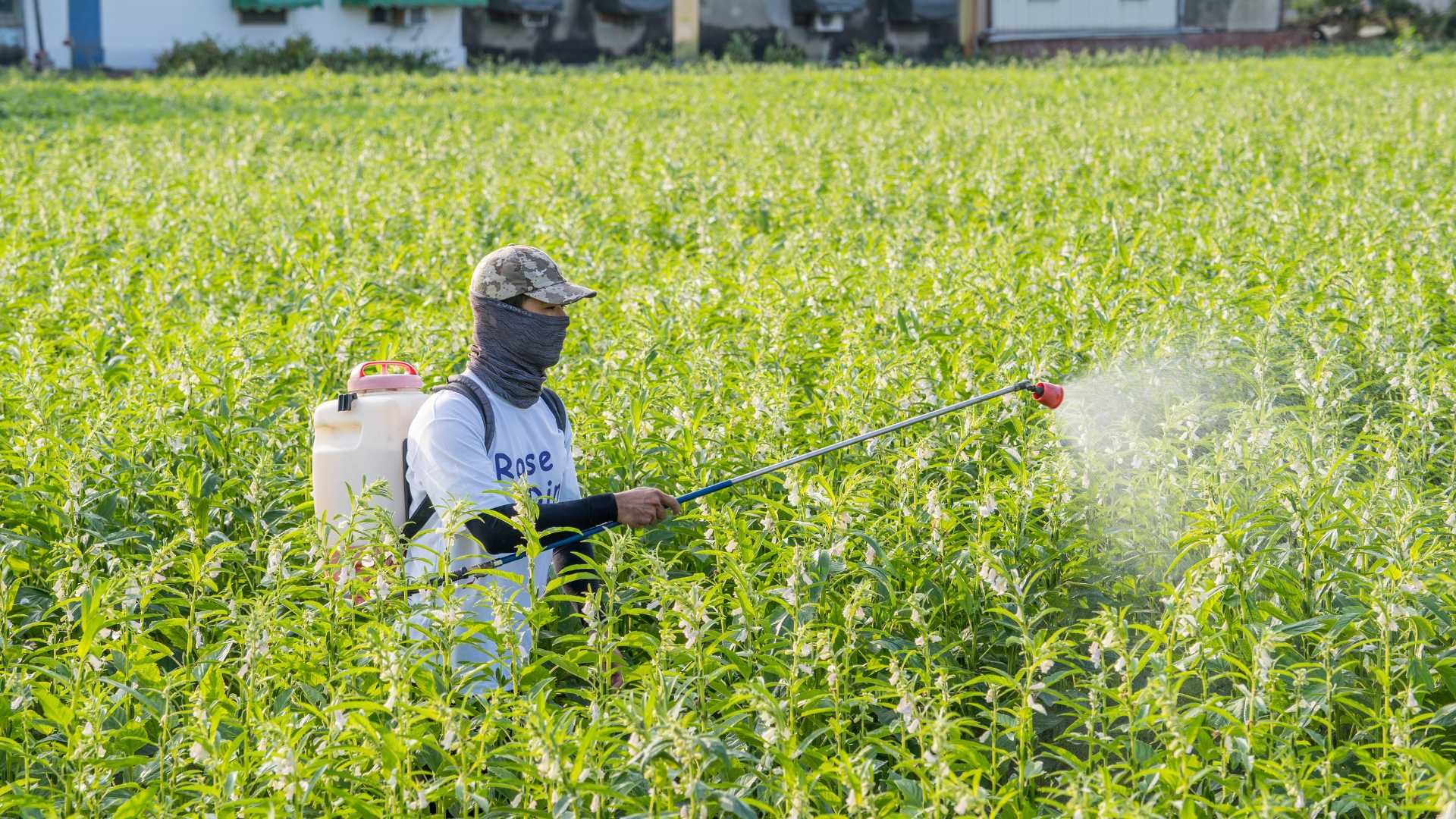
1. Global Rise in Total Applied Toxicity (TAT) and the UN Biodiversity Target
The 2022 United Nations Biodiversity Conference (Kunming-Montreal Global Biodiversity Framework) committed countries to reduce pesticide risk by 50% by 2030. This target links biodiversity protection with human health and sustainable agriculture, making it central to SDGs 2 (Zero Hunger), 3 (Health), 12 (Responsible Consumption), and 15 (Life on Land).
However, a recent study published in Science shows that instead of declining, Total Applied Toxicity (TAT) increased globally between 2013–2019. For the first time, researchers assessed toxicity across 600+ pesticides in 65 countries, measuring impact on non-target species such as pollinators, soil organisms, fish, terrestrial arthropods, and plants.
The findings indicate that rising pesticide volumes and the increasing use of more toxic formulations have collectively elevated ecological risk. Only Chile is currently on track to meet the 2030 target, while major agricultural producers are not.
The governance logic is clear: without measurable reduction in toxicity—not just volume—the UN biodiversity commitments risk becoming symbolic. Failure to reverse the trend will undermine ecosystem services essential for food security and economic stability.
Key Data:
- 50% reduction target by 2030 (UN Biodiversity Conference, 2022)
- 600+ pesticides, 65 countries studied
- 2013–2019 study period
- Only Chile on track
2. India’s Contribution to Global Applied Toxicity
India is among four countries—China, Brazil, the U.S., and India—that together account for nearly 70% of global TAT. Toxicity increased in India during the study period, especially affecting terrestrial arthropods, soil organisms, and fish.
Pesticides are extensively used on high-value crops such as fruits, vegetables, maize, soybean, rice, and cereals. While these inputs enhance yield, their ecological cost is disproportionately borne by non-target species.
Particularly concerning are rising TAT levels in sub-Saharan Africa, parts of the Indian subcontinent, and southern Australia, indicating that developing agricultural economies are witnessing heightened ecological stress.
India’s agricultural growth model, rooted in Green Revolution-era chemical intensification, has improved food security but now faces sustainability limits. If toxicity continues to rise, it may jeopardise long-term soil health, pollination services, and export competitiveness.
Major Contributors to Global TAT:
- China
- Brazil
- United States
- India (~70% combined contribution)
Most Affected Non-target Species:
- Terrestrial arthropods (highest impact)
- Soil organisms
- Fish
- Invertebrates and plants
3. Biodiversity and Ecological Implications
Non-target species play critical roles in agroecosystems—pollinators enhance crop productivity, soil organisms maintain fertility, and aquatic organisms sustain freshwater ecosystems. Increased TAT directly threatens these ecological foundations.
The study highlights that toxicity rose particularly among:
- Invertebrates
- Terrestrial plants
- Soil organisms
- Fish
Such degradation weakens ecosystem resilience, intensifies pest resistance cycles, and increases dependency on chemical inputs—creating a negative feedback loop.
Rachel Carson’s warning remains relevant:
“If we are going to live so intimately with these chemicals eating and drinking them, taking them into the very marrow of our bones,” we had better know something about the power of the “who’s who of pesticides.” — Rachel Carson, Silent Spring (1962)
Biodiversity loss is not merely an environmental issue; it directly affects agricultural productivity, rural livelihoods, and climate resilience. Ignoring pesticide-linked ecological damage could compromise both food security and environmental stability.
4. Human Health and Urban Exposure Risks
The pesticide issue extends beyond farms into urban and domestic spaces. Reports indicate increasing exposure through pest control treatments, wall paints, incense sticks, stored grains, aircraft cabins, and even food offerings.
A tragic example cited involved the death of two children in Chennai following pest control treatment. Such incidents highlight regulatory gaps in “ordinary use” pesticides outside agricultural fields.
Globally, concerns are rising over “pesticide cocktails” and “forever chemicals” found in food products such as apples and imported roses. The European Union has rejected consignments of Indian basmati rice due to fungicide residues banned in Europe.
When pesticide regulation fails to address cumulative exposure and chemical persistence, public health risks escalate. This can also affect trade relations and export credibility, linking environmental governance to economic diplomacy.
Emerging Concerns:
- “Forever chemicals” in food products
- Residue-based rejection of exports
- Urban and domestic pesticide exposure
5. India’s Regulatory Framework: Gaps and Reform
India’s pesticide regulation is governed primarily by the Insecticides Act, 1968, which was designed for agricultural usage patterns of the 1960s. It lacks robust provisions for modern, widespread domestic and commercial use.
India reportedly uses at least 66 pesticides banned elsewhere, including paraquat (banned in Europe). Concerns exist regarding persistence in soil, water, and food chains.
The proposed Pesticides Management Bill, 2025 seeks to:
- Reduce risk to people and environment
- Promote biological and traditional knowledge-based pesticides
- Update regulatory mechanisms
However, experts caution that without strong liability provisions and expert-driven reforms, it may not sufficiently address structural problems.
Effective pesticide governance requires moving from mere registration and control toward accountability, liability, and long-term agroecological transformation. Without this shift, regulatory reform may remain procedural rather than substantive.
Regulatory Issues:
- Outdated 1968 framework
- Weak liability mechanisms
- Continued use of globally banned chemicals
- Limited monitoring of non-agricultural use
6. Monitoring, Data Transparency, and International Cooperation
The study underscores the need for countries to regularly report annual pesticide use data, disaggregated by active ingredient. This would enable real-time tracking of progress toward UN targets.
Currently, data gaps hinder accurate assessment and international accountability. Transparent reporting can support evidence-based policymaking and global comparisons.
Countries such as China, Japan, and Venezuela showed declining trends in applied toxicity, suggesting that policy shifts and regulatory tightening can yield measurable outcomes.
Without systematic data reporting and international coordination, biodiversity commitments risk lacking enforcement mechanisms. Monitoring is central to translating global pledges into national action.
7. Way Forward: Towards Sustainable Pest Management
Meeting the 2030 target requires structural transformation rather than incremental adjustment.
Policy Measures:
- Gradual shift to less-toxic pesticides
- Promotion of organic agriculture
- Integrated Pest Management (IPM)
- Strong liability and compensation mechanisms
- Regular national pesticide-use reporting
Structural Reforms:
- Move beyond Green Revolution chemical-dependence
- Align pesticide policy with climate adaptation strategies
- Strengthen residue monitoring for export competitiveness
The challenge lies in balancing food security with ecological sustainability, especially in agrarian economies like India.
Reducing pesticide toxicity is not anti-agriculture; it is pro-sustainability. If integrated reforms are delayed, biodiversity loss, trade barriers, and public health costs may outweigh short-term productivity gains.
Conclusion
The rising global Total Applied Toxicity trends indicate that the UN’s 2030 pesticide reduction target is currently off track. For India, the issue intersects biodiversity conservation, public health, agricultural sustainability, and trade competitiveness.
A calibrated shift toward safer alternatives, robust regulation, transparent monitoring, and agroecological transformation is essential to align national agricultural policy with global biodiversity commitments and long-term developmental goals.