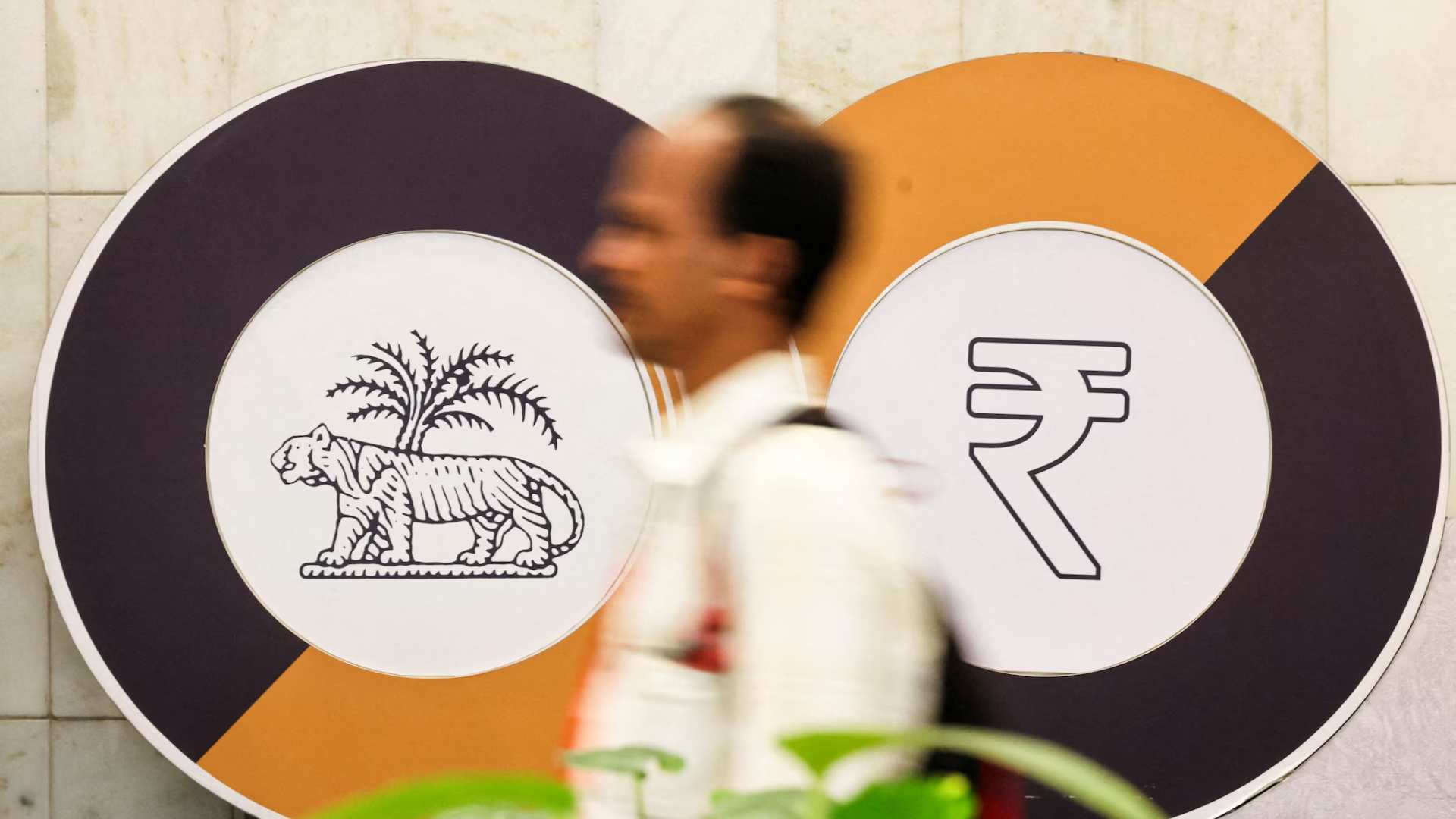
RBI Unveils ₹50,000 Crore G-Secs Purchase to Boost Liquidity

Amid escalating geopolitical tensions, the RBI's strategic G-Secs purchase aims to enhance liquidity amidst rising crude oil prices.
S
Surya
5 mins read
RBI injects liquidity amid global economic tensions

RBI’s Open Market Operations and Rupee Movement Amid Global Tensions

Rising geopolitical tensions and conflict in West Asia have begun affecting global financial markets and energy prices. Since India is highly dependent on imported crude oil, such developments can influence the country’s inflation, trade balance, and economic stability. In this context, the Reserve Bank of India (RBI) has taken steps to maintain adequate liquidity in the financial system.


RBI’s Open Market Operations (OMO)

On March 9, 2026, the RBI conducted an Open Market Operation (OMO) purchase auction of Government of India Securities (G-Secs) worth ₹50,000 crore.

The securities purchased had different maturities, including:

  • 6.01% Government Security maturing on July 21, 2030
  • 7.30% Government Security maturing on June 19, 2053

A few days earlier, the RBI had announced that it would conduct OMO purchases worth ₹1,00,000 crore in total. These purchases were divided into two tranches:

  • ₹50,000 crore on March 9, 2026
  • ₹50,000 crore on March 13, 2026

This step was taken after reviewing current liquidity and financial market conditions.


What are Open Market Operations?

Open Market Operations are one of the key monetary policy tools used by the RBI to regulate the amount of money in the economy.

In OMOs, the central bank either:

  • Buys government securities from the market, which injects money into the banking system, or
  • Sells government securities, which absorbs excess money from the system.

When the RBI purchases government securities, banks receive funds in exchange. This increases liquidity in the banking system, enabling banks to lend more to businesses and consumers.

In the present case, the RBI conducted OMO purchases, meaning it injected liquidity into the financial system.


Reasons for Liquidity Injection

The RBI’s decision was influenced by temporary liquidity pressures in the banking system.

One major factor is advance tax payments made by companies. When firms pay large amounts of taxes to the government, funds move out of the banking system and into government accounts. This temporarily reduces liquidity available for banks to lend.

By purchasing government securities, the RBI aims to ensure that banks continue to have adequate funds for credit expansion and economic activity.


Previous OMO Interventions

The RBI has been actively using OMOs to support economic stability.

Recent interventions include:

  • ₹2,00,000 crore OMO purchases conducted during December 2025 and January 2026, in four tranches of ₹50,000 crore each.
  • ₹1,25,000 crore OMO purchases carried out in May 2025 to support economic growth.

These actions indicate that the RBI frequently uses OMOs to manage liquidity fluctuations and support financial stability.


Government Bond Switch Auction

Alongside the RBI’s liquidity operations, the Government of India conducted a bond switch auction.

In this process:

  • The government bought back government securities worth ₹6,309 crore.
  • It simultaneously issued new bonds worth ₹6,431 crore.

The securities repurchased were scheduled to mature in the next financial year. By replacing near-term maturing bonds with new ones of longer maturity, the government can smooth its debt repayment schedule and manage borrowing costs more efficiently.


Movement of the Indian Rupee

At the same time, the Indian rupee experienced significant volatility in the foreign exchange market.

On March 9, the rupee briefly fell to a record low of ₹92.36 per U.S. dollar before recovering slightly.

By the end of the trading session:

  • The rupee closed at ₹92.21 per U.S. dollar.
  • The previous closing rate was ₹91.82 per dollar.
  • This represents a depreciation of 39 paise.

Reports suggested that the RBI intervened in the foreign exchange market, which helped stabilise the currency.


Impact of Rising Crude Oil Prices

The depreciation of the rupee was largely driven by a sharp rise in global crude oil prices, which crossed $110 per barrel.

Higher oil prices affect India’s economy because:

  • India imports a large portion of its energy requirements.
  • Rising oil prices increase the import bill.
  • This can widen the current account deficit and put pressure on the rupee.

Energy price shocks also influence inflation, since higher fuel costs raise transportation and production expenses across the economy.


Broader Impact on the Indian Economy

According to market analysts, the surge in crude oil prices and geopolitical uncertainty could affect several macroeconomic indicators.

These include:

  • Trade deficit, due to higher import costs
  • GDP growth, as energy costs increase for industries
  • Inflation, as higher fuel prices spread across sectors

Currency depreciation can also make imports more expensive, further increasing inflationary pressures.


Outlook for the Rupee

Financial analysts suggest that the rupee may remain under pressure if geopolitical tensions continue and energy prices remain high.

In the foreign exchange market:

  • The resistance level for the USD–INR exchange rate is estimated near ₹93 per dollar.
  • A support level exists around ₹91.80 per dollar.

These levels indicate the range within which the currency may fluctuate depending on global economic developments and central bank interventions.


Conclusion

The RBI’s Open Market Operations reflect an attempt to maintain liquidity and financial stability at a time of global uncertainty. Rising geopolitical tensions and surging crude oil prices have increased pressure on the Indian economy and the rupee.

By injecting liquidity into the banking system and monitoring currency markets, the RBI aims to ensure that financial conditions remain stable despite external shocks.

Quick Q&A

Everything you need to know

Open Market Operations (OMOs) refer to the buying and selling of government securities (G-Secs) by a central bank in the open market in order to regulate liquidity and money supply in the economy. In India, the Reserve Bank of India (RBI) conducts OMOs as part of its broader monetary policy toolkit to influence short-term interest rates, stabilize financial markets, and ensure adequate liquidity in the banking system.

When the RBI purchases government securities from banks and financial institutions, it injects liquidity into the financial system. Banks receive funds in exchange for the securities, increasing their capacity to lend to businesses and households. Conversely, when the RBI sells government securities, it absorbs liquidity from the market, thereby reducing the amount of money circulating in the economy. This mechanism allows the central bank to manage inflationary pressures and maintain financial stability.

In the context of the article, the RBI conducted OMO purchase auctions worth ₹1,00,000 crore in two tranches to inject liquidity into the banking system. Such measures are often used during periods of financial stress or liquidity shortages. For example, during the COVID-19 pandemic, the RBI extensively used OMOs and other liquidity measures to stabilize financial markets and support economic recovery. Thus, OMOs play a crucial role in maintaining equilibrium between economic growth and price stability.

The Reserve Bank of India conducted large-scale OMO purchase auctions primarily to address liquidity constraints in the financial system. Liquidity shortages can occur when significant funds move out of the banking system, such as during advance tax payments made by corporations to the government. These outflows temporarily reduce the funds available with banks, potentially limiting their ability to extend credit to businesses and consumers.

Another factor influencing the RBI’s decision is the broader environment of global economic uncertainty. Rising geopolitical tensions in West Asia and the resulting surge in crude oil prices have increased volatility in financial markets. In such situations, central banks often inject liquidity to maintain stability and ensure that banks continue to lend to productive sectors of the economy.

By purchasing government securities worth ₹1,00,000 crore, the RBI effectively infused funds into the banking system, helping to offset liquidity pressures. Similar measures have been used in the past—for instance, during periods of economic slowdown or financial stress—to stimulate credit flow and support economic growth. Thus, OMOs serve as a proactive policy instrument to manage both domestic liquidity conditions and external economic shocks.

India is one of the world’s largest importers of crude oil, importing nearly 85% of its domestic oil requirements. As a result, fluctuations in global oil prices have a significant impact on the Indian economy. When crude oil prices rise sharply—as seen during geopolitical tensions in West Asia—the cost of India’s oil imports increases substantially, leading to a higher current account deficit and increased pressure on the country’s foreign exchange reserves.

Higher oil prices also contribute to inflationary pressures. Petroleum products are essential inputs for transportation, manufacturing, and agriculture. When fuel costs rise, the price of goods and services across the economy tends to increase. This phenomenon, known as cost-push inflation, can slow economic growth and reduce purchasing power among consumers.

Additionally, rising oil import bills increase demand for foreign currency, particularly the U.S. dollar, to pay for imports. This increased demand can weaken the Indian rupee. As highlighted in the article, the rupee fell to a record low of 92.36 against the dollar before partially recovering due to RBI intervention. Therefore, global geopolitical developments—especially in energy-producing regions—have direct implications for India’s exchange rate stability, inflation, and macroeconomic performance.

The depreciation of the Indian rupee can create multiple macroeconomic challenges, particularly for an import-dependent economy like India. When the rupee weakens against major currencies such as the U.S. dollar, the cost of importing essential commodities—including crude oil, fertilizers, and electronic goods—rises significantly. This increases the overall import bill and worsens the country’s current account deficit.

A weaker rupee also contributes to imported inflation. Since many critical inputs for industrial production are imported, higher import costs translate into increased production expenses for domestic industries. These costs are often passed on to consumers in the form of higher prices, thereby raising inflation levels. Persistent inflation can affect economic growth and complicate monetary policy decisions for the central bank.

However, currency depreciation is not entirely negative. A weaker rupee can make Indian exports more competitive in global markets by lowering their price in foreign currency terms. Sectors such as IT services, textiles, and pharmaceuticals may benefit from such currency movements. Nevertheless, the overall impact depends on the balance between import costs and export gains, which is why central banks like the RBI occasionally intervene in currency markets to stabilize excessive volatility.

Open Market Operations are widely regarded as one of the most effective instruments available to central banks for managing liquidity in the financial system. By buying or selling government securities, central banks can quickly adjust the supply of money in the economy without directly interfering with market mechanisms. This flexibility makes OMOs particularly useful during periods of financial stress, when liquidity shortages could disrupt credit flows and economic activity.

In the Indian context, OMOs have been used frequently during periods of economic uncertainty. For example, during the COVID-19 pandemic, the RBI conducted large-scale bond purchases to ensure that banks had sufficient funds to support economic recovery. Similarly, in the present scenario, the RBI’s OMO purchases aim to offset liquidity shortages caused by advance tax payments and external economic shocks such as rising oil prices.

However, OMOs also have certain limitations. While they can address short-term liquidity constraints, they may not solve deeper structural issues such as weak credit demand or financial sector stress. Additionally, excessive liquidity injection may lead to asset price inflation or distortions in bond markets. Therefore, OMOs are most effective when used in combination with other policy instruments such as interest rate adjustments, regulatory measures, and fiscal policy coordination.

The present scenario—characterized by rising crude oil prices, geopolitical tensions in West Asia, and depreciation of the Indian rupee—illustrates the complex challenges faced by the Reserve Bank of India in managing the economy. As the central bank, the RBI must simultaneously pursue multiple objectives, including controlling inflation, maintaining financial stability, supporting economic growth, and ensuring orderly functioning of financial markets.

In response to liquidity pressures caused by advance tax outflows and global uncertainties, the RBI conducted OMO purchases to inject funds into the banking system. At the same time, it intervened in the foreign exchange market to prevent excessive volatility in the rupee’s value. Such interventions may involve selling foreign exchange reserves to stabilize the currency when market pressures become too strong.

This situation demonstrates the importance of coordinated macroeconomic management. Monetary policy actions by the RBI often complement fiscal measures taken by the government, such as adjusting fuel taxes or managing public borrowing. By carefully calibrating liquidity operations, currency interventions, and interest rate policies, the RBI seeks to balance growth with macroeconomic stability during periods of global economic turbulence.

Attribution

Original content sources and authors

Sign in to track your reading progress

Comments (0)

Please sign in to comment

No comments yet. Be the first to comment!