GS3 Environment & Bio-diversity
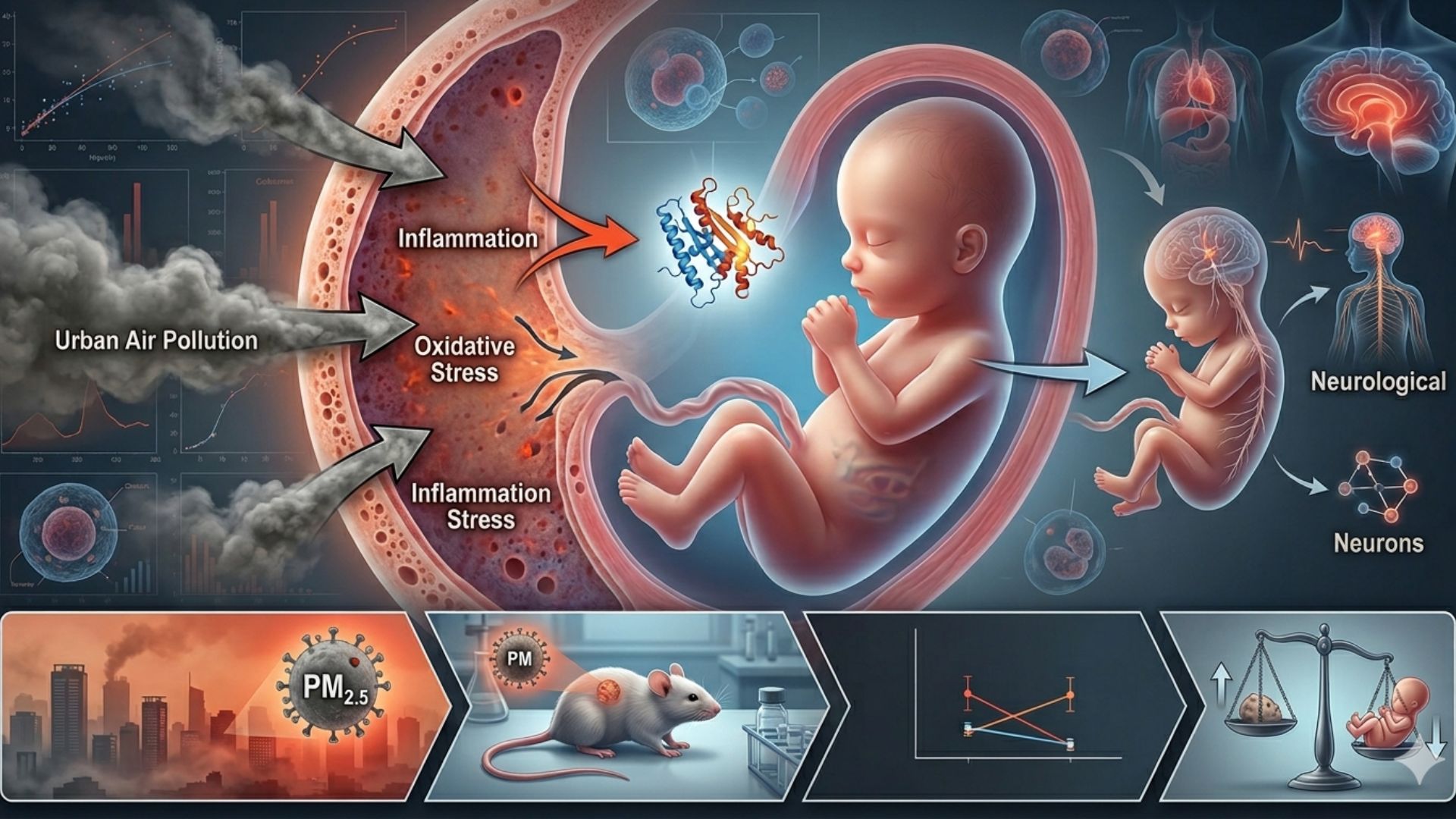
AIIMS Study Unravels How Air Pollution Harms Babies Before Birth

Urban air pollution has long been linked to adverse pregnancy outcomes. While previous studies established that pollutants can cross the placental barrier and affect foetal development, the precise biological mechanism remained unclear. A recent ICMR-funded study by researchers at AIIMS Delhi, published in EMBO Molecular Medicine, has now mapped the complete molecular pathway through which air pollution affects the placenta and the developing foetus.
Why is the Study Significant?
The study provides the first comprehensive explanation of how urban particulate matter interferes with placental function and foetal growth at the molecular level.
“Our research reveals that exposure during pregnancy to Urban Particulate Matter activates inflammatory pathways that inhibit IGFBP3 expression, a key protein governing placental equilibrium and embryonic growth.” — Prof. Subhradip Karmakar, AIIMS Delhi
Pollutants Responsible
The primary pollutants identified are:
- PM2.5 (particles smaller than 2.5 micrometres)
- PM10 (particles smaller than 10 micrometres)
These pollutants can:
- Cross the placental barrier
- Generate oxidative stress
- Trigger inflammation
- Disrupt normal placental functioning
The Biological Pathway Identified
Researchers found a step-by-step chain of events:
- Urban particulate matter enters the maternal bloodstream.
- Pollutants cross the placenta.
- Inflammatory pathways become activated.
- Expression of IGFBP3 (Insulin-like Growth Factor Binding Protein-3) is suppressed.
- Placental development and nutrient transfer are impaired.
- Foetal growth becomes restricted.
- Long-term developmental consequences emerge.
Air Pollution (PM2.5/PM10)
            ↓
      Inflammation
            ↓
   Suppression of IGFBP3
            ↓
    Placental Dysfunction
            ↓
 Restricted Foetal Growth
            ↓
 Long-term Health Impacts
Evidence from Human Populations
The study analysed delivery records of 994 women from:
- Delhi (high pollution exposure)
- Deoghar, Jharkhand (lower pollution exposure)
Key observations included:
- PM2.5 exposure emerged as a significant risk factor for low birth weight.
- Higher pollution levels were associated with increased incidence of preeclampsia, a potentially life-threatening rise in blood pressure during pregnancy.
- Greater exposure correlated with poorer pregnancy outcomes.
Findings from Experimental Studies
Laboratory studies on rodents helped establish causality.
Researchers observed that particulate matter:
- Reduced the placenta's ability to invade the uterine wall.
- Impaired formation of nutrient-exchange layers.
- Restricted blood vessel development.
- Triggered severe cellular stress.
- Altered epigenetic regulation, changing which genes remain active or inactive.
Example
A healthy placenta functions like a highly efficient transport network,
delivering oxygen and nutrients from mother to foetus.

Pollution disrupts this network by damaging roads (blood vessels),
reducing transport capacity, and altering control systems (genes),
ultimately restricting foetal growth.
Impact on Pregnancy and Offspring
Among pregnant rats exposed to pollution levels comparable to New Delhi:
- Litter sizes declined by up to 25%.
- Placental size reduced significantly.
- Newborn weight decreased by approximately 34%.
The effects extended beyond birth:
- Impaired motor coordination
- Increased anxiety-like behaviour
- Heightened stress responses
These findings indicate that damage initiated during pregnancy can persist throughout later life.
“Prenatally exposed rodents show persistent behavioural deficits after birth, demonstrating the long-term consequences of these molecular disruptions.”
Broader Developmental Concerns
Researchers believe the implications may extend across generations. Future studies will examine links with:
- Cognitive development and IQ
- Motor skill development
- Cardiovascular disorders
- Metabolic diseases
- Cancer susceptibility
- Transgenerational health effects
Way Forward
-
Integrate air pollution exposure assessment into prenatal healthcare.
-
Strengthen urban air quality monitoring systems.
-
Promote awareness among pregnant women regarding pollution risks.
-
Encourage protective measures such as:
- Wearing appropriate masks
- Consuming antioxidant-rich foods
- Limiting exposure during high-pollution periods
-
Adopt multi-dimensional pollution control policies involving transport, industry and urban planning sectors.
-
Expand research on long-term and transgenerational impacts.
Conclusion
The AIIMS Delhi study significantly advances understanding of how urban air pollution affects pregnancy by identifying the complete molecular pathway linking particulate matter exposure to impaired foetal growth. By demonstrating how pollutants suppress the crucial IGFBP3 protein and disrupt placental function, the research underscores that air pollution is not merely an environmental issue but a critical maternal and child health challenge requiring urgent policy and public health interventions.
Attribution
Original content sources and authors


Syllabus classification
How this article maps to GS papers
Main syllabus
GS3Environment & Bio-diversityAlso covers
Quick Q&A
What is the significance of the AIIMS Delhi study on air pollution and its impact on foetal development through the placental pathway?
Why is the issue of maternal exposure to air pollution increasingly important for UPSC aspirants and public policy debates in India?
How do particulate pollutants such as PM2.5 and PM10 interfere with placental functions and influence long-term developmental outcomes?
What are the major reasons behind the rising concern over transgenerational and developmental impacts of air pollution exposure?
What lessons can be drawn from the AIIMS Delhi and ICMR research as a case study in environmental health governance?
What is a critical analysis of the challenges and policy implications arising from research linking air pollution with foetal health outcomes?
Practice questions
1 question for mains preparation