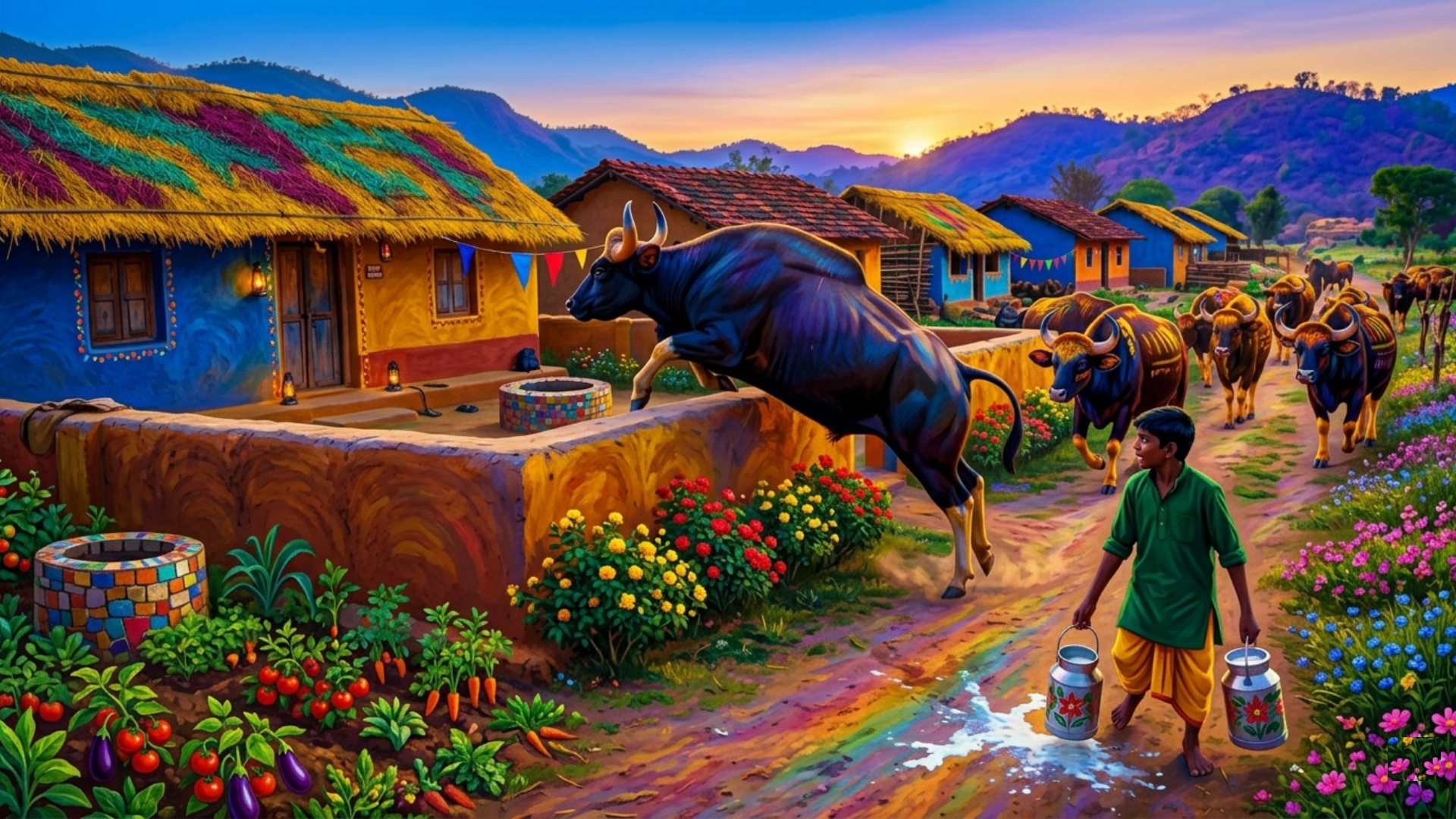
Human-Wildlife Conflict in Kollam

Climate Stress, Habitat Fragmentation and the Failing Forest Fringe
S
Surya
5 mins read
Gaurs invade Kollam villages as heat drives wildlife out

Introduction

Human-Wildlife Conflict (HWC) is among the most complex conservation challenges facing India today. With over 20% of the world's wild tiger population, the largest Asian elephant population (~29,000), and a network of 900+ protected areas covering 5% of the country's geographical area, India's wildlife wealth increasingly shares boundaries with dense human settlements. The Wildlife Institute of India estimates that HWC costs India thousands of livestock deaths and hundreds of human casualties annually. The forest fringes of Kollam district in Kerala — where gaur herds, elephant families, and big cats are now regular visitors to human settlements — exemplify a crisis that is no longer seasonal but structural, driven by climate change, habitat fragmentation, and invasive species.

"We shall not save what we do not love, and we will not love what we do not know." — Jacques-Yves Cousteau


Root Causes — A Multi-Layered Crisis

DriverMechanismLocal Example
Climate changeRising temperatures dry up interior water sourcesShendurney Wildlife Sanctuary pools reduced to cracked mud by April
Habitat fragmentationWildlife corridors disrupted; animals confined to isolated patchesGaur herds roaming Alayamon grama panchayat ward to ward
Invasive floraSenna spectabilis/siamea colonise forest floor; displace native forageAryankavu range — "green desert" with no nutritional value for wildlife
Shrinking forest interiorHuman settlements expanding into buffer zonesLabour colonies (layams) in plantation estates facing elephant raids
Population pressureBoth human and wildlife populations growing in shared landscapesVisible increase in elephant population in Kollam forest fringes

Key Species Involved and Their Legal Status

SpeciesSchedule (WPA 1972)Conflict Type
Asian ElephantSchedule ICrop raiding, road blockades, attacks on settlements
Gaur (Indian Bison)Schedule IResidential area incursions, human injuries
Wild BoarSchedule IIICrop destruction
Leopard/Big CatSchedule ILivestock predation, disappearance of domestic animals

All four are protected under the Wildlife Protection Act, 1972. Elephants additionally receive protection under Project Elephant (1992) and the Wildlife Crime Control Bureau.


Failure of Existing Mitigation Measures

MeasureLimitation
Solar fencingFails due to overhanging vegetation causing short circuits; elephants learn to bypass using dry wood
Elephant Proof Trenches (EPT)Fill with silt after monsoons; animals cross easily within a few seasons
Artificial waterholesInsufficient against current evaporation rates at scale
Forest department drivesTemporary displacement — animals return due to unchanged root causes
Early warning systemsAbsent or inadequate in tribal settlements like Kulambi and Villumala

The fundamental problem is that mitigation remains reactive and symptomatic rather than preventive and ecological.


Invasive Species — An Underappreciated Driver

The aggressive spread of Senna spectabilis and Senna siamea in the Aryankavu range deserves particular attention:

  • Both species are fast-growing, drought-resistant, and capable of colonising degraded forest floors rapidly
  • They displace native plant diversity — eliminating the food base for herbivores
  • Animals surrounded by nutritionally barren invasive vegetation are effectively forced out of the forest
  • This is a direct ecological push factor that amplifies the pull of agricultural crops in human settlements
  • Eradication of invasive species is now recognised as a prerequisite for meaningful HWC reduction

Human and Social Dimensions

  • Children placed under virtual house arrest; daily routines completely disrupted
  • Tribal communities in Kulambi and Villumala facing road blockades by elephant herds — access to schools and workplaces cut off
  • Psychological toll on farming families who have cultivated forest fringe land for over 50 years
  • Several families actively seeking relocation — a form of climate-induced internal displacement
  • Plantation workers facing pre-dawn safety threats during agricultural shifts
  • Compensation mechanisms under existing schemes are slow, inadequate, and poorly publicised

Relevant Policy and Legal Framework

  • Wildlife Protection Act, 1972 — species protection and habitat management
  • Project Elephant, 1992 — elephant corridor identification and protection
  • National Wildlife Action Plan (2017–2031) — includes HWC mitigation as a priority
  • Compensatory Afforestation Fund Act, 2016 (CAMPA) — funds for habitat restoration
  • Biological Diversity Act, 2002 — ecosystem-level conservation mandate
  • Disaster Management Act, 2005 — applicable when HWC reaches emergency levels in settlements
  • Forest Rights Act, 2006 — rights of tribal communities in forest fringe areas must be balanced with conservation

Way Forward

  • Restore microclimates — rejuvenate interior forest ponds, water tables, and native vegetation to reduce the push factor driving wildlife out
  • Aggressive invasive species eradication — particularly Senna in Western Ghats ranges; replace with native fodder species
  • Wildlife corridor mapping and legal protection — prevent further fragmentation through land-use planning
  • Community-based early warning systems — SMS alerts, trained local volunteers in tribal settlements
  • Outcome-based maintenance of EPTs and solar fencing — not just installation targets
  • Rapid and adequate compensation for crop loss, livestock loss, and human injury under a time-bound framework
  • Voluntary relocation with dignity — properly resourced resettlement for families choosing to move from high-conflict zones
  • Landscape-level planning integrating forest, revenue, and agricultural department mandates

Conclusion

The annual siege of Kollam's forest fringes is not a law-and-order problem — it is an ecological emergency with deep climate roots. When interior forests can no longer sustain wildlife through summer, animals will come to us. The question is whether we respond with trenches and fences alone, or with the ecological intelligence to restore the habitats that once kept this balance intact. India's commitment to biodiversity conservation — reflected in its status as a megadiverse nation and signatory to the Convention on Biological Diversity — demands a shift from reactive conflict management to proactive landscape restoration. The forest must be made liveable again, for both the gaur and the child afraid to go to school.

Quick Q&A

Everything you need to know

Human-wildlife conflict refers to interactions between humans and wild animals that result in negative impacts on people, wildlife, or the environment. These conflicts typically arise when expanding human activities overlap with natural habitats, leading to competition for resources such as land, food, and water.

In regions like Kollam in Kerala, this conflict has intensified significantly. The article highlights how animals such as gaurs (bison) and elephants are increasingly entering human settlements, causing injuries, crop damage, and widespread fear among residents. Incidents such as gaurs roaming through residential areas, attacking individuals, and elephants raiding plantations illustrate the severity of the situation.

Key manifestations include:

  • Encroachment of wildlife into villages and towns
  • Crop destruction and economic losses for farmers
  • Threats to human life and safety
  • Psychological stress and disruption of daily life

For example, the case of Kulathupuzha, where large herds of bison were spotted near town centers and a student was injured, shows how such conflicts are no longer confined to forest fringes. This reflects a deeper ecological imbalance where natural boundaries between humans and wildlife are increasingly blurred.

The intensification of human-wildlife conflict in areas like Kollam is driven by a combination of ecological, climatic, and anthropogenic factors. At its core, the issue stems from the degradation of natural habitats, which forces animals to venture into human settlements in search of basic resources.

Major reasons include:

  • Climate change: Rising temperatures and erratic rainfall patterns have dried up water sources inside forests, pushing animals outward.
  • Habitat fragmentation: Development activities and land-use changes have disrupted wildlife corridors.
  • Scarcity of food: The spread of invasive species like Senna has reduced the availability of edible vegetation.

In Kollam, the drying up of water bodies in the Shendurney Wildlife Sanctuary has compelled animals like elephants and gaurs to move into agricultural lands and villages. This is not an isolated event but part of a recurring annual pattern during summer months.

Significance: This trend indicates a systemic ecological crisis rather than isolated incidents. It highlights how environmental degradation and climate stressors are altering animal behavior. Unless root causes are addressed, such conflicts will continue to escalate, posing risks to both biodiversity and human livelihoods.

Climate change and ecosystem fragmentation act as interconnected drivers that disrupt the natural balance of forest ecosystems, ultimately leading to wildlife displacement.

Mechanisms involved:

  • Rising temperatures: Increased heat turns forest interiors into inhospitable environments, drying up perennial water sources.
  • Altered rainfall patterns: Unpredictable monsoons reduce water retention in forest soils and streams.
  • Fragmentation: Infrastructure development and deforestation break continuous habitats into isolated patches.

In Kollam, tribal communities report that shaded gullies that once retained water now remain dry, forcing animals to migrate. Additionally, fragmented habitats prevent animals from accessing traditional migration routes, pushing them toward human-dominated landscapes.

Consequences:
  • Increased encounters between humans and wildlife
  • Loss of biodiversity due to habitat degradation
  • Changes in animal behavior, including aggression and nocturnal movement

For instance, elephants in plantation areas are increasingly approaching labour colonies, indicating a breakdown of natural barriers. This demonstrates how climate stress and habitat disruption combine to create a cascading ecological crisis.

Current mitigation strategies to address human-wildlife conflict include physical barriers, technological interventions, and habitat management. While these measures have shown some success, their effectiveness remains uneven and often temporary.

Common strategies:

  • Solar fencing: Used to deter animals but often fails due to poor maintenance or animal adaptation.
  • Elephant Proof Trenches (EPT): Effective initially but become unusable due to siltation.
  • Artificial waterholes: Aim to retain animals within forests but may not meet demand during extreme summers.

Limitations:
  • Lack of regular maintenance reduces long-term effectiveness
  • Animals adapt quickly, finding ways to bypass barriers
  • Insufficient integration of scientific and ecological knowledge

For example, elephants have been observed using non-conductive materials like dry wood to bypass electric fences. Similarly, trenches lose functionality after monsoons due to debris accumulation.

Critical perspective: While these measures provide short-term relief, they do not address root causes such as habitat degradation and climate change. A sustainable approach requires ecosystem restoration, community participation, and long-term planning rather than reactive measures.

Invasive species significantly exacerbate human-wildlife conflict by altering the ecological composition of forests and reducing the availability of food for native fauna.

Key impacts of invasive flora like Senna species:

  • Loss of native vegetation: These plants outcompete indigenous species, reducing biodiversity.
  • Food scarcity: Since they are inedible, herbivores find themselves in ‘green deserts’.
  • Habitat degradation: Dense growth prevents regeneration of natural ecosystems.

In the Aryankavu range of Kerala, the spread of Senna spectabilis and Senna siamea has created conditions where animals are surrounded by vegetation that offers no nutritional value. This forces them to move into agricultural lands in search of food.

Consequences:
  • Increased crop raiding by herbivores
  • Greater movement of large animals into human settlements
  • Escalation of conflict incidents

Thus, invasive species act as a hidden but critical driver of conflict. Addressing their spread through ecological restoration is essential for long-term conflict mitigation.

The situation in Kollam district provides a compelling real-world example of the socio-economic consequences of human-wildlife conflict.

Key impacts observed:

  • Economic losses: Farmers face crop destruction from elephants and other animals, affecting livelihoods.
  • Work disruption: Plantation workers are unable to carry out early morning shifts due to animal presence.
  • Healthcare burden: Injuries from animal encounters increase medical expenses.

For instance, in Ambanad and Mambazhathara, elephant incursions have caused severe damage to crops and created constant fear among workers. Similarly, the incident involving a school student injured by a bison highlights the risks to public safety.

Social consequences:
  • Children are confined indoors, affecting education and well-being
  • Communities experience psychological stress and fear
  • Some families consider relocation due to repeated threats

This example shows that human-wildlife conflict is not just an environmental issue but also a socio-economic and public health challenge. It underscores the need for integrated policy responses that address both ecological and human dimensions.

A comprehensive strategy to address human-wildlife conflict must adopt a multi-dimensional approach that integrates ecological, technological, and social interventions.

Key components of the strategy:

  • Habitat restoration: Rejuvenate forest water bodies, remove invasive species, and restore native vegetation.
  • Scientific management: Use GIS mapping and wildlife tracking to predict animal movement and prevent conflicts.
  • Infrastructure improvement: Upgrade and maintain barriers like solar fencing and trenches.

Community-centric measures:
  • Provide compensation for crop and livestock losses
  • Promote community awareness and early warning systems
  • Encourage voluntary relocation in high-risk zones

Institutional coordination: Collaboration between forest departments, local governments, and research institutions is essential. For example, partnerships with climatologists can help design adaptive strategies to cope with climate-induced changes.

Expected outcomes: Such a holistic approach would reduce conflict incidents, improve biodiversity conservation, and enhance community resilience. Ultimately, sustainable coexistence requires addressing root ecological imbalances while safeguarding human interests.

Attribution

Original content sources and authors

Sign in to track your reading progress

Comments (0)

Please sign in to comment

No comments yet. Be the first to comment!