
1. Context: Rethinking Wildlife Tourism Beyond Protected Areas
Wildlife tourism in India has largely evolved around State-controlled Protected Areas such as National Parks and Tiger Reserves. These models rely on regulated entry, vehicle-based safaris, fixed timings, and a focus on flagship species. While this has helped conservation visibility, it has also resulted in crowding, habitat stress, and limited visitor experience.
Simultaneously, areas outside formal Protected Areas—often rich in biodiversity—have remained under-governed. These landscapes face pressures from unregulated tourism, garbage dumping, fuelwood extraction, and gradual habitat degradation, without the legal safeguards available to National Parks.
The article situates Jabarkhet Nature Reserve (JNR), near Mussoorie, as an alternative conservation and tourism model. It demonstrates how restored private woodland can function as both a biodiversity refuge and a low-impact tourism site, without mass infrastructure or exclusionary pricing.
Ignoring such alternatives risks overburdening existing Protected Areas while allowing ecologically valuable non-protected landscapes to degrade irreversibly.
Governance logic: Diversifying conservation models reduces pressure on State-run reserves. If ignored, wildlife protection remains spatially narrow, and tourism continues to degrade unprotected yet critical habitats.
2. Issue: Ecological Decline in Human-Used Hill Landscapes
Historically, the Mussoorie–Dehradun hills were described as “abounding with wildlife,” hosting species such as tiger, leopard, deer, bear, and porcupine. Over time, unregulated access, hunting, forest produce extraction, and unmanaged tourism eroded this ecological richness.
Jabarkhet Estate exemplified this trajectory. After initial forestry management in the 1960s, the land remained largely unmanaged for decades. It gradually turned into an open-access space, accumulating garbage, invasive weeds, and sustained human pressure without stewardship.
By 2010, ecological degradation was visible, with 500 kg of garbage and three tonnes of invasive Eupatorium weed removed during restoration efforts. This highlights how absence of governance—not merely development—can damage ecosystems.
Unchecked use of commons without institutional responsibility leads to ecological collapse, even in areas traditionally considered “natural.”
Governance logic: Conservation failure often results from institutional vacuum rather than over-regulation. If ignored, open-access forests become ecological sinks instead of buffers.
3. Intervention: Private Stewardship as a Conservation Mechanism
Jabarkhet Nature Reserve, established in 2015, represents Uttarakhand’s first privately owned and operated nature reserve with conservation as its primary objective. Unlike resort-based eco-tourism, JNR focused on habitat restoration before visitor expansion.
The model emphasised removal of waste, control of invasive species, and allowing natural regeneration without artificial landscaping or beautification. Tourism was introduced later, carefully designed around walking trails and seasonal limits.
Crucially, the reserve avoided extractive or spectacle-driven activities such as adventure sports, helipads, or large infrastructure. This reinforced the principle that tourism must adapt to ecology, not vice versa.
Private ownership, when aligned with conservation ethics, can complement State-led conservation rather than undermine it.
Governance logic: Private actors can fill conservation gaps if incentives align with ecological outcomes. If ignored, private land remains either degraded or converted for intensive commercial use.
4. Outcomes: Wildlife Recovery and Biodiversity Value
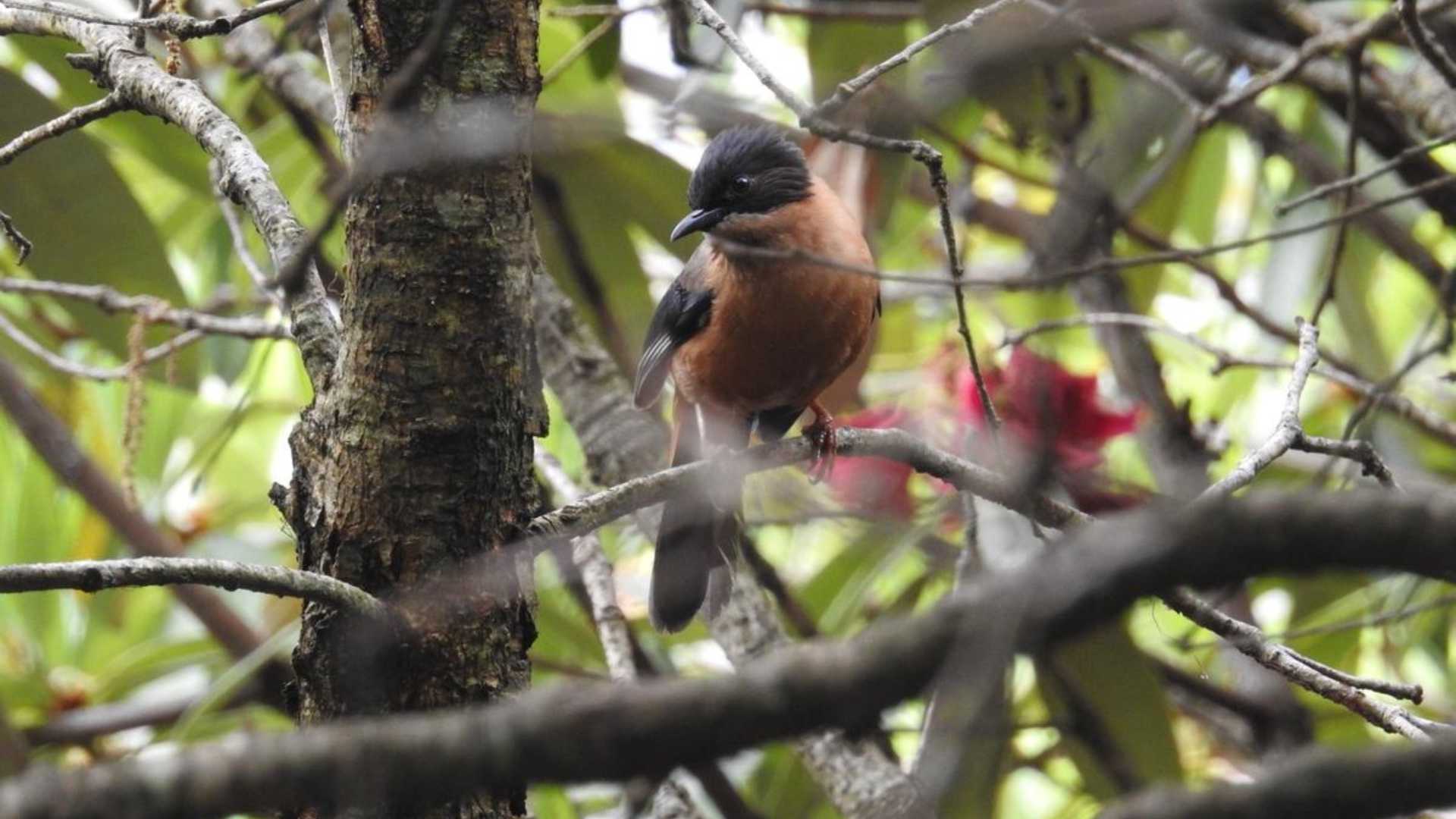
The restoration of habitat at JNR enabled the return of diverse fauna, including leopard, barking deer, goral, yellow-throated marten, leopard cat, jungle cat, black bear, civet, and over 150 bird species within roughly 100 acres.
Floral and lower-order biodiversity is particularly significant. The reserve hosts insectivorous sundews, ground orchids, over 40 species of ferns, hundreds of fungi species, dozens of grasses, and over 300 flowering plants.
Historically, the area was also a site of scientific discovery. In 1848, malacologist William Benson recorded the land snail Bradybaena radicicola here, underscoring its long-term ecological value.
Such micro-refuges gain importance as larger landscapes face fragmentation from roads, mining, and construction.
Governance logic: Small, well-managed habitats can act as biodiversity stepping stones. If ignored, species survival becomes dependent only on shrinking core Protected Areas.
5. Community Integration and Livelihood Linkages
A key feature of JNR’s model is the integration of local communities into conservation. Residents from neighbouring villages were trained as guides, naturalists, and restoration workers.
This blended traditional ecological knowledge with formal skills such as bird identification and visitor interpretation. Employment generation helped build trust in a region historically wary of external “development” projects.
The approach ensured that eco-tourism benefits accrued locally rather than being extracted by external operators. It also strengthened compliance, as local livelihoods became linked to habitat protection.
Excluding communities from conservation often leads to conflict, encroachment, and rule violations.
Governance logic: Conservation succeeds when local incentives align with ecological goals. If ignored, conservation remains enforcement-heavy and socially fragile.
6. Comparative Perspective: Limits of Current Tourism Models
India’s dominant wildlife tourism model relies on:
- Vehicle-based safaris
- Fixed routes and timings
- Focus on “star species” sightings
While effective for revenue and awareness, this often results in crowding and habitat stress. Alternative models such as community trails exist but usually cater to niche wildlife enthusiasts.
JNR illustrates a third pathway—self-paced, low-density walking access in restored woodland, with wildlife having priority over human movement.
Internationally, private reserves are common in Africa, but in India, misuse of “eco-tourism” labels has created scepticism about private conservation initiatives.
Governance logic: Diversifying tourism models reduces ecological pressure. If ignored, tourism growth directly translates into habitat degradation.
7. Broader Implications: Landscape-Level Conservation Challenges
The article situates JNR within wider environmental pressures:
- Himalayan road widening contributing to landslides
- Mining and commercial use fragmenting the Aravallis
- Legal definitions excluding ecologically important slopes and ridges
As landscapes are increasingly dissected, isolated natural habitats gain strategic importance as refuges and corridors.
Private reserves cannot replace State conservation, but they can supplement it by protecting land otherwise vulnerable to conversion.
At the landscape scale, every conserved patch contributes to ecological resilience.
Governance logic: Conservation must operate beyond legal boundaries of Protected Areas. If ignored, fragmented governance accelerates biodiversity loss.
8. Way Forward: Policy-Relevant Takeaways
- Recognise responsible private reserves as complementary conservation instruments
- Develop regulatory clarity distinguishing conservation-led reserves from commercial resorts
- Encourage community-linked eco-tourism models with livelihood integration
- Protect non-protected but biodiverse landscapes through incentives and stewardship frameworks
Such approaches align conservation with development without expanding State fiscal burden.
Governance logic: Enabling plural conservation pathways strengthens ecological security. If ignored, conservation remains overstretched and spatially inadequate.
Conclusion
The Jabarkhet Nature Reserve demonstrates that conservation, community livelihoods, and low-impact tourism can coexist outside formal Protected Areas. As environmental pressures intensify across India’s landscapes, such models offer scalable lessons for sustainable governance, ecological resilience, and inclusive development.
These hills are clad with thick forest… and they were the home of many wild animals