Introduction
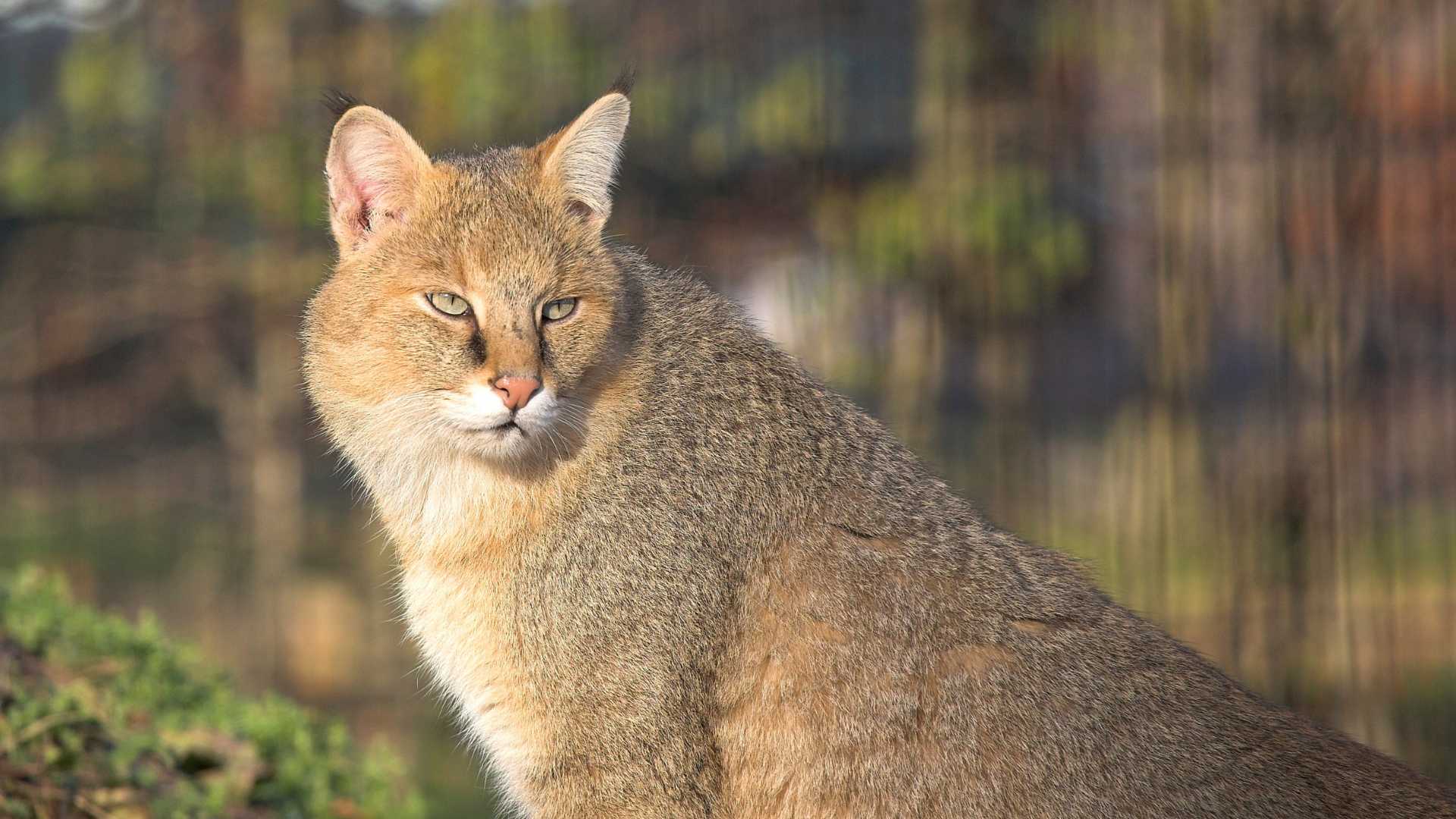
India's conservation narrative has long centred on charismatic megafauna — tigers, elephants, and leopards — while smaller, ecologically vital species remain understudied and underfunded. The jungle cat (Felis chaus), India's most widespread small wild cat, is a striking example of this neglect. A landmark 2026 study published in Scientific Reports — based on over 26,000 camera-trap locations — estimates India's jungle cat population at over 3 lakh individuals, while simultaneously revealing that their preferred agro-pastoral habitats outside protected areas face mounting, unmitigated threats.
| Key Data Point | Detail |
|---|---|
| Estimated population in India | 3 lakh+ (range: 1.57 lakh – 4.59 lakh) |
| Camera-trap locations analysed | 26,000+ across India |
| Final dataset used for modelling | 6,000+ records |
| Top states by population | Madhya Pradesh, Rajasthan, Odisha |
| IUCN Red List status | Least Concern (population declining) |
| Legal protection in India | Schedule II — Wildlife Protection Act, 1972 |
| States with suitable habitat | 21 states |
"Our results highlight the importance of agro-pastoral landscapes in conserving wildlife beyond protected areas, especially as urbanisation continues to expand." — Dr. Kathan Bandyopadhyay, University of Illinois Urbana-Champaign
Background and Context
The jungle cat is the most widespread wild cat in India, found across grasslands, wetlands, semi-arid scrublands, and agro-pastoral landscapes. Unlike tigers or leopards, it actively avoids dense forests — making its survival dependent on open ecosystems and agricultural landscapes that fall largely outside India's protected area network.
Despite being listed under Schedule II of the Wildlife Protection Act, 1972 — making hunting and trading illegal — the species has received minimal conservation attention. The IUCN's "Least Concern" classification has created a false sense of security, masking a declining population trend. The 2026 study is the first to establish a nationwide population baseline for the species in India.
Ecological Profile and Habitat Preferences
| Characteristic | Detail |
|---|---|
| Preferred habitat | Agro-pastoral, grasslands, wetlands, semi-arid scrub |
| Avoided habitats | Dense forests, heavily urbanised areas |
| Climatic preference | Warm, semi-arid, seasonally dry regions with moderate rainfall |
| Predicted hotspots | Eastern India (rather than drier western regions) |
| Human tolerance | Moderate — avoids densely populated areas |
| Ecological role | Rodent control in agricultural landscapes — natural pest management |
The species' association with agricultural landscapes gives it significant ecological and economic value — jungle cats suppress rodent populations in and around farms, providing a natural pest control service to farming communities.
Key Threats
1. Habitat loss and fragmentation: Open natural ecosystems — grasslands, scrublands, and agro-pastoral landscapes — face severe conversion pressure from urbanisation, large-scale linear infrastructure (highways, railways), and agricultural intensification. Unlike tiger or elephant corridors, these habitats receive no formal policy protection.
2. Road mortality: Speeding vehicles on roads passing through agro-pastoral habitats kill jungle cats — yet unlike infrastructure in tiger reserves, no wildlife passage planning is mandated for these landscapes.
3. Stray dog population: Stray dogs share foraging spaces with jungle cats, acting as vectors for wildlife diseases and practising kleptoparasitism — snatching kills from smaller carnivores, directly undermining their survival.
4. Poaching: Despite Schedule II protection, illegal hunting and trading persist, particularly given low public awareness and limited enforcement in non-protected areas.
5. Hybridisation with domestic cats: Potential genetic dilution through hybridisation with domestic cats poses a long-term threat to the species' genetic integrity — though evidence remains limited.
Policy and Governance Gaps
"When roads pass through a tiger or elephant corridor, there is a policy to try and mitigate those. But when they pass through agro-pastoral landscapes, we don't plan for it even though these areas support rich biodiversity." — Dr. Yadvendradev Jhala, National Centre for Biological Sciences
This observation encapsulates the core governance failure — India's biodiversity conservation policy is effectively a protected area policy, leaving the vast and ecologically rich landscape outside reserves largely unregulated and unprotected.
Key gaps:
- No mandatory Environmental Impact Assessment (EIA) provisions specifically addressing small carnivore habitats in agro-pastoral zones.
- Wildlife passageways are planned only for charismatic megafauna corridors — not for open ecosystem species.
- No dedicated funding stream for small cat research and conservation under Project Tiger or analogous schemes.
- Land use policies do not recognise the ecological value of open ecosystems — grasslands are frequently classified as "wastelands" available for diversion.
Conservation Recommendations
- Wildlife passageways: Mandate planning for wildlife underpasses and crossings in infrastructure projects passing through agro-pastoral and open ecosystems — not just tiger and elephant corridors.
- Land use policy reform: Recognise open ecosystems (grasslands, scrublands) as ecologically valuable — remove "wasteland" classification that facilitates their diversion.
- Stray dog management: Implement targeted stray dog population control programmes in wildlife-adjacent agricultural landscapes.
- Community engagement: Involve farming communities in jungle cat conservation — their role as natural pest controllers makes them natural allies of farmers.
- Research investment: Fund dedicated small cat research including denning ecology, ranging patterns, diet, and density studies to fill critical knowledge gaps.
Comparison — Conservation Attention by Species
| Species | IUCN Status | Legal Protection | Conservation Programme | Research Attention |
|---|---|---|---|---|
| Tiger | Endangered | Schedule I | Project Tiger (dedicated) | Extensive |
| Leopard | Vulnerable | Schedule I | Partial | Moderate |
| Elephant | Endangered | Schedule I | Project Elephant | Moderate |
| Jungle Cat | Least Concern | Schedule II | None dedicated | Minimal |
| Snow Leopard | Vulnerable | Schedule I | Project Snow Leopard | Growing |
Conclusion
The jungle cat's story is a microcosm of India's broader conservation blind spot — the tendency to concentrate resources and policy attention on flagship species while allowing less visible but ecologically vital species to decline in plain sight. The 2026 baseline study is a critical first step, but a population estimate is not a conservation strategy. India must expand its conservation framework beyond protected areas to include the agro-pastoral and open ecosystems that support millions of wild species — including the jungle cat. This requires not just ecological thinking but a fundamental shift in land use governance, infrastructure planning, and the political will to protect biodiversity that exists beyond the forest boundary.