
New Crustacean Genus and Species Discovered in Kavaratti

Researchers identify a new microscopic crustacean named Indiaphonte bijoyi, celebrating India's marine biodiversity.
GopiGopi
2 mins read
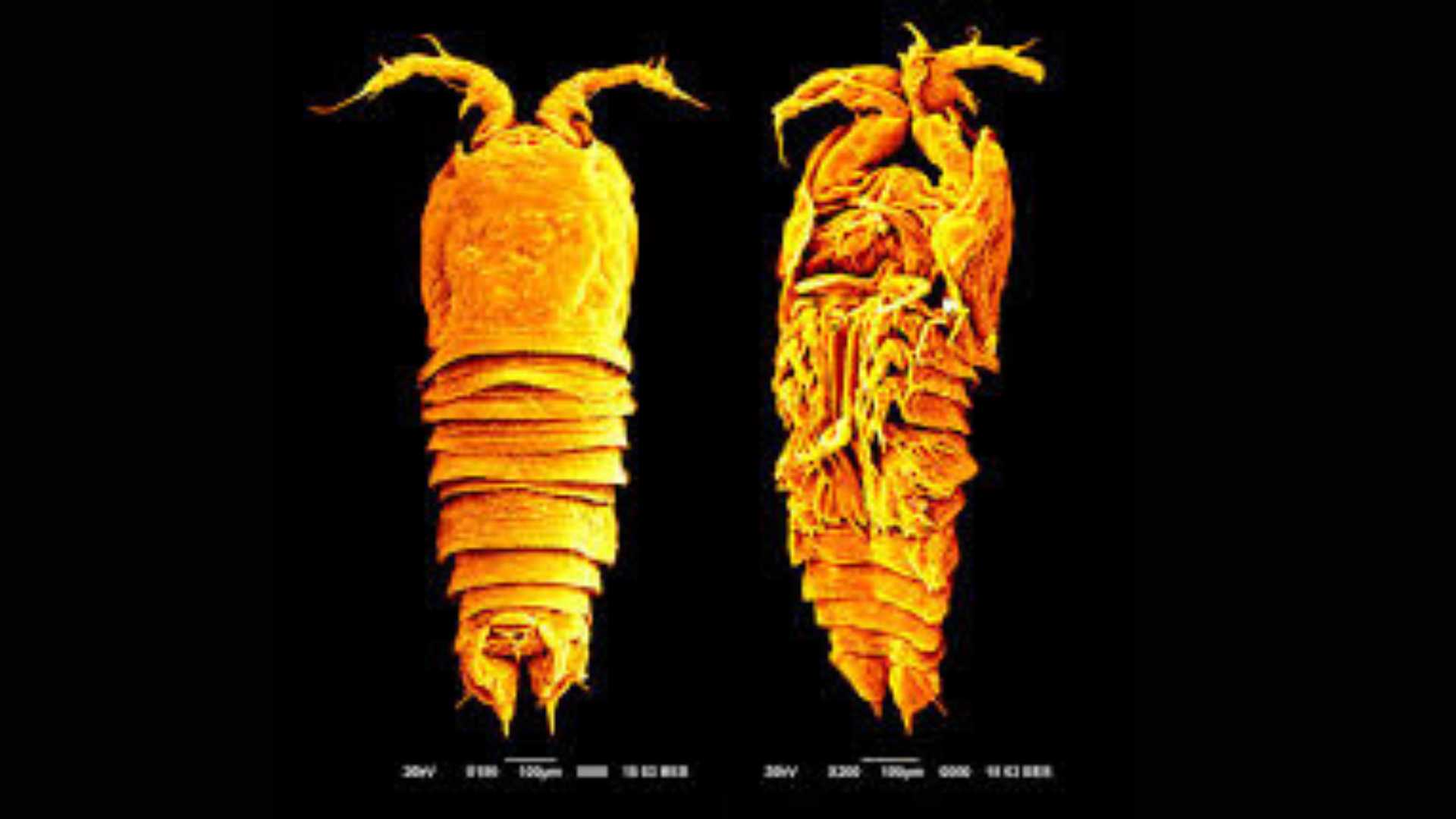
Microscopic view of the newly discovered crustacean Indiaphonte bijoyi, found in the Kavaratti lagoon, Lakshadweep
Not Started

Discovery of a New Crustacean Species: Indiaphonte bijoyi

Overview

A new genus and species of microscopic crustacean has been discovered from the Kavaratti lagoon in the Lakshadweep Islands. The organism belongs to the Copepoda class and is so small that it can be studied only using a microscope.

Scientific Classification

  • Phylum: Arthropoda
  • Class: Copepoda
  • Order: Harpacticoida
  • Family: Laophontidae

Scientific Name and Naming

  • Genus name Indiaphonte honours India
  • Species name bijoyi honours Dr. S. Bijoy Nandan, Dean, Faculty of Marine Sciences, CUSAT, and former Vice-Chancellor of Kannur University
  • The naming is described as a form of Guru Dakshina, acknowledging his contributions to marine science

Discovery and Publication

  • Discovered and described by Neelima Vasu K., Department of Marine Biology, CUSAT
  • Collaborated with Prof. Samuel E. Gómez-Noguera, UNAM University, Mexico
  • Scientific description published in the journal Zootaxa

Physical Characteristics

  • Semi-cylindrical and slightly flattened body
  • Body wider in the middle and tapering towards the posterior end
  • Antennae-like appendages present at the front
  • Females slightly larger than males
  • Female body length ranges from 518–772 micrometres
  • Male body length ranges from 508–756 micrometres

Why It Is a New Genus

  • Displays a unique combination of morphological traits
  • These traits do not match any previously known genus within the Laophontidae family

Ecological Category: Meiofauna

  • Belongs to Meiofauna, which are tiny invertebrates less than 1 mm in size
  • Lives in sediments of aquatic environments
  • Plays a crucial role in nutrient cycling and sediment health

Family Laophontidae: Key Facts

  • One of the most diverse families under Harpacticoida
  • Comprises about 350 species across 77 genera

Ecological and Economic Importance

  • Harpacticoid copepods produce Omega-3 fatty acids
  • Important fatty acids include EPA and DHA
  • Essential for the growth of fish and shellfish
  • Contribute to human nutritional security
  • Widely used as live feed in aquaculture, especially for fish larvae

Environmental Significance

  • Highly sensitive to pollution, oil spills, heavy metals, and climate change
  • Act as reliable bio-indicators of environmental change

Key Takeaway

The discovery of Indiaphonte bijoyi highlights India’s rich marine biodiversity and underscores the ecological importance of microscopic organisms in maintaining healthy aquatic ecosystems.


Quick Q&A

Everything you need to know

Species overview: Indiaphonte bijoyi is a newly discovered crustacean from the Kavaratti lagoon in the Lakshadweep islands, classified under the family Laophontidae within the Copepoda class. The organism is microscopic, measuring between 508–772 micrometres, with females slightly larger than males. It has a semi-cylindrical body tapering posteriorly and antennae-like appendages at the front.

Scientific significance: Indiaphonte bijoyi represents a new genus and species because it exhibits a unique combination of morphological traits that do not match any previously recorded genus within Laophontidae. Its discovery enhances understanding of biodiversity in benthic meiofaunal communities, emphasizing the rich yet underexplored marine ecosystems of India. Naming the species after S. Bijoy Nandan honours his contributions to marine sciences and meiofaunal research.

Broader implications: Discovering a new genus not only adds to taxonomic records but also provides baseline data for ecological and environmental studies, including ecosystem health monitoring and biodiversity conservation strategies.

Role in the ecosystem: Indiaphonte bijoyi, as a meiofaunal organism, plays a crucial role in sediment ecosystems, contributing to nutrient cycling, sediment aeration, and the overall health of marine and freshwater habitats. Despite their small size, meiofauna regulate microbial populations and support the base of aquatic food webs.

Bioindicator function: Harpacticoid copepods, the group to which Indiaphonte belongs, are highly sensitive to environmental stressors such as pollution, oil spills, heavy metals, and climate change. Their presence, abundance, and health provide valuable indicators of ecosystem integrity and can inform conservation and remediation strategies.

Contribution to aquaculture and human nutrition: These organisms produce omega-3 fatty acids like Eicosapentaenoic Acid (EPA) and Docosahexaenoic Acid (DHA), essential for the growth of fish and shellfish, and ultimately contribute to human nutritional security. They are widely used as live feed in aquaculture for fish larvae, highlighting their economic and ecological importance.

Discovery process: Indiaphonte bijoyi was discovered in the Kavaratti lagoon by Neelima Vasu K., a researcher at the Department of Marine Biology, Cochin University of Science and Technology (Cusat), in collaboration with Samuel E. Gómez-Noguera, a copepod taxonomist from UNAM University, Mexico. The organism’s microscopic size necessitated the use of microscopes and detailed morphological examination.

Taxonomic classification: Detailed analysis of body shape, size, and appendage morphology revealed a combination of traits not observed in any existing genus within the Laophontidae family. This unique combination justified the creation of a new genus, Indiaphonte, with the species named bijoyi in honour of Dr. S. Bijoy Nandan.

Scientific documentation: The discovery and classification were published in the journal Zootaxa, ensuring peer-reviewed validation and contributing to global marine biodiversity records. This formal publication allows other researchers to study, compare, and further explore the ecological and evolutionary significance of the genus.

Meiofaunal ecosystem functions: Harpacticoid copepods are an essential component of benthic meiofauna, contributing to sediment nutrient cycling, organic matter decomposition, and the maintenance of microbial communities. These functions directly influence water quality, sediment stability, and habitat suitability for other aquatic organisms.

Nutritional and economic relevance: By producing and converting omega-3 fatty acids such as EPA and DHA, these copepods support aquaculture operations and enhance the nutritional value of farmed fish and shellfish, which are critical to human diets and food security.

Environmental sensitivity: Their sensitivity to pollutants and environmental stressors makes them reliable bio-indicators. Changes in their populations or morphology can signal ecological disturbances, providing early warning for interventions in marine conservation and sustainable fisheries management.

Enhancing taxonomic knowledge: Discovering a new genus such as Indiaphonte contributes significantly to the taxonomic and systematic understanding of marine biodiversity. It highlights unexplored or understudied habitats like lagoons in Lakshadweep, encouraging further research and documentation of meiofaunal diversity.

Implications for conservation: Recognising and cataloguing new species provides baseline data crucial for ecosystem management. Since meiofaunal organisms act as bio-indicators, their study informs conservation priorities, pollution assessment, and climate change monitoring, enabling more targeted policy and management strategies.

Challenges and opportunities: Despite their ecological significance, microscopic organisms often receive limited attention in conservation frameworks. Discoveries like Indiaphonte bijoyi advocate for integrating meiofaunal research into marine conservation programs and highlight the need for capacity building, advanced microscopy, and molecular studies to assess biodiversity comprehensively.

Aquaculture and food chain: Indiaphonte bijoyi, as a harpacticoid copepod, produces and converts essential omega-3 fatty acids such as Eicosapentaenoic Acid (EPA) and Docosahexaenoic Acid (DHA). These nutrients are vital for the growth and survival of fish larvae, which are foundational to aquaculture operations.

Economic and nutritional impact: By serving as live feed for commercially important fish and shellfish, these copepods indirectly support human nutritional security by enhancing the quality and availability of seafood. For example, in aquaculture farms, copepods like Indiaphonte bijoyi improve the survival rate of larval fish, ensuring sustainable yields.

Broader relevance: This exemplifies the link between biodiversity conservation and human food security. Protecting such species and their habitats ensures the continued availability of nutrient-rich seafood, demonstrating the ecosystem services provided by meiofaunal organisms.

Underexplored biodiversity hotspots: The discovery of Indiaphonte bijoyi in the relatively small Kavaratti lagoon highlights that Indian marine ecosystems, including lagoons, estuaries, and coral reef habitats, remain rich but underexplored for microfaunal diversity.

Research and collaboration opportunities: The study was conducted in collaboration between Indian researchers and international experts, demonstrating the importance of global partnerships in taxonomy and marine biology. Such collaborations enable knowledge exchange, capacity building, and validation of findings.

Policy and conservation implications: This discovery underscores the need for systematic surveys, biodiversity assessment programs, and conservation policies that include microscopic organisms. It also encourages integrating meiofaunal research into broader marine ecosystem management, emphasizing that even the smallest organisms play critical roles in ecosystem functioning and human well-being.

Attribution

Original content sources and authors

Sign in to track your reading progress

Comments (0)

Please sign in to comment

No comments yet. Be the first to comment!