1. Discovery and Taxonomic Significance
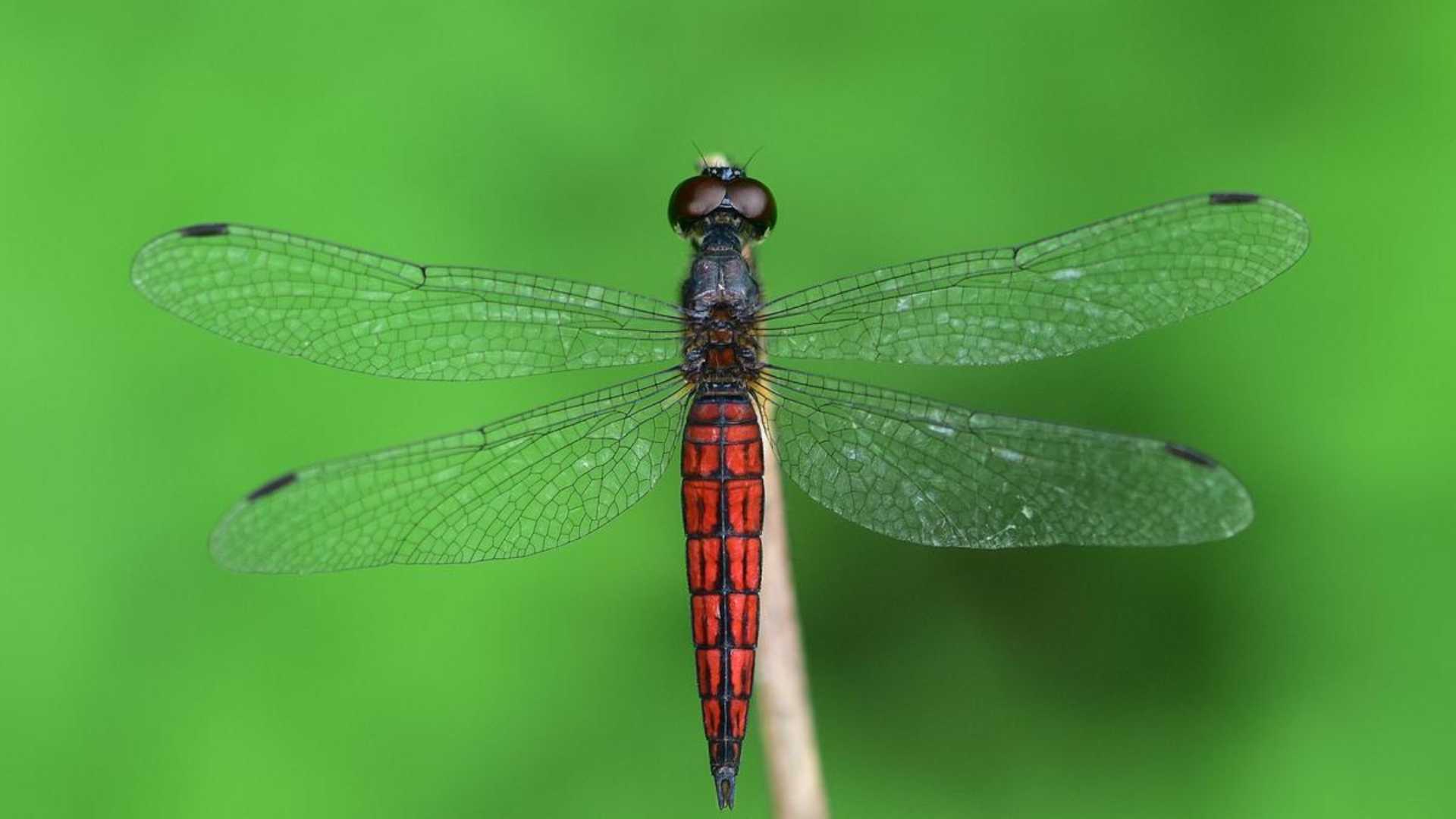
A newly identified dragonfly species, Lyriothemis keralensis, has been discovered in Varapetty near Kothamangalam, Kerala. Its identification underscores the exceptional biodiversity of the Western Ghats and the ecological richness of plantation-dominated landscapes. The discovery also corrects a decade-long misidentification, strengthening India’s taxonomic documentation.
The species was previously mistaken for Lyriothemis acigastra, believed to be restricted to Northeast India. Detailed microscopic examination and comparison with museum specimens revealed clear morphological differences, including a slender abdomen and distinct anal appendages and genitalia. Such findings highlight institutional scientific capacity and the importance of museum collections.
The species exhibits strong seasonal visibility, appearing only during the Southwest monsoon (late May–August) and remaining in its aquatic larval stage during other periods. This life-cycle pattern demonstrates the ecological dependence on shaded pools and plantation canal networks.
Accurate species identification improves conservation planning and helps avoid data gaps in biodiversity assessments; ignoring such taxonomic precision may lead to misaligned policy interventions.
Key Distinguishing Features:
- Bright blood-red males with black markings
- Bulkier yellow females with black markings
- More slender abdomen than related species
- Distinctly shaped anal appendages and genitalia
2. Habitat Characteristics and Ecological Behaviour
Lyriothemis keralensis inhabits vegetated pools and irrigation canals embedded within pineapple and rubber plantations. These shaded plantation landscapes create microhabitats essential for the species’ larval development and adult emergence. This indicates that biodiversity value extends beyond formal forests into modified agroecosystems.
The species’ seasonal emergence during the monsoon months points to its ecological sensitivity to hydrological cycles and shade-dependent aquatic niches. Its survival outside the protected area network highlights the role of private and community-managed landscapes in sustaining ecological diversity.
Its persistence in larval form for most of the year suggests reliance on perennial water networks, even within commercial plantations. This makes land-use decisions, drainage patterns, and plantation management practices crucial for species survival.
Ecologically sensitive land-use is essential to protect species relying on microhabitats in plantation landscapes; without it, habitat alteration could rapidly shrink survival niches.
Habitat Features:
- Shaded plantation water bodies
- Seasonal monsoon-linked visibility
- Permanent canal and pool networks sustaining larval stages
3. Conservation Concerns and Governance Implications
Researchers note that most populations of Lyriothemis keralensis lie outside protected areas, raising concerns about unregulated land-use practices. Plantation belts—though economically important—often undergo rapid land modification, affecting microhabitats that sustain endemic species.
The species’ reliance on shaded and vegetated aquatic systems makes it vulnerable to drainage alterations, chemical inputs, and land-clearing within plantations. This highlights the governance challenge of integrating biodiversity considerations into agricultural and plantation management policies.
Given the species’ decade-long misidentification, its actual population size and distribution remain uncertain, further complicating conservation assessments. Ensuring survival will require monitoring, habitat-sensitive cultivation, and integration of biodiversity norms into state-level land regulation frameworks.
If conservation needs are ignored, micro-endemic species may decline before their ecological value is understood, weakening broader ecosystem stability and biodiversity outcomes.
Key Challenges:
- Occurs largely outside protected area network
- Plantation-driven habitat modification
- Limited baseline data due to earlier misidentification
Policy Priorities:
- Integrate biodiversity safeguards in plantation management
- Encourage habitat-sensitive land-use practices
- Strengthen taxonomic monitoring and documentation
4. Scientific Collaboration and Institutional Value
The discovery resulted from collaboration among multiple research institutions, including the Indian Foundation for Butterflies, Kerala Agricultural University, the Society for Odonate Studies, and the National Centre for Biological Sciences. This reflects the growing scientific capacity for biodiversity studies in India.
The findings, published in the International Journal of Odonatology, demonstrate the role of academic and civil-society institutions in documenting emerging species. Such collaborations enhance knowledge repositories, expand citizen-science networks, and improve accuracy in faunal assessments.
This case also shows how long-term field observation and museum-based verification together strengthen scientific rigour. Interdisciplinary partnerships—linking field biologists, taxonomists, and conservation experts—enable more effective ecological governance.
Institutional collaboration improves scientific accuracy and strengthens conservation governance; neglecting such partnerships may limit the country’s ability to monitor biodiversity effectively.
Institutional Contributors:
- Indian Foundation for Butterflies
- Kerala Agricultural University
- Society for Odonate Studies
- National Centre for Biological Sciences
Value Additions:
- Strengthened taxonomic clarity
- Improved ecological datasets
- Enhanced conservation research capacity
Conclusion
The discovery of Lyriothemis keralensis illustrates the ecological value of plantation landscapes, the importance of taxonomic accuracy, and the need to integrate biodiversity concerns into land-use governance. Strengthening scientific collaboration and habitat-sensitive management practices will be crucial for sustaining such micro-endemic species and ensuring long-term ecological resilience in India.