
1. Context: Marine Turtle Conservation and Scientific Monitoring
Marine turtles, including the Olive Ridley, are migratory species whose survival depends on safe nesting beaches and undisturbed marine corridors. India’s long coastline makes it a critical habitat, but increasing coastal development and fishing pressures have intensified conservation challenges.
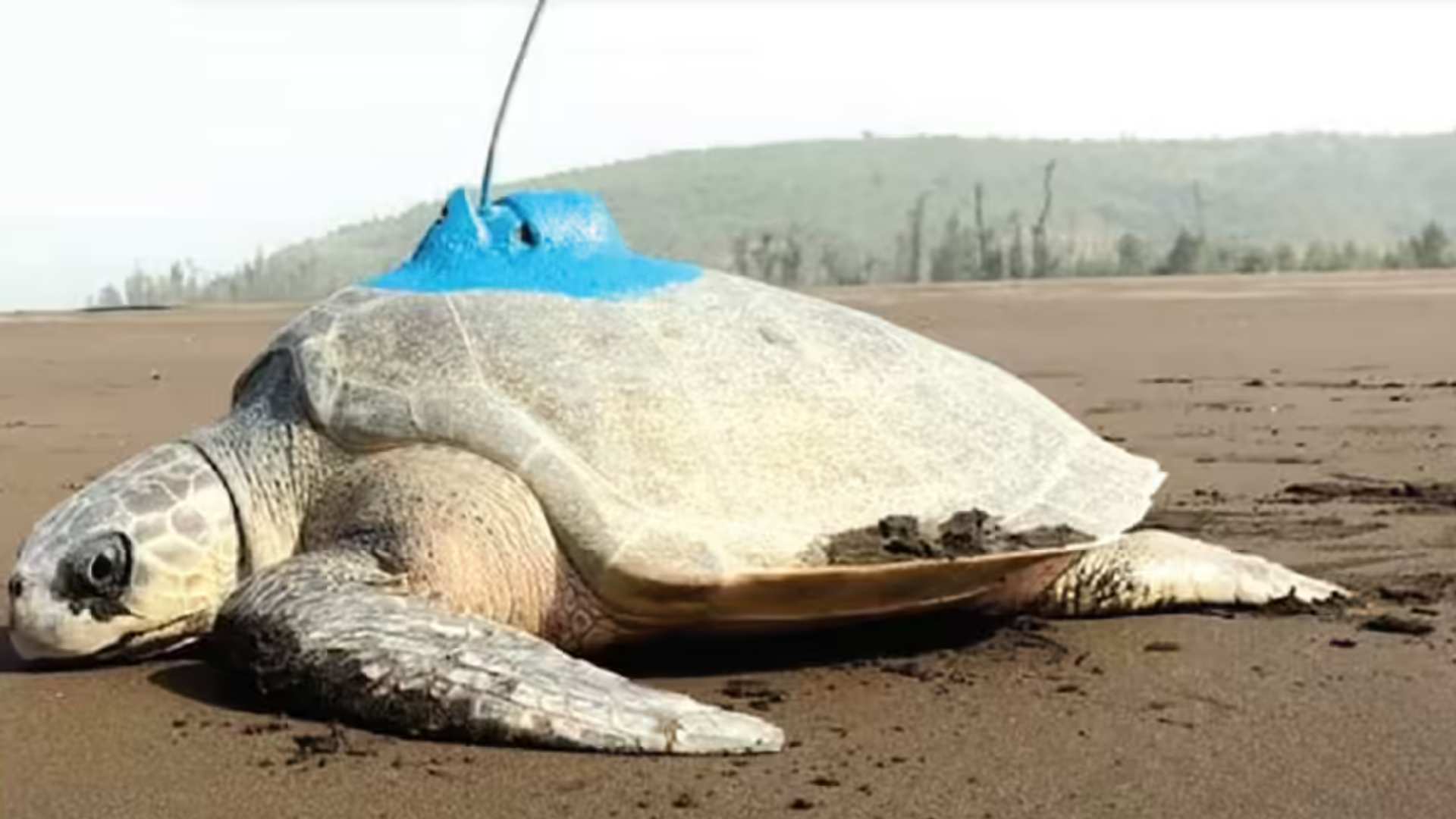
The article highlights a first-of-its-kind initiative on city beaches where Olive Ridley turtles were satellite-tagged during nesting. This marks a shift from reactive conservation to proactive, data-driven wildlife management using modern technology.
Such initiatives are significant for governance because marine biodiversity conservation is closely linked with sustainable fisheries, coastal livelihoods, and India’s international environmental commitments. If scientific monitoring is ignored, conservation policies risk remaining generic and ineffective.
The governance logic lies in recognising that migratory species cannot be protected through static rules alone; without spatial and temporal data, regulatory responses remain misaligned with ecological realities.
2. Issue: Knowledge Gaps in Turtle Movement and Human Interaction
A key issue addressed is the limited understanding of turtle movement in near-shore waters during nesting seasons. Traditional conservation relied heavily on beach protection, leaving marine-phase threats insufficiently studied.
The study aims to monitor behaviour, nesting patterns, and interactions with fishing activities between November and April. This period is critical as it coincides with intense fishing activity along the Tamil Nadu coast.
Without such monitoring, accidental injuries from fishing gear and habitat overlap remain under-documented, weakening both conservation enforcement and conflict mitigation with fishing communities.
Effective governance requires identifying where and when conflicts occur; absence of such evidence results in regulatory blind spots and reactive enforcement.
3. Instrument: Satellite Tagging and Telemetry Technology
Satellite tagging allows continuous tracking of turtles across marine and coastal zones, providing near real-time data on movement and habitat use. Flipper tagging complements this by enabling long-term identification and nesting-site fidelity analysis.
The article notes that tags will be deployed across vulnerable nesting sites, including the Chennai coast and the Cauvery delta. This ensures spatially diverse data rather than site-specific assumptions.
Such technology strengthens conservation by shifting focus from anecdotal evidence to empirical datasets, enabling adaptive policy responses. Ignoring technological tools risks outdated management in a rapidly changing coastal environment.
The logic is that technology converts conservation from intent-based to evidence-based governance; without it, policy remains static despite dynamic ecosystems.
4. Institutional Framework and Coordination
The initiative is carried out jointly by the Wildlife Institute of India and the Advanced Institute for Wildlife Conservation, with support from the Tamil Nadu government through a formal Government Order issued in August 2025.
This reflects institutional coordination between research bodies and state administration, a critical requirement for environmental governance under India’s federal structure. Veterinary support from Arignar Anna Zoological Park further demonstrates multi-agency involvement.
Weak coordination often leads to fragmented conservation outcomes. In contrast, institutional collaboration enables integration of research findings into policy and field-level implementation.
Governance effectiveness depends on institutional convergence; without it, scientific findings fail to translate into regulatory or operational action.
5. Wildlife Health, Ethics, and Conservation Practice
One tagged turtle required surgical removal of a fishing hook before release, highlighting the intersection of wildlife health management and conservation objectives. Veterinary intervention ensured the turtle’s survival and ethical treatment.
Such instances reveal the hidden costs of marine resource use and underline the need for humane wildlife response mechanisms within conservation frameworks.
If animal welfare is neglected, conservation efforts lose legitimacy and may face resistance from both communities and enforcement agencies.
Ethical wildlife management strengthens conservation credibility; ignoring it undermines trust and long-term compliance.
6. Implications for Coastal Governance and Policy
The study has wider implications for regulating fishing practices, designing seasonal advisories, and protecting critical marine habitats. Data on turtle–fishing interactions can inform gear modification and spatial restrictions.
Impacts:
- Improved identification of conflict zones between turtles and fisheries
- Evidence-based refinement of coastal conservation measures
- Enhanced compliance through scientific justification
Failure to integrate such findings into policy would perpetuate biodiversity loss and regulatory inefficiency.
Data-driven insights enable balanced governance; without policy uptake, scientific efforts remain academic.
7. Way Forward: Strengthening Science–Policy Linkages
Long-term conservation requires institutionalising telemetry studies, expanding them to other coastal states, and integrating findings into fisheries and coastal regulation frameworks.
Capacity-building of local enforcement agencies and awareness among fishing communities will be essential to translate data into action.
Sustained investment in scientific monitoring ensures resilience of conservation policies in the face of climate change and coastal pressures.
The way forward lies in embedding science within governance systems; ignoring this risks reactive and fragmented conservation outcomes.
Conclusion
The satellite tagging initiative represents a shift towards evidence-based marine conservation in India. By aligning technology, institutions, and policy, it strengthens coastal governance while safeguarding biodiversity. In the long term, such approaches are essential for sustainable development and ecological security.