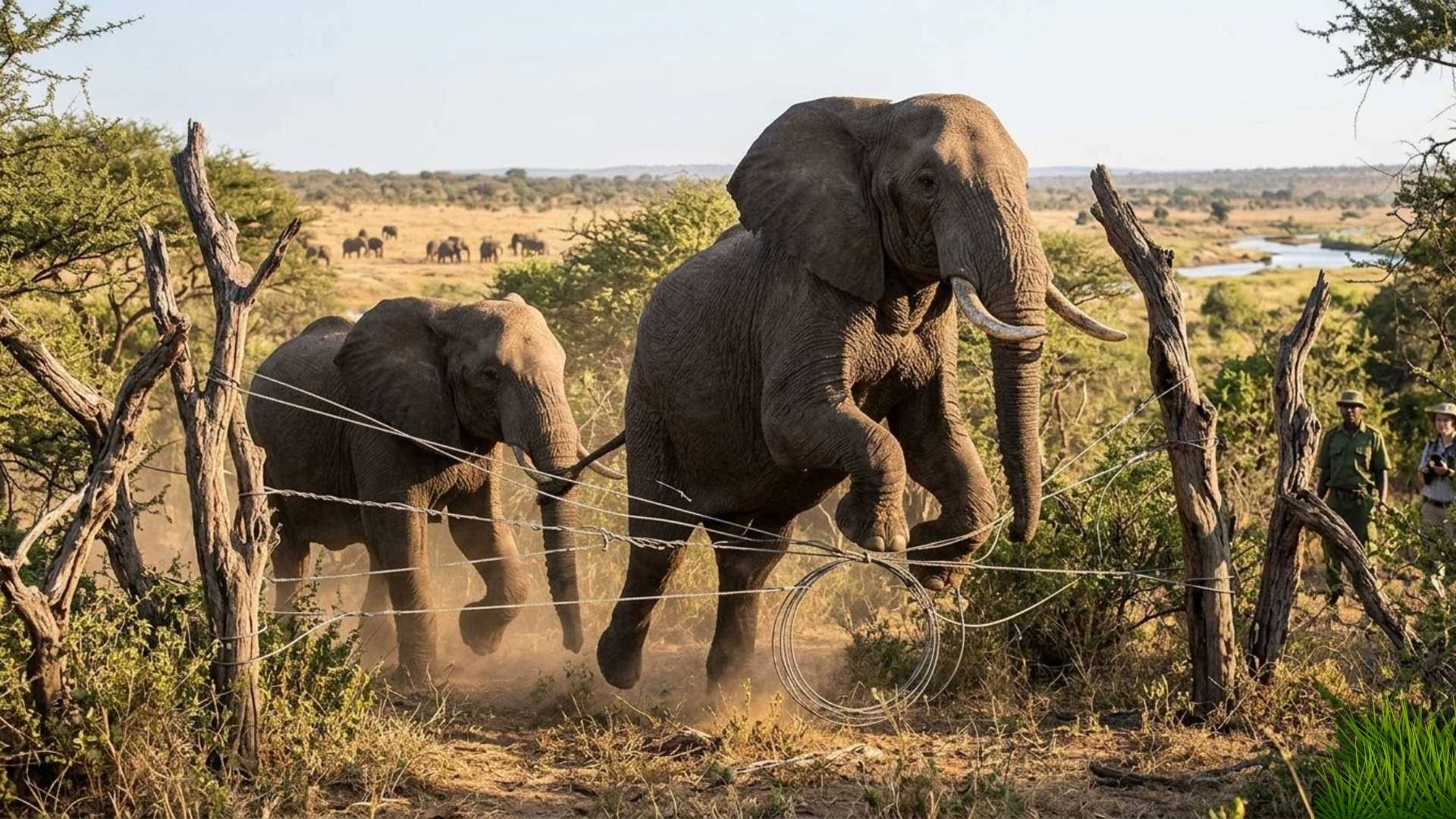
Two Elephants Electrocuted by Illegal Electric Snares in Tirupati

A shocking incident where a male and female elephant were found dead due to illegal snares near the Reserve Forest boundary.
G
Gopi
2 mins read
Two elephants electrocuted by illegal snares near Talakona Reserve Forest, Tirupati

Electrocution of Elephants in Tirupati District (Andhra Pradesh)

Location of the Incident

  • Place: Erravaripalem village, Bhakarapeta Range, Tirupati district, Andhra Pradesh
  • Forest Area: Near Talakona South Beat, Talakona Reserve Forest
  • Distance from forest boundary: Approximately 450 meters

Details of the Incident

  • Date of incident: 9 March 2026
  • Animals affected: 2 Asian elephants
  • Age: Around 11–12 years
  • Sex: 1 male and 1 female (sub-adults)

Cause of Death

  • Primary cause: Electrocution
  • Method used: Illegal electric snares
  • Material used: Aluminium wires
  • Electric source: Connected to a 33/11 kV transmission line
  • Purpose of snares: Illegal hunting of wild animals and protection of crops from wildlife.

Movement Pattern of the Elephants

  • The elephants belonged to the Talakona Reserve Forest.
  • They occasionally moved into nearby agricultural fields.
  • However, for the last three months, their movement was mostly restricted to the interior forest.
  • While exiting the forest through Old Saibulapalle Rastha, they encountered the electric snares and died on the spot.

Agricultural Lands Involved

  • Fields belong to Shaik Akthar and Shaik Shameer.

  • Crops cultivated:

    • Mango
    • Groundnut

Administrative Response

  • Case registered: In Bhakarapeta Range
  • Investigation: A committee has been constituted
  • Chairperson: District Forest Officer (DFO) V. Saibaba
  • Post-mortem: Conducted according to prescribed wildlife guidelines

Important Species Information

Asian Elephant (Elephas maximus)

  • IUCN Status: Endangered
  • Wildlife Protection Act, 1972: Schedule I
  • CITES: Appendix I
  • Keystone and flagship species of forest ecosystems.

Key Conservation Issue Highlighted

  • Illegal electric fencing/snares is a major cause of elephant mortality in India.

  • It reflects Human–Elephant Conflict (HEC) due to:

    • Crop raiding
    • Expansion of agriculture near forests
    • Lack of safe wildlife corridors

Key Data Extracted

  • Number of elephants dead: 2
  • Age: 11–12 years
  • Distance from forest boundary: 450 m
  • Electric line used: 33/11 kV transmission line
  • Location: Talakona Reserve Forest, Tirupati district

Quick Q&A

Everything you need to know

Wildlife electrocution refers to the accidental or intentional death of animals due to contact with live electric wires, power lines, or illegal electric fencing. In India, this has emerged as a serious conservation concern, particularly for large mammals such as Asian elephants, which frequently move between forest habitats and agricultural lands. The recent incident in Tirupati district, where two sub-adult elephants died due to illegal electric snares connected to a high-voltage transmission line, illustrates the severity of the problem.

Several factors contribute to wildlife electrocution:

  • Illegal electric fencing: Farmers sometimes connect wires to high-voltage lines to protect crops from wild animals.
  • Unregulated power infrastructure: Low-hanging or poorly insulated power lines in forested landscapes increase the risk of accidental contact.
  • Human–wildlife conflict: Crop raiding by elephants and other animals often leads farmers to adopt hazardous deterrent methods.

Electrocution is particularly dangerous for elephants because of their large body size and tendency to move in groups. A single exposed electric line can cause multiple deaths in a herd. Moreover, elephants often use traditional migration routes that pass through agricultural landscapes, increasing their exposure to such risks.

From a conservation perspective, the issue is alarming because elephants are classified as Endangered on the IUCN Red List and are protected under Schedule I of the Wildlife (Protection) Act, 1972. Frequent incidents of electrocution not only threaten their population but also disrupt ecological balance. Addressing this challenge requires coordinated efforts involving forest departments, power utilities, and local communities.

Human–elephant conflict (HEC) occurs when the needs and behaviour of elephants overlap with human activities, particularly agriculture and settlement expansion. Elephants are wide-ranging animals that require large territories and often move along traditional migratory corridors. When these corridors intersect with agricultural lands, conflicts such as crop damage, property destruction, and sometimes human or animal casualties occur.

The main causes of human–elephant conflict include:

  • Habitat fragmentation: Infrastructure development, roads, and agriculture reduce natural elephant habitats.
  • Loss of migration corridors: Traditional movement routes are obstructed by settlements or plantations.
  • Attractive crops: Crops like mango, sugarcane, and groundnut attract elephants due to their high nutritional value.

In the Tirupati incident, elephants from the Talakona Reserve Forest ventured into nearby agricultural fields, which likely prompted farmers to install illegal electric snares. Such defensive actions, although intended to protect crops, often result in unintended wildlife fatalities.

The broader implications of human–elephant conflict are significant. It leads to economic losses for farmers, threatens the survival of elephant populations, and creates tension between conservation authorities and local communities. Sustainable solutions must balance livelihood protection with wildlife conservation through measures such as compensation schemes, community-based monitoring, and the protection of elephant corridors.

Illegal electric snares are improvised devices created by connecting metallic wires, often aluminium, to high-voltage electricity sources such as transmission lines. These wires are placed around agricultural fields or forest edges with the intention of deterring or killing wild animals that attempt to enter croplands. When an animal touches the wire, it receives a fatal electric shock.

The functioning and impact of electric snares can be understood through several aspects:

  • Direct lethal impact: Large animals such as elephants, deer, and wild boars are instantly killed upon contact with high-voltage current.
  • Non-selective killing: These snares do not target specific animals, meaning endangered species can also become victims.
  • Ecosystem disruption: The death of keystone species like elephants can disturb ecological processes such as seed dispersal and forest regeneration.

In the reported case from Tirupati district, the snares were connected to a 33/11 kV transmission line, making the electric current extremely dangerous. Such high-voltage connections are illegal and pose risks not only to wildlife but also to humans who might accidentally encounter them.

From an ecological perspective, the loss of elephants has cascading effects on forest ecosystems. Elephants are often referred to as ecosystem engineers because they help shape vegetation patterns and maintain biodiversity. Their deaths due to illegal snares therefore have consequences far beyond the immediate loss of individual animals.

The persistence of illegal hunting methods, including electric snares, is often linked to a combination of structural, economic, and social factors. In many rural areas located near forests, farmers face frequent crop losses due to wildlife, which creates pressure to adopt extreme protective measures. While these actions may be illegal, they are sometimes viewed by locals as necessary for livelihood protection.

Several factors contribute to this problem:

  • Economic vulnerability: Small farmers may lack resources to implement safe and legal crop protection measures.
  • Weak enforcement: Monitoring large forest boundaries and remote agricultural areas is challenging for forest departments.
  • Lack of awareness: Some communities may not fully understand the ecological and legal consequences of using electric snares.

In the Tirupati case, the agricultural lands where the elephants died belonged to farmers cultivating mango and groundnut crops. These crops are attractive to elephants, making the fields vulnerable to raids. Farmers sometimes resort to illegal measures when they perceive official support mechanisms to be inadequate.

Addressing the root causes requires a multi-dimensional approach. Governments must strengthen compensation systems for crop damage, promote alternative crop protection methods such as solar-powered fences, and improve community participation in conservation efforts. Without addressing the socio-economic context, enforcement alone may not eliminate such practices.

India has implemented several strategies to reduce human–elephant conflict and prevent wildlife deaths caused by electrocution or other human activities. These measures involve technological solutions, community engagement, and policy interventions aimed at balancing conservation with rural livelihoods.

Some notable strategies include:

  • Solar-powered fencing: States such as Karnataka and Tamil Nadu have installed regulated solar fences that deter elephants without causing lethal shocks.
  • Early warning systems: Use of SMS alerts, watchtowers, and tracking collars helps communities anticipate elephant movements.
  • Elephant corridors: The government and NGOs have identified and secured critical corridors to allow safe movement between habitats.

For instance, the Nilgiri Elephant Corridor project has helped maintain connectivity between elephant habitats across Tamil Nadu, Kerala, and Karnataka. Similarly, community-based monitoring programmes in Assam involve local volunteers who track elephant movements and warn villages about approaching herds.

Such initiatives highlight the importance of coexistence-based conservation. Instead of relying solely on restrictive enforcement, these strategies integrate scientific research, local knowledge, and technological innovation. If implemented effectively in regions like Tirupati, similar approaches could significantly reduce incidents of wildlife electrocution.

India has a relatively strong legal framework for wildlife protection, particularly concerning elephants. The Wildlife (Protection) Act, 1972 grants the Asian elephant the highest level of legal protection under Schedule I, making hunting, capture, or harm to elephants a serious criminal offence. Additionally, initiatives such as Project Elephant, launched in 1992, aim to protect elephant populations and their habitats.

The legal and institutional framework includes several components:

  • Strict legal penalties: Wildlife crimes, including killing elephants through electrocution, can lead to imprisonment and fines.
  • Protected areas and reserves: Elephant reserves and national parks help safeguard critical habitats.
  • Specialized agencies: Forest departments and wildlife crime control units monitor illegal activities.

Despite these provisions, implementation challenges remain. Many incidents of wildlife electrocution occur in remote areas where enforcement is difficult. Limited manpower, lack of coordination between electricity boards and forest departments, and delays in legal proceedings can weaken deterrence.

Therefore, the effectiveness of the framework depends on stronger enforcement and community engagement. Integrating conservation policies with rural development programmes, improving surveillance technologies, and increasing awareness among local communities can enhance the success of wildlife protection measures.

As a district administrator facing repeated wildlife electrocution incidents, the approach should combine immediate enforcement with long-term preventive strategies. The primary objective would be to protect wildlife while addressing the legitimate concerns of farmers and local communities living near forest areas.

Short-term measures would include:

  • Strict enforcement: Conduct inspections to identify illegal electric snares and prosecute offenders under the Wildlife Protection Act.
  • Coordination with electricity authorities: Ensure proper insulation of power lines and prevent illegal tapping of transmission lines.
  • Rapid response teams: Deploy forest and veterinary teams to monitor wildlife movement and respond quickly to emergencies.

Long-term strategies would focus on conflict mitigation:
  • Promotion of safe fencing technologies such as solar-powered fences.
  • Community awareness programmes to educate farmers about wildlife laws and conservation importance.
  • Improved compensation mechanisms for crop damage caused by wildlife.

A participatory governance approach is crucial. Involving local communities, NGOs, forest departments, and power utilities in joint decision-making can create sustainable solutions. By combining enforcement, technology, and community participation, districts can significantly reduce wildlife electrocution incidents and promote peaceful coexistence between humans and wildlife.

Attribution

Original content sources and authors

Sign in to track your reading progress

Comments (0)

Please sign in to comment

No comments yet. Be the first to comment!