Introduction
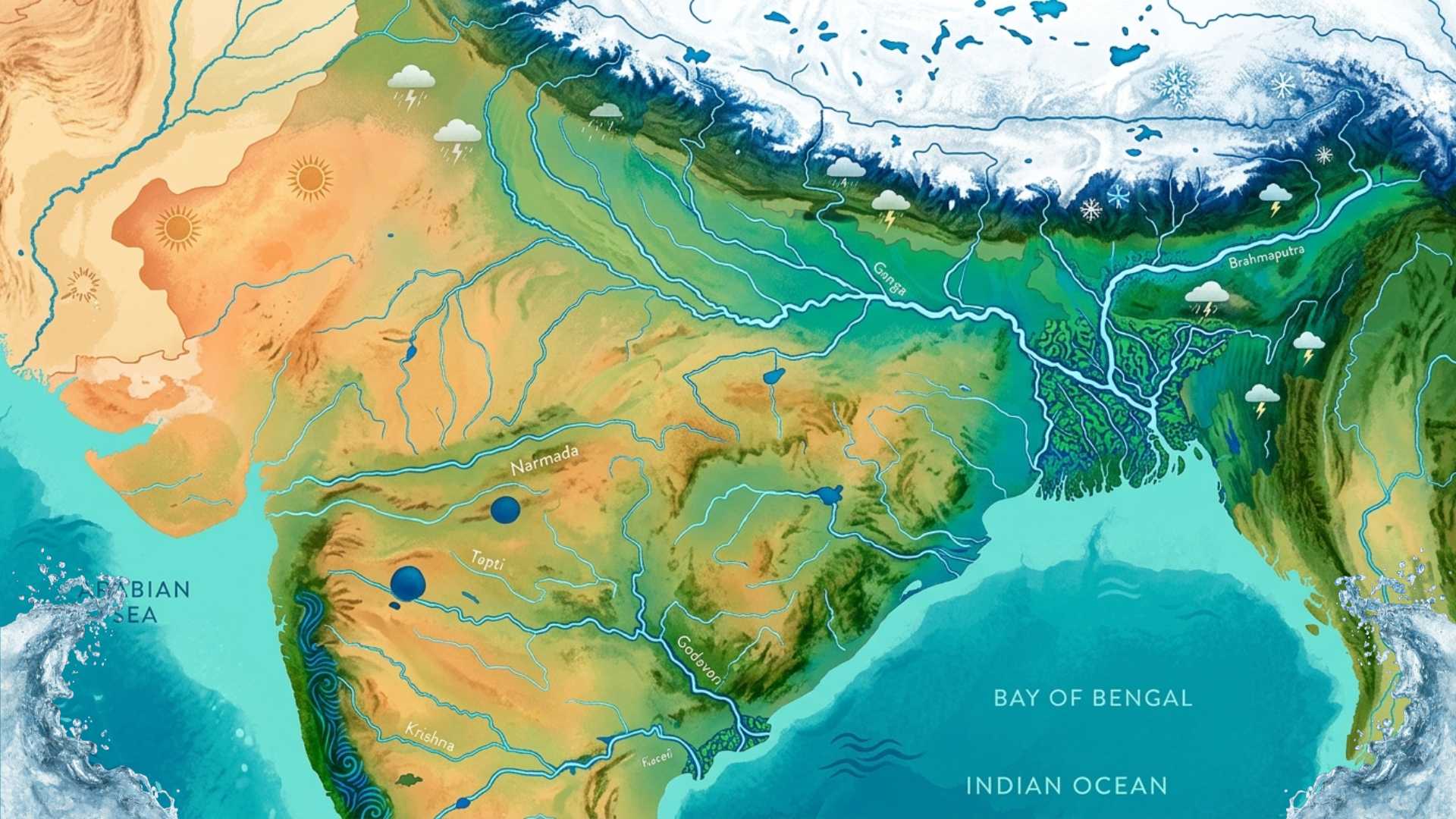
Climate change is increasingly experienced through water-related extremes such as floods, droughts, and glacial melt. Globally, over 90% of climate disasters are water-related (UN Water). Agriculture contributes nearly 40% of anthropogenic methane emissions, largely from rice cultivation and livestock. At COP-30 (Belém, Brazil, 2025), adaptation was reframed as measurable and accountable implementation, with water, sanitation, and hygiene (WASH) integrated into global climate resilience indicators for the first time. This shift has major implications for countries like India, where water security is central to climate resilience and food security.
Background: COP-30 and the Shift Toward “Implementation”
COP-30 was branded the “COP of Implementation”, emphasising practical adaptation measures rather than commitments alone.
Key development:
- Introduction of 59 Belém Adaptation Indicators under the UAE Framework for Global Climate Resilience.
- Integration of water systems, sanitation, and early warning mechanisms into climate accountability.
Core Idea: Adaptation is no longer about policy declarations but about systems functioning during climate stress.
Climate Change and the Water Nexus
Climate impacts are primarily transmitted through water systems.
| Climate Impact | Water-related Consequence |
|---|---|
| Rising temperatures | Glacier retreat and altered river flows |
| Extreme rainfall | Urban flooding and infrastructure collapse |
| Droughts | Agricultural losses and groundwater depletion |
| Sea-level rise | Saline intrusion into coastal aquifers |
| Erratic monsoon | Food security disruptions |
Water–Food–Climate Nexus
Water management is directly linked to climate mitigation and adaptation.
Key climate strategies include:
- Water use efficiency
- Wastewater reuse
- Aquifer recharge
- Climate-resilient sanitation systems
These measures also reduce methane emissions from agriculture and waste systems.
Belém Adaptation Indicators (COP-30)
The 59 Belém indicators introduce measurable benchmarks for climate resilience.
1. Climate-Resilient Water and Sanitation Systems
| Indicator Area | Key Focus |
|---|---|
| Water Security | Reduce climate-induced water scarcity |
| Disaster Resilience | Infrastructure resistant to floods and droughts |
| Drinking Water | Universal access to safe water |
| Sanitation | Climate-resilient sanitation systems |
2. Risk Governance Indicators
| Indicator | Target |
|---|---|
| Multi-hazard Early Warning Systems | Universal coverage by 2027 |
| Hydrometeorological Services | Strengthening monitoring networks |
| National Vulnerability Assessments | Updated by 2030 |
These indicators aim to transform adaptation into quantifiable global governance metrics.
India’s Institutional Response to Water-Centred Adaptation
India has already initiated several reforms aligned with these global indicators.
Major Institutional Developments
| Initiative | Significance |
|---|---|
| Ministry of Jal Shakti (2019) | Integrated water governance |
| Water Vision 2047 | Long-term strategy for sustainable water management |
| National Water Mission | Improved water use efficiency |
| Jal Jeevan Mission | Universal rural drinking water access |
| Atal Bhujal Yojana | Groundwater management |
Case Study: Groundwater Management
NAQUIM Programme (National Aquifer Mapping and Management)
| Phase | Focus |
|---|---|
| NAQUIM 1.0 | Aquifer mapping |
| NAQUIM 2.0 | Aquifer-level management plans |
Significance:
- Moves from hydrogeological knowledge to policy action.
- Supports sustainable groundwater extraction and recharge.
Case Study: River Rejuvenation
National Mission for Clean Ganga (NMCG)
The programme has evolved beyond pollution control.
Key features:
- Digital river monitoring
- Biodiversity conservation
- International cooperation
- Sewage treatment infrastructure
Clean rivers also act as buffers against climate shocks such as floods and droughts.
Key Challenges for India
1. Water Scarcity and Climate Vulnerability
- India hosts 18% of the global population but only 4% of freshwater resources.
- Most climate disasters in India are water-related.
- Infrastructure must be climate stress-tested.
Required measures:
- Source diversification
- Redundancy in supply systems
- Climate-resilient WASH infrastructure
2. Adaptation Finance Gap
Global climate finance discussions aim to mobilise $1.3 trillion annually by 2035, but operational mechanisms remain uncertain.
Challenges:
- Limited predictable funding
- Water projects often treated as development expenditure rather than climate investment
Policy need:
- Explicit classification of water infrastructure as climate adaptation investments.
3. Digital Fragmentation in Water Governance
India possesses extensive hydrological data but faces issues such as:
- Fragmented databases
- Limited AI-based predictive systems
- Weak integration into local governance
Opportunity:
- Use Digital Public Infrastructure (DPI) for integrated climate decision-making.
Opportunities for India
India can leverage its existing institutional and technological strengths.
Potential Areas of Leadership
| Area | Opportunity |
|---|---|
| Digital governance | Integration of hydrological data platforms |
| Climate-resilient agriculture | Water-efficient irrigation systems |
| Early warning systems | Disaster preparedness |
| Community-led water management | Local resilience |
Integration of:
- Hydrological data
- Crop advisories
- Insurance systems
- Financial flows
can create real-time climate governance platforms.
Expert Insight
According to UN Water,
“Water is the primary medium through which climate change impacts societies and ecosystems.”
Thus, water governance is central to climate resilience and sustainable development.
Conclusion
The Belém Adaptation Indicators represent a paradigm shift from climate commitments to measurable resilience outcomes. For India, water-centric adaptation aligns with existing missions such as Jal Jeevan Mission, NAQUIM, and the National Water Mission. By integrating climate indicators, digital platforms, and sustainable financing, India can transform water governance into a pillar of climate resilience and emerge as a global leader in adaptation for the Global South.
UPSC Mains Question
Climate change impacts are increasingly manifested through water systems. In this context, discuss the significance of the Belém Adaptation Indicators introduced at COP-30. Evaluate India’s preparedness to build climate-resilient water governance. (250 words)