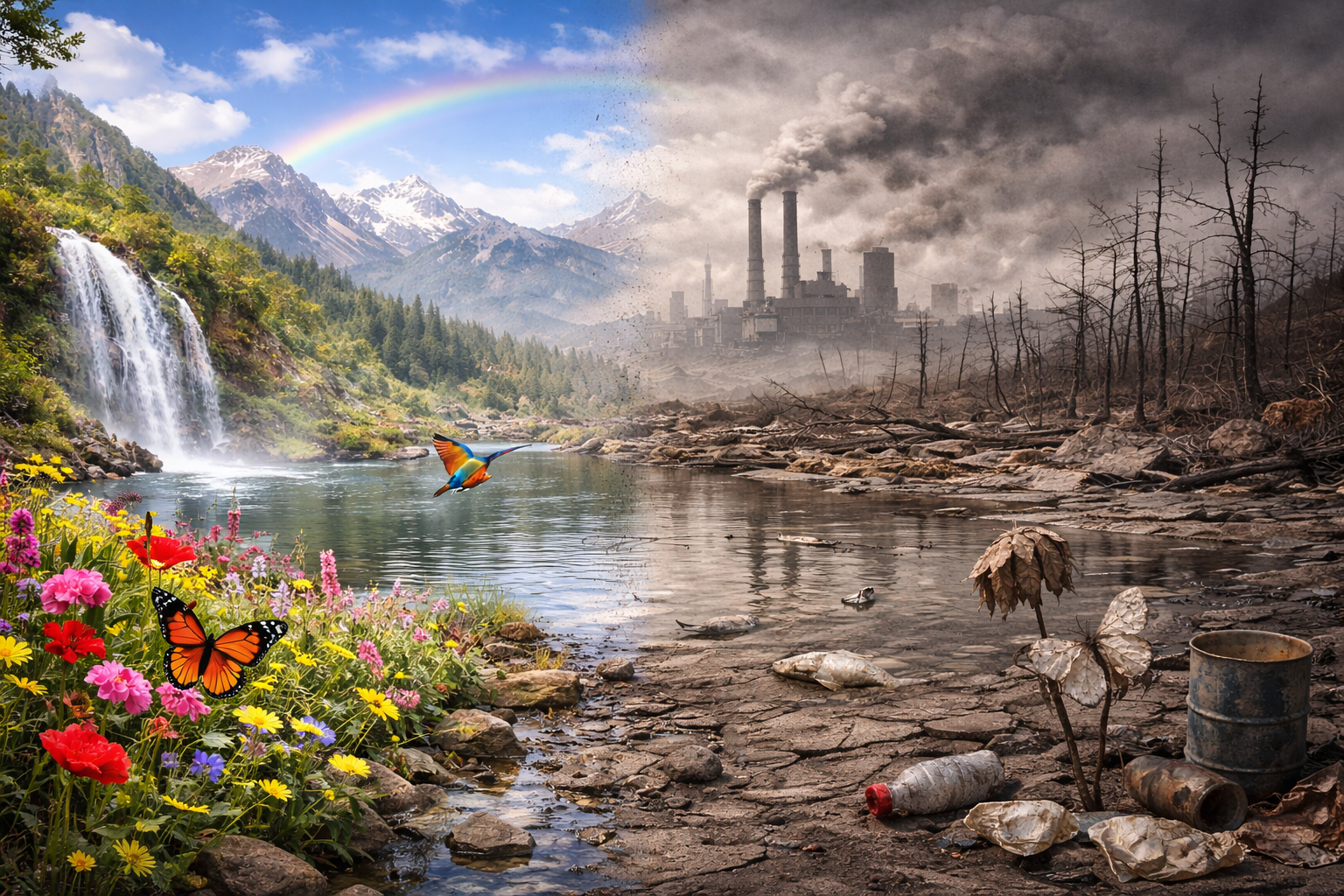
1. Changing Colours of the Natural World: A Climate Signal
Over the last two decades, more than half of the world’s oceans have turned greener, while forests are browning prematurely. These shifts reflect an accelerating ecological instability shaped by global warming, habitat loss, and pollution. The colours of nature—once reliable indicators of species fitness and ecosystem health—are undergoing rapid transformation.
Species coloration is tightly linked to survival strategies such as camouflage, thermoregulation, and mate attraction. With rising temperatures and altered habitats, these adaptive systems are being stressed. Consequently, animals and plants are drifting away from their evolutionary colour norms, signalling deeper ecological imbalance.
Research from the Amazon illustrates how deforestation is reducing colour diversity in butterflies. Brightly coloured species are declining, while duller butterflies proliferate due to superior camouflage in degraded environments. Such changes represent early warnings of ecological disruption and the loss of evolutionary traits shaped over millennia.
Ignoring these shifts could cause silent collapses in species populations, as colour-based ecological functions weaken, ultimately eroding ecosystem resilience.
2. Climate-Driven Colour Change in Animals
Rising temperatures are directly influencing pigmentation in various species. During the Industrial Revolution, soot-darkened trees favoured darker peppered moths; today, global warming is driving the opposite trend across insects and birds. Reduced melanin under warmer conditions is making species lighter, particularly in the northern temperate regions.
A 2024 Ecology and Evolution study found that insects—such as dragonflies and ladybirds—are becoming lighter to prevent overheating during frequent heatwaves. Lighter bodies allow insects to stay active longer under thermal stress, highlighting the role of colour in thermoregulation.
These patterns align with established ecological principles: Bogert’s rule predicts lighter colouration in warm climates for cold-blooded species; Gloger’s rule expects darker pigments where humidity and rainfall are high. Observations such as the increased prevalence of brown morph tawny owls in Europe underscore how warming winters are reshaping species distributions.
If such physiological adaptations become mismatched to rapidly changing climates, species may face heat stress, reduced activity windows, and elevated mortality.
Impacts:
- Lighter insects in temperate northern hemisphere responding to heatwaves
- Shift towards brown morph tawny owls due to milder winters
- Altered predator–prey dynamics as camouflage patterns change
- Compromised mating success where colours influence courtship
3. Urbanisation, Pollution, and Colour Alteration
Beyond climate change, urban environments are creating new evolutionary pressures. A 2024 study on 547 bird species in China found urban birds to be darker and duller than rural populations. Heavy metals such as lead can bind with melanin, altering plumage and possibly signalling physiological stress.
Plants are undergoing parallel changes. Declines in carotenoid production—key to red, yellow, and orange hues—reduce the attractiveness of plants to pollinators. Flowers are altering UV pigments to shield themselves from intensified sunlight, but these changes make them less detectable to pollinators, weakening plant–pollinator networks.
These shifts highlight how urbanisation reshapes ecological communication systems. Duller colours in birds and muted pigments in plants break long-standing visual cues essential to survival and reproduction.
Unchecked urban pollution risks degrading ecological signalling systems, weakening food webs and lowering species fitness in human-dominated landscapes.
Causes:
- Heavy metal exposure (lead, cadmium) in cities
- Reduction of carotenoid pigments in urban plants
- Increased sunlight and UV exposure modifying floral UV patterns
Impacts:
- Duller plumage in birds
- Reduced pollinator visitation
- Lower reproductive success and altered courtship timing
4. Colour Loss in Marine Ecosystems: Coral Bleaching
One of the starkest examples of ecological colour loss is coral bleaching. In February 2025, major bleaching events were recorded in the Gulf of Mannar, Palk Bay, Lakshadweep, Andaman & Nicobar Islands, and the Gulf of Kachchh. Heat stress forces corals to expel symbiotic algae, turning them white and leaving reefs vulnerable to starvation and disease.
Healthy reefs function as “underwater forests”, providing habitat, breeding grounds, and food security for marine organisms. Bleaching collapses this structure, allowing algae and stress-tolerant organisms to dominate, thereby reducing biodiversity and destabilising marine ecosystems.
Ocean greening—driven by proliferating algal blooms—further compounds these stresses. Excessive algae block sunlight, hinder photosynthesis, and reduce oxygen levels when they decay, harming fish and other marine life.
If marine colour disruptions continue, fisheries, coastal livelihoods, and biodiversity will face irreversible losses, undermining long-term ecological and economic stability.
Impacts:
- Coral whitening from heat stress
- Decline of reef-associated fish and invertebrates
- Rise of algal blooms reducing water clarity and oxygen
- Disruption of marine food chains
5. Restoration Potential and Way Forward
While ecological discolouration signals widespread stress, evidence shows that revival is possible. Regenerating Amazon forests have restored colour diversity in butterfly populations, illustrating how ecosystem recovery can reverse colour loss. Protecting microhabitats such as shaded refuges can help darker insects avoid overheating, stabilising population structures.
In India, regulating coastal development, improving water quality, and monitoring stress indicators are essential to minimise coral bleaching. Strengthening long-term ecological monitoring—especially in southern hemisphere and tropical regions—will also address knowledge gaps and inform targeted interventions.
"By successfully implementing strategies from both field- and lab-based monitoring, we can guide interventions." — Md Tangigul Haque
Proactive habitat management and monitoring can prevent irreversible ecological colour loss, preserving both biodiversity and the ecosystem services underpinning human well-being.
Policy Measures:
- Strengthen large-scale ecological surveys in tropical regions
- Restore degraded landscapes to revive plant–animal colour interactions
- Improve coastal regulation and water quality standards
- Preserve shaded microhabitats to help thermally sensitive species
- Enhance monitoring of coral stress indicators
Conclusion
Ecological colour changes are becoming visible indicators of climate stress, habitat degradation, and pollution. These transformations affect survival strategies, reproduction, and ecosystem balance. By integrating habitat restoration, pollution control, and long-term ecological monitoring, policymakers can slow or reverse colour degradation. Preserving the planet’s natural colours is not merely aesthetic—it is central to sustaining biodiversity and ecological resilience essential for human development.