
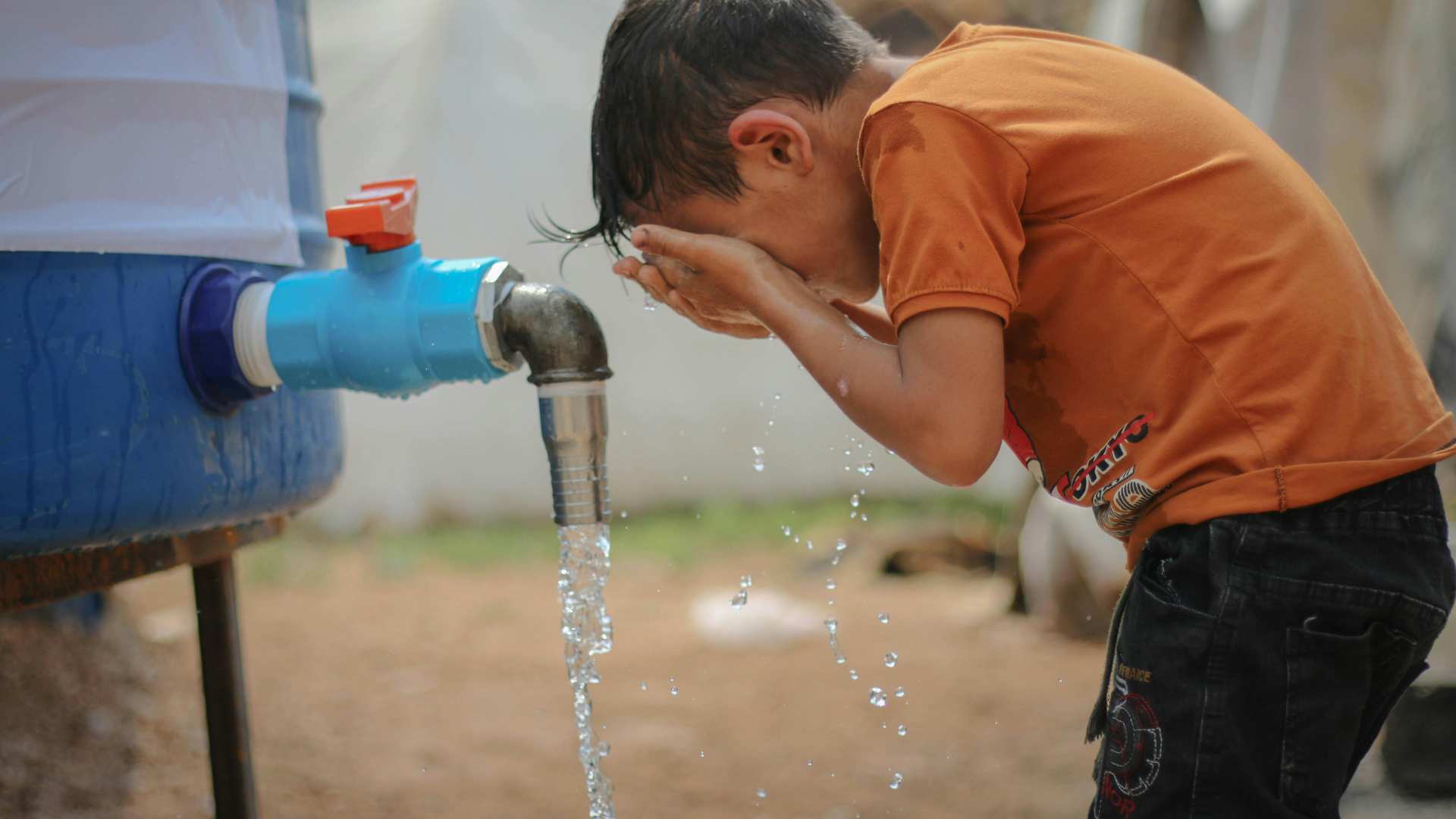
Water Bankruptcy Era: Global Crisis Unfolds

A new UN report highlights the onset of water bankruptcy, emphasizing its impact on millions and potential migrations across vulnerable regions.
5 mins read
Global water bankruptcy threatens billions amid climate, mismanagement
Not Started

1. Context: Emergence of “Global Water Bankruptcy”

A new United Nations report signals a qualitative shift in the global water crisis by introducing the concept of “global water bankruptcy.” Unlike earlier notions of water stress or scarcity, this term denotes irreversible depletion of freshwater systems beyond their capacity to recover.

The report, published by the UN University’s Institute for Water, Environment and Health, highlights that human extraction and mismanagement have crossed ecological thresholds in many regions. This reframing is significant for governance because it implies that conventional demand–supply adjustments may no longer suffice.

If policymakers continue to treat water scarcity as a temporary or cyclical challenge, governance responses may remain inadequate, leading to deeper social, economic, and ecological instability.

“Water bankruptcy is not about how much water you have; it’s about how you manage your water.” — Kaveh Madani, UN University

The shift from scarcity to bankruptcy underscores the loss of recovery potential; ignoring this risks locking societies into permanent water insecurity.

2. Scale of Global Freshwater Insecurity

The report estimates that three-quarters of the global population, around 6.1 billion people, live in countries facing freshwater insecurity or critical insecurity. Additionally, 4 billion people experience severe water scarcity for at least one month annually.

These figures demonstrate that water insecurity is no longer confined to arid or low-income regions but has become a widespread global condition. Such scale directly affects public health, food security, and economic productivity.

Failure to recognise the magnitude of this crisis could lead to underinvestment in water governance and delayed adaptation strategies.

Statistics:

  • Population in water-insecure countries: ~6.1 billion
  • People facing severe seasonal water scarcity: 4 billion

Water insecurity at this scale transforms a sectoral issue into a systemic development challenge.

3. Visible Manifestations: Urban Collapse and Ecological Damage

Cities are increasingly facing “Day Zero” scenarios, where municipal water systems approach collapse. Tehran’s acute shortages have prompted warnings about possible evacuation or even relocation of Iran’s capital.

Ecological consequences are equally stark. In Turkey, over 700 sinkholes, some reaching 100 feet deep, have formed due to aquifer collapse from excessive groundwater extraction. These examples illustrate how hydrological stress translates into infrastructure failure and land instability.

Ignoring such early warning signs risks sudden urban crises with high humanitarian and economic costs.

Urban water failures reveal how environmental degradation directly undermines governance capacity.

4. Drivers: Climate Change and Human Mismanagement

While climate change intensifies droughts and makes water availability unpredictable, the report stresses that water management choices are equally decisive. Chronic groundwater overuse, deforestation, land degradation, and pollution have caused irreversible freshwater losses.

Climate change shifts freshwater patterns globally, but local actions often amplify these impacts. Higher temperatures increase evaporation, salinise soils, and intensify forest and peatland fires, especially where wetlands are drained or forests cleared.

If governance focuses only on climate mitigation without reforming land and water management, water availability will continue to decline.

“Droughts are no longer just natural but anthropogenic.” — Kaveh Madani

Anthropogenic drought highlights that policy decisions can either exacerbate or moderate climate impacts.

5. Groundwater Depletion and Quality Degradation

Nearly half of the world’s population relies on stored groundwater for domestic use, yet these reserves are being rapidly depleted. At the same time, one-quarter of humanity depends on large lakes that have lost half their water since the early 1990s.

Water availability is further overstated because much of it is polluted. Fertilisers, mining effluents, plastics, pharmaceuticals, and inadequate wastewater treatment have degraded rivers, lakes, and coastal waters, reducing usable supplies.

Ignoring water quality alongside quantity risks false assessments of water security.

Statistics:

  • Population dependent on groundwater: ~50%
  • Population dependent on shrinking large lakes: ~25%
  • Decline in lake water volumes since early 1990s: ~50%

Water quantity without quality does not translate into real water security.

6. Implications for Food Security and Migration

The report warns that drought and water scarcity are likely to drive migration in Sub-Saharan Africa, South Asia, and Latin America. Agricultural systems are particularly vulnerable, as rising temperatures increase evaporation and crop water demand.

A related Nature study notes that even regions experiencing heavier rainfall may face worse crop droughts due to faster soil moisture loss. Agriculture, as the largest water user, thus becomes a central stress multiplier.

If these dynamics are ignored, water stress could escalate into food insecurity and forced migration, straining political and social systems.

Water stress acts as a threat multiplier for food systems and human mobility.

7. Governance Response and Global Cooperation

The UN report calls for formal recognition of water bankruptcy in policy debates and the establishment of a global monitoring framework to track water resources. It urges governments to reconsider or block projects that further degrade water systems.

The timing is significant, ahead of preparatory meetings for the 2026 UN Water Conference. However, the U.S. decision to withdraw from UN Water and UN Universities may weaken collective global action, even if immediate operations continue.

Without coordinated monitoring and restraint, fragmented national actions may fail to arrest global water decline.

Effective water governance requires shared metrics, early warning systems, and collective restraint.

Conclusion

The concept of global water bankruptcy marks a turning point in understanding freshwater crises, shifting focus from temporary scarcity to irreversible depletion. Addressing this challenge demands integrated governance that combines climate adaptation, sustainable land and water management, pollution control, and international cooperation. Failure to act decisively risks entrenching water insecurity as a permanent constraint on human development.

Quick Q&A

Everything you need to know

Definition: 'Global water bankruptcy' refers to a situation in which freshwater systems have been depleted beyond recovery due to unsustainable human use, climate change, and mismanagement. Unlike 'water stress' or 'water crisis', which imply temporary or recoverable shortages, water bankruptcy indicates irreversible damage to local or regional water resources.

Key Differences: While water stress allows for interventions such as conservation and replenishment, water bankruptcy reflects permanent depletion of aquifers, lakes, and reservoirs. For instance, half the global population relies on groundwater, which in many areas is overdrawn faster than it can naturally recharge, leaving communities permanently vulnerable.

Global Implications: The UN report warns that 6.1 billion people live in areas with insecure or critically insecure water supplies, and 4 billion people face severe scarcity at least one month a year. This marks a paradigm shift in understanding freshwater challenges—from temporary crises to structural insolvency of water systems.

Importance of Management: Kaveh Madani, lead author of the UN report, emphasizes that water bankruptcy is as much about mismanagement as it is about scarcity. Poor allocation, over-extraction, pollution, and infrastructure inefficiencies can drastically reduce water availability even in regions with adequate rainfall.

Examples: In Turkey, overuse of groundwater has caused 700 sinkholes, while in Tehran, municipal water systems are approaching collapse, prompting potential city relocations. These crises demonstrate that without efficient management, abundance does not guarantee access.

Policy Implications: Proper water management includes regulating withdrawals, improving wastewater treatment, maintaining ecosystem services, and integrating climate adaptation strategies. Effective management can prolong the usability of available freshwater and prevent irreversible losses, highlighting its equal importance alongside natural resource availability.

Climate Change Effects: Rising temperatures increase evaporation, reduce soil moisture, and intensify droughts. Extreme weather events, such as heavy rains followed by dry periods, further destabilize water availability for agriculture, industry, and households.

Human-Induced Factors: Land degradation, deforestation, draining wetlands, excessive groundwater extraction, and pollution amplify scarcity. Agricultural practices, urbanization, and industrial effluents contribute to depletion and contamination of freshwater sources.

Interlinked Impacts: The combination of climate-driven variability and anthropogenic mismanagement transforms temporary droughts into long-term water crises. For example, semi-arid tropics experience soil erosion during extreme rainfall and increased plant water demand during heatwaves, stressing both surface and groundwater. This demonstrates that scarcity is a combined anthropogenic-climatic phenomenon.

Causes: Day Zero events occur when municipal water systems near depletion due to over-extraction, population pressure, and poor infrastructure. Rapid urbanization, inefficient water distribution, and reliance on non-replenishing sources like groundwater accelerate such crises.

Societal Implications: Water scarcity affects public health, agriculture, industry, and urban planning. In Tehran, authorities have warned of evacuating or relocating citizens. Such events can trigger social unrest, migration, and economic losses, as essential services like hospitals and schools struggle to function.

Policy Considerations: Governments must adopt water rationing, expand storage and distribution infrastructure, promote conservation, and invest in desalination or recycling technologies. These measures reduce vulnerability and ensure equitable water access.

Challenges: Addressing water bankruptcy involves systemic reform across governance, infrastructure, and environmental stewardship. Obstacles include lack of accurate monitoring, fragmented policies, pollution control difficulties, and competing demands from agriculture, industry, and urban populations.

Opportunities: Water-efficient technologies, integrated water resource management, and global cooperation provide solutions. For instance, investing in precision irrigation, wastewater recycling, and rainwater harvesting can enhance availability. Policy frameworks can incentivize sustainable groundwater use and protect wetlands.

Strategic Importance: Recognizing water bankruptcy in national and global policy debates allows governments to prioritize investments, regulate projects that degrade water sources, and create monitoring frameworks. International collaboration, such as sharing data and best practices, is crucial for managing transboundary water resources and ensuring long-term resilience.

Iran: Acute water shortages in Tehran have forced government warnings of potential evacuation or relocation of citizens, highlighting the urban consequences of water mismanagement.

Turkey: Excessive groundwater extraction led to the formation of roughly 700 sinkholes, some up to 100 feet deep, demonstrating geological consequences of unsustainable use.

Agriculture: Crop droughts in Europe, northern South America, and North America are worsening due to rising temperatures, increasing evaporation and soil moisture loss. In tropical semi-arid regions, extreme heat and rainfall extremes strain water supply for irrigation. These examples illustrate how poor management combined with climatic stressors has immediate societal, environmental, and economic repercussions.

Case Study: The UN report highlights the need for a global monitoring framework to track water availability, quality, and usage. Currently, mismanagement and pollution compromise both surface and groundwater. Half the world relies on groundwater, which is being over-extracted faster than it can recharge.

Lessons Learned: Countries with poor monitoring suffer Day Zero crises, sinkhole formations, and irreversible aquifer depletion. Conversely, nations investing in integrated water management, efficient irrigation, and pollution control demonstrate more resilience.

Policy Implications: A global framework would enable early warning systems, facilitate cross-border cooperation, and guide investments in sustainable water infrastructure. For example, tracking water stress across sub-Saharan Africa, South Asia, and Latin America can help policymakers prevent migration crises, protect ecosystems, and ensure equitable access.

Attribution

Original content sources and authors

Sign in to track your reading progress

Comments (0)

Please sign in to comment

No comments yet. Be the first to comment!