
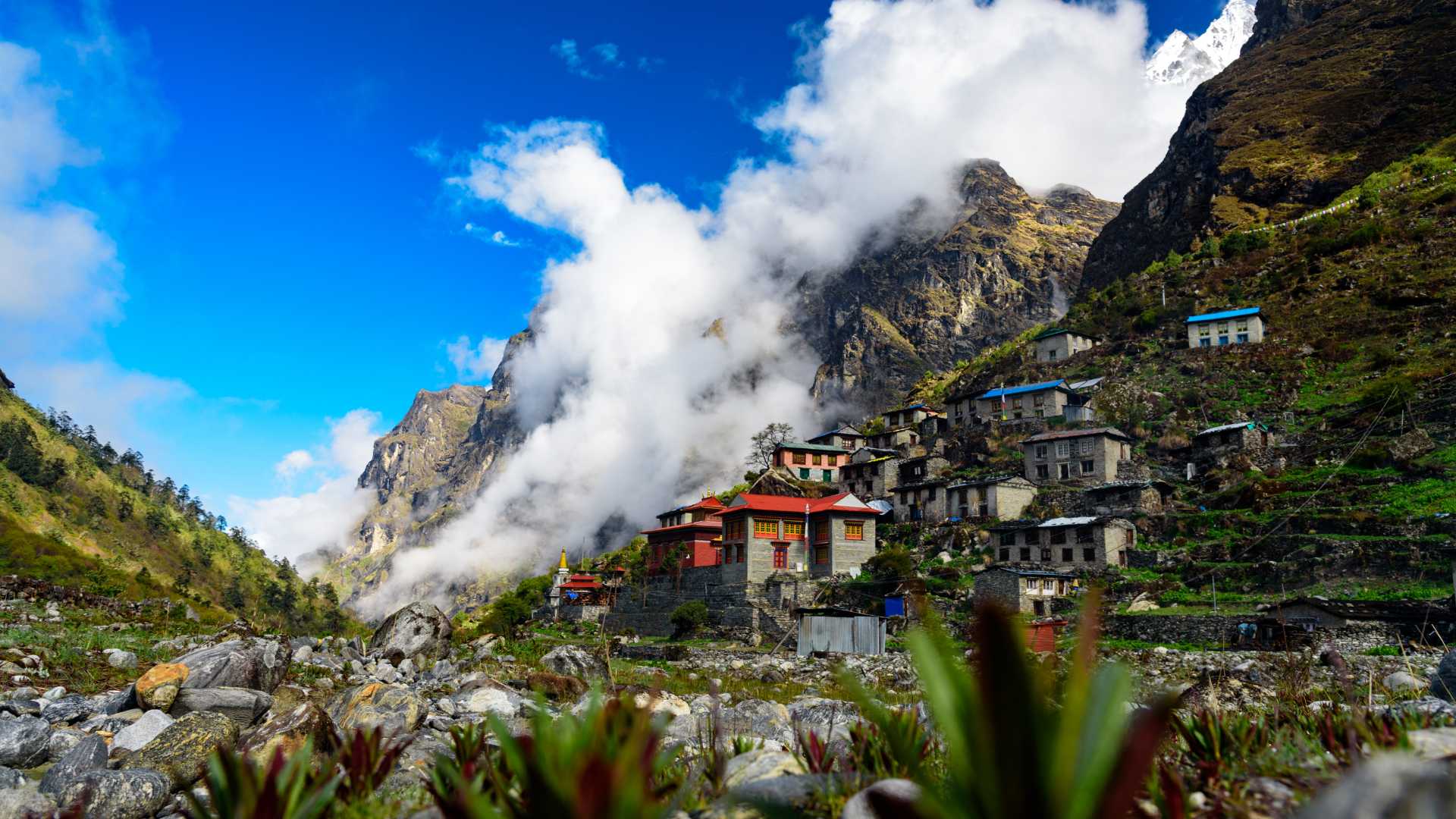
1. Climate Extremes in the Himalayas: Context and Scale
The year 2025 marked an inflection point in India’s climate vulnerability, with nearly 331 days affected by extreme climate events. These were not isolated anomalies but reflected a persistent pattern of intensified heatwaves, floods, landslides and avalanches across the Himalayan region.
The human cost was substantial, with over 4,000 deaths attributed to climate-induced disasters in a single year. Himalayan States such as Himachal Pradesh and Uttarakhand bore a disproportionate burden, indicating regional asymmetry in climate impacts.
Towns including Dharali, Harsil, Uttarkashi, Chamoli, Kullu, Mandi and Kishtwar experienced sudden cloudbursts, landslides and avalanche-triggered flash floods. These events led to loss of life, destruction of infrastructure and erosion of livelihoods, particularly in ecologically fragile mountain settlements.
The persistence of such disasters suggests that extreme events are becoming the “new normal” rather than episodic shocks. Ignoring this shift undermines disaster preparedness, fiscal stability and long-term development planning in mountain States.
When climate extremes become frequent, development models based on historical climate stability fail. If this reality is ignored, public infrastructure investments repeatedly convert into fiscal losses and humanitarian crises.
2. Infrastructure Expansion in Ecologically Fragile Zones
Despite recent disasters, infrastructure expansion has continued in high-risk Himalayan zones. In November 2025, the Uttarakhand Forest Department approved diversion of 43 hectares of forest land, including 10 hectares for muck dumping, for the Char Dham road-widening project.
This approval involved felling nearly 7,000 Devdar (Deodar) trees in areas such as Dharali and Harsil, which had recently suffered avalanche-induced flash floods. The decision highlights a disconnect between disaster experience and development choices.
The project relies on the DL-PS (double-lane with paved shoulder) standard, mandating a 12-metre paved width, even in zones officially classified as geologically unstable. Such uniform standards disregard terrain-specific risks.
The region lies north of the Main Central Thrust (MCT), a critical tectonic zone where major infrastructure is discouraged. Proceeding with large-scale construction here elevates disaster probability and undermines resilience objectives.
Applying standardised infrastructure norms to heterogeneous ecological zones prioritises speed over safety. If unchecked, this converts development projects into long-term risk multipliers.
3. Ecological and Hydrological Significance of Devdar Forests
Devdar forests constitute a critical ecological buffer in the Himalayan landscape. Their extensive root systems stabilise slopes, reduce landslide incidence and act as natural barriers against avalanches and glacial debris flows.
These forests are integral to the health of the Bhagirathi Eco-Sensitive Zone, a nearly 4,000 sq km buffer notified in 2012 to protect the Ganga’s last relatively pristine stretch. Forest degradation directly affects downstream river systems.
The article highlights the unique antimicrobial properties of Devdar trees, derived from terpenoids, essential oils and phenolic compounds. Organic matter from these forests regulates microbial activity in mountain streams, supporting a biologically balanced river ecosystem.
Devdar forests also maintain cooler microclimates, regulate snowmelt-fed stream temperatures and sustain dissolved oxygen levels essential for aquatic life. Their removal risks irreversible alteration of river ecology.
Natural ecosystems perform regulatory functions that engineered solutions cannot replicate. Ignoring these services results in hidden ecological costs that manifest as water insecurity and disaster risks.
4. Limitations of Compensatory and Technical Fixes
Recent proposals suggest “translocating” mature Devdar trees to mitigate forest loss. However, uprooting centuries-old trees effectively destroys their ecological functions, which are site-specific and non-transferable.
The Supreme Court has previously discouraged felling of Devdar trees in this region, recognising their irreplaceable ecological value. Administrative approvals that dilute this principle weaken judicially endorsed environmental safeguards.
Post-facto engineering solutions, such as slope retrofitting with Swiss fibreglass bolts and wire mesh, have been proposed as remedial measures. These interventions come eight years after large-scale destabilisation caused by aggressive hill cutting.
The core engineering flaw lies in cutting slopes beyond the natural angle of repose of Himalayan geology. Once destabilised at this scale, no amount of reinforcement can fully restore slope stability.
Technological fixes cannot compensate for fundamentally flawed planning. If design-stage errors persist, remedial spending becomes an endless cycle with diminishing returns.
5. Policy Contradictions and Governance Gaps
The ongoing development approach contradicts the National Mission for Sustaining the Himalayan Ecosystem (NMSHE), approved in 2014 under the National Action Plan on Climate Change. The mission emphasises glacier monitoring, biodiversity protection and hazard mitigation.
While NMSHE seeks to build scientific capacity and guide sustainable development, current projects bypass comprehensive Environmental Impact Assessments through fragmentation and procedural dilution.
Along nearly 700 km of widened roads, over 800 active landslide zones have emerged. Key border routes face frequent closures, undermining both connectivity and strategic objectives.
Local communities now describe the “all-weather road” as an “all-paidal” road, reflecting declining functionality and public trust in infrastructure governance.
Policy incoherence weakens institutional credibility. When flagship missions are ignored, sustainability frameworks become symbolic rather than operational.
6. Climate Change as a Risk Multiplier
Climate change amplifies existing vulnerabilities in the Himalayas by intensifying rainfall variability, accelerating glacial melt and increasing the frequency of extreme events. A cited study notes that high-altitude regions have warmed 50% faster than the global average since 1950.
This accelerated warming triggers a dangerous “water peak phase”, characterised by excessive runoff and flash floods. Once glaciers retreat substantially, this phase is followed by prolonged water scarcity and drought.
Unsafe land use—wide highways on unstable slopes, large tunnels without adequate geological surveys, and extensive hydropower projects—acts as the primary disaster trigger. Climate change magnifies their destructive potential.
Unregulated tourism, high vehicular density and absence of carrying-capacity assessments further compound ecological stress, revealing deeper governance failures.
Climate change does not act in isolation; it multiplies policy and planning failures. Ignoring this interaction leads to recurrent disasters rather than adaptive development.
7. Strategic and Developmental Implications
The Himalayas are foundational to India’s ecological security, water systems and climatic stability. Repeated disasters reinforce the axiom that national sustainability is inseparable from Himalayan stability.
If border connectivity and national interest are core objectives, disaster resilience must precede aggressive infrastructure expansion. Stability-focused design enhances both civilian safety and strategic reliability.
Science-based land-use planning, adherence to ecological thresholds and alignment with existing policy frameworks are essential to avoid converting development into a liability.
Failure to recalibrate current approaches risks long-term economic losses, humanitarian crises and irreversible ecological damage in one of the world’s most climate-sensitive regions.
Long-term national interest is served by resilience-oriented development. Ignoring this principle undermines security, growth and intergenerational equity.
Conclusion
The article underscores the need to realign Himalayan development with climate science, ecological limits and existing policy mandates. Sustainable infrastructure, grounded in terrain-specific risk assessment and ecosystem preservation, is essential for long-term resilience. Integrating disaster risk reduction into development planning will determine whether the Himalayas remain a stabilising foundation or an escalating source of national vulnerability.
.jpeg)
