1. Context: Strategic Infrastructure and the NGT Order
The Great Nicobar Island Project (GNIP) is a large-scale infrastructure initiative envisaging a trans-shipment port, an international airport, township development, and a 450 Megavolt-Amperes (MVA) gas and solar-based power plant. It is positioned as a project of strategic and economic importance in the Indian Ocean Region.
The Kolkata Bench of the National Green Tribunal (NGT) recently upheld the environmental clearance process, stating that safeguards were in place and that the project’s “strategic utility” justified limited public disclosure. The ruling endorsed the government’s appraisal mechanism rather than reopening substantive ecological concerns.
The debate reflects a classic development–environment dilemma: whether strategic and economic imperatives can outweigh ecological fragility and indigenous rights in remote territories. Such decisions carry long-term implications for environmental governance and federal accountability.
When strategic projects are insulated from deeper scrutiny in the name of national interest, institutional checks may weaken, affecting long-term ecological security and public trust in regulatory mechanisms.
2. Environmental Concerns: Biodiversity and Ecological Fragility
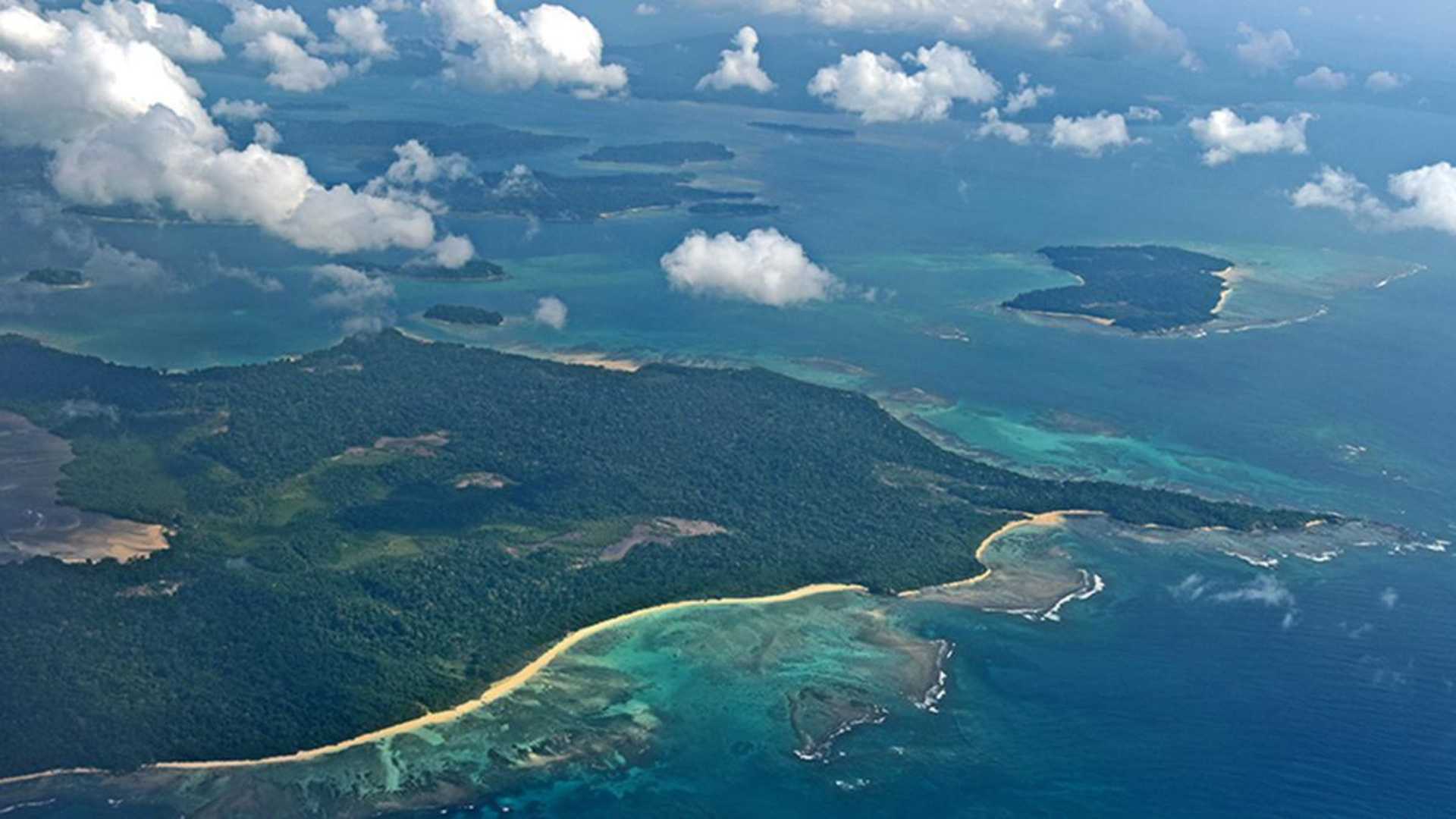
Great Nicobar Island hosts pristine tropical forests, rich biodiversity, coral ecosystems, and critical habitats such as leatherback turtle nesting grounds. The proposed diversion of forest land has triggered apprehensions among scientists and environmental groups.
Independent experts estimate that nearly nine lakh trees across 130 sq. km may be felled for the project. This scale of ecological alteration in an island ecosystem—known for high endemism and ecological sensitivity—raises concerns about irreversible biodiversity loss.
Disturbance to coral reefs and marine ecosystems could have cascading effects on coastal resilience, fisheries, and disaster vulnerability in a seismically active and climate-sensitive zone.
Key Ecological Risks:
- Felling of ~9 lakh trees
- Diversion of 130 sq. km of forest land
- Threat to leatherback turtle nesting habitats
- Coral reef disturbance
Island ecosystems are inherently fragile and less resilient to large-scale anthropogenic disturbances. Ignoring cumulative ecological impacts may compromise long-term sustainability and disaster preparedness.
"In nature's economy the currency is not money, it is life." — Vandana Shiva
3. Indigenous Rights and the Forest Rights Act (FRA)
The project area is home to the Shompen and Nicobarese tribes, whose community forest rights are protected under the Forest Rights Act (FRA), 2006. The Act mandates prior recognition and settlement of rights before diversion of forest land.
Concerns were raised regarding whether community rights were fully settled and whether consent processes were genuinely free and informed. Reports of alleged coercion to sign “surrender certificates” have amplified apprehensions regarding procedural integrity.
The NGT order did not independently re-examine these concerns in depth, instead relying on the government’s appraisal. This has intensified debate over whether statutory safeguards for tribal communities have been meaningfully implemented.
Legal and Governance Issues:
- Compliance with FRA, 2006
- Validity of Gram Sabha consent
- Allegations of coercive consent processes
Failure to ensure genuine consent and transparent settlement of rights risks undermining constitutional protections for Scheduled Tribes and weakens the legitimacy of development interventions.
4. Historical Precedent: Lessons from Extractive Development
The editorial draws parallels with phosphate mining in Nauru and Banaba in the early 20th century by the British Phosphate Commissioners. Large-scale strip mining rendered Banaba physically devastated by 1945, leading to forced relocation of its native population over 2,000 km to Fiji.
The long-term ecological damage and displacement of indigenous populations illustrate how short-term economic logic can produce irreversible socio-environmental costs in remote territories.
Such precedents underscore the need for precaution, especially in ecologically sensitive and geographically isolated regions where restoration may be difficult or impossible.
Comparative Insight:
- Banaba rendered uninhabitable by 1945
- Forced relocation over 2,000 km
- Ongoing struggle for rehabilitation
Historical experiences demonstrate that economic viability alone cannot determine policy in ecologically fragile zones; long-term environmental and social costs often exceed immediate gains.
5. Institutional Accountability and Environmental Governance
The NGT’s decision effectively places trust in executive agencies to implement safeguards conscientiously. However, the absence of deeper independent scrutiny may weaken the perception of environmental justice.
Environmental Impact Assessment (EIA) processes are intended to balance developmental needs with ecological safeguards. When they are seen as procedural formalities rather than substantive evaluations, regulatory credibility suffers.
Transparency limitations justified on strategic grounds raise broader questions about public participation, informed debate, and democratic accountability in environmental decision-making.
Strong institutions require not only statutory compliance but also perceived fairness and transparency; otherwise, governance deficits can undermine both environmental protection and development legitimacy.
6. Development vs. Environment: Structural Policy Dilemma
The GNIP debate exemplifies the structural tension between:
- Economic and strategic imperatives (port-led growth, maritime positioning)
- Ecological conservation (biodiversity, forests, marine systems)
- Indigenous rights and social justice
- Institutional credibility and participatory governance
In the long term, whether the project proves to be a “net good” will depend not merely on economic returns but on how effectively environmental safeguards, tribal protections, and transparent governance are implemented.
The issue intersects multiple GS dimensions:
- GS1: Tribal communities and geographical vulnerabilities
- GS2: Environmental governance, FRA, NGT
- GS3: Infrastructure development, biodiversity conservation
- Essay: Development vs sustainability; strategic autonomy vs ecological prudence
Balanced development requires integrating strategic objectives with ecological prudence and social justice; neglecting any one dimension risks creating irreversible developmental imbalances.
Conclusion
The Great Nicobar Island Project represents a critical test of India’s environmental governance architecture. Strategic infrastructure and ecological conservation need not be mutually exclusive, but achieving this balance requires rigorous appraisal, transparent processes, and genuine community participation. Long-term national interest ultimately depends on harmonising economic ambition with ecological and institutional sustainability.