Introduction
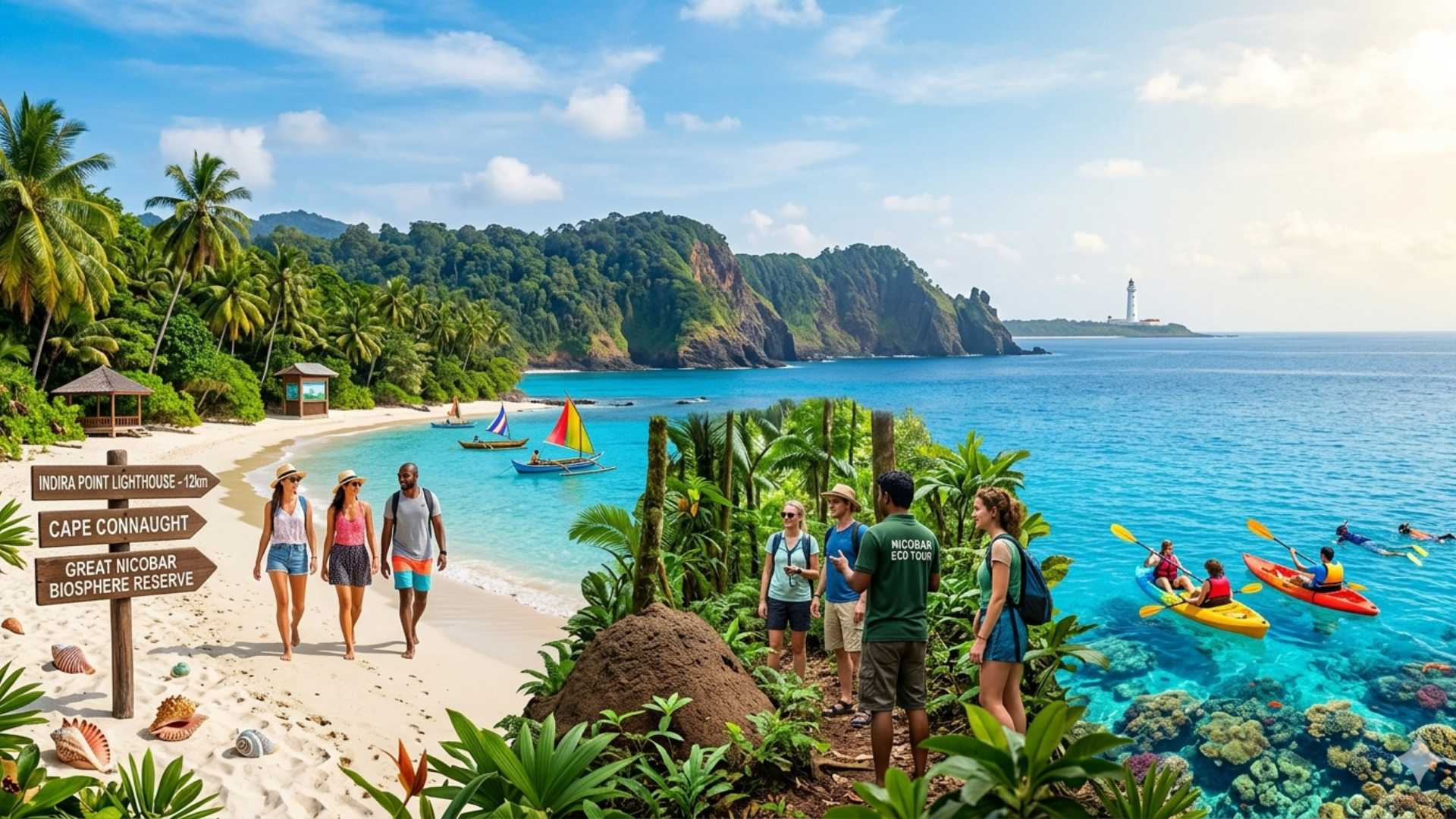
The Great Nicobar Island (GNI) — India's southernmost landmass — sits at one of the world's most strategically critical maritime chokepoints: the western entrance to the Malacca Strait, through which ~30% of global trade and 80% of China's oil imports pass annually. The Union government's ₹92,000 crore mega-project to develop GNI as a port, tourism, and logistics hub represents India's most ambitious Andaman & Nicobar development initiative. Yet it has triggered one of India's sharpest contemporary conflicts between developmental imperatives and the constitutional rights of Particularly Vulnerable Tribal Groups (PVTGs) — the Nicobarese and the Shompen.
"Development that displaces the most vulnerable without consent is not development — it is dispossession with infrastructure."
Project Components at a Glance
| Component | Details |
|---|---|
| Total outlay | ₹92,000 crore |
| International Container Transhipment Port (ICTP) | Leverage Malacca Strait proximity |
| Airport | International connectivity |
| Power plants | Energy infrastructure |
| Tourism infrastructure | Adventure, biodiversity, amusement, family entertainment |
| Projected population by 2055 | 3.36 lakh (from current ~10,000) |
| Expected tourist inflow (2055) | 1 million/year |
| Employment in tourism & allied sectors | 70%+ of direct jobs |
| Implementing agency | Andaman & Nicobar Islands Integrated Development Corporation (ANIIDCO) |
Strategic Rationale: Why GNI Matters
Geographic significance:
| Parameter | Detail |
|---|---|
| Location | Southern tip of Andaman & Nicobar archipelago |
| Distance from Malacca Strait (western entrance) | ~90 nautical miles |
| Global trade through Malacca Strait | ~30% of world trade |
| China's oil imports via strait | ~80% |
| Nearest major transshipment port (competitor) | Colombo, Singapore, Port Klang |
Strategic objectives:
- Counter China's String of Pearls — naval bases from Gwadar to Hambantota encircling India
- Establish Indian Ocean Region (IOR) dominance
- Capture global transshipment traffic — India currently sends 75%+ of its transshipment cargo to foreign ports
- Dual-use infrastructure: commercial port + naval forward operating base
The Ecological Concern
GNI is among the most biodiverse and ecologically sensitive zones on earth:
| Ecological Asset | Status |
|---|---|
| Forest cover | ~85% of island — tropical rainforest |
| Leatherback sea turtle nesting | Galathea Bay — one of world's largest nesting sites; ICTP location overlaps |
| Coral reef systems | Among India's richest |
| Endemic species | Multiple — flora and fauna found nowhere else |
| Seismic vulnerability | Andaman arc — high earthquake/tsunami zone (2004 tsunami epicentre nearby) |
| Designated protected areas | Galathea National Park, Campbell Bay National Park |
Environmental clearance controversies:
- National Green Tribunal set aside biodiversity concerns citing "strategic importance" — critics call this a category error (security ≠ environmental exemption)
- Challenge to project clearances pending in Calcutta High Court
- Forest Rights Act (FRA) 2006 — tribal forest rights allegedly not settled before clearances granted
Tribal Rights: The Constitutional Crisis
Two PVTGs at stake:
| Community | Population | Status |
|---|---|---|
| Nicobarese | ~30,000 (GNI: ~8,000–9,000) | Scheduled Tribe; some integration with mainland |
| Shompen | ~200–400 | Amongst world's last uncontacted/minimally-contacted hunter-gatherer groups |
Legal framework being tested:
| Law | Provision at Stake |
|---|---|
| Forest Rights Act, 2006 | Community forest rights must be settled before diversion |
| PESA, 1996 | Gram Sabha consent mandatory for tribal land acquisition |
| Article 19(5) | Reasonable restrictions on movement to protect tribal areas |
| Article 21 | Right to life includes right to livelihood and cultural identity |
| UN Declaration on Rights of Indigenous Peoples (UNDRIP) | Free, Prior and Informed Consent (FPIC) — India voted in favour |
Specific concerns:
- Two contradictory draft relocation plans — communities unclear where they will be moved
- 30-day public consultation window — no notification date mentioned, making deadline unknown
- Shompen — project area overlaps their forest habitat; contact could be catastrophic (Andamanese precedent — population collapsed from 5,000 to ~400 post-contact)
Governance & Process Failures
| Issue | Detail |
|---|---|
| Consultation opacity | Draft plan notified without clear date — 30-day window indeterminate |
| Contradictory relocation drafts | Two plans with inconsistent resettlement locations |
| FRA non-compliance | Forest rights not settled before environmental clearances |
| NGT overreach concern | "Strategic importance" used to override ecological standards |
| Demography transformation | 10,000 → 3,36,000 — a 33x increase — irreversible social change |
Balancing Act: Development vs. Rights
| Pro-Development Argument | Counter-Argument |
|---|---|
| Malacca Strait leverage — genuine strategic need | Naval objectives can be met with smaller footprint |
| Transshipment port reduces India's port dependency | Commercial viability questioned — Colombo/Singapore entrenched |
| Employment and connectivity for islanders | 70% tourism jobs benefit migrants, not Nicobarese |
| Infrastructure deficit in A&N Islands | Scale of transformation disproportionate to need |
| India's blue economy and maritime vision | Ecological destruction undermines long-term blue economy |
Way Forward
- Settle FRA rights first — no further construction until Nicobarese community forest rights formally recognised
- Free, Prior and Informed Consent (FPIC) for Shompen — independent anthropological oversight mandatory
- Reconcile contradictory relocation plans — single, transparent, community-validated resettlement framework
- Scale naval component separately from commercial/tourism development — decouple strategic from commercial
- Independent ecological impact assessment — not routed through agencies with project stake
- Leatherback turtle nesting site protection — ICTP location reconsideration or seasonal construction moratorium
- All-party parliamentary oversight committee — given irreversibility of demographic and ecological transformation
Conclusion
The Great Nicobar project is not a choice between development and backwardness — it is a choice between two visions of development. One vision treats strategic geography as sufficient justification to override forest rights, tribal consent, and ecological thresholds. The other insists that India's constitutional democracy cannot selectively apply its own laws based on project scale or security rationale. The Shompen, one of the last uncontacted peoples on earth, did not ask to be at the entrance to the Malacca Strait. India's obligation to them — legal, ethical, and civilisational — must precede its obligation to capture transshipment market share.