
Introduction
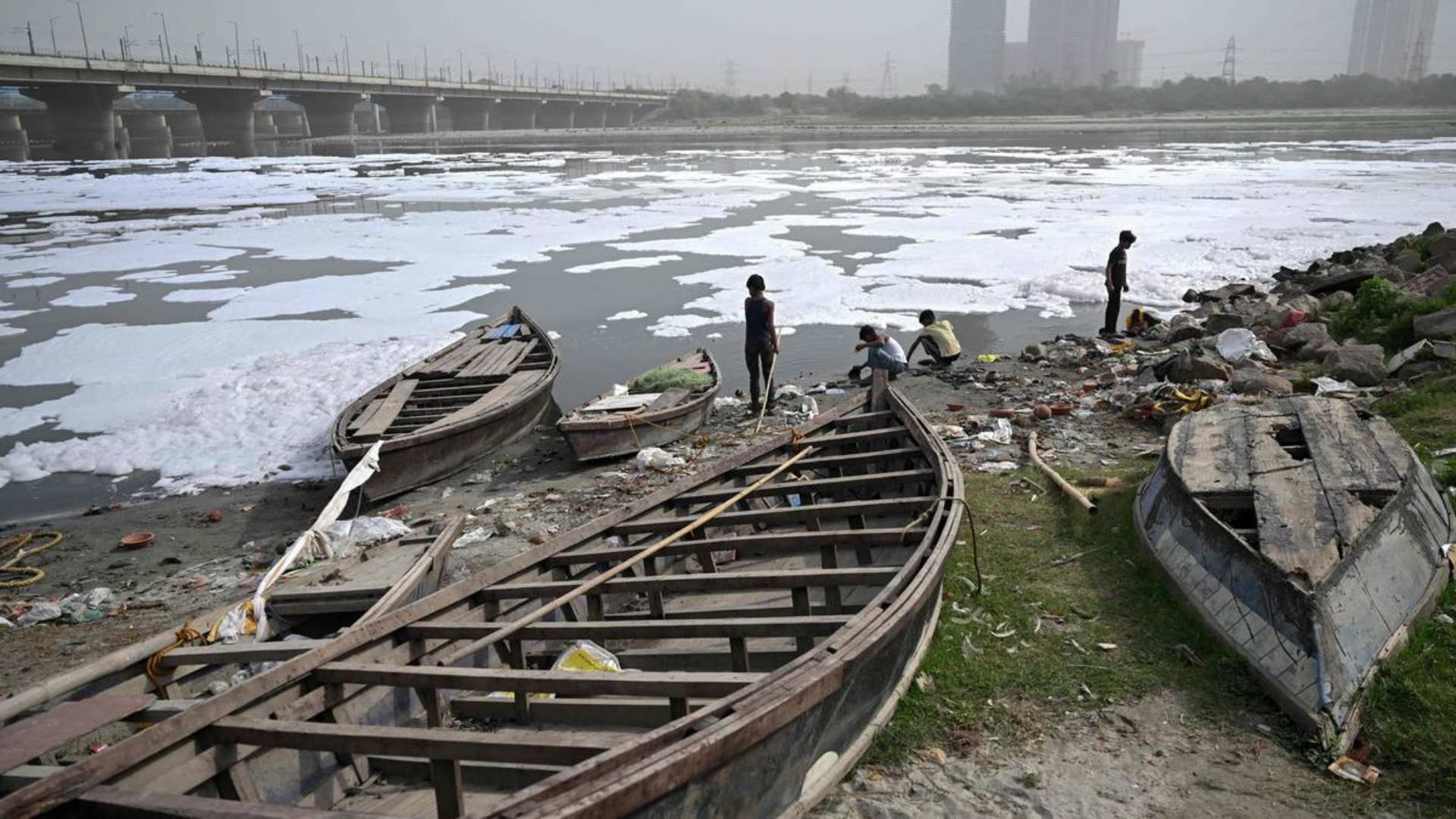
India's rivers are simultaneously sacred and severely stressed. The CPCB's 2025 assessment identified 296 polluted river stretches across 271 rivers, with BOD levels at 800+ locations exceeding safe bathing limits — a crisis compounded by large-scale ritual offerings that, though culturally significant, impose measurable ecological costs on already fragile aquatic ecosystems.
"The debate is not about curbing faith, but about recognising ecological limits."
| Data Point | Figure |
|---|---|
| Polluted river stretches (CPCB 2025) | 296 across 271 rivers |
| Yamuna BOD in Delhi | 83 mg/l (safe limit: 3 mg/l) |
| Milk poured into Narmada (April 2025) | 11,000 litres |
| Equivalent nutrition value | 44,000 glasses; 2,200 children fed daily for 20 days |
| Daily milk+oil offerings at Varanasi ghats | 1,250 litres each (minimal estimate) |
| Daily floral waste at Varanasi | 5 tonnes (peak: 14 tonnes) |
| MP malnutrition scheme budget | ₹700 crore (Yashoda Scheme, 2026–27) |
Background & Context
Rivers in India hold civilisational, spiritual, and ecological significance simultaneously. Ritual offerings — milk, flowers, oil, ashes, idols — have been practiced for millennia. However, traditions that evolved in an era of sparse populations are now practiced at vastly larger scales, amplifying ecological impact. The Narmada milk-pouring incident (April 2025) crystallised a long-simmering tension between religious freedom and environmental responsibility, exposing gaps in regulation, enforcement, and public discourse.
Key Concepts
Biochemical Oxygen Demand (BOD): A measure of organic pollution load in water. Higher BOD = lower dissolved oxygen = ecological stress. Safe limit for bathing: 3 mg/l. Dairy effluents have BOD levels far exceeding domestic sewage.
Eutrophication: Nutrient enrichment from organic offerings triggers algal blooms → further oxygen depletion → aquatic biodiversity collapse.
Cumulative Pollution Load: Even individually minor offerings create significant aggregate pollution. At Varanasi's ghats (2.5 lakh daily footfall), minimal per-person offerings of 5ml milk + 5ml oil + one flower = 1,250 litres each and 5 tonnes of floral waste daily.
Environmental Impact Analysis
1. Dissolved Oxygen Depletion Dairy effluents carry high BOD, accelerating microbial activity and rapidly consuming dissolved oxygen. This suffocates aquatic life — fish, macroinvertebrates, and riparian biodiversity — creating ecologically "dead" stretches as seen in the Yamuna (BOD: 83 mg/l, nearly 27× safe limit).
2. Algal Blooms & Eutrophication Nutrient-rich offerings (milk, flowers, food) trigger phytoplankton overgrowth. Algal blooms block sunlight, further depleting oxygen, releasing toxins, and disrupting the aquatic food chain.
3. Heavy Metal & Synthetic Contamination Idol immersion introduces heavy metals from paints and synthetic materials. NGT's 2018 monitoring committee noted an "unacceptable rise" in pollution and heavy metals post-immersion in the Yamuna.
4. Scale Amplification Events like Kumbh Mela, Chhath Puja, Durga Puja, and Ganesh Utsav produce measurable BOD and solid waste spikes — confirmed by CPCB monitoring and peer-reviewed studies.
Legal & Regulatory Framework
| Legal Instrument | Relevance |
|---|---|
| Water (Prevention & Control of Pollution) Act, 1974 | Prohibits discharge of pollutants into water bodies |
| Article 21, Constitution | Right to clean environment as fundamental right |
| Article 25, Constitution | Religious freedom — not absolute, subject to public health |
| Precautionary Principle | Environmental protection even under scientific uncertainty |
| Polluter Pays Principle | Applied by NGT to ritual pollution cases |
| NGT CPCB Guidelines, 2020 | Mandates artificial tanks/regulated zones for idol immersion |
Critical Gap: No single law explicitly regulates offerings such as milk, flowers, oil, or mass bathing as a distinct category. Enforcement remains uneven due to political sensitivities.
Governance Challenges
- Regulatory vacuum: Ritual offerings fall outside clear statutory definitions of "pollutants" under existing law.
- Political sensitivity: State pollution control boards and NGT have been slow to act — no action taken in the Narmada case despite public outcry.
- Scale blindness: Per capita limits alone are insufficient without site-specific caps, waste collection infrastructure, and diversion systems.
- Opportunity cost: 11,000 litres of milk poured into Narmada could have supplemented MP's ₹700-crore Yashoda Scheme targeting 1.3 crore malnourished children.
Way Forward
- Regulatory clarity: Explicit guidelines under the Water Act for ritual offerings — categorised by scale, location, and ecological sensitivity of the water body.
- Site-specific management: Designated offering zones with collection and treatment infrastructure at major pilgrimage sites.
- Community-led reimagination: Encourage eco-friendly alternatives — biodegradable flowers, symbolic micro-offerings — through religious leadership, not state imposition.
- NGT jurisdiction expansion: Extend idol immersion guidelines to cover all organic ritual offerings above threshold quantities.
- Ecological literacy: Integrate river ecology and pollution science into school curricula and pilgrimage site awareness programmes.
Conclusion
The Narmada milk-pouring episode is not an isolated controversy — it is symptomatic of a structural governance gap at the intersection of faith, ecology, and law. India's constitutional framework already recognises that religious freedom is not absolute when it conflicts with public health and environmental rights. The challenge is not theological but administrative: building regulation that is ecologically effective, politically sensitive, and culturally legitimate. Reimagining devotion within ecological limits is not a betrayal of tradition — it is its most mature expression.
