
1. Coastal cleanliness governance gap
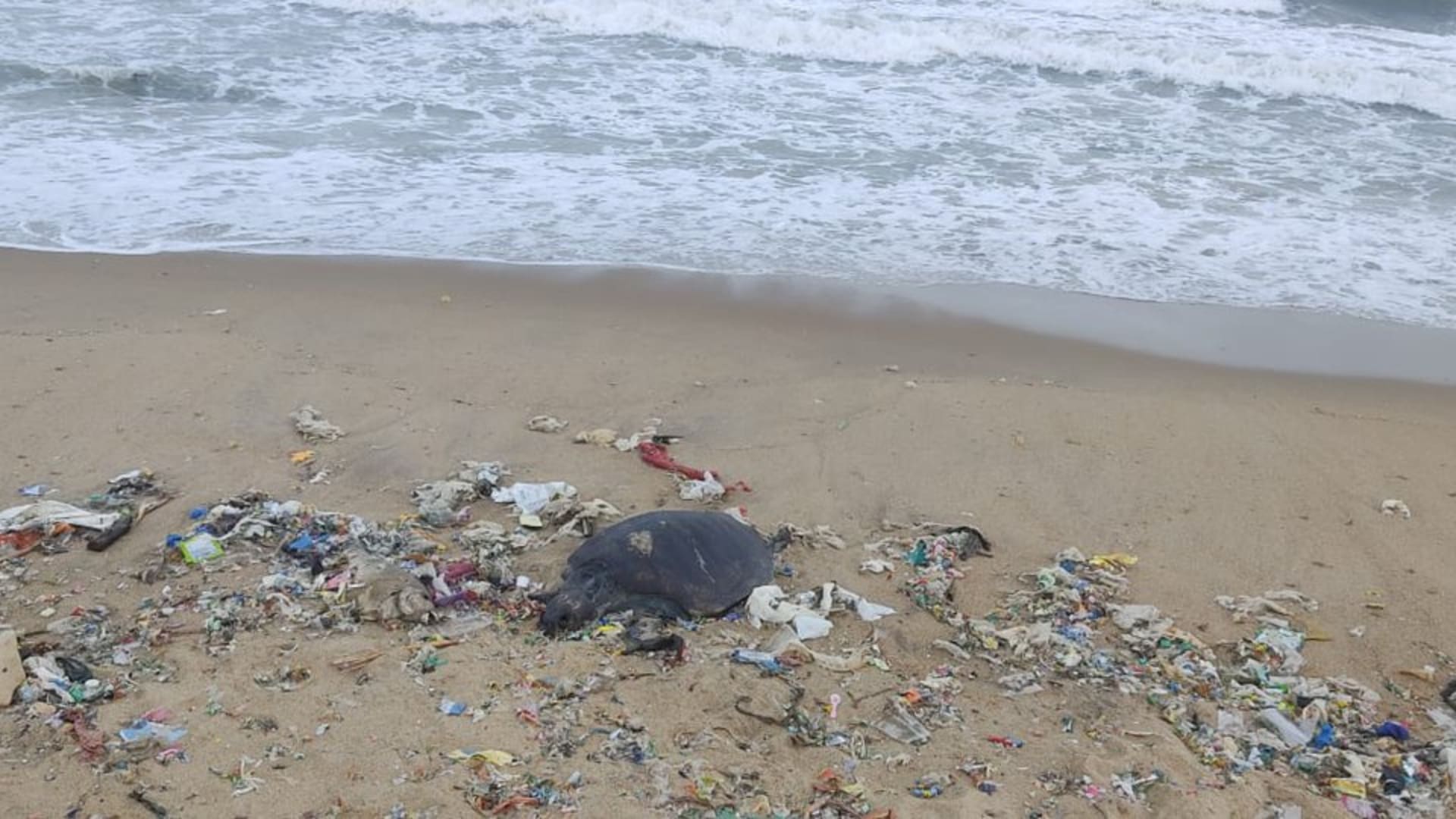
Kovalam beach illustrates uneven outcomes of coastal cleanliness governance within the same district geography. Despite tourism value and community usage, non-certified public stretches lack routine conservancy attention, indicating implementation variance at the panchayat/local body level. This contrasts with a nearby Blue Flag certified beach, which has retained certification for the 5th consecutive year, reflecting sustained compliance with global environmental and cleanliness standards.
Beaches are public commons that influence tourism economy, coastal ecology, and urban-rural quality of life. Neglect, especially post-rain littering, signals weak decentralised waste logistics, monitoring, and accountability loops. If not addressed early, such hotspots evolve into chronic waste sinks, increasing clean-up costs, lowering tourist inflow, and degrading marine habitats.
Inconsistent SWM (Solid Waste Management) execution creates spatial inequity; ignoring it results in tourism decline, marine pollution, health risks, and loss of environmental credentials for the region.
2. Local institutional capacity and last-mile SWM
Local accounts indicate that rain-induced waste surfaced in early December, but clearance by panchayat conservancy staff has been delayed, pointing to last-mile SWM capacity constraints. Privately managed or hotel-adjacent areas show better maintenance, suggesting that institutional incentives and supervision are stronger where economic actors depend on cleanliness for revenue, unlike neglected public edges.
The presence of glass, plastics, and symbol-bearing waste shows deficiencies in segregation, collection frequency, and enforcement of anti-litter norms. Collector’s response confirms issue acknowledgement but remains at the assurance stage, reinforcing that grievance redressal channels exist but require faster SLA-based resolution.
Where local bodies lack operational capacity or performance pressure, commons degrade quickly; if ignored, distributed waste becomes a permanent ecological and economic liability.
-
Key observations (derived from case context):
- Littered public stretch vs Blue Flag compliant stretch
- Post-rain waste accumulation since early December
- Regular cleaning limited to private/hotel zones
- Clearance pending at panchayat level
3. Environmental, social, and economic implications (GS3–GS1 link)
Coastal pollution impacts ecological sustainability (GS3), community well-being (GS1), and tourism-linked livelihoods. Designer synthetics in previous cases and coastal waste here reflect broader governance challenges of monitoring dispersed, portable, last-mile issues in urban-adjacent rural tourism belts.
Blue Flag certification nearby demonstrates policy success, but the neglected stretch shows the risk of dual-speed environmental governance. Consequently, environmental branding cannot substitute for universal infrastructure and accountability.
If such dual outcomes persist, certified successes remain islands while surrounding geographies undermine overall environmental performance and long-term human capital linked to clean public spaces.
-
Impacts:
- Marine plastic intrusion into waves → ecological harm
- Glass and unsegregated waste → community safety risks
- Spatial neglect → tourism inequity and credibility erosion
4. Policy direction and implementation solutions
Scale district-wide coastal SWM through micro-geography mapping of waste-prone shore points, post-rain clean-up triggers, and performance benchmarking of panchayat SWM frequency. Adopt uniform monitoring dashboards for both certified and non-certified stretches to reduce spatial disparity.
Institutionalise event-based clearance protocols (rain, high tide, storm wash-ashore cycles) so that clean-up is automatic, not reactive to complaints. Expand Blue Flag learnings into standard panchayat KPIs as the administration plans extension to 3 more Chennai beach stretches.
Leveraging existing certification standards as operational KPIs ensures recall for exam answers; ignoring them prolongs commons degradation and raises future remediation burden.
-
Reforms/Measures:
- Trigger-based coastal clearance post-rain
- Private–public SWM supervision convergence
- KPI alignment using certification benchmarks
- Mobility and transit tagging of waste origin points
5. Way Forward (scalable governance focus)
Create commons-first SWM compliance metrics for coastal panchayats, integrate tourism actors into feedback loops, and deploy decentralised beach SWM squads during monsoons. Use issue-tracking SLAs to ensure time-bound clearance.
Adopt digital evidence capture (mobiles, vehicles, repeat geography tags) for network tracing and resource deployment planning. Expand certification standards as operational baselines, not aspirational badges.
6. Forward-looking governance outcome
Universal coastal SWM reduces marine pollution velocity, improves tourism reliability, lowers ecological risk, and protects public commons as assets for regional development.
"We do not inherit the earth from our ancestors; we borrow it from our children." — Native American Proverb
