
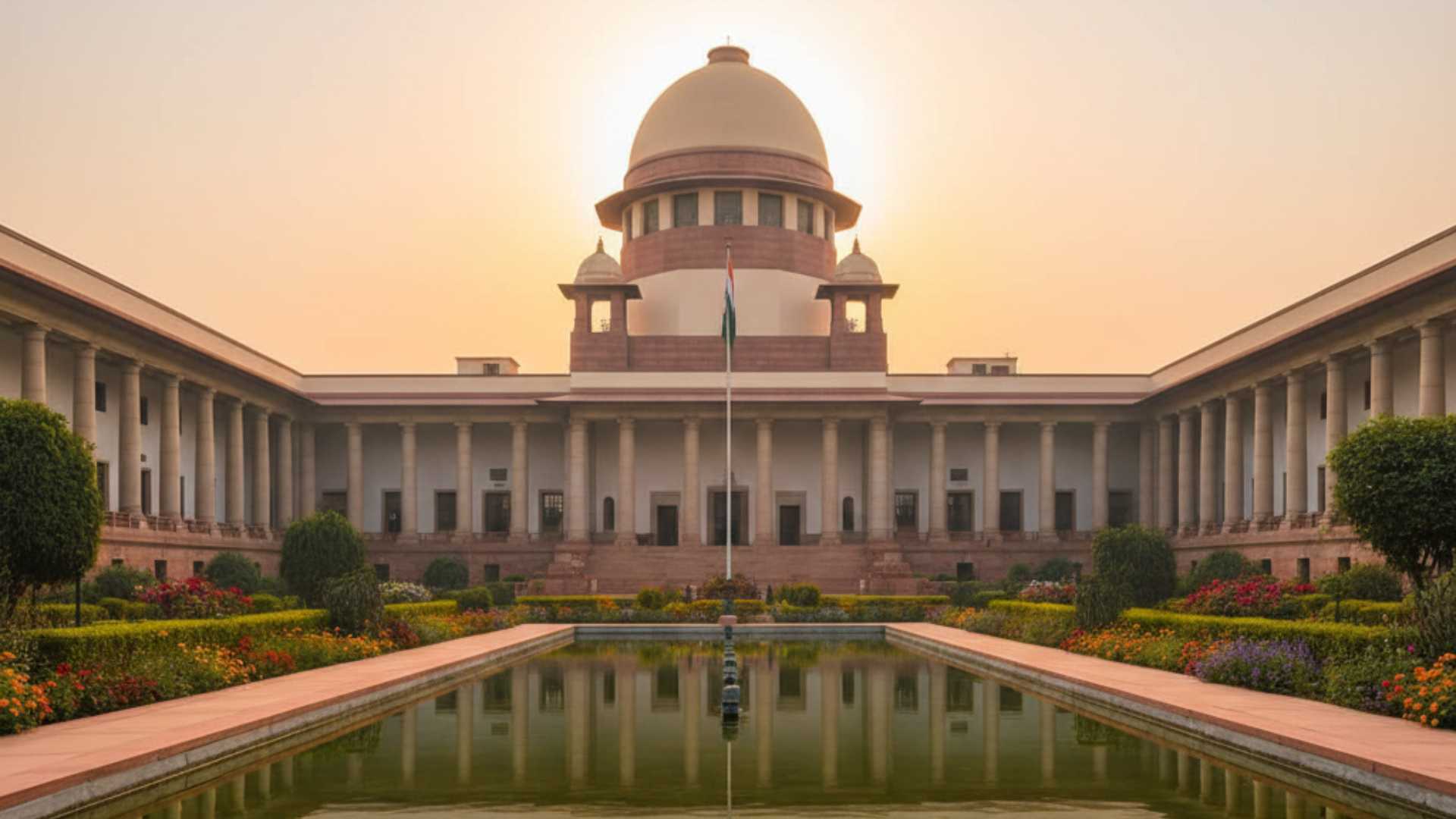
The Court’s remark highlights a collective-action paradox — citizens endure hazardous air, yet the cumulative effect of personal mobility choices, household waste burning, renovation dust, and high-emission celebrations sustains the very crisis they seek relief from.
1. Context of Air Pollution in Delhi
Delhi, the national capital, continues to experience severe air quality issues, as reflected in persistently high Air Quality Index (AQI) readings. Despite multiple interventions over the years, including reports, expert committees, and policy measures, tangible improvement remains limited. The Supreme Court, led by Chief Justice Surya Kant, has recently observed that the sufferers of poor air quality are indirectly contributing to the problem themselves.
The challenge is compounded by conflicting claims over the sources of pollution. While vehicular emissions, construction activity, and stubble burning have all been cited, data discrepancies make it difficult to assess their exact contribution. For instance, heavy vehicles’ contribution is estimated at 20–40% by different sources, reflecting the lack of consensus on causative factors.
The issue is not only environmental but also affects governance, public health, and urban planning. Failure to address it risks long-term developmental setbacks, including health burdens on vulnerable populations and economic disruptions due to hasty interventions.
Understanding the underlying causes and accurately attributing sources is crucial for governance. Without clarity, policies may be ineffective, misdirected, or socially disruptive.
2. Institutional Response and Challenges
The Centre for Air Quality Management (CAQM) serves as the expert body responsible for air quality monitoring and policymaking. The National Green Tribunal (NGT) has directed CAQM to act after complaints highlighting severe health issues, including effects on infants. However, CAQM requested two months to firm up an action plan, a delay the Supreme Court deemed excessive given the immediacy of the problem.
The Supreme Court emphasised transparent and issue-wise evaluation of pollution sources, suggesting that delays in decision-making reflect institutional inefficiency. The Court is prepared to examine each source individually with expert assistance, indicating a hands-on judicial approach to ensure accountability.
Timely and transparent institutional response is essential. Delays in addressing air quality compromise public health and undermine confidence in governance mechanisms.
- Key challenges:
- Conflicting data on pollution sources (20–40% for heavy vehicles).
- Coordination between multiple stakeholders (government, industry, citizens).
- Balancing environmental action with socio-economic implications (supply chain disruption, housing shortages).
3. Causes and Attribution of Pollution
Delhi’s pollution arises from multiple overlapping sources, making mitigation complex. Chief Justice Kant highlighted heavy vehicles and construction activity as major contributors, followed by stubble burning and domestic activities. Citizens themselves indirectly contribute through daily activities.
- Causes of pollution:
- Vehicular emissions: heavy trucks, passenger vehicles.
- Construction activity: dust, particulate matter from ongoing urban development.
- Agricultural stubble burning: seasonal spikes from nearby states.
- Domestic and lifestyle activities: energy consumption, waste burning.
The lack of precise attribution complicates policy formulation. While restrictive measures like banning trucks or halting construction could improve air quality, they also risk economic disruption, highlighting the importance of calibrated interventions.
Accurate identification of pollution sources ensures targeted and effective policy, reducing both environmental and economic costs.
4. Policy Implications and Governance Logic
The Supreme Court’s observations highlight a key governance principle: multi-dimensional problems require both expert guidance and institutional accountability. Current strategies have been insufficient due to data gaps, delayed action, and partial stakeholder engagement.
- Impacts of poor governance:
- Public health deterioration, especially for vulnerable groups (e.g., infants).
- Policy paralysis due to conflicting data and stakeholder pressures.
- Social and economic trade-offs if immediate but blunt interventions are applied.
Therefore, a structured, issue-wise, and evidence-based policy framework is necessary. This should include:
- Transparent attribution of pollution sources.
- Consultation with stakeholders to balance environmental action and socio-economic needs.
- Short-term mitigation alongside long-term structural reforms.
Ignoring governance logic may lead to ineffective policies, public frustration, and persistent environmental degradation.
5. Way Forward
Effective mitigation of Delhi’s air pollution requires a combination of institutional efficiency, data-driven analysis, and stakeholder-sensitive action. The Supreme Court has indicated readiness to facilitate issue-wise expert evaluation, providing an opportunity for structured solutions.
Future strategies should integrate technological monitoring, regulatory enforcement, and community engagement. Clear timelines, transparent reporting, and periodic evaluation can ensure that interventions are both effective and socially acceptable.
Proactive, evidence-based governance will reduce health risks, enhance urban livability, and demonstrate institutional accountability in addressing complex environmental challenges.