GS3 Environment & Bio-diversity
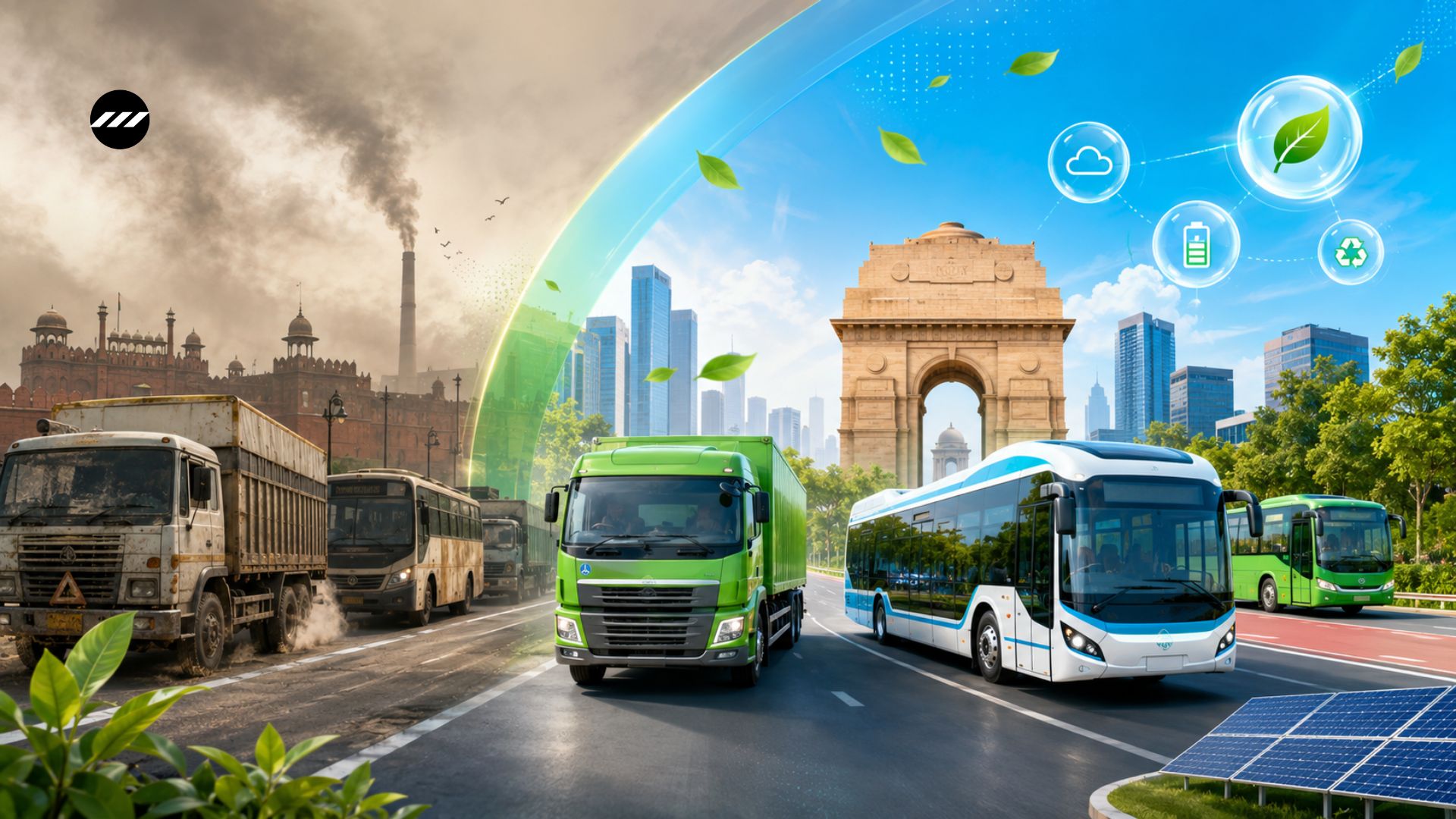
Phasing Out Polluting Vehicles: Delhi-NCR's Push for Cleaner Transport and Better Air Quality

Why in News?
The Union Cabinet has approved a two-year vehicle replacement scheme with an outlay of ₹9,585 crore to reduce air pollution in the Delhi-NCR region by replacing older buses and trucks with cleaner vehicles.
The initiative seeks to accelerate the transition towards BS-VI-compliant and electric vehicles, targeting one of the largest contributors to air pollution in the region.
"Clean mobility is not merely a transport issue; it is a public health imperative."
What Has Been Approved?
Key Features of the Scheme
| Component | Details |
|---|---|
| Total Outlay | ₹9,585 crore |
| Central Government Contribution | ₹5,041 crore |
| State Tax Concessions | ₹1,601 crore (estimated) |
| Duration | 2 Years |
| Implementing Agency | NCR Planning Board (NCRPB) |
| Partner States | Delhi, Haryana, Rajasthan, Uttar Pradesh |
The scheme will be jointly implemented by:
- Ministry of Road Transport and Highways
- Ministry of Petroleum and Natural Gas
- NCR State Governments
Who Will Benefit?
The government estimates benefits for approximately 2.07 lakh vehicle owners.
Beneficiary Categories
| Vehicle Type | Approximate Number |
|---|---|
| Trucks | 1.91 lakh |
| Buses | 16,000+ |
| Total | 2.07 lakh |
The focus is on replacing older commercial vehicles that contribute disproportionately to air pollution.
Why Target Trucks and Buses?
According to studies by ARAI and TERI, the transport sector remains a major source of pollution in Delhi-NCR.
Contribution to Air Pollution
| Pollutant | Share from Transport Sector |
|---|---|
| PM2.5 | 14% |
| Carbon Monoxide | 40% |
| Nitrogen Oxides (NOx) | 63% |
Heavy Vehicles Matter More
Although trucks and buses constitute only 3% of the vehicle fleet, they account for:
- 36% of PM2.5 emissions.
Vehicle Share in Fleet:
3%

Contribution to PM2.5:
36%

A small number of vehicles generate a
disproportionately large pollution burden.
Why Replace Older Vehicles?
Older vehicles emit significantly higher levels of pollutants.
Pollution Comparison
| Vehicle Category | Relative Emissions |
|---|---|
| Pre-BS Vehicle | Equivalent to 14 BS-VI vehicles |
| BS-IV Vehicle | 2.7 times more than BS-VI |
The replacement strategy therefore focuses on achieving maximum emission reduction through fleet modernisation.
What Will Happen to Old Vehicles?
BS-III and Older Vehicles
- Mandatory scrapping.
- To be dismantled at registered vehicle scrapping facilities.
BS-IV Vehicles
Owners can:
- Scrap the vehicle, or
- Sell it outside NCR in non-NCAP cities and towns.
Eligibility Condition
Benefits will be available only if owners purchase and register:
- BS-VI vehicles, or
- Electric vehicles (EVs)
within the NCR region.
Financial Incentives Offered
To encourage participation, the government has introduced multiple incentives.
Incentive Package
| Incentive | Benefit |
|---|---|
| Interest Subvention | 5% on vehicle loans for 5 years |
| Fuel Vouchers | Up to ₹4,800 per month |
| EV Incentives | Lump-sum financial support |
| Certificate Trading | Benefits through certificate-of-deposit mechanism |
These measures aim to reduce the cost burden of vehicle replacement.
Understanding BS-VI Standards
What is BS-VI?
Bharat Stage VI (BS-VI) emission standards are India's most stringent vehicle emission norms.
Implemented nationwide in:
- April 2020
They replaced:
- BS-IV standards that were operational from 2017.
Major Improvements
| Parameter | BS-IV | BS-VI |
|---|---|---|
| Sulphur Content in Fuel | 50 ppm | 10 ppm |
| Emissions | Higher | Significantly Lower |
BS-VI vehicles emit lower levels of:
- Nitrogen Oxides (NOx)
- Particulate Matter (PM)
- Hydrocarbons
- Sulphur compounds
Technologies Behind BS-VI Vehicles
To comply with stricter norms, manufacturers introduced advanced emission-control systems.
Key Technologies
- Diesel Particulate Filters (DPF)
- Selective Catalytic Reduction (SCR)
- Onboard Diagnostic Systems (OBD)
Cleaner Fuel +
Advanced Filters +
Emission Monitoring
=
Lower Vehicle Pollution
These technologies help reduce harmful emissions while improving environmental performance.
Way Forward
- Accelerate transition towards electric mobility.
- Strengthen public transport infrastructure.
- Expand vehicle scrappage ecosystems.
- Improve last-mile connectivity to reduce private vehicle dependence.
- Promote cleaner fuels and alternative energy sources.
- Strengthen regional coordination among NCR states.
- Integrate transport planning with air-quality management strategies.
Conclusion
The Delhi-NCR vehicle replacement scheme represents a targeted effort to address one of the region's major sources of air pollution. By phasing out highly polluting vehicles, incentivising cleaner technologies, and promoting BS-VI and electric mobility, the initiative seeks to improve air quality, public health, and environmental sustainability. Its success, however, will depend on effective implementation, widespread participation, and continued investment in clean transportation systems.
Attribution
Original content sources and authors

.jpeg)
Syllabus classification
How this article maps to GS papers
Main syllabus
GS3Environment & Bio-diversityAlso covers
Quick Q&A
What is the vehicle replacement scheme for Delhi-NCR and what is its significance in addressing air pollution?
Why is vehicular pollution considered a critical challenge for Delhi-NCR and why are heavy commercial vehicles receiving special policy attention?
How do Bharat Stage VI emission norms function and in what ways are they superior to BS-IV standards?
What are the major reasons behind the government's emphasis on scrapping old vehicles and promoting cleaner alternatives in Delhi-NCR?
What is a critical analysis of the government's vehicle replacement strategy as a tool for combating air pollution in Delhi-NCR?
How does the Delhi-NCR vehicle replacement initiative serve as a case study of cooperative federalism and sustainable urban governance?
Practice questions
1 question for mains preparation