
1. Background and Judicial Context
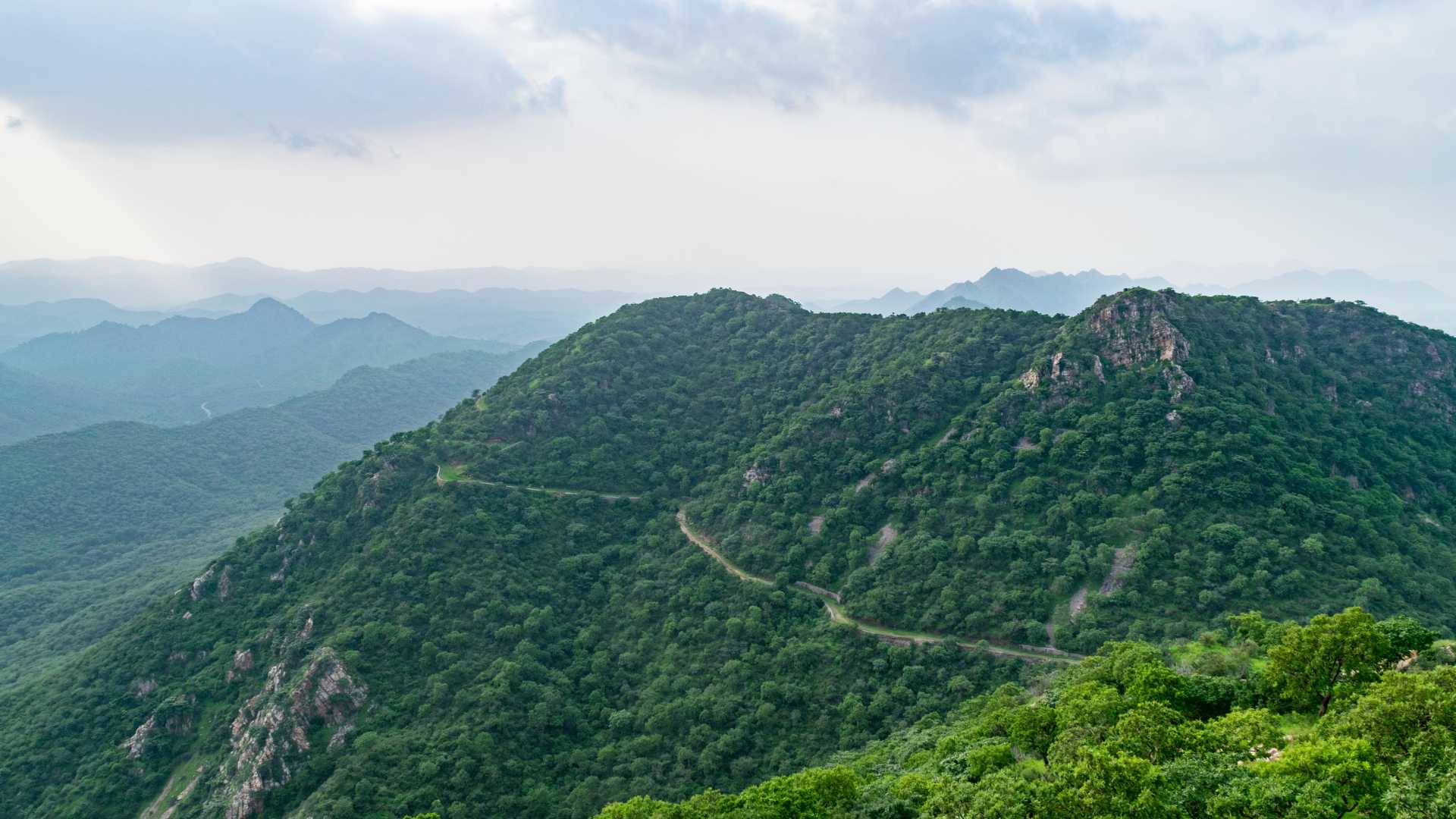
The Aravalli Range is among the world’s oldest mountain systems and plays a critical ecological role in north-western India, particularly in regulating climate, groundwater recharge, and desertification control. Its protection has long involved judicial intervention due to weak enforcement and conflicting administrative definitions.
In November 2025, the Supreme Court upheld a government-backed definition of the Aravalli based on elevation (100 metres or above) and spatial clustering (within 500 metres). This definition triggered widespread concern as it appeared to exclude a large proportion of ecologically linked hills from statutory protection.
Consequently, the Supreme Court took up the matter suo motu and stayed its own judgment in December 2025, recognising that the definition could undermine environmental safeguards. The present proceedings reflect judicial willingness to recalibrate environmental governance when regulatory outcomes threaten ecological integrity.
This context highlights the Supreme Court’s role as a constitutional guardian in environmental governance; failure to revisit flawed definitions risks irreversible ecological damage through legally sanctioned regulatory gaps.
2. Proposal for a Supreme Court–Supervised Expert Committee
In January 2026, a Bench headed by Chief Justice Surya Kant proposed constituting a multidisciplinary committee to assist the Court in redefining the Aravalli Range and framing a roadmap for permissible activities. The committee would operate directly under the Court’s supervision, signalling heightened judicial control.
The proposed panel is to include environmentalists, scientists, foresters, and experts in regulated mining wherever legally permissible. This reflects an attempt to balance ecological conservation with economic and developmental considerations.
The Court also directed the Additional Solicitor General and the amicus curiae to suggest expert names, reinforcing the consultative and non-adversarial nature of the proceedings.
The committee mechanism reflects governance logic that complex environmental issues require scientific legitimacy; ignoring such expert input risks policy arbitrariness and erosion of public trust.
3. Contested Definition of the Aravalli Range
The earlier definition restricted Aravalli identification to hills of 100 metres or more and clusters within 500 metres. Judicial scrutiny revealed that, in Rajasthan alone, only 1,048 out of 12,081 hills would qualify under this criterion.
This raised alarms that lower-elevation hills and dispersed hillocks—though ecologically contiguous—would be stripped of protection. Such exclusion could facilitate mining and construction in areas critical to the stability of the larger range.
The Court acknowledged that this restrictive demarcation created a “significant regulatory lacuna”, weakening the very purpose of environmental regulation.
Definitional precision is central to environmental law; if ecological systems are fragmented by narrow legal thresholds, governance mechanisms fail to protect cumulative environmental functions.
4. Environmental and Regulatory Implications
The Court noted that excluding large portions of the Aravalli could enable unregulated mining and disruptive activities in technically “non-Aravalli” areas. These activities, though legally permissible under the narrow definition, may still degrade the protected core.
A conservation group estimated that 31.8% of the Aravalli Range stood at risk following the recent classification. This reinforced fears of progressive ecological erosion through piecemeal exclusions.
Recognising these risks, the Court barred fresh or renewed mining leases in the region without its prior permission, pending final adjudication.
Key Implications:
- Ecological: Fragmentation of habitats and weakening of natural buffers.
- Regulatory: Expansion of legally unprotected zones despite ecological continuity.
- Administrative: Increased litigation and enforcement ambiguity.
Environmental harm often occurs incrementally; ignoring these implications can lead to irreversible degradation masked by formal legal compliance.
5. Debate on Definability of Mountain Systems
Senior advocate Kapil Sibal, appearing for an intervenor, questioned the feasibility of defining mountain systems altogether. He argued that geological formations such as the Aravalli or Himalayas are sub-tectonic strata that resist rigid boundaries.
The Court accepted this intervention, noting that the proceedings were not adversarial and that diverse perspectives were necessary. This openness reflects judicial sensitivity to scientific complexity and epistemic limits of law.
The debate underscores tension between administrative need for clear definitions and ecological reality of continuous landscapes.
This debate reveals a governance dilemma: overly rigid definitions aid administration but may distort natural systems; ignoring this tension can lead to legally sound yet ecologically flawed outcomes.
6. Sustainable vs Regulated Mining Question
The Court proposed that the expert committee examine whether “sustainable” or “regulated” mining within newly demarcated areas could proceed without adverse ecological consequences. This signals a shift from blanket prohibition to conditional permissibility.
However, the Court expressed concern that exclusions from the Aravalli definition might eventually lead to the erosion of the entire range’s ecological integrity, even if mining is regulated.
The emphasis, therefore, is on cumulative impact assessment rather than isolated project approvals.
Balancing development and conservation requires cumulative ecological assessment; neglecting this leads to policy decisions that appear sustainable individually but are destructive collectively.
7. Judicial Emphasis on Scientific and Nuanced Redefinition
The Supreme Court stressed that any definition of the Aravalli must emerge from exhaustive scientific and geological estimation, including precise measurement of hills and hillocks. It cautioned against simplistic spatial thresholds.
The Court warned that limiting protection to clusters within 500 metres could create a “structural paradox” where ecologically linked terrains are left vulnerable to exploitation.
Accordingly, the redefinition exercise is intended to preserve the ecological integrity of the entire range rather than only its most prominent features.
Scientific nuance in environmental policymaking ensures long-term resilience; ignoring it risks policy capture by narrow administrative convenience.
Conclusion
The Supreme Court’s intervention in redefining the Aravalli Range reflects an evolving model of environmental governance that prioritises scientific expertise, institutional oversight, and ecological continuity. By pausing its own judgment and proposing a multidisciplinary committee, the Court seeks to prevent regulatory gaps that could enable irreversible environmental harm. The outcome will have long-term implications for balancing development, mining regulation, and ecological protection within India’s constitutional framework.