1. Structural Divergence: India vs Bangladesh in the EU Textile Market
India’s textile sector, traditionally a major contributor to manufacturing employment and exports, has steadily lost ground in global garment markets, particularly in the European Union (EU). In contrast, Bangladesh has emerged as a dominant supplier of readymade garments (RMG), especially in mass-market categories.
Within the textile value chain, India’s exports to the EU are concentrated in intermediate products such as yarns and fabrics, rather than in finished garments like T-shirts, shirts, and trousers. Bangladesh, on the other hand, has successfully positioned itself in labour-intensive finished garment segments.
The divergence is evident in market share trends. India’s share in EU imports of knitted/crocheted garments declined from 6.5% (2009) to 4.4% (2023). In contrast, Bangladesh’s share rose from 6% (2000) to 13% (2009) and further to 26% (2023). Similarly, India’s woven garment exports to the EU fell from a peak of 2.9 billion in nominal terms.
This structural divergence reflects India’s limited competitiveness in labour-intensive final-stage manufacturing. If unaddressed, it constrains employment generation and reduces India’s presence in global value chains, particularly in segments that absorb large numbers of semi-skilled workers.
Key Trends:
- India: Declining share in EU garment imports.
- Bangladesh: Rapid expansion in knitted and woven garments.
- Shift from intermediate exports (India) to final product exports (Bangladesh).
2. Pricing, Competitiveness and Structural Constraints
A comparison of per-unit export prices shows that India’s garments consistently command higher unit values than Bangladesh’s across major categories. This could indicate higher value addition or better quality positioning.
However, India’s low market share in the EU suggests that demand in this market is largely driven by price-sensitive mass apparel. Therefore, “premium positioning” alone cannot compensate for cost disadvantages in volume-driven segments.
The more plausible explanation lies in structural constraints: higher production costs, fragmented supply chains, scale limitations, and logistical inefficiencies. Bangladesh’s export model has benefited from focused policy support, labour cost advantages, and streamlined export ecosystems.
Competitiveness in global apparel markets is primarily price-driven at scale. If higher prices stem from structural inefficiencies rather than quality differentiation, India risks remaining confined to niche segments while losing employment-intensive mass production opportunities.
Possible Structural Disadvantages:
- Higher production costs
- Less integrated logistics and supply chains
- Fragmented industrial policy approach
- Lower scale efficiencies in garment clusters
3. Tariff Asymmetry and Preferential Access: The EBA Advantage
A major reason for Bangladesh’s export success has been preferential access under the EU’s Everything But Arms (EBA) scheme. As a Least Developed Country (LDC), Bangladesh enjoyed duty-free, quota-free access to the EU market.
Crucially, zero tariffs were granted even if garments did not satisfy the EU’s standard “double transformation” rule of origin (RoO). This allowed Bangladesh to import fabric from third countries, stitch garments domestically, and export them at zero duty.
India, lacking such preferential treatment, faced EU Most Favoured Nation (MFN) tariffs of around 12% on apparel exports. This tariff differential created a significant competitive gap in price-sensitive markets.
Trade preferences can decisively shape global value chain participation. When tariff asymmetries exist, even marginal cost differences translate into major market share shifts. Ignoring tariff diplomacy limits export competitiveness irrespective of domestic reforms.
Tariff Comparison:
- Bangladesh (EBA): 0% duty, relaxed RoO
- India (MFN): ~12% tariff
- Impact: Price advantage for Bangladesh in EU markets
4. Impending Structural Break: Bangladesh’s Graduation from LDC Status
Bangladesh is set to graduate from LDC status in 2029, leading to the loss of automatic EBA benefits. This implies that its apparel exports to the EU could face MFN tariffs of around 12%, unless alternative arrangements are secured.
Bangladesh is expected to seek entry into the EU’s Generalised Scheme of Preferences Plus (GSP+), which provides zero tariffs on roughly two-thirds of tariff lines, including textiles. However, GSP+ imposes stricter rules of origin, including adherence to the double transformation requirement.
Given Bangladesh’s heavy reliance on imported fabrics (including from India), compliance with stricter RoO could become challenging. If the EU maintains its stance, Bangladesh’s current cost advantage may narrow.
The erosion of preferential access could alter competitive dynamics in the EU market. If Bangladesh’s advantage is tariff-driven, its market share may decline. However, if it stems from deep supply-chain efficiencies, it may remain resilient even under higher tariffs.
Post-2029 Scenario:
- Loss of EBA benefits.
- Possible shift to GSP+ (subject to stricter RoO).
- Increased exposure to MFN tariffs if compliance fails.
5. India–EU FTA: Correcting the Tariff Disadvantage
The recently finalised India–EU Free Trade Agreement grants India duty-free access to EU textile markets, subject to the double-stage processing (double transformation) requirement.
Unlike Bangladesh, India already possesses a relatively vertically integrated textile industry. Most yarn and fabric used in apparel production is manufactured domestically. Therefore, compliance with stricter rules of origin is unlikely to pose a major hurdle.
This eliminates India’s earlier ~12% tariff disadvantage, potentially placing Indian exporters on an equal or stronger footing compared to post-LDC Bangladesh.
By aligning tariff access with domestic supply-chain strength, the FTA creates a structural opportunity. If leveraged effectively, it can help India shift from intermediate exports to higher-value finished garment exports.
Strategic Advantages under FTA:
- Duty-free access to EU markets.
- Compatibility with double transformation norms.
- Reduced tariff asymmetry vis-à-vis Bangladesh.
- Scope for expansion in finished garments.
6. Employment, Industrial Policy and Strategic Coherence
Textiles remain one of the largest employers in Indian manufacturing, spanning both formal and informal sectors. However, the sector has not generated sufficient employment growth in recent years.
Bangladesh’s success reflects consistent, focused promotion of the garment industry over three decades. India’s approach has been comparatively fragmented, lacking long-term strategic coherence.
The narrowing of Bangladesh’s tariff advantage and the reduction of India’s tariff disadvantage together create a “rare window of opportunity.” The experience of Vietnam’s export surge after the EU–Vietnam FTA (2020) demonstrates how trade agreements can catalyse apparel exports when supported by domestic reforms.
Trade agreements alone do not guarantee export growth. Without cost competitiveness, policy coordination, and supply-chain efficiency, tariff gains may not translate into employment expansion.
Policy Priorities:
- Cost-competitive mass garment production
- Strengthening vertical integration
- Streamlined logistics and export facilitation
- Cluster-based industrial strategy
- Labour-intensive manufacturing push
7. Broader Governance and Development Linkages
The textile opportunity intersects multiple GS dimensions:
- GS3 (Economy): Export diversification, manufacturing competitiveness, employment generation.
- GS2 (International Relations): Trade diplomacy, FTAs, preferential access regimes.
- GS1 (Society): Labour-intensive sectors and rural-to-urban employment transitions.
- Essay Themes: Globalisation, competitiveness, industrial policy, employment crisis.
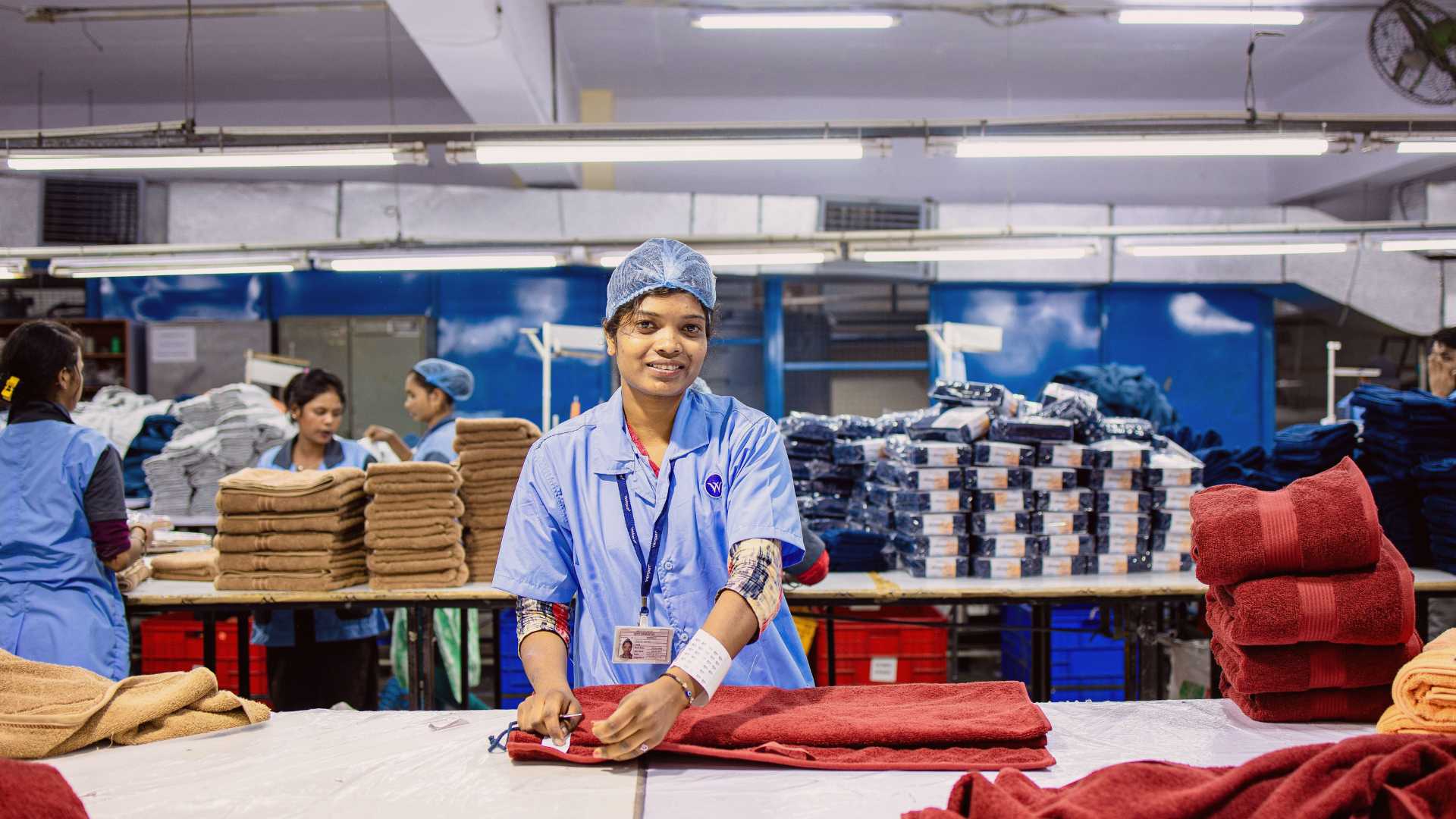
Reviving textile exports to high-income markets like the EU could serve as a stimulus to address India’s employment challenge, particularly for women and semi-skilled workers traditionally employed in garments.
Export-led manufacturing growth is critical for demographic dividend realisation. Failure to seize this window may entrench India’s position as a supplier of intermediates rather than a global manufacturing hub.
Conclusion
The convergence of two structural shifts—Bangladesh’s impending loss of LDC privileges and India’s tariff gains under the India–EU FTA—creates a strategic opening for India’s textile sector. However, tariff correction must be complemented by cost efficiency, policy coherence, and scale expansion.
If India can align trade policy with industrial strategy, the textile sector can once again become a driver of employment-intensive growth and deeper integration into global value chains.