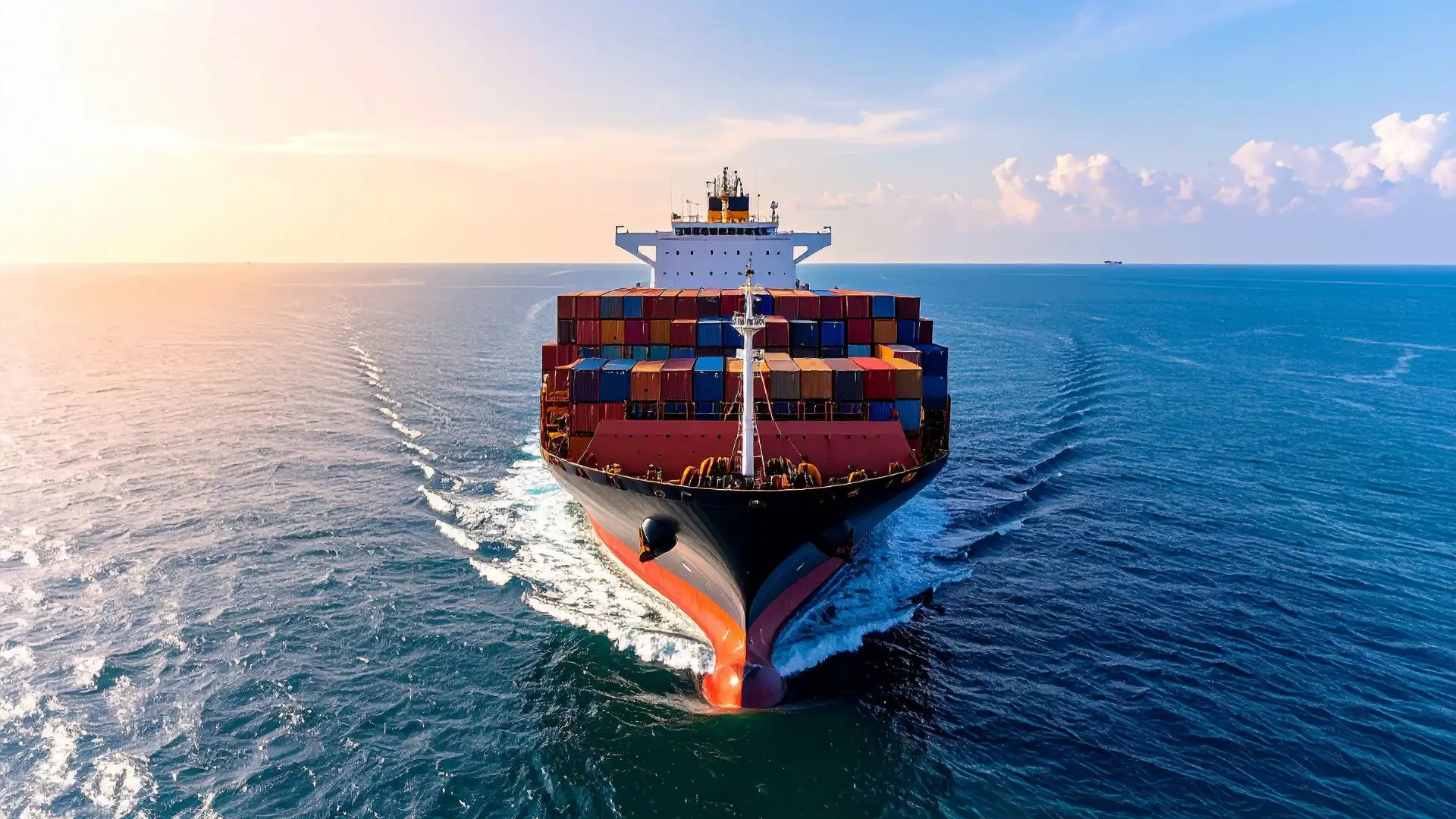
1. Export Promotion Mission (EPM): Policy Context and Rationale
The Government of India has operationalised the Export Promotion Mission (EPM) by notifying the first tranche of guidelines related to its market access schemes on December 31, 2025. This marks the transition of EPM from a budgetary announcement to an implementation-ready export facilitation framework.
EPM was announced in Union Budget 2025 and received Cabinet approval in November 2025, signalling high-level political and administrative prioritisation of export competitiveness. The mission aims to address structural bottlenecks faced by Indian exporters, particularly in accessing overseas markets.
The overall EPM has a financial outlay of ₹25,060 crore for the period 2025-26 to 2030-31, indicating a medium-term commitment rather than a one-off incentive. This reflects the recognition that export capability building requires sustained policy support.
If such a mission were delayed or fragmented, India’s exporters—especially MSMEs—would continue to face high entry barriers in global markets, weakening India’s ambition to consolidate its position in global value chains.
This approach reflects the governance logic that export growth is not automatic and requires coordinated state support; without structured missions like EPM, market access remains skewed in favour of large firms with existing global networks.
2. Market Access Component: Strategic Focus within EPM
The market access component is the first operationalised pillar of the EPM and has been allocated ₹4,531 crore over six years (2025–31). For the current financial year, ₹500 crore has been earmarked, indicating phased scaling.
This component directly targets the demand-side constraints of exports by enabling Indian firms to connect with foreign buyers, distributors, and markets. Rather than production-linked incentives, it focuses on exposure, matchmaking, and visibility.
By prioritising market access, the government acknowledges that production capacity alone does not translate into exports unless firms are integrated into international commercial networks.
Ignoring this dimension would risk underutilisation of domestic manufacturing capacity and limit the effectiveness of other export-promotion measures.
The underlying logic is that trade facilitation must extend beyond tariffs and logistics to include relationship-building; without such support, smaller exporters remain invisible in global markets.
3. Institutional Design and Inter-Ministerial Coordination
EPM is jointly implemented by the Department of Commerce, Ministry of MSME, and the Ministry of Finance, with coordination from Indian missions abroad, Export Promotion Councils (EPCs), commodity boards, and industry associations.
This multi-institutional architecture aims to bridge domestic policy design with on-ground execution in foreign markets, leveraging diplomatic missions as commercial facilitators.
Such coordination is critical to avoid siloed export schemes and to ensure that financial support aligns with sectoral priorities and market intelligence.
Without effective coordination, the mission risks duplication of efforts, weak monitoring, and uneven regional or sectoral outreach.
This reflects the governance principle that export promotion is cross-cutting; failure to align institutions can dilute outcomes despite adequate funding.
4. Financing Market Access Activities under EPM
Under the Market Access Support Intervention, exporters—especially MSMEs—are eligible for financial assistance to organise or participate in structured export promotion activities.
These include Buyer-Seller Meets (BSMs), international trade fairs and exhibitions, Mega Reverse Buyer-Seller Meets (RBSMs) organised in India, and trade delegations to priority and emerging markets.
The emphasis on reverse buyer-seller meets reflects a cost-effective strategy, bringing global buyers to India rather than sending numerous small exporters abroad.
If such facilitation were absent, participation in global trade events would remain prohibitively expensive for MSMEs, reinforcing export concentration among large firms.
This design shows the development logic that reducing transaction and information costs is as important as financial incentives; ignoring this perpetuates unequal export participation.
5. Scale of Financial Assistance: Quantitative Provisions
The guidelines specify event-level financial caps to standardise support and ensure predictability.
- Statistics:
- ₹5 crore per event for Buyer-Seller Meets (BSMs)
- ₹10 crore per event for Reverse Buyer-Seller Meets (RBSMs)
- ₹5 crore for each trade delegation
- Reimbursement support for airfare of eligible Indian delegates, subject to limits
These figures indicate a preference for funding collective platforms rather than individual firm subsidies, maximising outreach per rupee spent.
Overlooking such calibrated caps could lead to fiscal inefficiency or capture by a few large events with limited spillovers.
The fiscal logic is to balance adequacy with prudence; without defined ceilings, export promotion spending risks low marginal returns.
6. Inclusion Safeguards and MSME-Centric Design
To prevent concentration of benefits, the scheme incorporates explicit participation and frequency caps.
- Policy measures:
- Financial assistance for up to two delegates per firm
- Minimum delegation size of 50 participants
- Mandatory 35% participation by MSMEs
- A firm can participate in up to three BSMs per year
- MSMEs eligible for four BSMs per year
According to DGFT Ajay Bhadoo:
“This is to ensure that there is diversification in who gets the assistance and it doesn’t go to just a few players.” — Ajay Bhadoo, DGFT
These safeguards align the scheme with inclusive growth objectives by widening the export base.
If such caps were absent, public resources could be cornered by established exporters, undermining the mission’s equity and capacity-building goals.
The governance reasoning is that inclusion does not happen automatically; without built-in safeguards, policy benefits tend to concentrate.
7. Phased Rollout and Administrative Timelines
The government plans to issue guidelines for all 11 components of EPM by January 31, 2026, indicating a time-bound rollout strategy.
The phased notification allows administrative learning and mid-course corrections, rather than overwhelming implementing agencies with simultaneous schemes.
This incremental approach also signals predictability to exporters, enabling them to plan participation aligned with upcoming guidelines.
Failure to adhere to timelines could weaken stakeholder confidence and delay export momentum.
This reflects administrative logic that sequencing improves implementation quality; rushed or delayed rollouts often reduce policy credibility.
8. Broader Implications for Trade and Development
The market access guidelines strengthen India’s export ecosystem by linking domestic enterprises with global demand, complementing supply-side reforms.
They also enhance the role of Indian missions abroad as economic actors, reinforcing the trade-diplomacy interface.
Consequently, the scheme has implications across GS2 (governance and institutions), GS3 (external sector and MSMEs), and International Relations (economic diplomacy).
Ignoring such integrative frameworks could limit India’s ability to convert macroeconomic growth into sustained export-led development.
The broader development logic is that exports are a system-level outcome; neglecting any node—market access, institutions, or inclusion—weakens the entire chain.
Conclusion
The notification of market access guidelines under the Export Promotion Mission represents a calibrated shift from ad hoc export incentives to a structured, inclusive, and institutionally coordinated approach. By prioritising MSMEs, embedding fiscal safeguards, and leveraging trade diplomacy, the EPM lays the groundwork for a broader and more resilient export base. Its long-term success will depend on timely rollout of remaining components and effective inter-agency coordination to translate policy intent into sustained export performance.