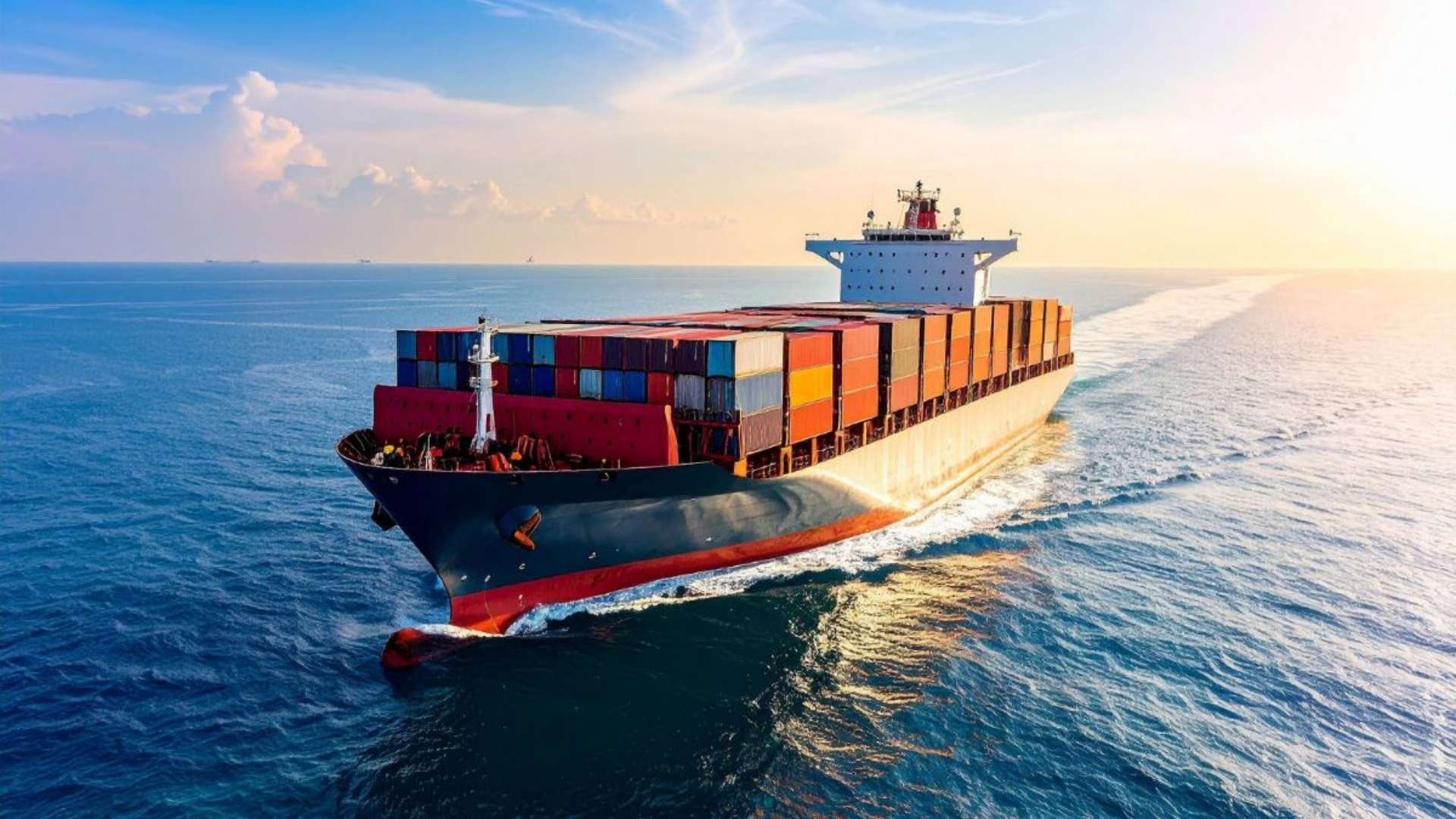
Impact of West Asia Conflict on Indian Exports and Shipping
Background
The ongoing conflict in West Asia, particularly tensions around the Strait of Hormuz and the Persian Gulf region, is beginning to affect India’s export logistics and shipping operations. This region is a critical maritime route for global trade, especially for shipments moving between Asia, Europe, and the Middle East.
Disruptions in this region have created uncertainty in shipping routes, insurance coverage, and cargo movement. As a result, a large volume of Indian export cargo is currently stranded or facing delays, creating challenges for exporters, logistics companies, and shipping operators.
Scale of the Disruption
According to logistics firms, a significant number of Indian export containers are currently stuck due to the conflict.
Key estimates suggest:
- Around 40,000–45,000 containers carrying Indian exports are stranded
- Many of these containers are already at sea or waiting at international ports
- The estimated value of the affected cargo is about $1–1.5 billion
Some industry sources suggest the number may be slightly lower at around 35,000 containers, but the disruption remains substantial.
Most of the cargo is either in transit through the Arabian Sea or waiting to be unloaded at ports in the Gulf region.
Nature of the Cargo Affected
A significant portion of the stranded cargo consists of agricultural and food products, especially basmati rice.
Approximately 400,000 tonnes of basmati rice exports are believed to be among the stuck consignments.
Other categories of exports may include:
- Food products
- Manufactured goods
- Industrial inputs
- Apparel and textiles
The impact is particularly severe for perishable goods, which may spoil if shipments are delayed for long periods.
Increased Shipping Costs
One of the most immediate effects of the conflict has been the sharp increase in shipping costs.
Shipping companies have introduced multiple emergency charges due to heightened risks in the region.
These include:
- War-risk surcharges
- Emergency Cost Recovery Charges (ECRC)
- Contingency charges
- Peak season surcharges
These additional charges have increased the per-container shipping cost by 5,000.
Under normal conditions, the freight cost for the same routes would typically be 1,500 per container.
This means exporters are facing a three- to five-fold increase in logistics costs, which significantly reduces their profit margins.
Insurance and Risk Challenges
Another challenge arises from the cancellation or withdrawal of war-risk insurance coverage by some insurers.
Shipping companies rely on such insurance to protect cargo and vessels in conflict-prone areas. Without adequate coverage:
- Shipping lines may avoid certain routes
- Cargo may face longer delays
- Freight costs may rise further due to increased operational risks
The Arabian Sea and nearby shipping routes are now considered high-risk zones, affecting the movement of vessels.
Possible Cargo Diversions and Returns
Because of the uncertainty in Gulf ports, shipping companies may adopt alternative strategies to manage cargo.
These include:
- Diverting ships to alternative ports
- Returning cargo to India
- Rerouting vessels through longer maritime routes
For example, cargo that cannot be discharged at Gulf ports may instead be unloaded at alternative ports such as Salalah in Oman.
However, rerouting increases both transport time and operational costs.
Back-to-Town (BTT) Option
Exporters facing prolonged delays may choose to use the Back-to-Town (BTT) procedure.
This is a customs mechanism that allows exporters to:
- Withdraw cargo that has already entered the export stream
- Bring it back into the domestic market
This option helps exporters avoid further losses if international shipment becomes unviable.
However, it also means that exporters must find alternative domestic buyers, which may not always be possible for specialised export goods.
Role of Non-Vessel Operating Common Carriers (NVOCCs)
Some of the containers currently stuck in the region belong to Non-Vessel Operating Common Carriers (NVOCCs).
NVOCCs are logistics operators that:
- Do not own ships
- Own or lease shipping containers
- Arrange cargo transport through shipping lines
Because they operate extensively in international shipping networks, many containers in the region may belong to international logistics operators rather than Indian exporters alone.
Impact on Specific Export Sectors
The effect of the crisis varies across industries.
Food and Agricultural Exports
Food exports, particularly basmati rice, face high risks due to delays and rising freight costs.
For perishable goods, extended transit times can result in complete loss of cargo value.
Apparel Industry
The apparel export sector has not yet faced major surcharge issues, but freight rates have still increased.
Shipping costs in this sector have risen by around 40 percent, from approximately ₹200 per kilogram to ₹280 per kilogram.
This rise is mainly due to longer routes and increased transport costs.
Congestion at Indian Ports
The disruption is also affecting operations at Indian ports, where cargo is beginning to accumulate.
According to sources in the shipping ministry:
- Around 20,000 containers were stranded or awaiting evacuation at major Indian ports
- Approximately 700,000 tonnes of liquid bulk cargo were waiting to be moved
- Around 939 tonnes of perishable cargo were stuck at ports
Port authorities are monitoring the situation and considering regulatory relaxations to facilitate cargo movement.
Government and Port Response
Authorities are exploring measures to reduce the pressure on exporters and logistics operators.
Possible responses include:
- Simplifying Back-to-Town procedures
- Relaxing port levies and rules
- Facilitating faster cargo clearance
Such measures aim to reduce congestion and prevent large-scale financial losses for exporters.
Potential Long-Term Impact on Shipping
At present, base freight rates have not yet increased dramatically. However, maritime intelligence firm Drewry warns that prolonged disruption could eventually affect global shipping dynamics.
Possible long-term effects include:
- Longer transit times due to rerouted shipping paths
- Reduced effective shipping capacity if vessels remain tied up for longer routes
- Higher freight rates across major East–West trade corridors
If vessels and containers remain stuck in disrupted routes, it could create temporary shortages of shipping capacity and equipment.
Conclusion
The ongoing West Asia conflict has created significant disruptions for India’s export logistics and maritime trade routes. Tens of thousands of containers carrying goods worth up to $1.5 billion are currently stranded due to shipping delays, rising insurance risks, and increased operational costs.
Exporters are facing higher freight charges, uncertain delivery timelines, and potential cargo losses, particularly for perishable products. While the immediate impact may remain manageable if the crisis resolves quickly, prolonged instability could lead to longer shipping routes, port congestion, and higher freight rates, affecting global trade flows and India’s export competitiveness.