Introduction
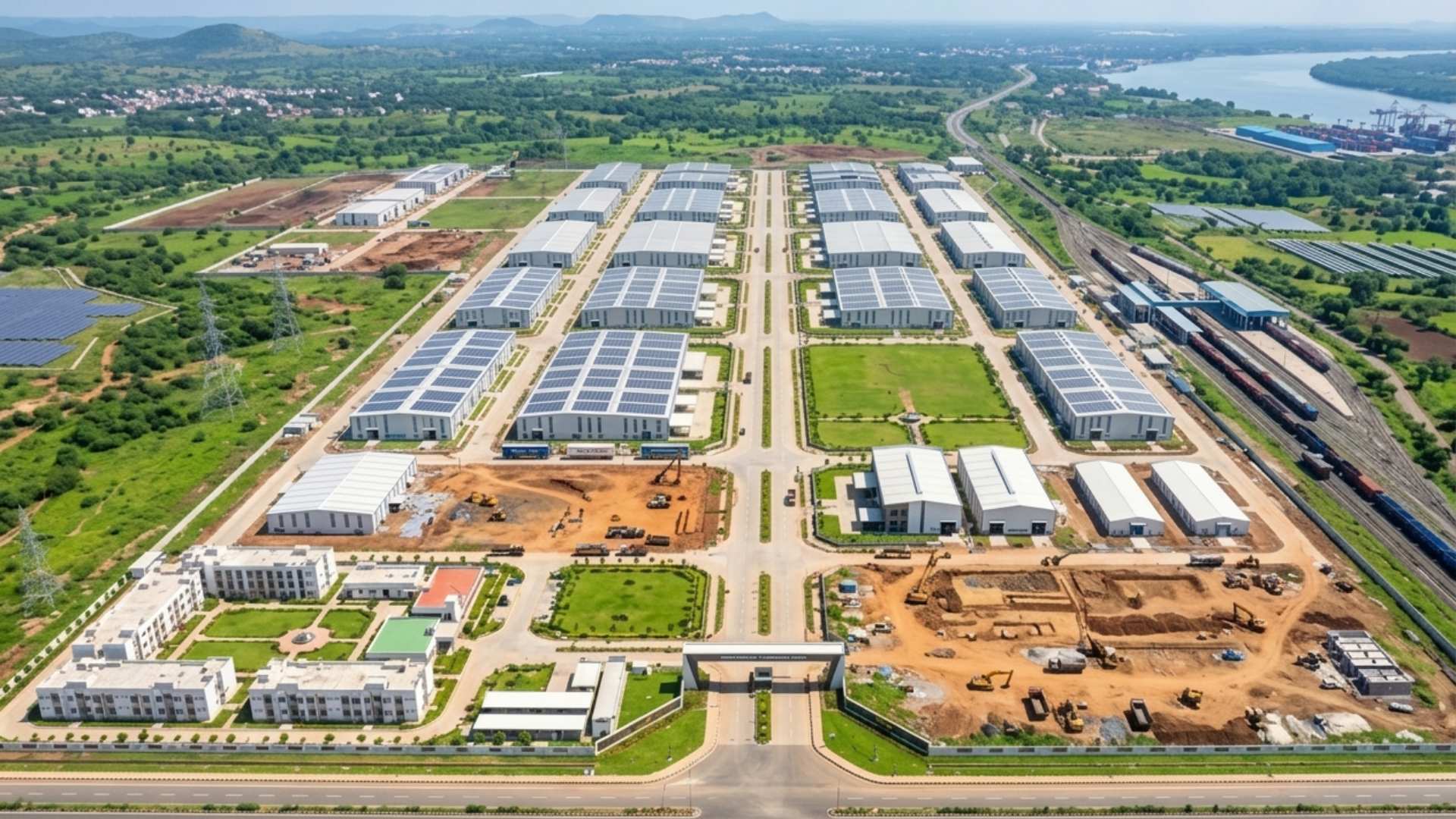
India aims to increase manufacturing’s share in GDP from 17% to 25% (Make in India goal) while boosting its role in global value chains. Industrial infrastructure remains a key bottleneck, with logistics costs (13–14% of GDP) higher than global benchmarks (8–10%). In this context, the BHAVYA scheme seeks to develop world-class industrial ecosystems through integrated, plug-and-play parks aligned with PM GatiShakti.
1. Background and Context
-
India’s industrial growth has been constrained by:
- Land acquisition issues
- Poor infrastructure
- Fragmented logistics networks
-
Existing initiatives:
- PM GatiShakti (2021) – integrated infrastructure planning
- National Industrial Corridor Programme (NICP)
- PLI Scheme – sector-specific incentives
Need: → Holistic industrial clusters with ready infrastructure and faster approvals.
2. Key Features of BHAVYA Scheme
| Feature | Details |
|---|---|
| Total Outlay | ₹33,660 crore |
| Duration | 6 years (starting 2026–27) |
| Target | 100 industrial parks |
| Phase 1 | 50 parks |
| Land Requirement | 100–1,000 acres (25 acres for NE/hilly states) |
| Funding Support | Up to ₹1 crore per acre |
| Model | Centre–State–Private sector collaboration |
| Integration | PM GatiShakti (multi-modal connectivity) |
3. Key Concepts
(a) Plug-and-Play Industrial Parks
-
Pre-approved land with:
- Ready infrastructure (power, water, roads)
- Environmental clearances
-
Enables industries to start operations quickly.
Benefit: → Reduces time-to-production and compliance burden.
(b) Multi-modal Connectivity (PM GatiShakti)
-
Integration of:
- Road, rail, ports, and air networks
-
Focus on last-mile connectivity
Impact: → Reduces logistics costs and improves competitiveness.
(c) Ease of Doing Business (EoDB)
- Single-window clearances
- State-led investor facilitation
- Deregulation focus
4. Significance and Implications
(a) Economic Growth
- Boost to manufacturing output
- Job creation across sectors
- Attraction of domestic and FDI investments
(b) Global Competitiveness
- Supports integration into Global Value Chains (GVCs)
- Competes with countries like Vietnam, China, Bangladesh
(c) Regional Development
-
Special provisions for:
- North-East and hilly regions
-
Promotes balanced regional growth
(d) Logistics Efficiency
- Alignment with National Logistics Policy
- Reduction in turnaround time and costs
5. Challenges and Concerns
(a) Land Acquisition Issues
- Social and environmental conflicts
- Delays in project execution
(b) Centre–State Coordination
-
States play a critical role in:
- Clearances
- Infrastructure delivery
(c) Private Sector Participation
- Investment risks in underdeveloped regions
- Need for viable PPP models
(d) Implementation Bottlenecks
-
Risk of:
- Delayed execution
- Cost overruns
- Underutilised parks
6. Comparison with Existing Initiatives
| Scheme | Focus | Difference |
|---|---|---|
| NICP | Industrial corridors | Large-scale, long-term |
| PLI | Sector incentives | Output-based subsidies |
| BHAVYA | Industrial parks | Infrastructure + EoDB integration |
7. Way Forward
- Strengthen land pooling mechanisms
- Enhance state capacity for clearances
- Ensure demand-driven park development
- Link with skilling initiatives (Skill India)
- Promote green industrial parks (sustainability focus)
Expert Insight:
“Infrastructure-led industrialisation is the backbone of sustained economic growth.” – World Bank
Conclusion
The BHAVYA scheme represents a strategic shift towards integrated, infrastructure-led industrialisation in India. By combining plug-and-play facilities with multi-modal connectivity and regulatory reforms, it can significantly enhance India’s manufacturing ecosystem. However, its success will depend on effective implementation, cooperative federalism, and sustained private sector participation.