1. Macroeconomic Context and Tamil Nadu’s Growth Performance
Tamil Nadu’s economy is highlighted in the Economic Survey 2025–26 as a major driver of India’s growth momentum amid global economic fragmentation. The State has demonstrated strong macroeconomic stability, positioning itself as the fastest-growing State economy during 2024–25. This growth strengthens India’s status as the world’s fastest-growing large economy and reinforces sub-national contributions to national economic resilience.
The State recorded 11.19% real GSDP growth, led primarily by the secondary sector. This performance is significant as it reflects both structural transformation and sectoral depth, especially when global conditions have strained manufacturing worldwide. It also indicates a stable domestic policy environment conducive to investment and industrial expansion.
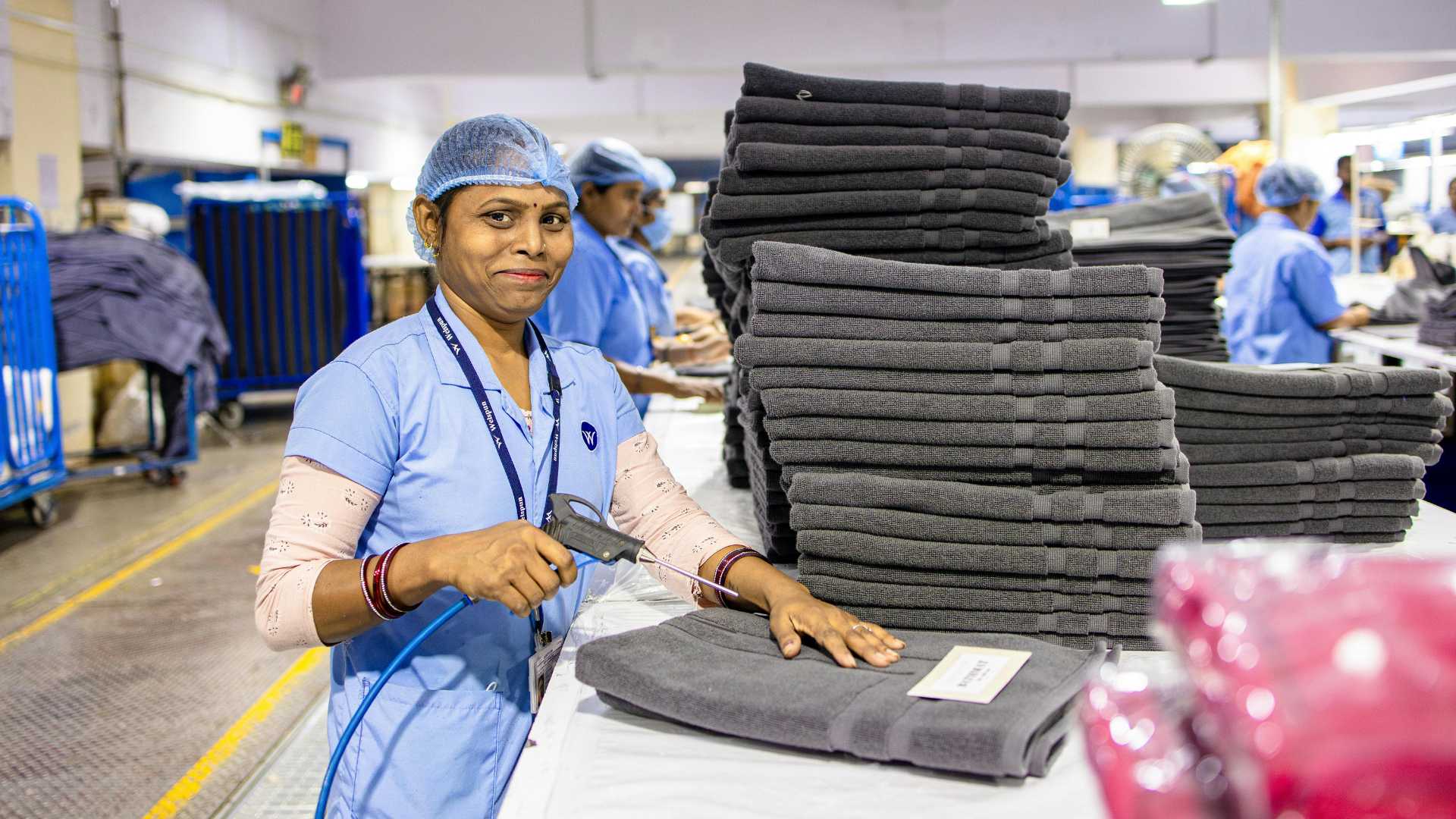
Manufacturing grew by 14.74%, more than triple the all-India average of 4.5%, signalling a robust production ecosystem. Tamil Nadu’s merchandise exports also nearly doubled to $52.07 billion in 2024–25, demonstrating global competitiveness. Inflation remained contained at 2.45%, reflecting effective supply-side management.
Seen through governance logic, high growth with low inflation suggests a balanced policy mix that supports both production and welfare. Neglecting such balance can risk overheating, fiscal stress or uneven development.
Key Statistics
- Real GSDP growth (2024–25): 11.19%
- Secondary sector growth: 13.43%
- Manufacturing growth: 14.74%
- Four-year average manufacturing growth: 9.38%
- GSDP four-year average: 8.63%
- Exports: 52.07 bn (2020–21 to 2024–25)
- CPI inflation (2025–26): 2.45%
2. Diversified Industrial Base and Manufacturing Leadership
Tamil Nadu’s industrial ecosystem is built on legacy strengths in textiles and leather, now expanded through sectoral diversification. The Survey identifies the State’s auto and electronics clusters (especially Sriperumbudur) as models of targeted industrial policy. These clusters integrate supply chains, logistics and skill ecosystems that encourage broader manufacturing growth.
The State hosts 85% of India’s cement industry and is one of only three States selected for a ₹100 crore Medical Devices Park, reflecting institutional capacity in handling specialised industrial infrastructure. Tamil Nadu contributes 15% of India’s manufacturing employment, surpassing Gujarat and Maharashtra, indicating a dense concentration of high-productivity units.
The State’s approach emphasises infrastructure availability, skilled labour mobility and predictable policy regimes. This strengthens investor confidence and accelerates industrial formalisation. Consequently, the State continues to attract large-scale manufacturing investments with minimal project delays.
Industrial diversification is critical to long-term resilience; reliance on a narrow set of industries would increase vulnerability to global shocks and supply-chain disruptions.
Causes of Industrial Leadership
- Strong cluster-based industrial policy
- Large-scale manufacturing units with high productivity
- Skilled manpower availability
- Infrastructure and logistics capacity
- Investor-friendly policy reforms
3. Ease of Doing Business Reforms and Project Execution
Under the Business Reforms Action Plan (BRAP) 2024, Tamil Nadu has implemented several institutional reforms to streamline business approvals. Measures such as single-window clearance, digitised processes and land reforms have improved transparency and investor experience. This contributes directly to faster project execution and reduced regulatory uncertainty.
The State also emphasises sustainability by promoting solar parks, district-level decarbonisation and energy-efficiency programmes. These initiatives integrate environmental goals into industrial growth, ensuring long-term compliance and reducing carbon intensity of production.
The convergence of environmental regulation with industrial development reflects an increasingly mature governance approach. It supports both investor expectations and ecological responsibility, while preventing the long-term costs of environmental degradation.
Reforms that reduce administrative friction are essential for sustaining investment flows. If ignored, delays and unpredictability can deter industries and shift investments to more competitive States.
Key Reforms
- Digital approval systems
- Single-window clearances
- Land-related reforms
- Solar park development
- Decarbonisation plans and energy-efficiency drives
4. Pollution Control and Climate Action Initiatives
The Economic Survey recognises Tamil Nadu’s proactive environmental governance, particularly through the Tamil Nadu Pollution Control Board (TNPCB). The Board actively monitors industrial effluent treatment and supports common effluent treatment plants for tanneries and textile clusters. These measures reduce industrial pollution and enable cleaner production.
The V.O. Chidambaranar Port has been designated a Green Hydrogen Hub under the National Green Hydrogen Mission. This places Tamil Nadu at the forefront of India’s ambition to produce five million metric tonnes of green hydrogen by 2030. The State is also evaluated for a Regional Rapid Transit System (RRTS) corridor in the Chennai-Vellore-Villupuram-Chengalpattu region, promoting sustainable mobility.
The Blue Economy Project covers Tamil Nadu’s 1,076 km coastline and addresses climate vulnerabilities in 14 coastal districts. It supports biodiversity improvement, coastal protection, livelihood resilience and marine pollution reduction. The Climate Resilient Villages initiative also demonstrates a community-level model for climate adaptation.
Environmental governance is foundational for sustainability; failure to act can lead to ecological decline, livelihood losses and higher climate-related vulnerabilities.
Key Climate Interventions
- Common effluent treatment plants
- Green Hydrogen Hub at V.O.C Port
- RRTS corridor identification
- Blue Economy project in coastal districts
- Climate Resilient Villages initiative
5. Performance in Agriculture and Horticulture
Tamil Nadu is cited as a high-performing State in groundnut productivity, alongside Gujarat and Karnataka. This is attributed to improved crop varieties, multiple cropping cycles and focused policy support for oilseeds. The State's progress in banana cultivation represents a region-specific horticultural success enabled by favourable agro-climatic conditions and efficient value-chain integration.
These achievements indicate a balanced growth model that includes both high-technology manufacturing and productive agriculture. They also highlight the significance of targeted interventions in improving farmer incomes and strengthening food supply stability.
Agricultural diversification reduces risk, maintains rural employment and supports food security. Ignoring such interventions could result in stagnation of farm incomes and rural distress.
Agricultural Achievements
- High groundnut productivity
- Improved oilseed varieties and multiple cropping
- Recognised excellence in banana cultivation
6. Urban Development, Civic Governance and Services Economy
Chennai is recognised as one of the world’s largest urban agglomerations and a model for disciplined civic conduct. The Chennai Metropolitan Area Parking Policy 2025 is cited as a national best practice, contributing to urban mobility and congestion management. Tamil Nadu ranks first in Civic Behaviour in the India Today Gross Domestic Behaviour Survey, reflecting strong civic culture and municipal capacity.
The State has liberalised building by-laws and simplified development norms, enabling orderly urban expansion. This aligns with broader governance efforts to strengthen urban planning and service delivery. Tamil Nadu is also a major services economy contributor; along with Karnataka, Maharashtra and Telangana, it accounts for 40% of India’s services output, driven by high-productivity sectors like IT, finance and professional services.
Urban reforms play a pivotal role in sustaining economic momentum. Without them, cities risk congestion, inequality and declining productivity.
Key Urban Governance Measures
- Metropolitan Area Parking Policy 2025
- Simplified building by-laws
- Civic behaviour improvements
- Contribution to national services output
7. Education, Skilling and Social Sector Gains
Tamil Nadu leads in higher education outcomes with 17 institutions in the NIRF Top 100 (2025), the highest among all States. This demonstrates the State’s strong education ecosystem and long-term human capital investments. The Tamil Nadu Working Women’s Hostels Corporation (Thozhi Hostels) is acknowledged as a national model for supporting women's workforce participation.
The Skill Voucher Scheme (2024) by the Adi Dravidar and Tribal Welfare Department enables skill development for disadvantaged communities, improving employability and social mobility. These initiatives reflect an integrated development strategy that combines economic expansion with social equity.
Investments in human capital ensure sustained productivity and inclusion; failing to maintain this focus may widen inequality and undermine future growth.
Social Sector Measures
- NIRF Top 100: 17 institutions
- Thozhi Hostels for working women
- Skill Voucher Scheme for disadvantaged students
8. Integrated Development Model and National Relevance
The Survey affirms that Tamil Nadu’s development model integrates economic growth, social welfare and environmental sustainability. It links industrial productivity with education, urban governance and climate readiness. This holistic approach strengthens resilience, enhances competitiveness and aligns with India’s long-term development goals.
The State’s performance contributes significantly to India’s Vision 2047 by enabling technology adoption, skill development and export competitiveness. Consequently, Tamil Nadu serves as a model for balanced and institution-driven development that may guide national policy frameworks.
A comprehensive approach prevents imbalances between sectors and ensures durable development outcomes; neglecting this integration can result in uneven progress and structural vulnerabilities.
Conclusion
Tamil Nadu’s performance in the Economic Survey 2025–26 illustrates a mature and diversified growth model driven by industrial strength, human capital development and proactive environmental governance. Its emphasis on integrated development, institutional capacity and sustainable reforms makes it a key contributor to India’s long-term economic vision and offers replicable lessons for other States.