
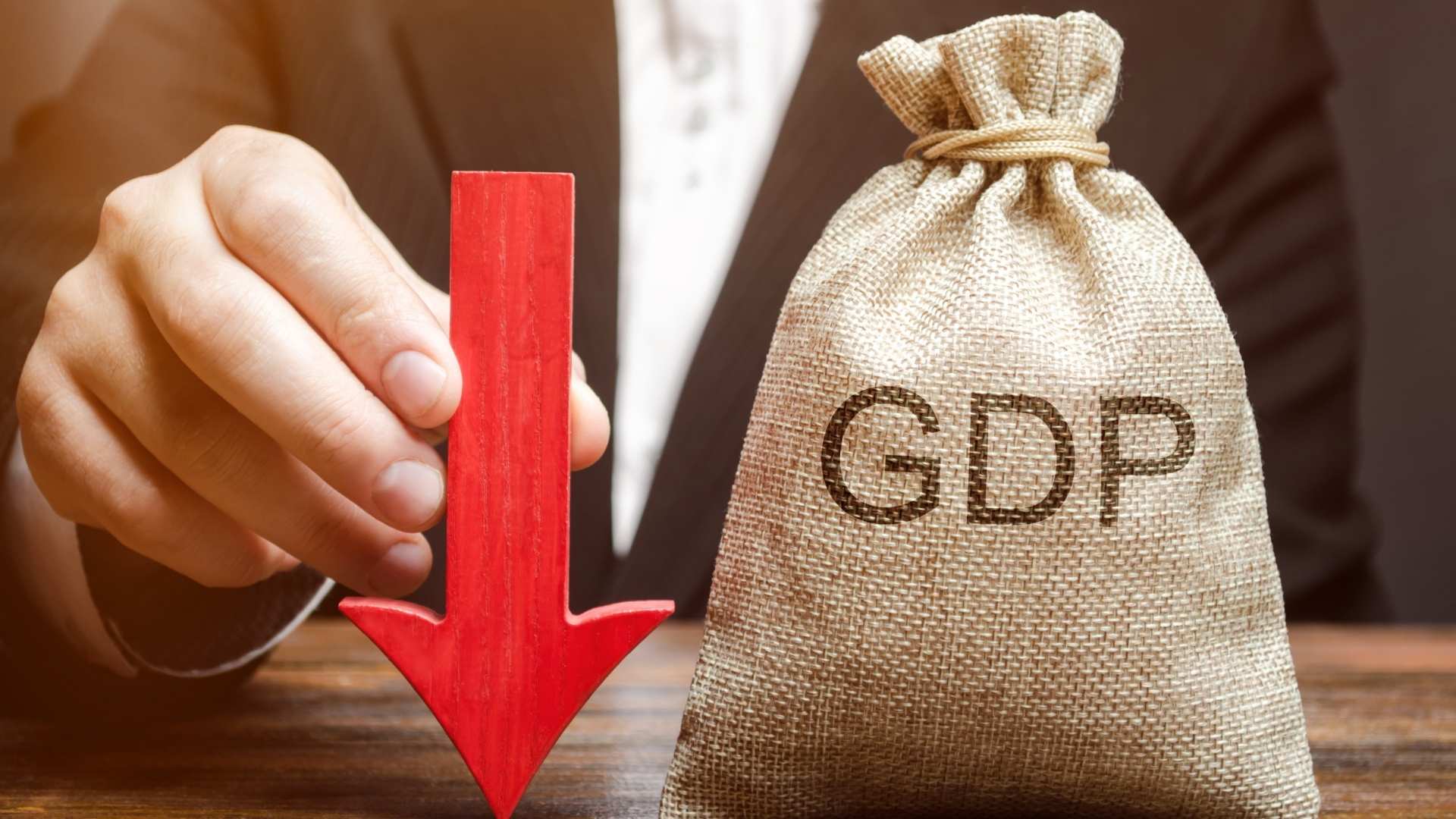
Grim Future: Analyzing India’s Economic Challenges

India’s economic fundamentals require a pragmatic evaluation in light of concerning trends in growth and production.
SuryaSurya
3 mins read
India’s Growth Concerns Deepen Amid Energy Crisis

Introduction

Recent economic data signals emerging stress in India’s growth trajectory. The Index of Eight Core Industries (ICI) growth fell to a three-month low in February 2026, while crude oil and natural gas sectors have seen prolonged contraction. With India importing ~85% of its crude oil and global oil prices crossing $100/barrel, external vulnerabilities are rising. Growth projections have already been revised down to ~6.5%, raising concerns about macroeconomic resilience.


Background & Context

  • Core industries (weight ~40% in IIP) are key indicators of industrial performance.

  • Weak core sector performance precedes broader economic slowdown.

  • Global backdrop:

    • Rising West Asia tensions
    • Volatile energy prices
    • Global economic uncertainty

SectorTrend
Crude OilContracting in 20 of last 24 months
Natural GasContracting for 20 consecutive months
Overall ICI GrowthDropped sharply in Feb 2026
Base EffectNot significant (Feb 2025 growth only 3.4%)

Key Concepts

1. Index of Core Industries (ICI)

  • Includes 8 sectors: coal, crude oil, natural gas, refinery products, fertilizers, steel, cement, electricity.
  • Indicator of industrial momentum.

2. Import Dependence

  • India heavily reliant on energy imports, especially from West Asia.

3. Inventory Build-up (Change in Stocks)

  • Rising share indicates unsold goods, signalling weak demand.

Structural Issues Identified

1. Energy Sector Weakness

  • Decline in domestic oil & gas production.
  • Over-reliance on cheap imports in the past.
  • Lack of proactive strategy despite rising geopolitical risks.

2. Demand-Side Weakness

  • Declining contribution of:

    • Private consumption
    • Investment (capital formation)
    • Exports
  • Rising inventory accumulation → production not matched by demand.


Macroeconomic Indicators: Emerging Concerns

IndicatorTrend
GDP (new series)Economy smaller than earlier estimates
Private ConsumptionDeclining share
InvestmentWeak
Exports & ImportsReduced contribution
Change in StocksIncreased significantly

1. Growth Slowdown

  • Rating agencies projecting ~6.5% GDP growth.
  • Risk of further slowdown due to global uncertainty.

2. Energy Security Risks

  • Supply disruptions due to West Asia conflict.
  • High oil prices → inflation, fiscal stress, CAD widening.

3. Industrial Slowdown

  • Weak core sector → slowdown in manufacturing and infrastructure.

4. Demand Compression

  • Inventory build-up → future production cuts.
  • Potential employment and income effects.

Policy Gaps Highlighted

1. Lack of Strategic Foresight

  • Failure to boost domestic production despite anticipated geopolitical risks.
  • Missed opportunity to build reserves.

2. Inadequate Energy Planning

  • Schemes like PM Ujjwala Yojana (2016) increased LPG demand.
  • However, supply security measures lagged.

Policy Measures & Way Forward

1. Strengthening Energy Security

  • Increase domestic exploration & production.
  • Expand Strategic Petroleum Reserves (SPR).
  • Diversify import sources.

2. Boosting Demand

  • Fiscal measures to stimulate:

    • Consumption
    • Investment
  • Support MSMEs and job creation.

3. Industrial Policy Focus

  • Strengthen core sectors through incentives and reforms.
  • Improve infrastructure and logistics.

4. Data-Driven Policymaking

  • Use early indicators (like ICI) for preemptive policy action.

Critical Analysis

  • India’s growth narrative shows structural fragility beneath macro stability.
  • Over-reliance on imports and weak domestic demand create vulnerabilities.
  • Highlights need for counter-cyclical policies and strategic foresight.

“Resilience is not just the ability to withstand shocks, but to anticipate and prepare for them.”


Conclusion

The recent slowdown in core sector performance, coupled with weakening demand indicators and external shocks, underscores the need for a more realistic assessment of India’s economic resilience. Strengthening domestic production, ensuring energy security, and reviving demand will be critical to sustaining long-term growth in an increasingly uncertain global environment.

Quick Q&A

Everything you need to know

The Index of Eight Core Industries is a key indicator of industrial activity, covering sectors such as coal, crude oil, natural gas, refinery products, fertilizers, steel, cement, and electricity. A slowdown in this index—especially a drop to a three-month low—signals weakening momentum in the foundational sectors that drive overall economic growth. Since these industries have strong forward and backward linkages, their underperformance can have cascading effects on manufacturing, infrastructure, and employment.

The February 2026 data is particularly concerning because the slowdown is not due to a high base effect, implying a genuine deceleration rather than a statistical anomaly. Sectoral contraction in crude oil and natural gas further highlights structural weaknesses in India’s energy ecosystem. This suggests that domestic production is not keeping pace with demand, increasing vulnerability to external shocks.

From a broader macroeconomic perspective, this slowdown reflects demand-side constraints and possible inefficiencies in supply chains. It also raises questions about the sustainability of India’s growth trajectory, especially when combined with declining contributions from consumption and investment. Thus, the core sector data acts as an early warning signal for deeper economic challenges.

India’s heavy reliance on imported energy, particularly from geopolitically volatile regions like West Asia, poses significant risks to its economic stability. When conflicts such as the U.S.-Iran tensions escalate, supply chains can be disrupted, leading to price volatility and potential shortages. With oil prices exceeding $100 per barrel, the import bill rises sharply, worsening the current account deficit and exerting pressure on the rupee.

This dependence also limits India’s strategic autonomy. In times of crisis, energy security becomes intertwined with foreign policy decisions, constraining India’s ability to act independently. Moreover, sectors like transport, manufacturing, and power generation are heavily reliant on fossil fuels, making the entire economy sensitive to global energy shocks.

The situation is exacerbated by declining domestic production of crude oil and natural gas. While cheaper imports may have been economically rational in the short term, they have led to underinvestment in domestic capacity. A more balanced approach—combining imports with strategic reserves and domestic production—is essential to mitigate risks and ensure long-term energy security.

A proactive increase in domestic oil and gas production could have served as a buffer against external shocks by reducing immediate dependence on imports. Even if it did not fully replace imports, it would have allowed India to build strategic reserves during periods of relatively stable prices, thereby cushioning the impact of subsequent price spikes and supply disruptions.

Such a strategy would also have supported energy price stability within the domestic market. By increasing local supply, the government could have moderated the pass-through of global price increases to consumers and industries. This, in turn, would have helped control inflation and maintained purchasing power, thereby sustaining demand in the economy.

Additionally, boosting domestic production would have had positive spillover effects on employment, investment, and technological development in the energy sector. The current supply crunch underscores the importance of foresight in policy planning. While hindsight reveals missed opportunities, the ongoing push to enhance domestic output is a step in the right direction, albeit delayed.

The contraction in domestic crude oil and natural gas production can be attributed to a combination of structural, economic, and policy-related factors. One major reason is the economic preference for cheaper imports, which has discouraged investment in domestic exploration and production. When global prices are low, importing becomes more cost-effective, leading to a decline in domestic activity.

Another factor is the presence of regulatory and operational challenges in the domestic energy sector. Issues such as complex licensing procedures, environmental clearances, and limited technological capabilities have hindered efficient extraction and production. Additionally, aging oil fields and declining productivity have further contributed to reduced output.

There is also a lack of consistent long-term policy direction aimed at achieving energy self-reliance. While initiatives like the Hydrocarbon Exploration and Licensing Policy (HELP) have been introduced, their impact has been gradual. The current contraction reflects the cumulative effect of these challenges, highlighting the need for policy reforms, technological upgrades, and investment incentives to revitalize the sector.

India has often been portrayed as a resilient economy, capable of withstanding global shocks due to its strong fundamentals. However, recent data suggests that this narrative may require a more nuanced assessment. The downward revision of GDP estimates indicates that the economy is smaller than previously believed, raising concerns about the accuracy of earlier growth projections.

Furthermore, the declining contributions of key growth drivers—such as private consumption, capital formation, and exports—point to underlying weaknesses. The rise in ‘change in stocks’ suggests that production is not being matched by demand, leading to inventory accumulation. This is a classic sign of slowing economic activity, which could eventually result in reduced production and employment.

On the other hand, India still retains certain strengths, such as a large domestic market, a growing services sector, and ongoing structural reforms. However, these advantages must be complemented by robust demand generation, energy security, and policy foresight. The current scenario calls for a realistic appraisal of economic resilience, rather than relying on optimistic assumptions.

The Pradhan Mantri Ujjwala Yojana (PMUY), launched in 2016, aimed to provide clean cooking fuel (LPG) to millions of households, particularly in rural areas. While the scheme has been successful in expanding access and improving health outcomes, it also significantly increased the demand for LPG. This surge in demand required a corresponding strategy to ensure stable and secure supply chains.

However, the lack of a comprehensive follow-up policy to secure LPG imports or build adequate reserves highlights a gap in planning. As global energy markets become volatile, ensuring uninterrupted LPG supply becomes challenging, especially for vulnerable populations who depend on subsidized cylinders. This demonstrates the importance of aligning welfare schemes with supply-side preparedness.

A more integrated approach would have included investments in domestic production, diversification of import sources, and the creation of strategic reserves. The PMUY case serves as a valuable lesson in policymaking: demand-side interventions must be complemented by robust supply-side strategies to ensure long-term sustainability and resilience.

In a scenario where oil prices exceed $100 per barrel and geopolitical tensions disrupt supply chains, India must adopt a multi-pronged strategy to ensure stability. In the short term, the government can utilize strategic petroleum reserves to manage supply shocks and prevent sharp price increases in the domestic market. Additionally, diversifying import sources can reduce dependence on any single region.

In the medium term, India should focus on boosting domestic production of oil and gas, as well as expanding renewable energy capacity. Investments in solar, wind, and green hydrogen can reduce reliance on fossil fuels and enhance energy security. Policy measures such as incentives for exploration and easing regulatory barriers can attract private investment into the energy sector.

In the long term, structural reforms aimed at improving energy efficiency and demand management are crucial. Promoting electric mobility, enhancing public transport, and encouraging energy conservation can reduce overall consumption. This comprehensive approach will not only address immediate challenges but also build resilience against future shocks, ensuring sustainable economic growth.

Attribution

Original content sources and authors

Sign in to track your reading progress

Comments (0)

Please sign in to comment

No comments yet. Be the first to comment!