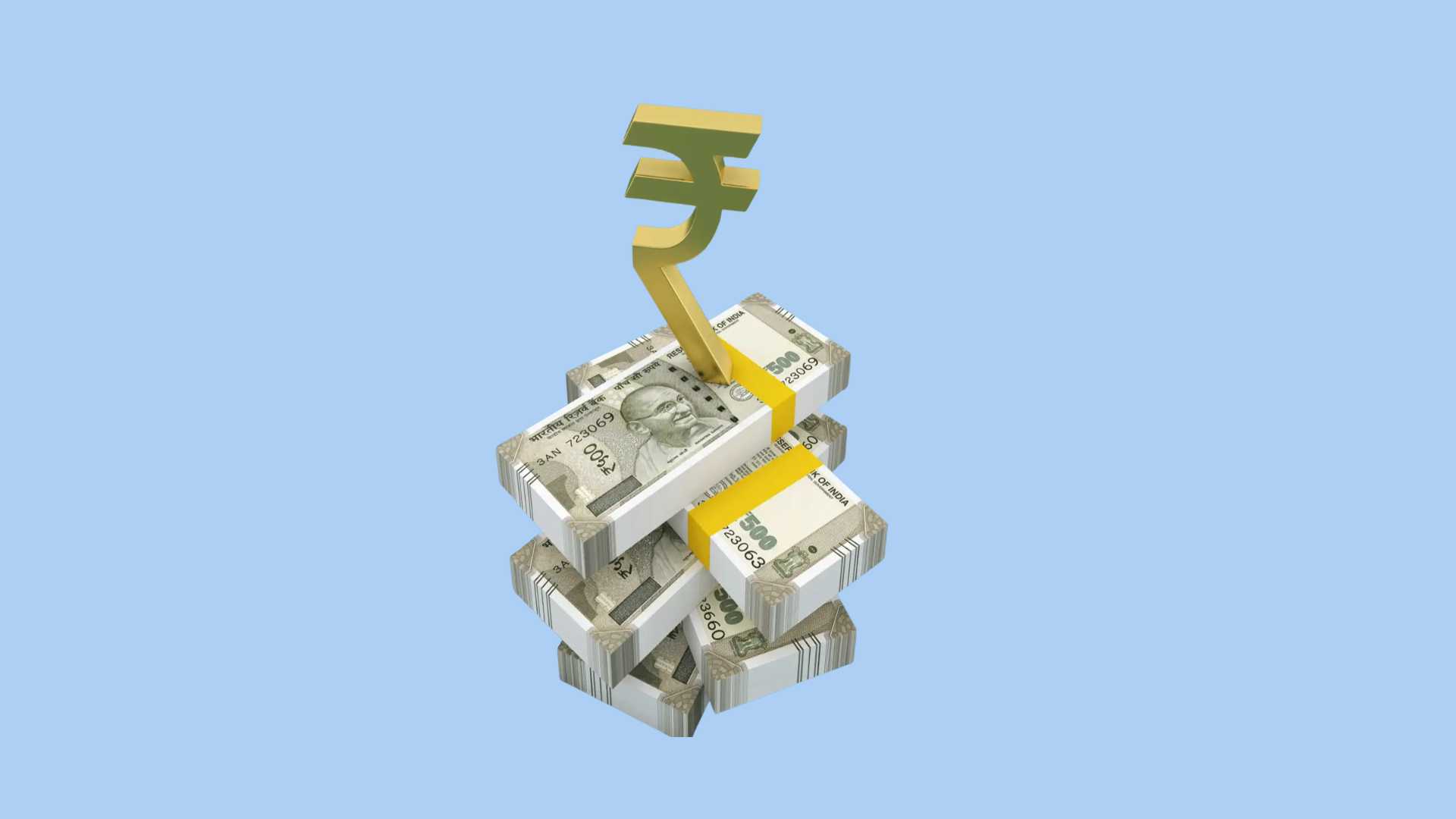
Stabilising the Indian Economy Through Currency Depreciation

Understanding how a weaker rupee can stimulate domestic demand and enhance exports amidst global economic distress
S
Surya
4 mins read
Rupee depreciation acts as automatic stabiliser during crisis

Introduction

Global geopolitical conflicts often trigger macroeconomic shocks through energy prices, capital flows, and trade disruptions. The recent conflict in West Asia, a region supplying nearly 30% of global oil, has pushed up energy prices and weakened global demand. For India, which imports over 85% of its crude oil, such shocks transmit through oil prices, remittances, export demand, and financial flows. In such situations, exchange-rate adjustments and capital flows act as automatic stabilisers, helping the economy absorb external shocks without heavy policy intervention.


1.Transmission of Global Shocks to India

India’s economy is deeply integrated with global markets through energy imports, remittances, trade, and capital flows.

Major Transmission Channels

ChannelImpact on Indian Economy
Physical gas shortagesSupply disruptions and higher energy costs
Rising crude oil pricesInflation, fiscal pressure, higher import bill
Decline in remittances from West AsiaReduced household income and foreign exchange
Lower export demandReduced growth in export-oriented sectors

These combined effects create a negative macroeconomic shock affecting growth, inflation, and external balances.


2. Exchange Rate Depreciation as an Automatic Stabiliser

When external shocks occur, currency depreciation helps the economy adjust automatically.

Mechanism of Adjustment

ImpactExplanation
Imports become costlierReduces demand for imported goods
Domestic demand risesConsumers shift to locally produced goods
Export competitiveness improvesForeign buyers find Indian goods cheaper
Higher revenues for export sectorsGlobal prices multiplied by weaker exchange rate

Example: If the rupee depreciates, sectors like steel, textiles, pharmaceuticals, and IT services gain competitiveness in international markets.

Thus, exchange-rate flexibility stabilises growth and employment during external crises.


3. Role of Capital Flows in Currency Adjustment

The movement of capital across countries strongly influences exchange rates.

During Economic Distress

  1. Global investors reassess risk.
  2. Capital flows out of emerging markets.
  3. Demand for domestic currency falls.
  4. Currency depreciates.

This depreciation automatically restores external balance by boosting exports and reducing imports.

Economists often describe this as the “price system’s homeostasis”—the self-correcting nature of markets.


4. Reverse Mechanism in Good Times

Automatic stabilisation works symmetrically during economic booms.

Economic ConditionCapital FlowsExchange Rate MovementEconomic Effect
Economic downturnCapital outflowsCurrency depreciationBoosts exports
Economic boomCapital inflowsCurrency appreciationModerates overheating

Thus, exchange rate movements stabilise the economy in both directions.


5. Concept of Automatic Stabilisers in an Open Economy

Automatic stabilisers are mechanisms that stabilise the economy without active government intervention.

Examples in macroeconomics:

  • Progressive taxation
  • Welfare transfers
  • Flexible exchange rates

In open economies, exchange rate flexibility acts as a powerful automatic stabiliser.

Advantages:

  • No policy delay
  • No administrative cost
  • Market-based adjustment

6. Policy Debate: Government Intervention vs Market Determination

While markets can stabilise the economy automatically, frequent discretionary intervention by governments or central banks can create uncertainty.

Problems with Discretionary Exchange Rate Intervention

IssueExplanation
Policy unpredictabilityFirms cannot anticipate exchange rate movements
Investment uncertaintyBusinesses struggle with long-term planning
Hedging difficultiesCurrency risk management becomes harder
Limited state capabilityGovernments may misjudge “correct” exchange rate

This uncertainty affects investment, exports, and corporate decision-making.


7. The Impossible Trinity (Mundell–Fleming Framework)

The Impossible Trinity (Trilemma) is a core concept in international macroeconomics.

It states that a country cannot simultaneously achieve all three of the following:

Policy ObjectiveDescription
Fixed exchange rateGovernment controls currency value
Independent monetary policyCentral bank sets domestic interest rates
Free capital flowsUnrestricted movement of international capital

A country can only achieve two out of these three goals.

Policy Choices

ModelFeatures
ChinaControlled capital flows + fixed exchange rate
EurozoneFree capital flows + fixed exchange rate
India (target model)Free capital flows + independent monetary policy

If India tries to control the exchange rate while allowing free capital flows, it loses control over domestic interest rates.


8. India’s Current Monetary Policy Framework

India adopted Flexible Inflation Targeting (FIT) in 2016.

Key Features

FeatureDetails
Inflation target4% CPI inflation
Tolerance band2% – 6%
Monetary authorityRBI Monetary Policy Committee

Under this framework, interest rates are primarily used to control inflation, not exchange rates.

Therefore, excessive exchange-rate management can conflict with inflation targeting.


9. Implications for India

Economic Stability

  • Flexible exchange rates absorb global shocks.
  • Reduces need for large fiscal or monetary interventions.

Export Competitiveness

  • Depreciation supports manufacturing and services exports.

Investment Climate

  • Predictable policies improve business confidence and capital inflows.

Policy Challenges

  • Balancing inflation control with exchange rate volatility.
  • Managing sudden capital flow reversals.
  • Maintaining adequate foreign exchange reserves.

10. Way Forward

Experts suggest that India should:

  • Maintain a flexible exchange rate regime.
  • Avoid excessive discretionary interventions.
  • Gradually liberalise the capital account.
  • Strengthen macroeconomic buffers such as forex reserves.

As economist Milton Friedman argued, “Flexible exchange rates serve as shock absorbers in an uncertain global economy.”


Conclusion

Exchange-rate flexibility and open capital flows form a critical pillar of macroeconomic stability in an interconnected world. For India, a market-determined exchange rate combined with inflation-targeting monetary policy allows the economy to absorb external shocks efficiently. However, policymakers must balance openness with prudential regulation to ensure stability while sustaining growth in an increasingly volatile global economic environment.

Quick Q&A

Everything you need to know

The ongoing conflict in West Asia has significant macroeconomic implications for India because the region plays a crucial role in India's energy security, trade relations, and migrant employment. When geopolitical tensions escalate in this region, they can transmit economic shocks to India through several interconnected channels. Understanding these transmission mechanisms is important for analysing India's macroeconomic vulnerability in a globalised economy.

The four major transmission channels include:

  • Energy supply disruption: West Asia is the primary supplier of crude oil and natural gas to India. Conflict can disrupt supply chains and create a physical shortage of gas, thereby increasing domestic energy costs.
  • Higher oil prices: Geopolitical instability often pushes global oil prices upward. Since India imports more than 80% of its crude oil needs, higher prices widen the current account deficit and increase inflationary pressures.
  • Decline in remittances: Millions of Indian workers are employed in Gulf countries. Economic slowdown in the region due to conflict may reduce remittances, which are an important source of foreign exchange for India.
  • Reduction in export demand: West Asia is a key export destination for Indian goods such as food products, engineering goods, and textiles. Economic distress in the region may reduce demand for Indian exports.


Together, these channels create a negative macroeconomic shock for India, affecting growth, inflation, and external sector stability. For example, during the 1973 oil crisis and subsequent geopolitical tensions in the Middle East, many oil-importing economies experienced severe inflation and economic slowdown. Similarly, the present conflict highlights India's structural vulnerability to external energy shocks, reinforcing the importance of diversification of energy sources and strengthening domestic economic resilience.

Exchange rate depreciation refers to the decline in the value of a country's currency relative to other currencies. In a flexible exchange-rate system, the currency adjusts automatically in response to external shocks, thereby helping stabilise the economy without requiring direct government intervention. Economists refer to this mechanism as an automatic stabiliser because it naturally helps the economy adapt to adverse global conditions.

When the Indian rupee depreciates, it alters the relative prices of domestic and foreign goods. This produces several stabilising effects:

  • Reduction in imports: A weaker rupee makes imported goods more expensive. Consumers and firms therefore reduce imports and shift toward domestically produced goods.
  • Boost to exports: Indian products become cheaper in international markets, improving export competitiveness and increasing foreign demand.
  • Support for domestic industry: Export-oriented sectors such as steel, pharmaceuticals, textiles, and IT services benefit from higher revenues when the rupee weakens.


For instance, if global investors withdraw capital due to geopolitical tensions, the rupee may depreciate. This depreciation makes Indian exports more attractive, which helps offset the decline in global demand. Thus, the exchange-rate mechanism helps rebalance the economy by stimulating domestic production and employment. This market-driven adjustment demonstrates the self-correcting nature of the price system in an open economy.

Capital flows are a major determinant of exchange rate movements in modern globalised financial systems. Investors constantly shift their funds across countries in search of better returns and lower risks. During periods of economic uncertainty or geopolitical instability, global investors reassess the risk profile of different economies, which can trigger large movements of capital across borders.

When adverse shocks affect a country such as India, international investors may demand higher returns or safer investment opportunities elsewhere. This can lead to capital outflows, meaning investors withdraw funds from domestic financial markets. As investors convert rupees into foreign currencies, the demand for foreign currency increases and the rupee depreciates. This mechanism is central to the functioning of a flexible exchange rate system.

The process typically unfolds through the following steps:

  • Global investors reassess economic risks in emerging markets.
  • Capital moves out of domestic equity and bond markets.
  • Demand for foreign currency increases in the forex market.
  • The domestic currency depreciates.


Although this may initially appear negative, it often has stabilising effects. Currency depreciation improves export competitiveness and stimulates domestic production. For example, during the global financial crisis of 2008, several emerging-market currencies depreciated, which helped restore external balance by boosting exports. Thus, capital flows and exchange rate adjustments together form an important mechanism of macroeconomic stabilisation.

A market-determined or flexible exchange rate is one in which the value of a currency is determined by demand and supply in foreign exchange markets. For a developing economy like India, this system offers several advantages in terms of macroeconomic stability and policy flexibility. However, it also presents certain challenges that policymakers must carefully manage.

Advantages of a flexible exchange rate include:

  • Automatic macroeconomic stabilisation: Currency depreciation during economic downturns boosts exports and reduces imports, helping stabilise growth.
  • Policy independence: The central bank retains greater control over domestic monetary policy, including interest rates and inflation targeting.
  • Shock absorption: Exchange rate movements help absorb external shocks such as oil price spikes or capital flow volatility.


However, there are also limitations:
  • Exchange rate volatility: Rapid currency fluctuations can create uncertainty for businesses engaged in international trade.
  • Capital flight risks: Sudden capital outflows can lead to sharp depreciation and financial instability.
  • Imported inflation: Depreciation raises the cost of imported goods such as crude oil, which can increase inflation.


For example, India experienced significant currency volatility during the 2013 “taper tantrum”, when global investors withdrew capital from emerging markets. While the rupee depreciated sharply, the flexible exchange rate eventually helped restore balance in the external sector. Therefore, while a market-determined exchange rate promotes economic resilience, it must be complemented by sound macroeconomic policies and strong financial institutions.

The “Impossible Trinity”, also known as the Mundell-Fleming Trilemma, is a fundamental principle in international economics which states that a country cannot simultaneously achieve all three of the following policy objectives:

  • A fixed or controlled exchange rate
  • Independent monetary policy
  • Free capital mobility
A country can only achieve any two of these objectives at the same time, but not all three. This creates a trade-off that policymakers must carefully navigate while designing macroeconomic policy frameworks.

In India’s case, the country has clearly chosen to prioritise monetary policy independence and gradually increasing capital account openness. The Reserve Bank of India (RBI) follows an inflation-targeting framework, aiming to maintain consumer price inflation around 4%. This requires control over domestic interest rates, which would be difficult if the exchange rate were tightly fixed.

Therefore, under the logic of the trilemma, India must allow a relatively flexible exchange rate. Attempts to simultaneously control exchange rates while allowing free capital flows could undermine monetary policy. For instance, if the central bank tries to defend a specific exchange rate while capital flows freely, it may lose control over domestic liquidity and interest rates. The trilemma thus explains why many modern economies prefer a flexible exchange rate combined with independent monetary policy.

Exchange rate movements have direct implications for domestic industries, especially those engaged in international trade. When a country's currency depreciates, its exports become cheaper for foreign buyers, which increases international demand. At the same time, imported goods become more expensive, encouraging consumers to shift toward domestically produced alternatives. This adjustment helps support local industries and employment.

For example, if the Indian rupee depreciates against the US dollar, sectors such as IT services, pharmaceuticals, textiles, and steel tend to benefit. Indian IT companies like Infosys and TCS earn a large share of their revenues in foreign currencies. When the rupee weakens, the value of these foreign earnings increases when converted into rupees, boosting company profits and improving export competitiveness.

Another example can be seen in the steel industry. Steel is often traded at global prices. When the rupee depreciates, the domestic price of steel rises because it reflects the global price multiplied by the exchange rate. This improves the revenue of domestic producers and encourages local production. Thus, exchange rate adjustments play a vital role in shaping the competitiveness of industries and the overall balance of trade in an open economy.

Attribution

Original content sources and authors

Sign in to track your reading progress

Comments (0)

Please sign in to comment

No comments yet. Be the first to comment!