Cabinet Approval for ₹37,500 Crore Coal Gasification Initiative

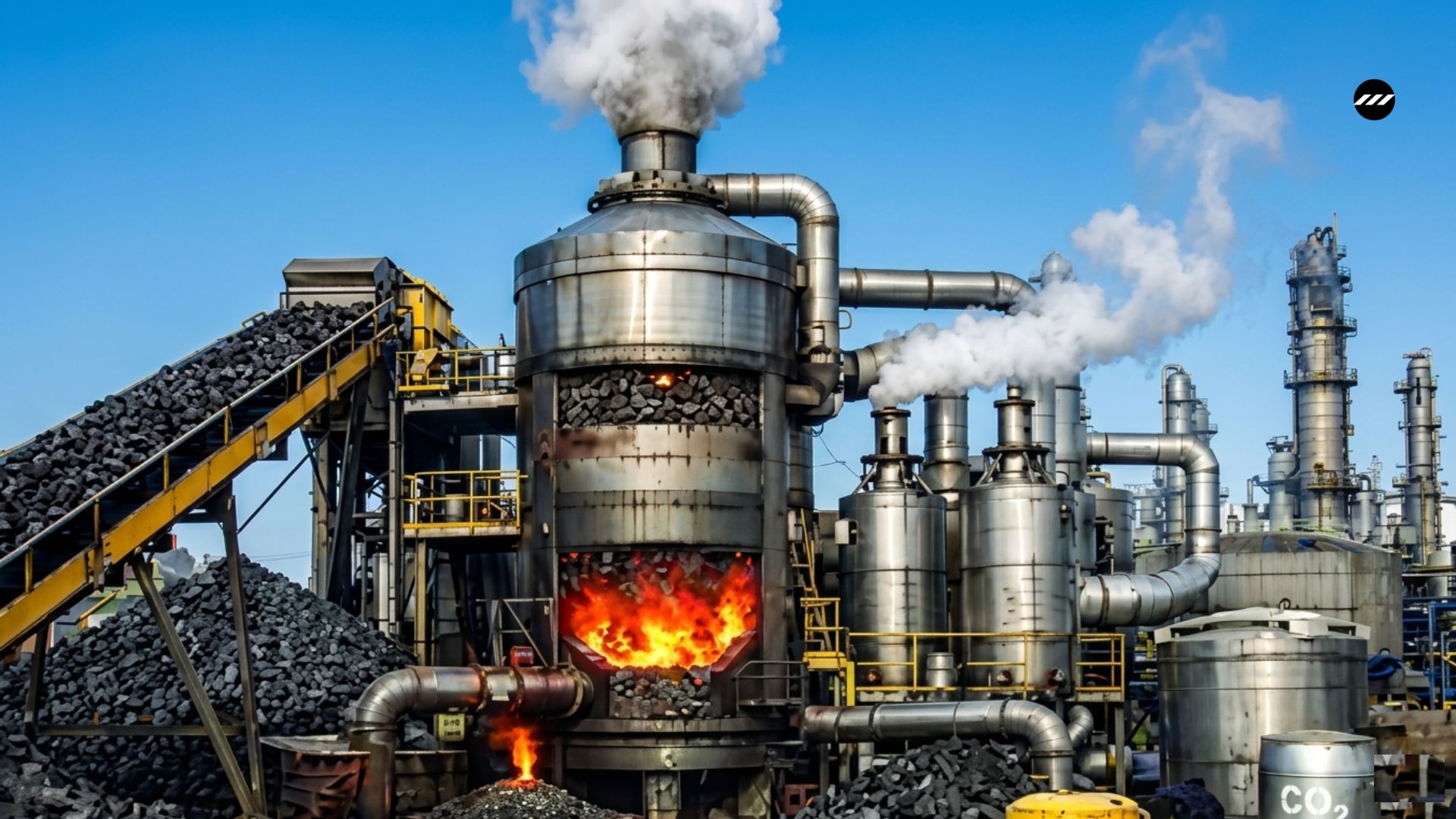
In a significant policy move, the Union Cabinet approved a ₹37,500 crore package to promote surface coal gasification — a method that converts coal into synthetic gas (syngas), which can then be processed into a range of industrial and agricultural products. The decision is as much an energy story as it is a strategic one, aimed squarely at reducing India's vulnerability to global commodity markets.
What Is Surface Coal Gasification?
Unlike conventional coal burning, surface coal gasification is a cleaner, alternate mining method that converts coal and lignite into syngas — a mixture primarily of hydrogen and carbon monoxide. This syngas serves as a feedstock for producing:
Syngas → Downstream Products:
  ✔ Urea           (fertiliser; ~20% imported)
  ✔ Methanol        (~80–90% imported)
  ✔ Ammonia         (100% import dependent)
  ✔ Synthetic Natural Gas (SNG)
  ✔ Fertilisers (other)
The import dependency across these products is not incidental — it is a structural vulnerability that this scheme directly targets.
The Import Bill Problem
The government's own press announcement framed the urgency clearly:
"India's import bill for key substitutable products — LNG, urea, ammonium nitrate, ammonia, coking coal, methanol, DME and others — stood at approximately ₹2.77 lakh crore in FY2025, a vulnerability further exposed by the ongoing geopolitical situation in West Asia."
West Asia's instability has repeatedly disrupted energy and fertiliser supply chains. Coal gasification, using India's abundant domestic coal reserves, offers a route to insulating critical sectors from such external shocks.
Scheme Structure: Key Features
- Target: Gasification of approximately 75 million tonnes of coal and lignite, contributing to a 100 MT target by 2030.
- Financial incentive: Up to one-fifth (20%) of plant and machinery costs.
- Project-level caps:
Per project cap (general)         → ₹5,000 crore
Per project cap (SNG / Urea)      → ₹9,000 crore
Per entity cap (all projects)     → ₹12,000 crore
- Coal linkage tenure extended up to 30 years — providing the long-term investment certainty that large capital-intensive projects demand.
Building on Prior Policy
The scheme does not start from scratch. It builds on:
- The National Coal Gasification Mission — India's broader framework for scaling up gasification.
- The ₹8,500 crore incentive scheme approved in January 2024, under which 8 projects worth ₹6,233 crore are already under implementation.
The Coal Ministry has indicated that more projects are expected in the coming months, suggesting the pipeline is beginning to fill.
Way Forward
The ₹37,500 crore package is a supply-side intervention — it incentivises private investment in capital-heavy infrastructure. For the scheme to deliver on its promise:
- Execution capacity must match policy ambition — the January 2024 scheme's 8 projects are a start, but 75 MT gasification demands significant scale-up.
- Technology partnerships in gasification efficiency will be critical, given India's limited operational experience at scale.
- Downstream integration — linking syngas output to fertiliser and energy grids — must be planned concurrently, not as an afterthought.
- Reducing ammonia import dependency from 100% should be treated as a national priority benchmark.
Conclusion
India's coal reserves are among the largest in the world, yet the country spends over ₹2.77 lakh crore annually importing products that coal gasification could domestically produce. The ₹37,500 crore package is a recognition that energy security, import substitution, and industrial self-reliance are not separate goals — they converge in the chemistry of syngas. The policy architecture is now in place; what follows must be delivery at scale.
Attribution
Original content sources and authors


Syllabus classification
How this article maps to GS papers
Main syllabus
GS3InfrastructureQuick Q&A
What is coal gasification, and how does the recently approved ₹37,500 crore scheme aim to strengthen India's energy and industrial security?
The Union Cabinet’s ₹37,500 crore package seeks to scale this technology as part of India’s broader energy strategy. It aims to gasify 75 million tonnes of coal and lignite, contributing significantly to the national target of 100 million tonnes by 2030. This aligns with the National Coal Gasification Mission and supports diversification of coal use beyond power generation.
Strategically, the scheme addresses import dependence. India imports a substantial share of methanol, LNG, ammonia, and urea, creating economic vulnerability. By promoting domestic conversion of coal into these products, the scheme seeks to reduce import bills, improve self-reliance, and provide resilience during geopolitical disruptions such as those witnessed in West Asia.
For UPSC perspective: the initiative represents the intersection of energy security, industrial policy, and Atmanirbhar Bharat, while raising questions about environmental sustainability and technology adoption.
Why is coal gasification being promoted despite India’s simultaneous commitment to clean energy transition?
The rationale lies in balancing economic realism with energy transition goals. While renewable energy supports decarbonisation, industries such as fertilisers, petrochemicals, and steel continue to depend on carbon-based feedstock. Gasification offers a domestic source for these sectors and reduces strategic import exposure.
However, critics note environmental concerns. Coal gasification still involves fossil fuel use and carbon emissions. Its viability depends on integrating carbon capture, improving efficiency, and using cleaner technologies. Without these safeguards, it may conflict with India’s net-zero commitments.
A comparable example is China, which has extensively used coal-to-chemicals technology to reduce imports, though concerns over emissions remain. Thus, India sees it as a pragmatic bridge between conventional resources and long-term clean alternatives.
How does the financial design of the new scheme encourage private investment in coal gasification projects?
The incentive is capped at ₹5,000 crore per project, while SNG and urea projects can receive up to ₹9,000 crore. A single entity can avail a maximum of ₹12,000 crore. These caps ensure both scalability and equitable allocation while prioritising strategically important products.
Another major reform is extending coal linkage tenure to 30 years. Long-term assured coal supply reduces supply risk and improves bankability. Investors prefer projects with guaranteed raw material access because revenue depends on uninterrupted coal supply.
The structure resembles production-linked incentives used in manufacturing sectors. By combining capital subsidy with supply security, the scheme attempts to create a robust ecosystem for domestic syngas-based industries.
What economic factors have pushed India to accelerate coal gasification in the current global context?
The ongoing geopolitical instability in West Asia has further highlighted supply chain vulnerabilities. Since many industrial inputs are sourced internationally, disruptions can affect agriculture, manufacturing, and energy sectors. Domestic gasification provides a strategic buffer against such shocks.
Economic diversification is another factor. India seeks to move coal use from low-value power generation to higher-value chemical production. This can create industrial clusters, jobs, and downstream manufacturing. It also supports sectors like fertilisers and transport fuels.
The broader reason is strategic resilience: reducing external dependence while leveraging domestic natural resources. This reflects a policy shift where energy policy is increasingly linked with economic security and industrial competitiveness.
Critically analyse the benefits and limitations of coal gasification as a long-term policy tool for India.
Yet, limitations are substantial. Coal remains a carbon-intensive fossil fuel. Gasification plants are capital-heavy and require complex technology. Without carbon capture and storage, environmental gains may be limited. Water use is also high, posing challenges in water-scarce regions.
From a policy perspective, there is also a lock-in risk. Large investments in coal-based infrastructure may delay renewable alternatives. This creates tension between short-term industrial goals and long-term climate commitments.
Therefore, coal gasification should be treated as a strategic interim tool. Its success depends on integrating cleaner technologies, strict environmental regulation, and parallel investment in green hydrogen and renewables.
How can the coal gasification scheme be understood as a case study in balancing economic self-reliance with environmental governance?
For instance, eight projects worth ₹6,233 crore approved under the earlier 2024 incentive package are under implementation. These projects show the government’s attempt to create industrial ecosystems around domestic coal conversion and chemical production.
The governance challenge lies in ensuring sustainability. If projects adopt carbon capture, cleaner processing, and efficient water management, coal gasification can act as a transition technology. Without such safeguards, it may undermine climate goals and local ecology.
As a case study, it highlights how public policy often requires balancing competing priorities: growth, energy security, environmental protection, and strategic autonomy.
Practice questions
1 question for mains preparation