
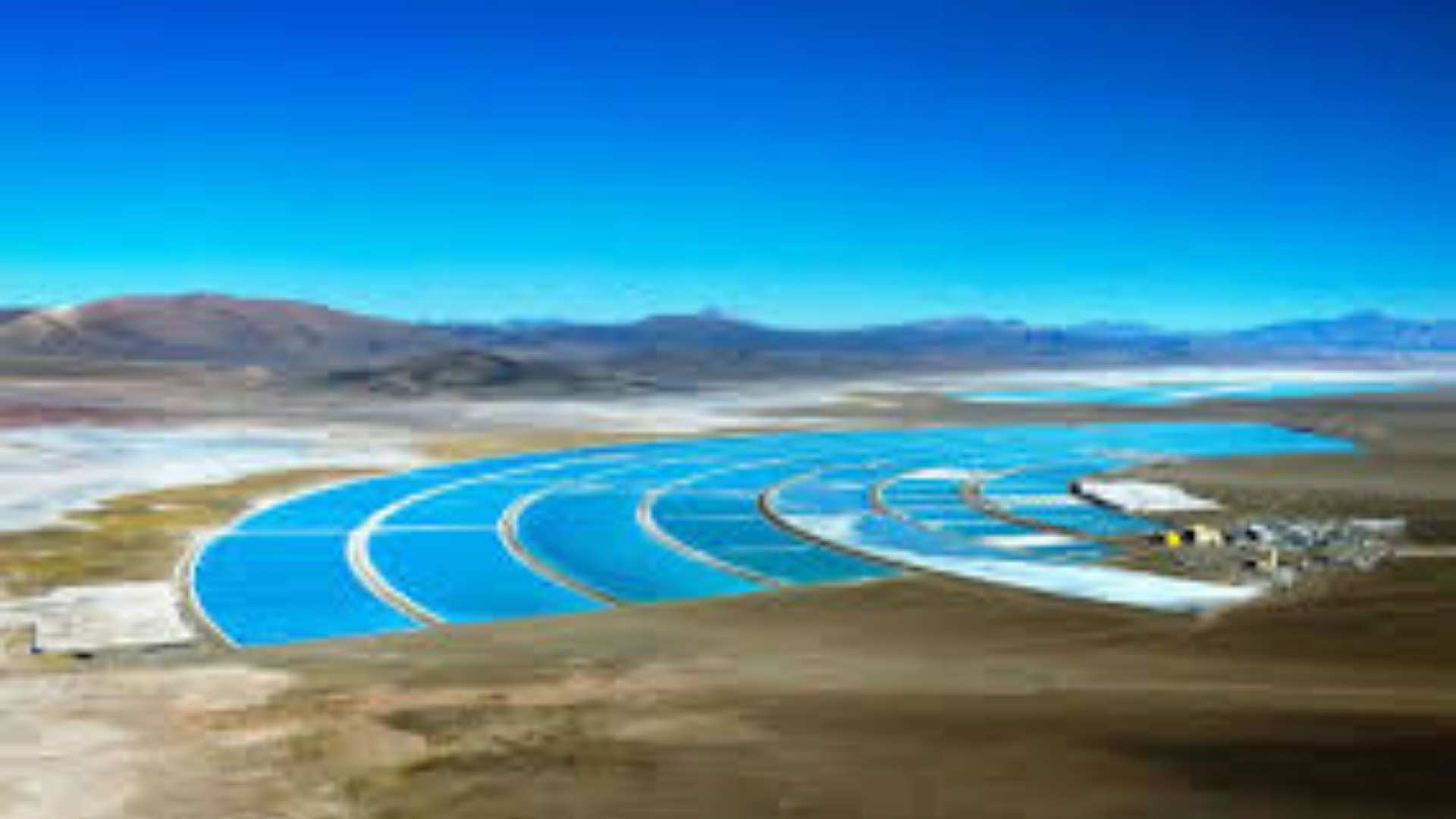
1. Strategic Context: Critical Minerals and India’s Energy Transition
India’s clean energy transition is structurally dependent on imported critical minerals and rare earths. These minerals are indispensable for renewable energy technologies, electric mobility, defence manufacturing, and advanced electronics.
China’s tightening export controls have intensified supply risks, underscoring India’s vulnerability in upstream and midstream segments of mineral value chains. Consequently, mineral security has emerged as a core issue linking GS3 (energy, industry), GS2 (foreign policy), and national security.
In response, India has committed to diversifying mineral trade linkages, promoting responsible production, and supporting standards-based markets. If ignored, dependence on a narrow supplier base could derail clean energy goals and strategic autonomy.
The governance logic is clear: energy transition without mineral security is strategically fragile and economically unsustainable.
2. India’s Two-Pronged Strategy: Domestic Capability and External Access
India’s approach combines long-term domestic capacity building with immediate overseas sourcing. Over the last five years, New Delhi has pursued nearly a dozen bilateral and multilateral mineral partnerships while reforming domestic mineral policies.
This dual strategy recognises that domestic mining and processing will take time, while clean energy deployment requires assured supply now. Therefore, mineral diplomacy has become a critical instrument of economic statecraft.
However, partnerships vary widely in outcomes, raising questions about effectiveness, prioritisation, and strategic coherence. Without recalibration, India risks expending diplomatic capital without securing material gains.
Strategic partnerships must be judged by delivered capacity, not announced intent.
3. Australia and Japan: Reliable Models of Strategic Cooperation
Australia has emerged as India’s most reliable mineral partner due to political stability, large reserves, and a shared strategic outlook. Cooperation includes long-term supply discussions, joint research, and targeted investments.
Under the India–Australia Critical Minerals Investment Partnership (2022), five target projects in lithium and cobalt were identified for potential investment. This reflects movement beyond dialogue into project-level collaboration.
Japan offers a different but equally valuable model. After facing Chinese rare-earth export restrictions a decade ago, Tokyo adopted a comprehensive strategy of diversification, stockpiling, recycling, and sustained R&D. India–Japan cooperation has expanded beyond Indian Rare Earths Limited into joint extraction, processing, and stockpiling in India and third countries.
These partnerships show that institutional depth and long-term planning build resilience faster than ad hoc deals.
Comparative examples:
- Australia: Joint investments and project identification in lithium and cobalt
- Japan: Diversification, recycling, stockpiling, and technology-led resilience
4. Africa: Opportunity with Structural Risks
African countries offer mineral abundance alongside long-standing trade ties with India. Recent agreements with Namibia for lithium, rare earths, and uranium, and asset-acquisition talks in Zambia for copper and cobalt, signal India’s growing engagement.
African partners increasingly seek local value addition rather than raw extraction. This aligns with India’s need to build long-term supply chains but requires an industrial, not transactional, approach.
Without sustained investment, technology transfer, and local processing, India risks losing ground to competitors with more coordinated strategies.
Africa rewards patience and industrial commitment; short-termism weakens strategic credibility.
5. United States and the European Union: Technology-Rich but Complex Partners
Despite political signalling around “friend-shoring,” India–U.S. cooperation on critical minerals has struggled to move beyond dialogue. Recent U.S. tariffs, shifting trade rules, and restrictive incentives under the Inflation Reduction Act complicate predictability.
Nevertheless, initiatives such as the TRUST Initiative and the Strategic Minerals Recovery Initiative propose collaboration in rare-earth processing, battery recycling, and clean separation technologies. The U.S. remains more valuable as a downstream technology partner than a raw mineral supplier.
The European Union offers a regulatory-led model through the Critical Raw Materials Act, the European Battery Alliance, and its circular economy agenda. For India, deeper cooperation requires alignment with EU standards on transparency, lifecycle assessment, and environmental norms.
Advanced economies offer technology and standards, but demand regulatory convergence and policy stability.
6. West Asia and Russia: Complementary but Constrained Options
West Asia presents opportunities in the midstream segment. Countries like the UAE and Saudi Arabia are investing in battery materials, refining capacity, and green hydrogen, backed by sovereign wealth funds acquiring mining assets globally.
For India, the Gulf could emerge as a processing hub for minerals sourced from Africa or Latin America. However, the absence of strong institutional frameworks limits depth.
Russia possesses significant reserves of rare earths, cobalt, and lithium, and scientific cooperation with India is longstanding. Yet sanctions, financing constraints, and logistical unpredictability restrict reliability. Russia can function as a hedge, not a foundation.
Diversification reduces risk, but reliability determines strategic weight.
7. Latin America and Canada: New Frontiers of Engagement
Latin America has become central to global copper, nickel, and rare-earth strategies. India has expanded engagement in Argentina, Chile, Peru, and Brazil, with both public and private investments.
Khanij Bidesh India Limited (KABIL) has signed a ₹200 crore exploration and development agreement with Argentina. However, competition is intense and engagement remains at an early stage.
Canada, following the restoration of diplomatic ties, emerges as a promising partner with reserves of nickel, cobalt, copper, and rare earths. A recently signed trilateral agreement with Australia and India enhances its potential, though political stability will be decisive.
Lasting presence in these regions requires value-chain partnerships, not extraction-only arrangements.
Key statistic:
- KABIL investment in Argentina: ₹200 crore
8. The Central Lesson: Processing is the Real Choke Point
Across all partnerships, a consistent lesson emerges: securing ore alone is insufficient. The primary vulnerability lies in mineral processing and refining, where global capacity is highly concentrated.
Without domestic midstream capability, India remains exposed to supply disruptions regardless of upstream diversification. Technology transfer, innovation, and on-ground project execution matter more than announcements.
A country-specific approach can distribute risk: upstream sourcing from Africa, Australia, Canada, and Latin America; midstream processing with Japan and West Asia; downstream technology with the EU and U.S.; and diversification via Russia.
Strengthening domestic frameworks for responsible mining, ESG compliance, and transparency is essential, as these factors increasingly shape international partnerships.
Control over processing determines control over the energy transition.
Conclusion
India has constructed an extensive web of critical minerals partnerships across continents. The strategic challenge now is to deepen effective partnerships, recalibrate weak ones, and anchor diplomacy in processing capacity, technology, and long-term certainty. A coherent value-chain strategy, backed by domestic regulatory strength, will be decisive for India’s clean energy transition and strategic autonomy.