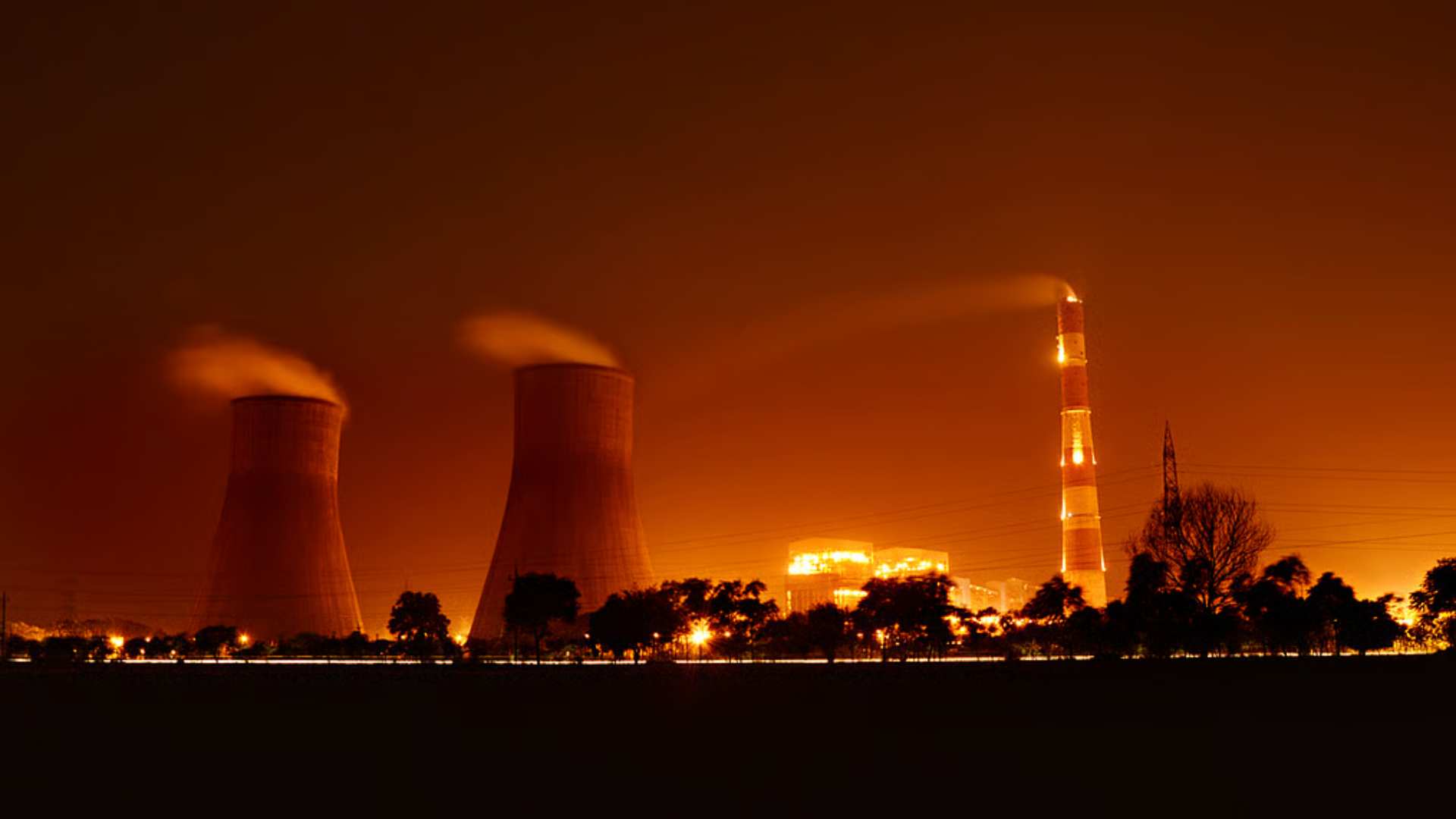
1. India’s Nuclear Energy Expansion: Strategic Context
India has articulated an ambitious civil nuclear energy roadmap aimed at strengthening energy security and diversifying its energy mix. The country plans to operationalise at least five Small Modular Reactors (SMRs) by 2033 and achieve 100 GW of nuclear energy capacity by 2047. This aligns with long-term climate commitments and the objective of gradually retiring coal-based power plants.
The Union Budget 2025–26 emphasised indigenous nuclear technology, particularly Bharat Small Modular Reactors (BSMRs) based on pressurised heavy-water reactor technology. It also signalled openness to public-private partnerships (PPPs), albeit with modest funding allocation. The enactment of the Sustainable Harnessing and Advancement of Nuclear Energy Act, 2025 (SHANTI Act) marked a significant reform in nuclear licensing and civil liability frameworks.
Nuclear energy is central to India’s low-carbon transition, given its ability to provide stable baseload power without greenhouse gas emissions. However, scaling up capacity from current levels to 100 GW requires not just technological capability but robust institutional and financial architecture.
"The release of atomic energy has not created a new problem. It has merely made more urgent the necessity of solving an existing one." — Albert Einstein
The strategic logic is clear: nuclear energy supports climate goals, energy security, and industrial growth. However, without aligning legal, financial, and regulatory reforms with capacity targets, ambitions risk remaining aspirational.
2. Unique Nature of Nuclear Energy Financing
India’s projected nuclear financing requirement by 2047 exceeds $200 billion, subject to competitive bidding. Unlike conventional infrastructure projects, nuclear financing involves heightened regulatory, technical, and safety compliance obligations.
Nuclear projects must comply with standards set by the International Atomic Energy Agency (IAEA), including safety, design, operational, construction, and commissioning norms. Additionally, onsite nuclear waste management facilities are mandatory prerequisites.
The capital cost of a nuclear power plant is three to six times higher than that of coal- or gas-based plants. Although operational costs are lower, nuclear projects require long-term, fixed-interest-rate, currency-hedged financing due to their extended gestation and payback periods.
Key Financial Features:
- Capital cost: 3–6 times thermal plants
- Payback period: Extremely long
- Financing requirement by 2047: $200+ billion
- Mandatory compliance with IAEA standards
The financial structure of nuclear energy reflects its high upfront risk and long-term return profile. Without specialised financing mechanisms, conventional funding channels cannot absorb such scale and tenor risk.
3. Structural Constraints in Domestic Financial Markets
Commercial banks have largely refrained from financing nuclear infrastructure due to:
- Borrowing covenants and regulatory restrictions
- Reputational risks
- Asset-liability mismatch (long-tenor loans vs short-term deposits)
Banks selectively fund working capital loans, but long-term project financing remains limited. Capital markets in developing economies like India lack sufficient depth to provide 25–30-year fixed-interest local currency financing. Moreover, securities regulations are not fully adapted to enable nuclear entities to access bond markets efficiently.
This structural limitation constrains the mobilisation of domestic savings for long-gestation infrastructure like nuclear energy.
The governance challenge lies in aligning financial regulation with strategic infrastructure goals. If domestic financial systems remain misaligned, nuclear expansion will depend excessively on external funding, increasing vulnerability.
4. Role of Export Credit Agencies and International Frameworks
The Organisation for Economic Cooperation and Development (OECD) provides a specialised framework for financing nuclear projects through Export Credit Agencies (ECAs). These arrangements typically:
- Cover cost of imported capital goods and services
- Provide financing for over 25 years
- Include construction period plus 22-year repayment period
- Allow capitalisation of interest during construction
However, such financing is restricted primarily to imported components and does not fully address the broader financing requirements of India’s nuclear mission.
Multilateral organisations such as the Asian Development Bank (ADB), International Energy Agency (IEA), and IAEA could assist in policy framework development and institutional capacity building.
International financing frameworks provide templates but not complete solutions. India must adapt global best practices while building domestic financial resilience.
5. Need for a Dedicated Nuclear Financing Entity
The article proposes establishing a separate nuclear financing entity to identify and structure nuclear finance transactions. This institution would require specialised expertise in:
- Financial, legal, and technical due diligence
- Risk assessment (commercial, operational, regulatory)
- Governance and compliance with international safety standards
- Coordination with India’s Atomic Energy Regulatory Board
Such an entity could structure:
- Sovereign financing
- Corporate and project financing
- Structured capital market instruments
Guarantee instruments would facilitate borrowing from ECAs and capital markets, thereby attracting private sector participation.
Dedicated institutional capacity is essential because nuclear financing combines technical complexity with financial sophistication. Without such an entity, fragmented financing approaches may deter private investment.
6. Government Support, Risk Mitigation, and Regulatory Reforms
Some degree of government guarantees or limited sovereign support is critical to address:
- Civil nuclear liability risks
- Off-take risks
- Long gestation uncertainty
The Reserve Bank of India (RBI) may need to consider:
- Currency swap facilities for hedging
- On-lending frameworks to multilaterals and ECAs
Regulators must also revisit securities guidelines to facilitate bond market access for nuclear projects.
The SHANTI Act, 2025 has already reformed aspects of licensing and civil liability, which is crucial for investor confidence. However, legal reform must be complemented by financial innovation.
State support acts as a risk absorber in strategic sectors. If liability, currency, and regulatory risks remain unmitigated, private capital will remain cautious, slowing nuclear capacity expansion.
7. Broader Governance and Developmental Implications
Nuclear energy intersects multiple GS dimensions:
- GS3 (Energy Security & Infrastructure): Diversification from coal; low-carbon baseload power
- GS2 (Institutions & Regulation): Role of SHANTI Act, RBI, Atomic Energy Regulatory Board
- GS3 (Investment Models): PPPs, sovereign guarantees, structured finance
- IR: Engagement with OECD, ECAs, ADB, IAEA
Failure to mobilise adequate financing could:
- Delay coal plant retirement
- Undermine climate commitments
- Increase reliance on fossil fuel imports
- Reduce investor confidence in infrastructure reforms
Conversely, a well-designed financing ecosystem could catalyse high-technology manufacturing, indigenous reactor development, and long-term industrial growth.
Energy transitions are not merely technological shifts but financial transformations. Sustainable governance requires aligning regulatory, financial, and technological ecosystems.
Conclusion
India’s nuclear energy mission is technologically feasible and strategically necessary, but financially demanding. Achieving 100 GW by 2047 will require over $200 billion in carefully structured, long-term financing supported by institutional innovation, regulatory reform, and calibrated sovereign backing.
Expanding the nuclear mission to include a dedicated financing architecture can transform ambition into implementation—strengthening energy security, climate resilience, and long-term economic stability.