
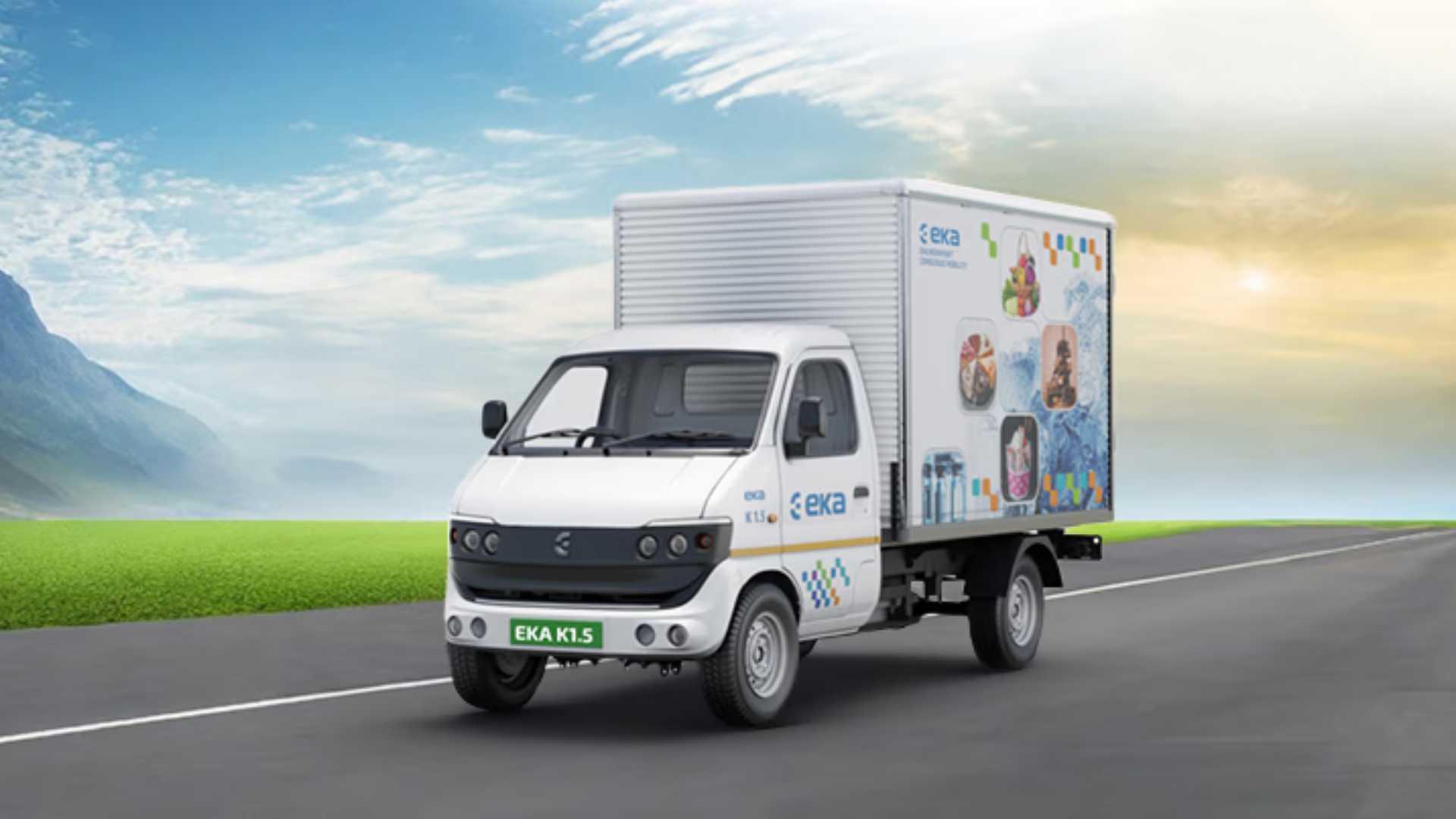
1. Context: LCVs and India’s Clean Transport Challenge
Light Commercial Vehicles (LCVs), defined as sub-3.5 tonne trucks, form the logistical backbone of India’s rapidly expanding e-commerce and goods delivery ecosystem. Despite their high utilisation and widespread presence, LCVs have historically remained outside India’s fuel efficiency and emissions regulatory framework.
India has, over the years, developed and implemented Corporate Average Fuel Efficiency (CAFE) norms for passenger cars, aligning fleet-wide CO₂ emissions with climate and energy goals. However, the absence of similar mandates for LCVs created a regulatory blind spot, weakening overall transport sector decarbonisation efforts.
This gap matters because commercial vehicles have disproportionately high daily usage and emissions intensity. If left unregulated, efficiency gains in passenger cars risk being offset by rising emissions from freight and last-mile delivery.
Governance coherence requires that high-emission, high-utilisation segments are regulated alongside private transport. Ignoring LCVs undermines climate targets and dilutes the effectiveness of existing transport policies.
2. Policy Shift: Introduction of Fuel Consumption Standards for LCVs
Recognising this gap, the Bureau of Energy Efficiency (BEE) released a draft proposal in July 2025 to introduce fuel consumption standards for LCVs for the period 2027–2032. This marks the first attempt to bring LCVs under systematic CO₂ regulation.
Ahead of the proposal, automakers lobbied for a full exemption, citing price sensitivity and the cost of compliance for internal combustion engine (ICE) vehicles. The government’s decision to reject this demand signals a stronger commitment to long-term decarbonisation over short-term industry concerns.
This move aligns LCV policy with India’s broader clean mobility agenda and acknowledges that regulatory certainty is essential to steer market behaviour and technology investment.
Regulatory inclusion creates predictable incentives for manufacturers. If policymakers had conceded exemptions, LCV emissions would remain structurally unaddressed, weakening climate governance.
3. Current Emissions Profile and Electrification Status of LCVs
India’s LCV fleet recorded an average emission intensity of 147.5 g CO₂/km in 2024. Notably, without the limited presence of electric LCVs, emissions would have risen to 150 g CO₂/km, demonstrating the impact of even marginal electrification.
LCVs constituted 48% of commercial goods vehicles in 2024, yet electric LCVs (e-LCVs) accounted for only 2% of the segment. Existing electric models typically feature sub-35 kWh batteries with a range of about 150 km, reflecting cautious manufacturer entry.
While battery electric LCVs offer lower total cost of ownership, high upfront prices and inconsistent incentives across States have constrained demand. Central schemes like PM E-DRIVE exclude LCVs, though States such as Maharashtra and Madhya Pradesh provide targeted support.
Key statistics:
- 48% share of LCVs in commercial goods vehicles (2024)
- 2% electrification rate in LCVs
- 147.5 g CO₂/km fleet average emissions (2024)
Without policy-backed market creation, cost advantages over a vehicle’s lifecycle fail to translate into adoption. Persisting low electrification risks locking the sector into high-emission pathways.
4. Role and Limits of Fuel Efficiency Standards in Driving Electrification
Fuel efficiency standards do not automatically guarantee electrification; their effectiveness depends on stringency. When standards are lenient, manufacturers prefer incremental ICE improvements over higher-risk electric investments.
Evidence from the passenger car segment illustrates this limitation: despite 8 years of CAFE norms, battery electric vehicles constitute only 3% of the fleet. This reflects standards that allowed compliance through marginal efficiency gains rather than transformative shifts.
Research by the International Council on Clean Transportation (ICCT) identifies 116.5 g CO₂/km as the threshold beyond which electrification becomes more cost-effective for compliance than ICE optimisation. The BEE’s proposed standard of 115 g CO₂/km marginally crosses this point, enabling but not strongly incentivising e-LCV adoption.
Standards that merely enable change, rather than compel it, tend to delay structural transitions. If stringency remains low, electrification will stay peripheral.
5. Super Credits, Technology Offsets, and Market Fragmentation Risks
To support compliance, the draft introduces super credit multipliers for e-LCVs, assigning them a zero CO₂ value for regulatory calculations. Such mechanisms have been used in regions like China, the EU, and the US to accelerate electric vehicle uptake.
However, the proposal also extends credits and CO₂ offset factors to hybrid BEVs and selected ICE technologies. While intended as transitional measures, this broad applicability risks fragmenting manufacturer strategies.
If compliance can be achieved through hybrids or marginal ICE tweaks, firms may defer full electrification. The proposal’s plan to phase out super credits for e-LCVs while retaining incentives for intermediate technologies could inadvertently prolong ICE dominance.
Comparative examples:
- China, EU, US: Use super credits to make BEVs compliance-efficient
- India (draft): Credits extended to hybrids and ICE offsets
Transitional incentives must be time-bound and targeted. If not withdrawn systematically, they dilute regulatory intent and slow technology shifts.
6. Way Forward: Designing Policy for Effective Electrification
India’s LCV policy now has the essential components: emissions standards, electrification incentives, and market signals. The challenge lies in integrating them strategically.
A more stringent standard that clearly favours electrification, combined with focused and temporary incentives, can overcome the current chicken-and-egg problem of high upfront costs and limited scale. Regulatory certainty would encourage innovation, reduce battery costs through volume, and expand model availability.
Failure to recalibrate policy risks replicating the passenger car experience, where relaxed standards and prolonged incentives resulted in modest electrification outcomes.
Policy design determines market direction. Clear, stringent, and time-bound measures can shift industry behaviour; ambiguous incentives entrench the status quo.
Conclusion
India’s move to regulate LCV fuel efficiency closes a long-standing policy gap in transport governance. Whether this transition delivers meaningful decarbonisation will depend on the stringency of standards and the disciplined use of incentives. A coherent approach can position LCVs as enablers of clean logistics, supporting long-term climate, energy security, and sustainable growth objectives.