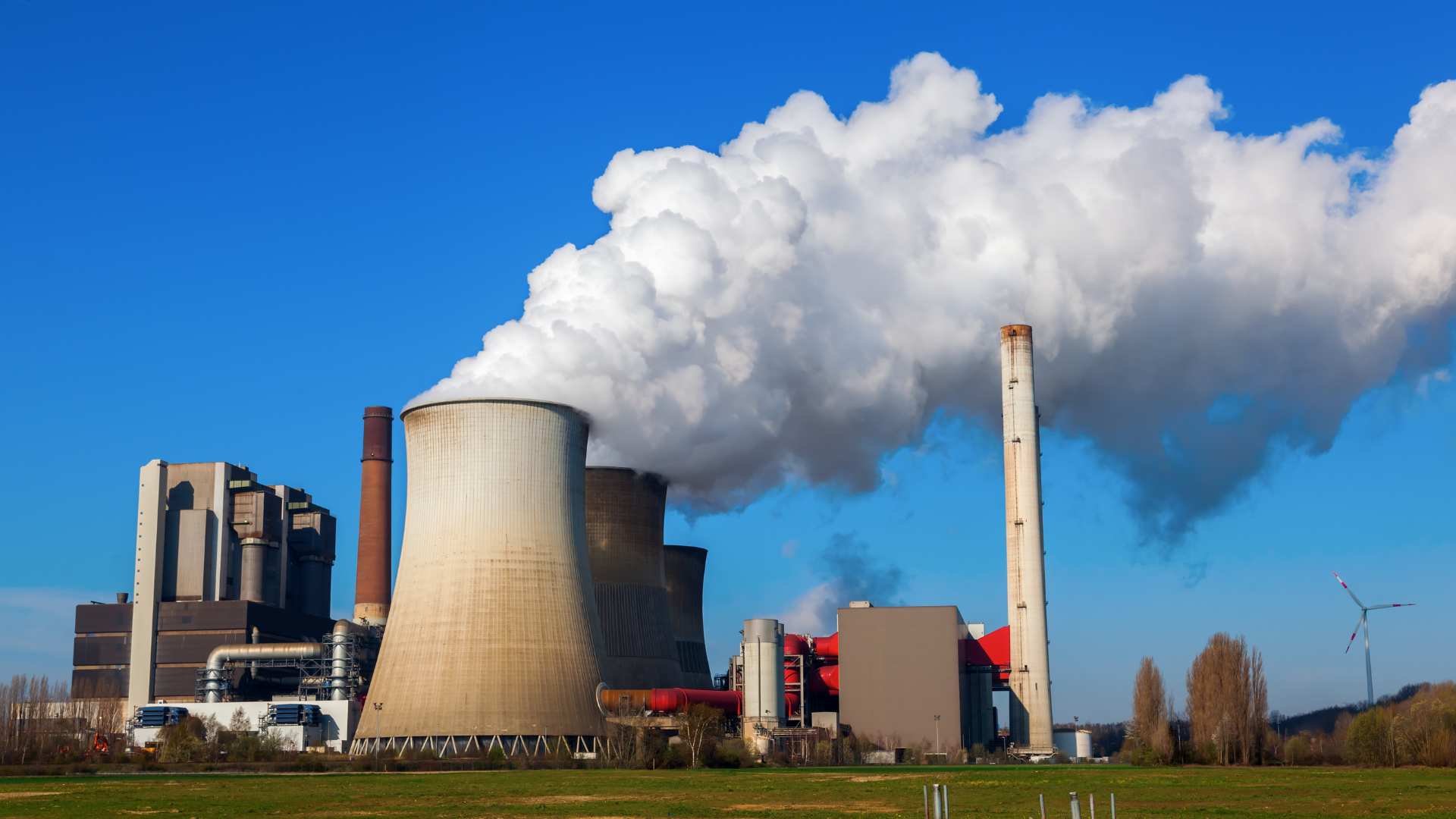
Enhancing India's Non-Fossil Energy Capacity Through Storage Solutions

To effectively utilize non-fossil energy sources, India needs to boost battery storage capabilities for sustainable power generation.
S
Surya
4 mins read
India updates climate targets, but execution remains the real challenge

Introduction

India has finally submitted its 2035 NDCs under the Paris Agreement — among the last G-20 nations to do so. The targets: 60% non-fossil installed capacity, a 47% emission intensity cut, and a 3.5–4 billion tonne CO₂ sink. The paradox is stark — India already exceeds its 2030 capacity target (52% installed), yet only ~25% of power generated is actually non-fossil — exposing a critical gap between ambition and ground reality.

"Without actual improvements in generated supply, these numbers mean little." — The Hindu Editorial, March 2026

Background and Context

The Paris Agreement Framework:

  • Signed by all major nations except the United States.
  • Goal: Limit global temperature rise to 2°C above pre-industrial levels (aspirational target: 1.5°C).
  • Mechanism: Countries must submit updated Nationally Determined Contributions (NDCs) every five years from 2020.

India's timeline: As of December 2025, India and Argentina were the only G-20 nations yet to submit updated NDCs. India's Environment Minister had committed at COP30, Brazil (November 2025) to submit by year-end. Submission came in late March 2026 — just before the close of Financial Year 2025–26.


India's NDC Comparison: 2020 vs. 2035

Parameter2020 NDC (Target: 2030)2035 NDC (Target: 2035)
Non-fossil installed capacity50%60%
Emission intensity reduction (vs. 2005)45% per unit of GDP47% per unit of GDP
Carbon sink (CO₂ absorption)2.5–3 billion tonnes3.5–4 billion tonnes
Net-zero commitment20702070 (reaffirmed)

Key Concepts

NDC vs. Net Zero: NDCs are interim, nationally defined targets — not legally binding reduction mandates. India, as a developing nation, does not commit to cutting absolute emissions but to reducing emission intensity (carbon per unit of GDP) and increasing the non-fossil share of capacity. Net zero by 2070 is the long-term structural commitment.

Carbon Sink: Forests and tree cover absorb atmospheric CO₂. India's commitment to a 3.5–4 billion tonne CO₂ sink by 2035 relies on expanding forest cover and deploying Carbon Capture, Utilisation and Storage (CCUS) technologies — recently announced as part of India's technology pathways.

The Capacity–Generation Gap: This is the central contradiction in India's climate story:

  • 52% installed capacity is already non-fossil (target met ahead of schedule).
  • Yet only ~25% of electricity generated is non-fossil.
  • Reason: Inadequate battery storage prevents full utilisation of intermittent solar and wind power.

Implications and Challenges

Structural Challenge — Storage Deficit: Solar and wind are intermittent sources. Without large-scale battery storage, surplus generation cannot be stored or dispatched on demand. India's grid continues to depend on thermal power to meet baseload requirements — rendering installed capacity statistics misleading as a measure of actual clean energy transition.

Policy Gap: The Power Ministry's own National Generation Adequacy Plan projects 70% of India's 1,121 GW installed capacity by 2035–36 to be non-fossil. This is more ambitious than the NDC's 60% — suggesting the NDC target is deliberately conservative and easily achievable.

Developing Country Equity: India's per capita emissions remain below the global average, even as it has become one of the world's largest absolute emitters. The principle of Common But Differentiated Responsibilities (CBDR) under the UNFCCC supports India's position of pursuing intensity-based rather than absolute reduction targets.

Geopolitical Context: The West Asian conflict has disrupted global oil supply, reinforcing the strategic and economic case for accelerating India's energy transition. Fossil fuel dependency is not merely an environmental liability — it is a national security vulnerability.


Comparison: India vs. EU Climate Commitments

ParameterIndia (2035 NDC)European Union
ApproachEmission intensity reductionAbsolute emission cuts
Target47% intensity cut vs. 200540–49% cut below 2005 levels
Non-fossil capacity60% installed by 2035Binding renewable energy targets
Net Zero20702050
Development statusDeveloping nationDeveloped bloc

Conclusion

India's updated NDCs represent a necessary step in its climate diplomacy — timely enough to avoid international censure, and ambitious enough to signal intent. However, the core challenge is not target-setting but execution: bridging the gap between installed non-fossil capacity and actual non-fossil generation. The West Asian conflict has underscored, with urgency, the strategic cost of fossil fuel dependence. India's credibility as a climate leader will not be established by NDC submissions alone, but by measurable investments in battery storage, grid modernisation, and CCUS deployment. As the world's most populous nation navigating development and decarbonisation simultaneously, India's choices carry weight far beyond its borders.

Quick Q&A

Everything you need to know

Nationally Determined Contributions (NDCs) are climate action plans submitted by countries under the Paris Agreement, outlining their commitments to reduce greenhouse gas emissions and adapt to climate change. These targets are updated every five years to reflect increasing ambition. Unlike binding emission cuts, NDCs are nationally tailored, allowing countries to align climate goals with developmental priorities.

India’s updated NDCs for 2035 reflect a gradual but significant enhancement of its climate commitments. Key targets include:

  • 60% installed electricity capacity from non-fossil fuel sources (up from 50% earlier)
  • 47% reduction in emissions intensity of GDP (up from 45%)
  • Creation of a carbon sink of 3.5–4 billion tonnes of CO2 through forest and tree cover
These commitments indicate India’s strategy of reducing emissions intensity rather than absolute emissions, consistent with its status as a developing country.

Importantly, India has also committed to achieving net-zero emissions by 2070, relying on renewable energy expansion and emerging technologies like carbon capture, utilisation, and storage (CCUS). While the targets appear ambitious, they are also calibrated to ensure energy security and economic growth, reflecting India’s balanced approach to climate responsibility.

India’s emphasis on emissions intensity reduction—that is, reducing emissions per unit of GDP—stems from its developmental context and equity considerations in global climate governance. As a developing country with relatively low per capita emissions, India argues that it should not be required to cap its total emissions at the cost of economic growth and poverty alleviation.

This approach is rooted in the principle of Common But Differentiated Responsibilities (CBDR), which recognizes that developed countries have historically contributed more to global emissions. While India is among the top emitters in absolute terms, its per capita emissions remain significantly below the global average. Therefore, focusing on efficiency improvements allows India to grow economically while still contributing to global climate goals.

Additionally, intensity-based targets provide flexibility. As India expands infrastructure, manufacturing, and energy access, total emissions may rise, but improved efficiency and cleaner technologies can reduce the carbon footprint per unit of output. For example, increasing renewable energy capacity and improving industrial energy efficiency directly lower emissions intensity. Thus, this strategy balances climate responsibility with developmental imperatives, though critics argue that it may delay deeper decarbonisation in the long run.

Achieving a high share of non-fossil fuel capacity requires more than just installing renewable energy infrastructure; it demands systemic changes in energy storage and grid management. While India has already exceeded its earlier target with over 50% installed capacity from non-fossil sources, only about 25% of actual electricity generation comes from these sources due to intermittency issues.

To bridge this gap, India must invest in:

  • Battery energy storage systems (BESS) to store excess solar and wind energy
  • Grid modernization to handle variable renewable inputs
  • Flexible generation systems such as hydro and gas-based plants for balancing
For instance, solar energy peaks during the day, but demand often rises in the evening. Without storage, surplus energy is wasted, reducing efficiency.

Additionally, policy measures such as time-of-day pricing, incentives for storage deployment, and integration of decentralized renewable systems can improve utilization. Countries like Germany have demonstrated how grid upgrades and storage can enhance renewable energy efficiency. Thus, India’s success will depend not just on capacity addition but on effective energy management and technological innovation.

The gap between installed renewable capacity and actual generation in India is primarily due to technical and infrastructural constraints. Renewable energy sources like solar and wind are inherently intermittent, meaning they do not produce electricity consistently throughout the day or year. Without adequate storage, surplus energy generated during peak conditions cannot be utilized later.

Another major factor is the lack of sufficient battery storage infrastructure. India currently lacks large-scale storage systems capable of capturing and redistributing renewable energy efficiently. This leads to curtailment, where excess renewable power is simply not used. Additionally, transmission bottlenecks and outdated grid systems limit the ability to transport electricity from renewable-rich regions to demand centres.

Policy and financial challenges also contribute. Investments in storage and grid modernization have lagged behind renewable capacity expansion. For example, while solar parks have expanded rapidly, corresponding investments in grid flexibility have not kept pace. This results in a structural inefficiency where installed capacity does not translate into usable energy. Addressing these issues is critical for ensuring that India’s renewable targets translate into real emission reductions and energy security.

India’s updated NDCs for 2035 represent a measured increase in ambition, aligning with global expectations while safeguarding domestic priorities. On the positive side, the targets are realistic and achievable, given that India has already surpassed its earlier renewable capacity goals. The focus on emissions intensity and carbon sinks reflects a pragmatic approach that balances climate action with economic growth.

However, there are notable limitations. Critics argue that the targets may lack sufficient ambition compared to developed economies that are committing to absolute emission reductions. Additionally, the emphasis on installed capacity rather than actual generation can create a misleading picture of progress. Without addressing storage and grid challenges, increased capacity may not translate into meaningful emission reductions.

Furthermore, geopolitical factors such as the West Asian conflict highlight India’s continued dependence on fossil fuels, particularly oil and gas. This underscores the need for faster transition to energy independence. In conclusion, while India’s NDCs are credible and development-oriented, their effectiveness will depend on implementation, technological upgrades, and sustained policy commitment.

The West Asian conflict has exposed the vulnerabilities associated with dependence on fossil fuel imports. As oil prices surged due to supply disruptions, countries like India faced increased energy costs, inflationary pressures, and potential threats to energy security. This situation underscores the strategic importance of transitioning to domestic renewable energy sources.

For example, India imports a significant portion of its crude oil requirements. Any geopolitical disruption in the Middle East directly impacts fuel prices, transportation costs, and overall economic stability. In contrast, renewable energy sources such as solar and wind are domestically available and not subject to global supply shocks. However, their effective utilization requires robust storage and grid systems.

The conflict serves as a real-world case study demonstrating that energy transition is not just an environmental imperative but also a matter of national security and economic resilience. By investing in renewable infrastructure, storage technologies, and grid modernization, India can reduce its exposure to external shocks and build a more sustainable energy future.

Attribution

Original content sources and authors

Sign in to track your reading progress

Comments (0)

Please sign in to comment

No comments yet. Be the first to comment!