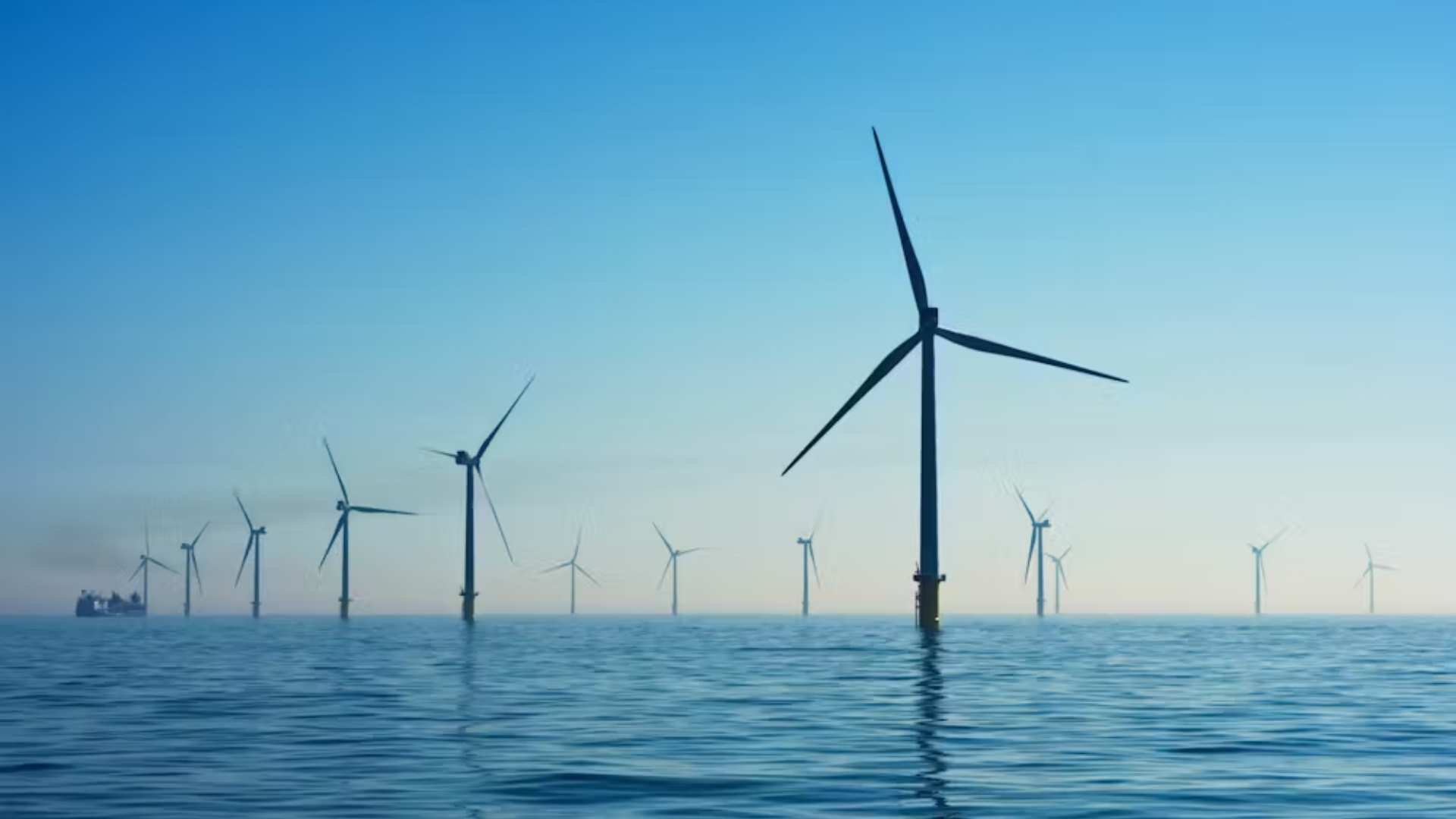
India's Rare Earths Push: A New Ally in Germany's Energy Needs

The Indo-German partnership could reshape the rare earth supply chain, aligning with Berlin's offshore wind energy ambitions and cutting reliance on China.
4 mins read
India-Germany partnership targets resilient rare earth and green energy supply
Not Started

1. Context: Strengthening India-Germany Partnership

The recent visit of German Chancellor Friedrich Merz to India marked a significant boost in bilateral engagement, culminating in 19 MoUs and eight key announcements, including a Joint Declaration of Intent on Cooperation in Critical Minerals.

This partnership spans defence, economic cooperation, renewable energy, and critical minerals. The move is strategically important as both countries seek to reduce dependence on China for rare-earth elements, which are central to high-tech industries including electric mobility, semiconductors, aerospace, renewable energy, and defence.

With China controlling a large portion of the rare-earth supply chain, India and Germany see collaboration as a means to enhance supply-chain resilience, reduce vulnerabilities, and jointly advance renewable energy and technological capacities.

Strategic partnerships in critical minerals underpin industrial competitiveness and energy security; neglecting them risks external dependency and technology bottlenecks.


2. Critical Minerals: Strategic Importance and India’s Position

India identifies 30 critical minerals, many containing rare-earth elements used in permanent magnets. These magnets are essential for wind turbines, EVs, semiconductors, aerospace, and defence.

India currently imports over 90% of permanent rare-earth magnets from China (2025). Historical incidents, such as China restricting supply during trade disputes, demonstrate the vulnerability of dependent industries like Indian automobiles. Germany similarly faces heavy reliance on China, particularly in the offshore wind energy sector, creating mutual interest in supply diversification.

Statistics:

  • India’s rare-earth deposits: 6.9 million tonnes (third-largest globally).
  • Rare-earth output: <1% of global capacity.
  • Dependence on China for permanent magnets: >90%.

Securing domestic production and diversifying suppliers enhances strategic autonomy and industrial resilience; failing to do so sustains vulnerability to geopolitical pressures.


3. Policy Initiatives in India

India has launched multiple measures to develop a domestic critical minerals ecosystem:

  • National Critical Mineral Mission (NCMM) 2025–2031 with a budget of $4 billion.
  • Funding of ₹7,280 crore (~$800 million) to promote manufacturing of sintered Rare Earth Permanent Magnets (REPM), aiming for 6,000 metric tonnes per annum by 2031.
  • Rare Earth Corridor in Odisha, Kerala, Andhra Pradesh, and Tamil Nadu to boost mining, processing, research, and manufacturing.

These initiatives aim to integrate critical mineral development with sectors like green hydrogen, semiconductors, defence co-production, and renewable energy, including offshore wind.

Policy-led supply-chain development addresses both economic and strategic priorities; inadequate implementation could perpetuate import dependence.


4. Indo-German Cooperation: Opportunities and Challenges

Both countries have complementary interests: India has deposits but low output; Germany has technological expertise and renewable energy targets but faces supply-chain concentration in China.

Collaborations include:

  • Manufacturing of rare-earth magnets.
  • Offshore wind energy development, including technology transfer.
  • Policy dialogue and joint research on recycling and alternative technologies.

Challenges:

  • India’s rare-earth deposits are largely inferred reserves, with complex extraction due to radioactive elements like thorium.
  • Germany and Europe demand reliable, cost-competitive supply, necessitating workforce training and technical cooperation.
  • Achieving ambitious offshore wind targets (India: 107 GW by 2030, Germany: 30–40 GW by 2035) requires integrated industrial and policy measures.

“The goal is more to reduce this dependency rather than becoming fully independent.”Kira Vinke, DGAP

Strategic collaboration requires aligning industrial capabilities, technical knowledge, and financing mechanisms; failure may limit both supply diversification and renewable energy expansion.


5. Renewable Energy and Offshore Wind: Strategic Linkage

The wind energy sector is a critical driver for rare-earth magnet demand:

  • Wind turbines require >200 kg of permanent magnets per MW.
  • India has ~70 GW potential offshore wind capacity identified (Tamil Nadu and Gujarat).
  • Germany has 9.2 GW installed capacity, targeting 30 GW by 2030.

MoUs such as between the German Offshore Wind Energy Foundation and the Indian Wind Turbine Manufacturers Association aim to facilitate technology transfer, manufacturing partnerships, and capacity-building.

Impacts:

  • Supports India’s renewable energy transition.
  • Promotes domestic manufacturing of strategic components.
  • Reduces dependence on single-country supply chains.

Developing offshore wind capacity in tandem with rare-earth magnet production strengthens energy security and industrial competitiveness; ignoring integration risks underutilisation of domestic potential.


6. Way Forward and Strategic Implications

India-Germany cooperation in critical minerals and renewable energy represents a model for strategic industrial partnerships with dual benefits:

  • Enhances supply-chain resilience against geopolitical shocks.
  • Facilitates technology transfer, industrial skill development, and green energy goals.

Key requirements for success:

  • Rapid development of commercially viable mining and processing infrastructure.
  • Integration with industrial policy for renewable energy deployment.
  • Public-private cooperation to ensure cost-effective and reliable output.

Strategic foresight in resource security and industrial collaboration is essential for global competitiveness and energy transition; without it, both supply vulnerability and climate targets may be compromised.


Conclusion

The Indo-German critical minerals and offshore wind partnership strengthens bilateral ties while addressing global supply-chain risks. India’s domestic initiatives, combined with Germany’s technological expertise, offer opportunities for industrial growth, energy security, and strategic autonomy. Timely implementation, workforce readiness, and integrated industrial policy will determine whether this collaboration translates into tangible economic and geopolitical benefits.

Quick Q&A

Everything you need to know

Critical minerals are elements essential for high-tech industries, defence, renewable energy, and advanced manufacturing, but whose supply is subject to geopolitical risks and concentrated production. Examples include rare earth elements used in permanent magnets, batteries, semiconductors, and electric mobility.

India’s collaboration with Germany is significant because both countries are heavily dependent on China for rare earths, especially permanent magnets used in wind turbines, electric vehicles, and defence applications. China currently dominates over 90% of global production and has historically used this leverage to influence trade, as seen in mid-2025 when India’s automobile industry faced supply restrictions following Sino-US trade tensions.

Through joint initiatives such as the National Critical Mineral Mission (NCMM) and the rare earth corridor announced in the Union Budget 2026-27, India aims to secure its supply chain via exploration, processing, research, and manufacturing. Germany benefits by diversifying its supply chain for renewable energy and strategic industries, thereby reducing dependence on China. This partnership reflects a strategic, long-term approach to industrial and energy security while integrating geopolitical, economic, and technological dimensions.

China’s dominance in rare earth elements presents a geopolitical and economic risk for countries dependent on these materials. Over 90% of permanent rare-earth magnets, critical for sectors like electric mobility, wind energy, aerospace, and defence, are sourced from China. This concentration exposes India and Germany to supply disruptions, price volatility, and political leverage.

For India, reliance on China constrains the growth of strategic sectors like EVs, wind energy, and high-tech manufacturing. Similarly, Germany, with ambitions to expand offshore wind capacity to 30 GW by 2030, faces supply-chain vulnerability. Any Chinese restrictions or export controls can delay projects, increase costs, and undermine energy transition targets.

Hence, both countries are pursuing supply chain diversification, joint R&D, and technology transfer initiatives to mitigate these risks. By collaborating on exploration, processing, and recycling of rare earths, India and Germany aim to build resilience in critical sectors while reducing strategic dependency on a single supplier.

The Indo-German partnership strengthens the rare earth permanent magnet (REPM) supply chain through a multi-pronged approach:

  • Collaborative exploration and R&D: Joint research on locating deposits, mapping inferred reserves, and refining extraction technologies to enhance output and reliability.
  • Processing and manufacturing: Investment in sintered REPM production facilities under India’s National Critical Mineral Mission, targeting 6,000 metric tonnes per annum by 2031.
  • Recycling and alternative technologies: Developing downstream processing, recycling, and exploring substitute materials to reduce dependency on raw imports.
  • Integration with strategic sectors: Aligning REPM production with wind energy, EVs, aerospace, and defence sectors to create a vertically integrated ecosystem.

Additionally, the partnership explores joint ventures, technology transfer, and skill development. For example, German expertise in offshore wind and REPM processing can accelerate India’s industrial capacity, while India’s rare earth reserves provide Germany with alternative sourcing options, thereby diversifying the European supply chain and enhancing strategic autonomy.

While India has the third-largest rare earth deposits globally, producing only <1% of global capacity, several challenges impede scaling up:

  • Inferred reserves: Most deposits are based on inferred data, lacking geological mapping and mining feasibility studies, which deters investment due to high capital risks.
  • Complex mining environment: Coastal deposits often contain radioactive elements like thorium, necessitating strict safety and regulatory measures, increasing costs and technical complexity.
  • Industrial and technological gaps: India currently lacks large-scale sintered magnet production, downstream processing, and recycling capabilities. Skill development and technology transfer are essential.
  • Time and cost: Developing mines, processing units, and infrastructure to commercial viability will take years, while global demand, particularly from Europe’s offshore wind sector, is immediate.

Therefore, while policy initiatives like the rare earth corridor and NCMM are steps in the right direction, India must address technological, regulatory, and investment challenges to become a reliable global supplier. From a UPSC perspective, this illustrates the intersection of resource policy, industrial development, and strategic planning.

Offshore wind energy requires over 200 kg of permanent rare-earth magnets per MW of generated energy, with India planning ~107 GW and Germany ~145 GW by 2030. Currently, over 90% of magnets are sourced from China, creating supply vulnerabilities.

Through collaboration, Germany can leverage India’s rare earth deposits to diversify its supply chain, while India gains technology transfer for offshore wind turbine manufacturing. For example, the MoU between the German Offshore Wind Energy Foundation and the Indian Wind Turbine Manufacturers Association facilitates cooperation on technology, policy dialogue, and component production. Germany benefits from more secure and diversified inputs for its North Sea projects under the Hamburg Declaration, while India gains industrial capability and workforce training.

This partnership exemplifies how strategic resource management, technology transfer, and industrial collaboration can simultaneously enhance energy security, promote renewable energy adoption, and strengthen bilateral economic ties.

Technology transfer and joint R&D are crucial because India currently lacks advanced capabilities in rare earth processing, sintered magnet production, and offshore wind energy manufacturing. Without technical expertise, the country cannot convert its large inferred deposits into commercially viable output or meet international quality and reliability standards required by European buyers.

Joint R&D initiatives facilitate the development of efficient extraction, processing, recycling, and alternative material technologies, reducing dependency on China and creating a sustainable domestic industry. Additionally, knowledge sharing on environmental safety, handling radioactive elements, and industrial automation can accelerate the commercialisation of rare earth projects.

For Germany, collaborating with India ensures secure and diversified supply chains for permanent magnets, essential for renewable energy and defence sectors. Thus, technology transfer and R&D create mutual benefits: India develops industrial capacity, and Germany reduces strategic supply vulnerabilities. In UPSC interviews, this can be linked to themes of global cooperation, strategic autonomy, and sustainable industrial development.

The rare earth corridor initiative spans Odisha, Kerala, Andhra Pradesh, and Tamil Nadu, regions with significant monazite sand and hard rock deposits. Economically, this corridor can stimulate regional industrial development, create employment, and attract domestic and foreign investment in mining, processing, and manufacturing sectors.

Strategically, the corridor reduces India’s dependence on imported rare earths, particularly from China, enhancing supply chain resilience for critical sectors such as defence, aerospace, renewable energy, and electric mobility. By establishing a cluster for mining, research, and magnet production, India positions itself as a reliable supplier to international markets, potentially catering to Germany and the EU’s demand for offshore wind and high-tech applications.

However, challenges remain: regulatory compliance, environmental management, radioactive safety, infrastructure, and skill development are critical to operational success. In UPSC interviews, the rare earth corridor exemplifies how resource endowments, policy planning, and international cooperation converge to advance economic growth, technological capability, and strategic autonomy.

Attribution

Original content sources and authors

Sign in to track your reading progress

Comments (0)

Please sign in to comment

No comments yet. Be the first to comment!