Introduction
India's clean energy ambitions and biodiversity conservation obligations are increasingly on a collision course. The Sharavathi Pumped Storage Hydroelectric Project in Karnataka sits at the heart of this conflict.
| Parameter | Detail |
|---|---|
| India's renewable energy target | 500 GW non-fossil fuel capacity by 2030 |
| PSH role | Grid-scale storage for peak-load management |
| India's biodiversity hotspots | 4 out of 34 globally |
| Project capacity | 2,000 MW |
| Daily peak demand (Karnataka) | ~18,000 MW |
| Project location | Sharavathi LTM Wildlife Sanctuary, Western Ghats |
| Current status | Karnataka High Court stay order in force |
Background & Context
The Sharavathi river flows ~130 km through the Western Ghats into the Arabian Sea. Karnataka already operates four major hydroelectric stations in its valley, making it the state's primary hydel corridor.
The Karnataka Power Corporation Limited (KPCL) proposed the Pumped Storage Project in 2017. Estimated at ₹4,800 crore then, the project cost has since doubled to ₹10,240 crore — a 113% cost escalation over eight years, raising additional questions about fiscal prudence.
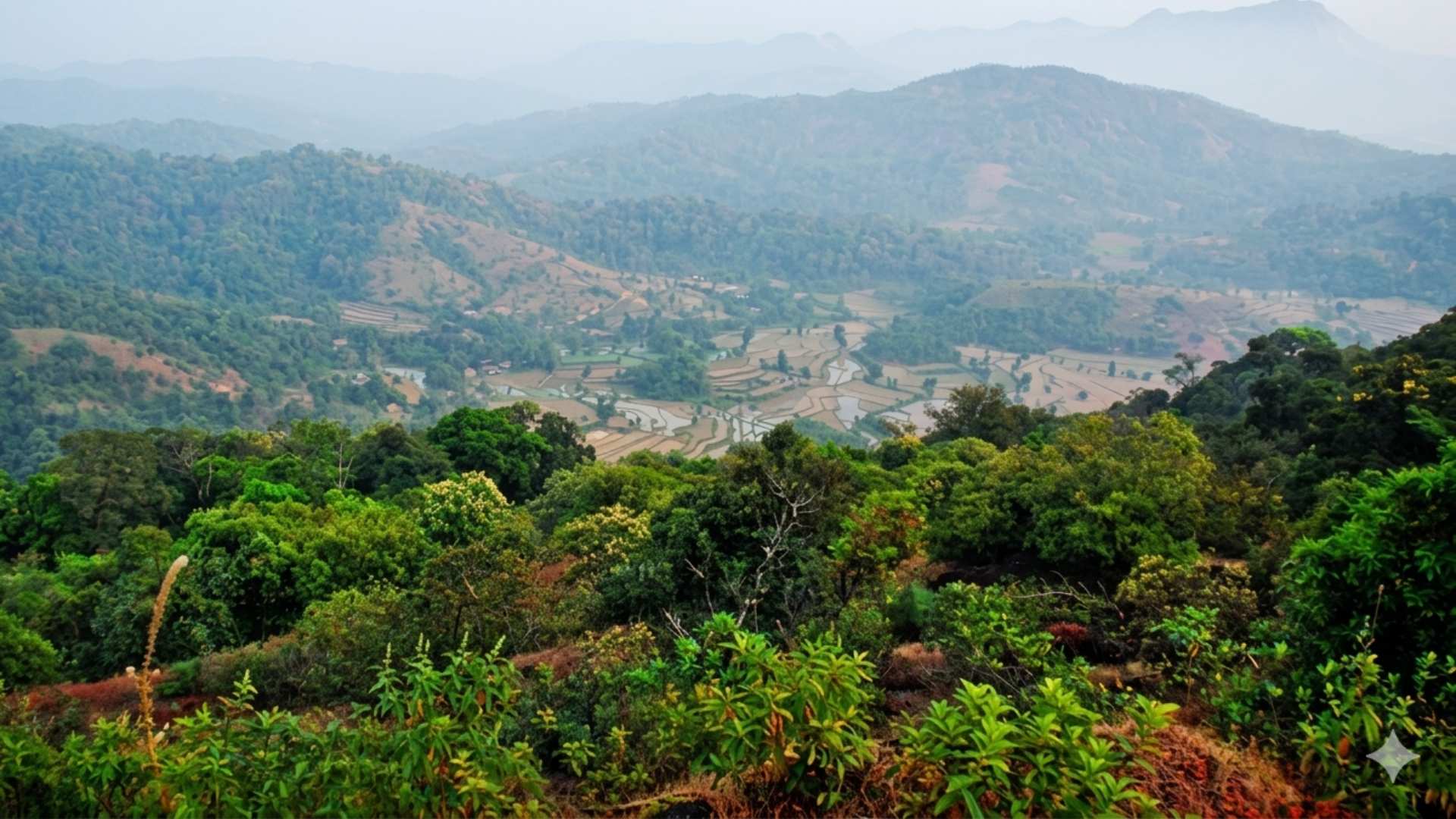
The project site lies within the Sharavathi Lion-Tailed Macaque Wildlife Sanctuary, a legally protected area under the Wildlife Protection Act, 1972.
Key Concept: Pumped Storage Hydropower (PSH)
PSH is a form of grid-scale energy storage. During off-peak hours, surplus electricity pumps water from a lower reservoir to an upper one. During peak demand, water is released downhill to generate electricity. It acts as a "battery" for the grid — critical for balancing intermittent renewable sources like solar and wind.
| Feature | Detail |
|---|---|
| Proposed capacity | 2,000 MW |
| Purpose | Peak-hour demand management |
| Daily peak demand (Karnataka) | ~18,000 MW |
| Project cost (2017) | ₹4,800 crore |
| Revised cost (current) | ₹10,240 crore |
| Location | Sharavathi LTM Wildlife Sanctuary, Western Ghats |
Regulatory & Approval Timeline
- 2017 — KPCL proposes the project
- January 2025 — Karnataka State Wildlife Board approves with conditions (tree felling reduced from 16,000+ to 7,000–8,000)
- In-principle approval received from the National Board for Wildlife (NBWL)
- Forest & environmental clearances — still pending from MoEF&CC
- 2025 — MoEF's site inspection report opposes the project
- 2025 — MoEF expert panel submits adverse report
- 2026 — Karnataka High Court stays all forest work until further orders
The project has received administrative approvals but faces simultaneous blocks from the judiciary, a ministry-level expert report, and civil society opposition — a rare convergence.
Environmental Concerns
1. Biodiversity threat — Lion-Tailed Macaque (LTM)
| Parameter | Detail |
|---|---|
| IUCN Status | Endangered |
| Wildlife Protection Act | Schedule I (highest protection) |
| Distribution | Endemic to Western Ghats, India |
| Wild population (approx.) | ~4,000 individuals* |
| Primary threats | Habitat fragmentation, deforestation |
| Relevance to project | Site lies within LTM sanctuary; tree felling would isolate sub-populations |
Tree felling and road construction within the sanctuary would fragment LTM habitat and isolate sub-populations — a direct driver of local extinction risk.
2. Destruction of wet evergreen forests The MoEF's Deputy Inspector General of Forests, Praneetha Paul, stated in her site inspection report that new road construction and road-widening would result in the "complete destruction of wet evergreen forests." These forests are among the most carbon-dense and biodiverse ecosystems on the subcontinent.
3. Landslide risk Local communities in Shivamogga and Uttara Kannada have witnessed increasing landslides during heavy monsoon seasons. Tunnel construction in geologically sensitive terrain is likely to exacerbate slope instability.
4. Legal violations alleged Petitioner Akhilesh Chipli and other environmentalists have argued the project violates provisions prohibiting non-forest activities within protected forest land, potentially in conflict with the Forest Conservation Act, 1980 and the Wildlife Protection Act, 1972.
Governance Dimension: Regulatory Gaps
The case exposes a structural tension in India's environmental governance:
- The State Wildlife Board approved the project, but the MoEF's own officer opposed it — revealing intra-governmental divergence.
- The NBWL gave in-principle approval despite a negative field report from its own ministry's officer.
- Forest and environmental clearances remain pending — indicating the approvals granted so far are legally incomplete.
- The Karnataka High Court's stay is a judicial check on premature implementation before statutory clearances are obtained.
The MoEF expert panel concluded that the "limited operational benefit offered by the project seems outweighed by the irreversible ecological, environmental and social costs involved."
This language is significant — it applies a cost-benefit framework to justify ecological protection, moving beyond sentiment to governance reasoning.
Competing Interests: A Structured View
| Stakeholder | Position | Rationale |
|---|---|---|
| KPCL / State Government | Pro-project | Clean energy, peak demand, CEA targets |
| Central Electricity Authority | Supportive | 50% non-fossil fuel capacity by 2030 |
| Karnataka State Wildlife Board | Conditional approval | Reduced tree felling |
| NBWL | In-principle approval | National energy goals |
| MoEF field officer | Opposed | Forest & habitat destruction |
| MoEF expert panel | Opposed | Ecological costs outweigh benefits |
| Karnataka High Court | Stay order | Pending full legal scrutiny |
| Local communities | Opposed | Landslide risk, livelihood concerns |
| Environmentalists | Opposed | Biodiversity, legal violations |
Broader Policy Implications
| Policy Dimension | Issue | Significance |
|---|---|---|
| Energy transition paradox | PSH is renewable, yet siting it inside protected forests converts a clean energy gain into an ecological loss | Undermines the spirit of sustainable development |
| Precautionary principle | When irreversible harm is scientifically evidenced, action must halt pending further assessment | India committed to this under Rio Declaration, Principle 15 |
| Compensatory afforestation inadequacy | Tree-for-tree replacement cannot substitute old-growth wet evergreen forests | These ecosystems take centuries to develop ecological complexity |
| Institutional accountability | Politically accountable boards approved the project; career forestry officials opposed it | Expert opinion must be insulated from project-promotion pressures |
Conclusion
The Sharavathi case is not simply a dispute between energy and environment — it is a test of whether India's environmental governance institutions can hold the line when economic imperatives and political pressure push for shortcuts. India's clean energy ambitions are legitimate and urgent, but they cannot be pursued by sacrificing irreplaceable biodiversity assets. The solution lies in rigorous site selection, transparent cumulative impact assessments, and genuine stakeholder inclusion — not in accelerating approvals while clearances remain pending. The Karnataka High Court's intervention reaffirms that judicial oversight remains a critical safeguard in India's governance architecture.
UPSC Mains Practice Question
Q. Pumped storage hydropower projects are increasingly being proposed within ecologically sensitive zones in India. Critically examine the tension between India's renewable energy targets and its biodiversity conservation obligations, with reference to relevant regulatory frameworks. (250 words / 15 marks)
Hint: Cover PSH's role in energy transition → WPA 1972, Forest Conservation Act → NBWL/State Wildlife Board roles → Precautionary Principle → Sharavathi case as example → Way forward with balanced conclusion.