GS3 Infrastructure

Great Nicobar Project Demands Greater Transparency

Great Nicobar Development Project: Strategic Ambitions versus Ecological and Social Concerns

The Great Nicobar Island development poses significant ecological, ethical and strategic questions for India’s future.
Dhinesh Balasubramanian Dhinesh Balasubramanian
3 mins read

“Development that destroys the very foundation on which life depends cannot be called sustainable development.”

The Great Nicobar Island Development Project has emerged as one of India's most debated infrastructure initiatives. While the project is often justified on grounds of national security, connectivity and economic growth, concerns persist regarding its strategic rationale, financial viability, environmental impact and implications for indigenous communities.

Project Overview

The project's estimated cost has risen significantly.

ComponentDescription
Transshipment PortGalathea Bay
International AirportCivil and strategic use
Power PlantEnergy infrastructure
TownshipUrban development support
Estimated Cost₹91,000 Crore

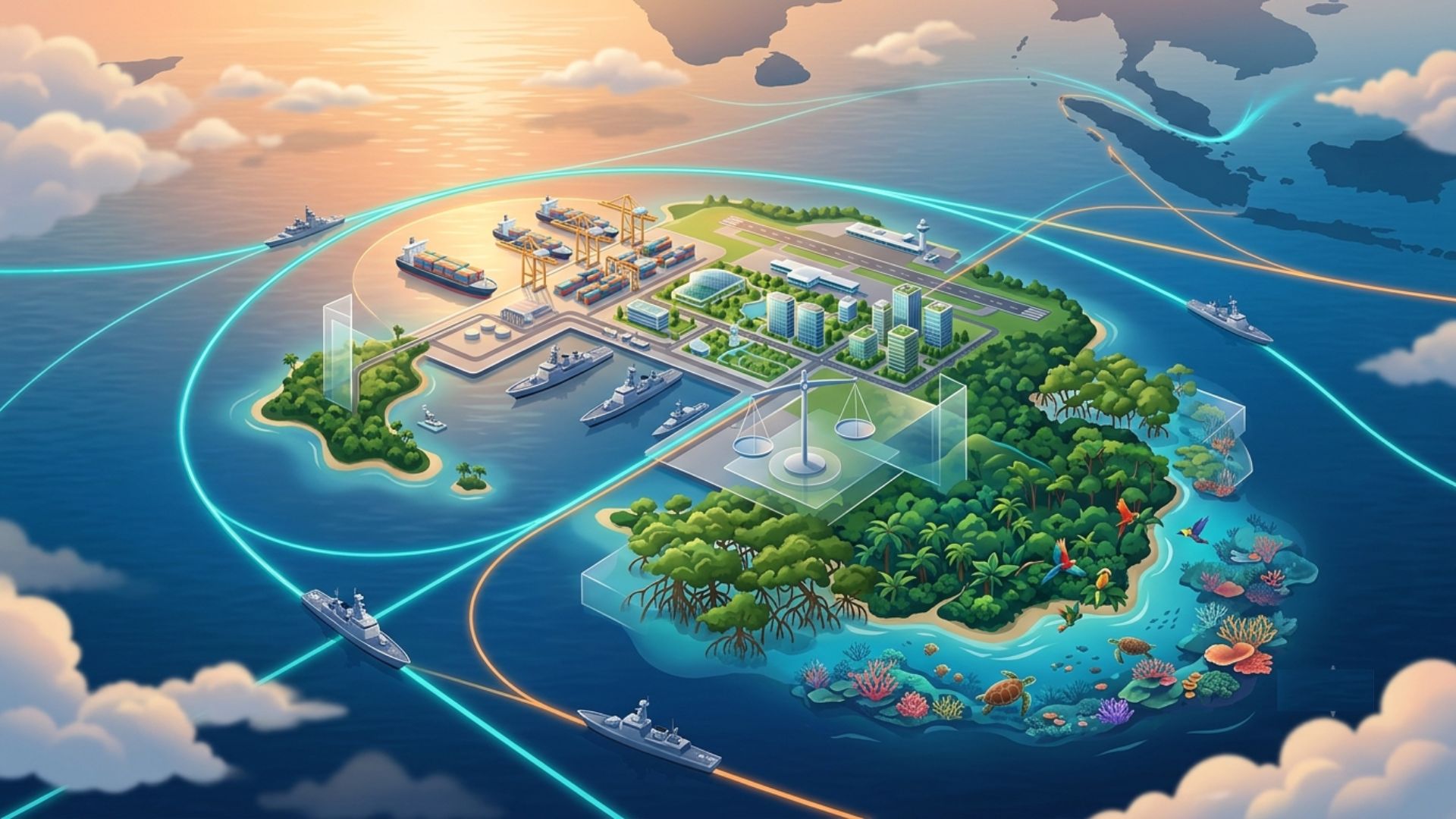
The project aims to transform Great Nicobar into a major logistics, connectivity and maritime hub in the Indian Ocean Region.

Debate Over Strategic Justification

The Union Government has frequently highlighted the project's strategic significance.

However, concerns have emerged from official assessments.

Findings of Government Bodies

InstitutionObservation
Public Investment Board (PIB)Port lacked clear strategic objectives (2024)
PPP Appraisal Committee (PPPAC)Approved project but denied requested Viability Gap Funding

The PIB reportedly observed that the strategic rationale was not central to the original proposal and appeared to gain prominence later through inputs from the Ministry of Defence.

Financial Concerns

The PPPAC declined:

  • ₹12,230 crore in Viability Gap Funding.

This raised questions regarding:

  • Commercial viability.
  • Long-term financial sustainability.
  • Dependence on public funding.
Key Question

If the project is commercially viable
           ↓
Why require large viability funding?

If primarily strategic
           ↓
Why develop it as a commercial transshipment hub?

Ecological Significance of Great Nicobar

Great Nicobar is among India's most ecologically sensitive regions.

Ecological Features

  • Dense tropical rainforests.
  • Coral reef ecosystems.
  • Coastal biodiversity hotspots.
  • Unique endemic species.

The island contains large areas of primary forests that have evolved over centuries.

Species at Risk

SpeciesSignificance
Leatherback TurtleGlobally important nesting sites
Nicobar MegapodeEndemic bird species
Coral ReefsMarine biodiversity support

Scientists have argued that the ecological losses resulting from large-scale land clearance could be irreversible.

Why Afforestation May Not Be Enough

Environmental experts point out that:

  • Primary forests cannot be recreated quickly.
  • Biodiversity loss cannot be fully compensated elsewhere.
  • Ecosystem services are location-specific.
Primary Forest Loss
        ≠
Planting Trees Elsewhere

Biodiversity
+ Habitat Complexity
+ Ecological Interactions

Cannot be Easily Replaced

This has intensified the debate over environmental clearances granted to the project.

Concerns of Indigenous Communities

The island is also home to indigenous tribal populations.

Major Concerns Raised

  • Inadequate consultation processes.
  • Lack of complete disclosure regarding project impacts.
  • Potential effects on ancestral lands.
  • Concerns regarding rehabilitation commitments made after the 2004 tsunami.

Importantly, tribal groups have not opposed all development initiatives.

Their concerns focus on:

  • Scale of the project.
  • Lack of transparency.
  • Sequence of decision-making.
  • Protection of customary rights.

Transparency and Governance Issues

Another major criticism relates to public disclosure.

Stakeholders have sought:

  • Release of the High-Powered Committee report.
  • Greater transparency regarding environmental assessments.
  • Public accounting of project costs and benefits.
  • Independent evaluation of ecological impacts.

Core Governance Question

How should governments balance:

Development GoalsConservation Goals
InfrastructureBiodiversity
SecurityIndigenous Rights
Economic GrowthEcological Sustainability
ConnectivityLong-Term Resilience

Way Forward

  • Release all assessment reports in the public domain.
  • Strengthen transparent environmental review mechanisms.
  • Ensure meaningful participation of indigenous communities.
  • Conduct periodic ecological impact assessments.
  • Re-evaluate project scale based on carrying-capacity studies.
  • Integrate national security objectives with sustainability principles.
  • Establish independent monitoring of environmental and social commitments.

Conclusion

The Great Nicobar Development Project embodies a broader challenge faced by many developing nations: balancing strategic and economic ambitions with ecological conservation and social justice. While infrastructure and security considerations are important, the long-term value of irreplaceable forests, fragile ecosystems and indigenous heritage must also be fully accounted for. A transparent, evidence-based and participatory approach remains essential to ensure that development does not come at an irreversible cost.

Attribution

Original content sources and authors

Author Dhinesh Balasubramanian
The Hindu Source The Hindu

Syllabus classification

How this article maps to GS papers

Main syllabus

GS3Infrastructure

Also covers

GS3Environment & Bio-diversityGS2International Relations

Quick Q&A

What is the Great Nicobar Island Development Project and why has it emerged as a significant policy issue in India?
The Great Nicobar Island Development Project is a large-scale infrastructure initiative aimed at transforming Great Nicobar Island into a strategic and economic hub through the establishment of a transshipment port at Galathea Bay, an international airport, a power plant, and an integrated township. Initially estimated at lower costs, the project is now valued at around ₹91,000 crore, making it one of India's most ambitious island infrastructure programmes. Great Nicobar occupies a strategically important position near the Malacca Strait, one of the busiest maritime trade routes in the world. Successive governments have viewed the Andaman and Nicobar Islands as critical to India's maritime security and Indo-Pacific strategy. Consequently, the project has often been justified on grounds of economic development, logistics enhancement, and national security. However, the project has become controversial due to questions regarding its strategic rationale, economic viability, and environmental implications. In August 2024, the Public Investment Board reportedly observed that the proposed port lacked clear strategic objectives, while the strategic label was subsequently emphasized by the Ministry of Defence. Simultaneously, concerns have been raised over the destruction of primary tropical forests, threats to leatherback turtle nesting sites, and the impact on endemic species such as the Nicobar megapode. For UPSC aspirants, the issue is relevant to GS Paper III under Infrastructure, Environment, Biodiversity, and Disaster Management. It also intersects with GS Paper II themes concerning governance, tribal rights, transparency, and sustainable development, illustrating the challenges involved in balancing strategic interests with ecological and social considerations.
Why is the Great Nicobar Island Development Project considered strategically important in the context of India's maritime and Indo-Pacific policies?
The Great Nicobar Island Development Project derives strategic importance primarily from its geographical location near the Malacca Strait, through which a significant proportion of global maritime trade and energy supplies passes. Situated at the southernmost tip of the Andaman and Nicobar archipelago, Great Nicobar offers India a valuable vantage point in the Indian Ocean Region and complements the country's SAGAR (Security and Growth for All in the Region) vision and Indo-Pacific strategy. From a geopolitical perspective, the island can strengthen India's maritime presence amid increasing Chinese activities in the Indian Ocean. Enhanced port infrastructure and logistics capabilities could potentially support naval operations, improve surveillance, and contribute to regional security cooperation. Supporters argue that a transshipment port would reduce India's dependence on foreign ports such as Colombo and Singapore for cargo handling. Such infrastructure could enhance trade efficiency and promote economic integration with Southeast Asia under the Act East Policy. However, critics point out that strategic justifications appear to have gained prominence only after concerns regarding commercial viability emerged. Reports indicating that the Public Investment Board found the port lacking clear strategic objectives have generated debate regarding whether national security arguments are being used retrospectively. For UPSC candidates, the issue is relevant to GS Paper II (International Relations) and GS Paper III (Infrastructure and Security). It demonstrates how strategic considerations, economic objectives, and environmental concerns often intersect in policymaking. It also highlights the importance of evidence-based planning and transparency in major infrastructure initiatives.
What is a critical analysis of the economic and strategic viability of the proposed Galathea Bay transshipment port?
The Galathea Bay transshipment port is the centerpiece of the Great Nicobar Island Development Project and has been projected as both a commercial and strategic asset. However, its economic and strategic viability has become a subject of considerable debate. On the economic front, concerns have emerged regarding the port's ability to generate adequate returns. The Public-Private Partnership Appraisal Committee reportedly declined to provide ₹12,230 crore in Viability Gap Funding and advised the Ports Ministry to mobilize resources from within its own budget. Such a decision is unusual for projects presented as nationally significant and has raised questions regarding commercial sustainability. Strategically, the port's location near major sea lanes provides undeniable advantages. It could support India's maritime ambitions, reduce dependence on foreign transshipment facilities, and strengthen naval logistics. Nevertheless, reports suggesting that the Public Investment Board found no clear strategic objectives have fuelled skepticism regarding whether strategic arguments were introduced later to justify the project's escalating costs. Another concern involves opportunity costs. Public expenditure amounting to ₹91,000 crore must be evaluated against competing developmental priorities. Critics argue that if the project primarily serves military purposes, it should be assessed as a defence asset rather than a commercially viable port. From the UPSC perspective, this debate is relevant to GS Paper III topics such as Infrastructure, Investment Models, and Economic Development. It also raises broader questions regarding public accountability, cost-benefit analysis, and the relationship between strategic imperatives and fiscal prudence.
What are the major environmental and ecological concerns associated with the Great Nicobar Island Development Project?
The environmental concerns surrounding the Great Nicobar Island Development Project stem from the ecological uniqueness and fragility of the island ecosystem. Great Nicobar is characterized by dense tropical rainforests, coral reefs, mangroves, and several endemic species, making it one of India's most biodiverse regions. The project involves large-scale diversion of primary forests, which scientists consider irreplaceable. Unlike secondary forests, primary forests contain mature ecosystems that have evolved over centuries and support numerous species. Environmental experts argue that compensatory afforestation elsewhere cannot recreate these complex ecological relationships. Particular concern has been expressed regarding the leatherback turtle, one of the world's largest marine turtles and a vulnerable species according to the International Union for Conservation of Nature (IUCN). Galathea Bay serves as an important nesting site for these turtles. The endemic Nicobar megapode, a bird found only in the Nicobar Islands, may also experience habitat loss. The island's vulnerability to earthquakes, tsunamis, and climate change further complicates development plans. Great Nicobar was severely affected by the 2004 Indian Ocean tsunami, highlighting the importance of adopting environmentally sensitive approaches. Critics contend that ecological losses are irreversible and cannot be adequately compensated through monetary measures. Proponents, however, argue that infrastructure development is essential for economic and strategic reasons. For UPSC aspirants, this issue is highly relevant to GS Paper III topics such as Environment, Biodiversity, Climate Change, and Disaster Management. It illustrates the challenge of balancing developmental objectives with ecological sustainability and intergenerational equity.
How does the Great Nicobar Island Development Project serve as a case study in balancing development, tribal rights, and environmental governance?
The Great Nicobar Island Development Project offers an important case study on the complex relationship between economic development, environmental conservation, and the rights of indigenous communities. Such conflicts are increasingly common in contemporary governance and highlight the need for inclusive and sustainable decision-making. The indigenous inhabitants of Great Nicobar have expressed concerns regarding the process through which consent was obtained. Tribal councils have alleged that consultations lacked full disclosure and have emphasized that ancestral rights and commitments relating to rehabilitation after the 2004 tsunami should not be overridden. Importantly, their objections are directed not against development itself but against the scale and manner in which it has been pursued. Environmental groups and scientists have similarly criticized the project for insufficient transparency and inadequate consideration of ecological impacts. Calls have been made for the public release of the High-Powered Committee report and for greater accountability regarding the financial and environmental costs involved. The case highlights the principles embodied in the Forest Rights Act, 2006, environmental impact assessments, and constitutional provisions protecting tribal interests. It also demonstrates the importance of the principle of free, prior, and informed consent recognized under international norms. For UPSC preparation, the project is relevant to GS Paper II (Governance and Vulnerable Sections) and GS Paper III (Environment and Infrastructure). It illustrates how development projects must reconcile economic objectives with social justice and ecological sustainability. The Great Nicobar debate thus represents a broader challenge confronting developing countries pursuing rapid growth while safeguarding natural and cultural heritage.
How can transparency and sustainable planning improve the implementation and legitimacy of large infrastructure projects like Great Nicobar?
Transparency and sustainable planning are essential for ensuring the legitimacy and long-term success of mega infrastructure projects. Projects involving significant public expenditure and ecological consequences require broad public trust and evidence-based decision-making. In the context of the Great Nicobar Island Development Project, critics have emphasized the need for greater disclosure regarding strategic objectives, environmental assessments, and financial implications. Releasing the High-Powered Committee report and making detailed cost-benefit analyses available would improve accountability and allow informed public debate. Sustainable planning involves integrating ecological, economic, and social dimensions into project design. This includes minimizing deforestation, protecting biodiversity hotspots, conducting cumulative impact assessments, and ensuring the participation of local communities. Adaptive management strategies can help mitigate unforeseen environmental consequences. Globally, successful infrastructure projects increasingly rely on principles of transparency, stakeholder consultation, and sustainability. International institutions such as the World Bank emphasize environmental and social safeguards as integral components of project implementation. In India's context, such approaches are consistent with constitutional principles under Article 48A, which directs the State to protect the environment, and Article 51A(g), which imposes a fundamental duty upon citizens to safeguard natural resources. They also align with the Sustainable Development Goals (SDGs). For UPSC aspirants, this topic is relevant to GS Paper II and GS Paper III. It demonstrates how good governance, public accountability, and environmental stewardship contribute to sustainable development and strengthen the legitimacy of state-led infrastructure initiatives.

Practice questions

3 questions for mains preparation

Discuss the role of indigenous rights in development projects like the Great Nicobar initiative. How does the government ensure the protection of these rights within its strategic goals?

10 marks · 150 words · 8 mins

Evaluate the strategic rationale behind the Great Nicobar Project in the context of national security. Does it provide a genuine benefit to India or is it merely a political maneuver?

10 marks · 150 words · 8 mins

Critically analyze the ecological and ethical implications of the Great Nicobar Project. How can India's development agenda balance national security with environmental conservation?

10 marks · 150 words · 8 mins