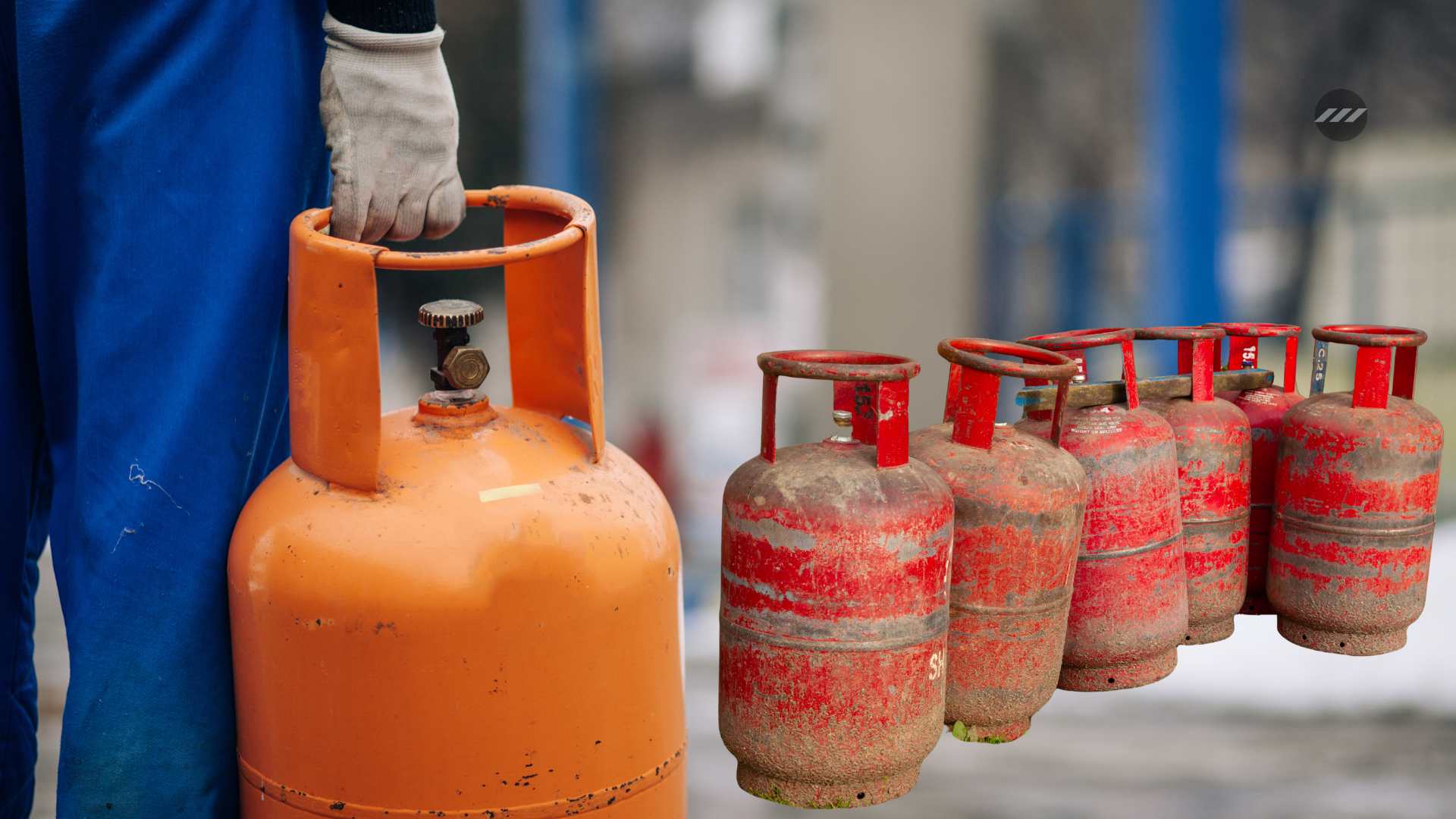
The Strategic Vulnerability in India's LPG Supply Model

Introduction
"India's LPG problem is not a passing shortage. It is an enduring mismatch between what the country produces and what its kitchens consume."
India consumed 33.15 million tonnes of LPG last year — but domestic production met only 40% of demand. The remaining 60% is imported, with 90% of imports transiting the Strait of Hormuz. This is not a supply chain problem — it is a strategic energy vulnerability concentrated in the most inelastic of all uses: the household kitchen.
| Indicator | Figure |
|---|---|
| Total LPG consumption | 33.15 MT/year |
| Domestic production share | ~40% |
| Import dependence | ~60% |
| LPG demand vs. indigenous production | 250% |
| Imports transiting Strait of Hormuz | ~90% |
| Household share of LPG consumption | >90% |
| Cavern-based deep storage | ~1.5 days of national demand |
| Operational tankage cover (broad) | ~15 days |
Background & Context
LPG in India is overwhelmingly a household fuel — commercial use accounts for less than 10%. Unlike a petrochemical plant that can slow production or switch feedstock, a household kitchen cannot defer cooking. This makes India's LPG import dependence qualitatively different from other commodity imports.
The Strait of Hormuz — the narrow waterway between Iran and Oman — is the world's most critical energy chokepoint. Recent geopolitical tensions have exposed India's assumption of uninterrupted transit as dangerously complacent.
Key Concepts
Energy Security — Availability of energy at affordable prices without supply disruption. India's LPG position fails on both the diversity and resilience dimensions of energy security.
Strait of Hormuz — ~21 km wide at its narrowest; handles ~20% of global oil trade and a significant share of LPG. Any closure or disruption directly hits India's household fuel supply.
Blue Carbon vs. LPG Storage — India's cavern-based strategic LPG storage (Visakhapatnam: 60 TMT + Mangaluru: 80 TMT = 140,000 MT total) equals only 1.5 days of national demand — critically insufficient for a country of India's import scale.
C3/C4 Streams — Propane (C3) and butane (C4) are the molecular components of LPG, produced at refineries. Currently diverted to petrochemicals and gasoline blending — competing with household kitchen demand from the same domestic pool.
Give It Up 2.0 — Proposed evolution of the original PAHAL/Give It Up scheme (2015), now oriented toward shifting urban households from LPG to electric induction cooking permanently.
Comparative Analysis — Why Raw Import % Misleads
| Country | LPG Import Dependence | Household Exposure | Storage Buffer | Key Differentiator |
|---|---|---|---|---|
| India | ~60% | >90% of LPG goes to kitchens | ~1.5 days (cavern) | Most exposed — inelastic household use |
| Japan | Higher than India | ~40% households use LPG | ~108 days | Electricity (55%) + city gas as alternatives |
| China | High | Large petrochemical share | Diversified | Industrial demand = flexible, deferrable |
| South Korea | High | Natural gas + electricity dominant | Diversified | Household not dependent on LPG alone |
Core insight: It is not how much a country imports — it is where the molecule goes and what alternatives exist.
Vulnerabilities — Three Structural Problems
1. SINGLE CORRIDOR CONCENTRATION
   ┌─────────────────────────────────────────────────────────┐
   │  90% of LPG imports → transit Strait of Hormuz         │
   │  Width: ~21 km | Controls ~20% of global energy trade  │
   │  One geopolitical flashpoint = national kitchen crisis  │
   └─────────────────────────────────────────────────────────┘

   Gulf tensions → Hormuz disrupted
          ↓
   90% import corridor blocked
          ↓
   No alternative route ready
          ↓
   Household kitchens starved ← hardest use to defer

   ⚠ Risk has now entered India's strategic calculus PERMANENTLY

2. DEMAND-PRODUCTION MISMATCH

   Domestic Production  ██░░░░░░░░  40%
   Import Dependence    ░░████████  60%
   ─────────────────────────────────────
   Total Demand = 250% of indigenous production

   ROOT CAUSE:
   Ujjwala Yojana ──→ 100 million+ new LPG households ✓
                  ──→ NO corresponding supply build-up  ✗
                           ↓
              Demand architecture outpaced
              domestic production capacity
                           ↓
              Gap is STRUCTURAL, not cyclical

3. THIN STRATEGIC RESERVE

   India  │█░░░░░░░░░░░░░░░░░░░░░░░░│  1.5 days
   Japan  │████████████████████████░│  108 days
   ──────────────────────────────────────────────

   India's cavern storage:
   ┌──────────────────────────────────────────┐
   │  Visakhapatnam (AP)  =  60,000 MT        │
   │  Mangaluru (KA)      =  80,000 MT        │
   │  Total               = 140,000 MT        │
   │  = only 1.5 days of NATIONAL demand      │
   └──────────────────────────────────────────┘
   Operational tankage (broad) = ~15 days
   BUT reserve-style protection = critically thin

═══════════════════════════════════════════════════════════════
CORE INSIGHT:
  Problem 1 → WHERE imports come from  (corridor risk)
  Problem 2 → HOW MUCH is imported     (structural gap)
  Problem 3 → HOW LONG India can last  (storage deficit)

  All three converge on ONE point:
  Household kitchen = most inelastic, least protected use
═══════════════════════════════════════════════════════════════
Policy Recommendations
| Measure | Rationale |
|---|---|
| Reserve domestic C3/C4 for kitchens | Stop competing household and petrochemical demand from same pool |
| Build strategic LPG buffer (14–21 days) | 1.3–1.9 MT target; minimum resilience threshold |
| Give It Up 2.0 — electric cooking push | Reduce households dependent solely on LPG |
| Expand PNG in dense urban areas | Piped natural gas as LPG substitute where viable |
| Diversify import corridors | Reduce Hormuz concentration; explore US, Australia, Africa sourcing |
| Separate petrochemical feedstock imports | Industry arranges own supply; government protects household pool |
Conclusion
India's LPG vulnerability is structural, not seasonal. The Ujjwala Yojana successfully brought clean cooking fuel to millions — but created a demand architecture that now depends on geopolitically unstable import corridors. The solution is not more imports, but a fundamental redesign: reserving domestic molecules for kitchens, building strategic reserves, separating industrial feedstock demand, and steadily shifting urban households to electric cooking. Energy security is not merely an economic goal — for a country where the kitchen is the last mile of the energy system, it is a social equity and national security imperative.
Attribution
Original content sources and authors


Syllabus classification
How this article maps to GS papers
Main syllabus
GS3InfrastructureQuick Q&A
What is the nature of India’s LPG vulnerability, and how does it differ from typical import dependence?
This creates a unique risk profile:
- Inelastic demand: Household cooking needs cannot be deferred or substituted easily.
- Limited alternatives: A large proportion of Indian households rely exclusively on LPG.
- High social sensitivity: Any disruption directly impacts daily life and welfare.
For example, while Japan imports a higher share of LPG, it mitigates risk through diversified energy sources like electricity and city gas. India, by contrast, channels most imported LPG into kitchens, making disruptions more severe. Thus, the vulnerability is not just about imports, but about where and how the imported fuel is used.
Why does the Strait of Hormuz pose a strategic risk to India’s LPG security?
The strategic risks include:
- Supply disruptions: Conflicts or blockades can halt shipments अचानक.
- Price volatility: Even perceived risks can spike global LPG prices.
- Limited rerouting options: Alternative supply routes are costly and constrained.
For instance, past tensions in the Gulf have led to temporary disruptions and increased freight costs. Unlike industrial users who can adjust production, Indian households cannot delay cooking needs. This makes dependence on a single corridor particularly risky. The issue is not just logistical but strategic, as energy security becomes intertwined with foreign policy and maritime stability.
Therefore, India must diversify supply routes, build reserves, and reduce dependence on this corridor to ensure long-term resilience.
How can India strengthen its LPG resilience through storage and supply management strategies?
Key strategies include:
- Expanding strategic reserves: Build cavern-based storage to cover at least 2–3 weeks of demand.
- Operational buffer enhancement: Improve tankage capacity across refineries and bottling plants.
- Supply prioritisation: Reserve domestic LPG and refinery outputs primarily for household use.
For example, Japan maintains over 100 days of LPG reserves, providing a strong buffer against disruptions. India’s proposed target of 14–21 days (1.3–1.9 million tonnes) would significantly improve resilience.
Additionally, supply management reforms are crucial:
- Segregating demand: Petrochemical industries should rely on separate import arrangements.
- Policy clarity: Ensure domestic production is not diverted away from essential uses.
Such measures would transform India’s LPG system from a just-in-time supply model to a buffered and resilient framework, reducing vulnerability to external shocks.
What are the key reasons behind India’s persistent mismatch between LPG demand and domestic production?
Major reasons include:
- Expansion of LPG access: Schemes like Ujjwala Yojana increased household penetration.
- Limited domestic hydrocarbon resources: India’s refining and extraction capacity is constrained.
- Urbanisation and lifestyle changes: Increased reliance on LPG in urban and semi-urban areas.
Additionally, policy choices have contributed to the imbalance. LPG has been prioritised as a clean fuel without simultaneous development of alternative energy infrastructure such as electricity-based cooking or piped gas networks.
For example, while LPG connections have expanded significantly, many households lack access to reliable electricity or PNG, limiting substitution options. This has locked India into a high-demand trajectory. The result is a structural dependence on imports, which persists despite policy awareness. Addressing this requires both supply-side augmentation and demand-side diversification.
Critically analyse the proposal to prioritise domestic LPG for household use while separating petrochemical demand.
Advantages of this approach include:
- Protection of essential consumption: Households are shielded from supply shocks.
- Efficient resource allocation: Scarce domestic LPG is directed where it is most needed.
- Reduced policy conflict: Avoids competition between domestic and industrial users.
However, there are challenges and trade-offs:
- Increased costs for industry: Petrochemical firms may face higher import prices.
- Market distortions: Artificial separation may reduce efficiency.
- Implementation complexity: Monitoring and enforcement require robust systems.
For example, countries with advanced energy markets often allow price mechanisms to allocate resources, whereas India’s approach may involve administrative controls. Balancing efficiency with equity is key.
Overall, while the proposal strengthens household energy security, it must be complemented by long-term measures such as expanding alternative fuels and improving domestic production to avoid creating new inefficiencies.
What lessons can India learn from countries like Japan, China, and South Korea in managing LPG dependence?
Key lessons include:
- Japan: Demonstrates the importance of diversification and storage. With over 100 days of reserves and significant reliance on electricity and city gas, Japan reduces household vulnerability.
- China: Shows how LPG demand can be shifted toward industrial uses, particularly petrochemicals, reducing pressure on household consumption.
- South Korea: Highlights the role of natural gas and electricity in supporting residential energy needs.
For example, Japan’s high storage capacity ensures stability even during supply disruptions, while India’s limited reserves expose it to risks. Similarly, South Korea’s diversified energy mix reduces reliance on any single fuel.
The key takeaway for India is:
- Diversify energy sources: Promote electricity and PNG.
- Build strategic reserves: Enhance storage capacity.
- Segment demand: Separate household and industrial consumption.
These lessons underline that import dependence is manageable if supported by diversification, storage, and policy clarity.
As a policy advisor, how would you design a long-term strategy to reduce India’s LPG dependence in household cooking?
Key policy interventions would include:
- Promoting electric cooking: Encourage induction stoves in urban and semi-urban areas.
- Expanding PNG networks: Develop piped gas infrastructure in dense urban clusters.
- Incentivising transition: Provide subsidies or rebates for alternative cooking technologies.
For example, a ‘Give It Up 2.0’ campaign can encourage affluent households to shift away from LPG, freeing resources for vulnerable groups.
Complementary measures are essential:
- Improve power reliability: Ensure uninterrupted electricity supply.
- Strengthen awareness campaigns: Highlight cost and environmental benefits.
- Invest in innovation: Develop efficient and affordable cooking technologies.
This approach balances energy security, environmental sustainability, and social equity. Over time, it would reduce import dependence while creating a more resilient and diversified household energy ecosystem.
Practice questions
1 question for mains preparation