
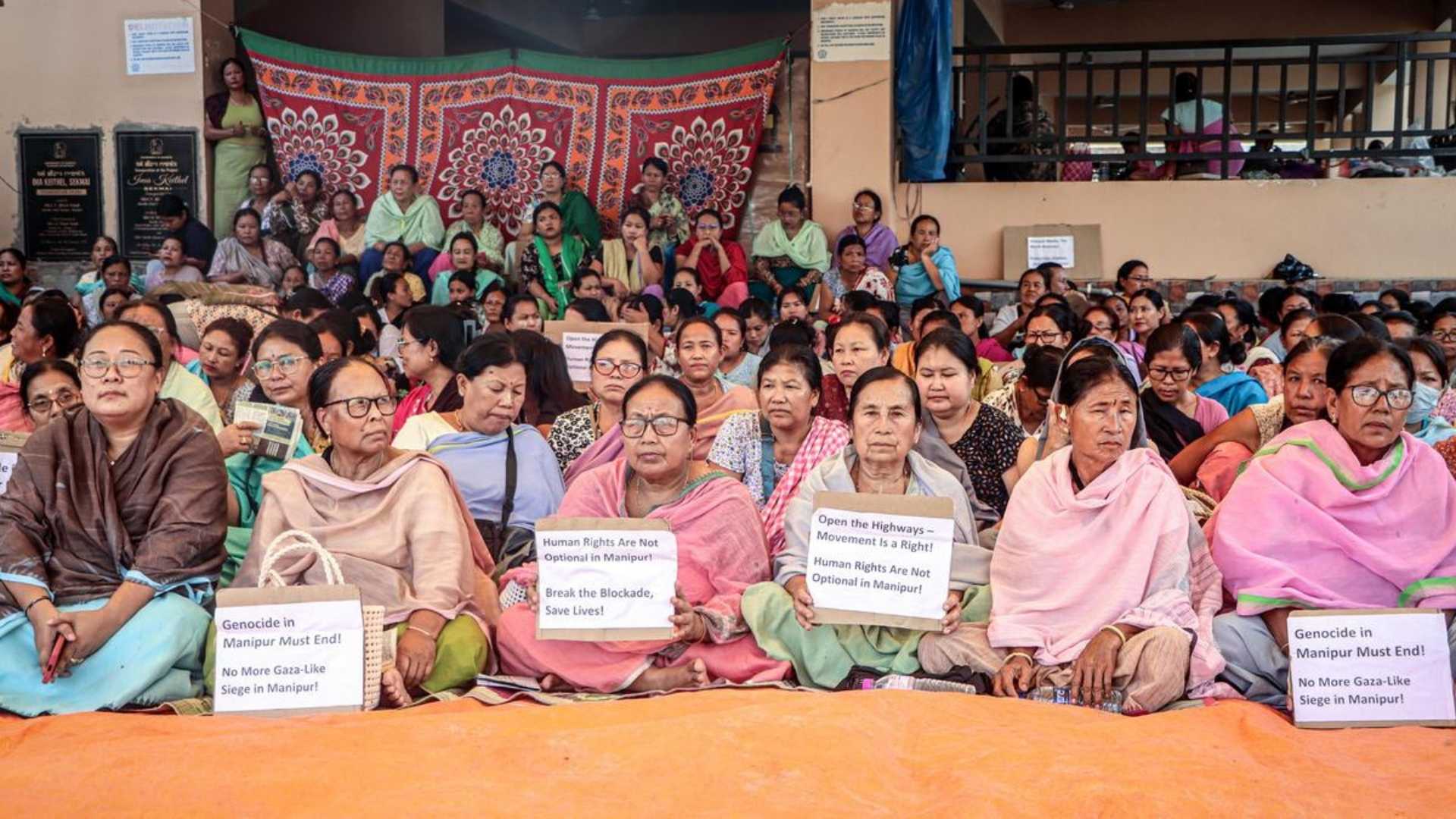
Kuki-Zo Groups Signal Return to Manipur Government, Seek Written Assurances on Union Territory

Insurgent bodies and tribal MLAs condition participation on a time-bound political settlement before Assembly tenure ends in 2027
GopiGopi
3 mins read
Tribal representatives engaging with Central and State officials to discuss Union Territory settlement
Not Started

Kuki-Zo Groups and Political Settlement in Manipur:


1. Background and Context

  • Kuki-Zo tribal groups, including insurgent organisations under Suspension of Operations (SoO) pacts, have expressed readiness to join the Manipur state government.

  • Their participation is conditional on written commitments from Central and State governments to implement a political settlement for a Union Territory with Legislature within the current Assembly tenure ending February 2027.

  • Ethnic conflict (May 3, 2023) between Kuki-Zo and Meitei communities resulted in:

    • 250 deaths
    • ~60,000 displaced persons
  • Manipur under President’s Rule since February 13, 2025; Assembly in suspended animation.

  • Kuki-Zo representation in Assembly:

    • 10 MLAs in total, including 7 from BJP

Reasoning: Integrating tribal groups into governance ensures stability and legitimacy. Ignoring such participation risks prolonged ethnic tension and political instability.


2. Political and Institutional Dynamics

  • Negotiated political settlements are essential for resolving ethnic conflicts and ensuring minority inclusion.

  • Time-bound execution of commitments is emphasised to maintain accountability and trust.

  • Key institutions involved:

    • Central government – oversees implementation under the Constitution
    • State government – manages local governance
    • Legislative Assembly – legislative authority and decision-making
    • Civil society organisations – Kuki-Zo Council acts as an intermediary
  • Impacts of institutional engagement:

    • Inclusion of minority voices in governance
    • Reduces likelihood of insurgency resurgence
    • Enhances credibility of democratic institutions

Reasoning: Institutional recognition of ethnic demands strengthens democratic legitimacy. Failure may lead to alienation and renewed conflict.


3. Governance Challenges and Policy Considerations

  • Union Territory with Legislature involves constitutional, land, and administrative implications.

  • Challenges include:

    • Balancing ethnic autonomy with state integrity
    • Ensuring time-bound implementation before Assembly tenure ends (Feb 2027)
    • Integrating insurgent MLAs without compromising governance efficiency
  • Consequences of inaction:

    • Undermined trust in political institutions
    • Potential escalation of ethnic tension
    • Delays in restoration of elected government

Reasoning: Time-bound commitments ensure settlements result in tangible governance outcomes. Ignoring them risks destabilising the state.


4. Implications for Democracy and Development

  • Inclusive political participation strengthens social cohesion and minority rights.

  • Political reconciliation impacts federal governance and electoral credibility.

  • Key impacts:

    • Stabilises legislative functioning
    • Builds confidence in democratic institutions among tribal communities
    • Enables implementation of development programs and public services

Reasoning: Inclusive governance ensures both political stability and developmental effectiveness. Neglect may perpetuate cycles of violence and economic disruption.


5. Way Forward

  • Formalise commitments from Central and State governments in writing.

  • Ensure protections for:

    • Land ownership
    • Legislative autonomy
    • Administrative rights of Kuki-Zo people
  • Maintain dialogue between civil society, insurgent groups, and political parties.

  • Focus on conflict-sensitive governance and inclusive electoral processes.

  • Apply lessons from Manipur to other multi-ethnic states facing similar conflicts.

Reasoning: Timely, institutionalised settlements create sustainable governance, integrating ethnic diversity without destabilising democratic institutions.


6. Key Data / Facts

  • Ethnic violence (May 3, 2023): 250 deaths, ~60,000 displaced
  • Manipur Legislative Assembly: 60 members, BJP 37 seats, Kuki-Zo 10 MLAs
  • President’s Rule imposed: February 13, 2025
  • Assembly tenure ends: February 2027

Conclusion

  • Kuki-Zo engagement highlights the importance of inclusive governance, negotiated settlements, and time-bound institutional commitments.

  • Proper implementation will:

    • Strengthen democratic legitimacy
    • Foster ethnic reconciliation
    • Support sustainable development and peace

Quick Q&A

Everything you need to know

The Kuki-Zo tribal groups in Manipur are demanding the creation of a union territory with a legislature under the Constitution of India. This demand arises from their long-standing aspiration for political recognition and autonomy, particularly after ethnic violence erupted between the Kuki-Zo and Meitei communities on May 3, 2023. The violence resulted in around 250 deaths and displaced nearly 60,000 people, highlighting the urgent need for a definitive political settlement.

The demand also includes constitutional safeguards for land ownership and other rights, ensuring the community’s cultural, social, and economic interests are protected. This political settlement is envisioned to be executed in a time-bound manner, within the current Assembly tenure ending February 2027, demonstrating the community’s commitment to a legally sanctioned and structured resolution.

The participation of Kuki-Zo MLAs is critical because Manipur’s Legislative Assembly has 60 seats, and the Bharatiya Janata Party (BJP) holds 37 of them. Out of the 10 Kuki-Zo MLAs, seven are affiliated with the BJP. Their support is essential for the formation of a stable elected government once President’s Rule, imposed on February 13, 2025, is lifted.

Without the Kuki-Zo MLAs’ participation, no party would likely achieve a working majority. Therefore, their conditional support—tied to a written commitment for a union territory and constitutional safeguards—directly affects the political restoration of the State. It also underscores how regional and ethnic interests can influence state-level governance and the functioning of democratic institutions in conflict-affected areas.

The Kuki-Zo groups formalized their conditional support through a resolution passed in a meeting in Guwahati on January 13, 2026, attended by members of the United People’s Front, Kuki National Organisation (KNO), suspended operations (SoO) insurgent representatives, and five MLAs. The resolution explicitly stated that their support for forming the government would depend on a written commitment from both the Central and State governments to execute the negotiated political settlement.

The resolution further specified that the settlement should be finalized within the tenure of the current Assembly (ending February 2027) and should include constitutional protections for land ownership. The groups also affirmed that in the absence of such commitment, they would refrain from participating in government formation, thus asserting a strategic political leverage while respecting democratic processes.

The demand for a separate administration stems from a combination of historical, social, and political factors. First, the ethnic violence between Kuki-Zo and Meitei communities in May 2023, which caused significant casualties and displacement, highlighted vulnerabilities in representation and governance. The lack of sufficient autonomy and security mechanisms during the conflict intensified the demand for a separate political entity.

Second, previous interactions under the suspension of operations (SoO) pact revealed that the Kuki-Zo community sought a structural solution, including land and cultural safeguards. Third, the imposition of President’s Rule and the suspended state of the Assembly created a political vacuum, motivating the Kuki-Zo groups to negotiate conditions for their participation in governance. Together, these factors led to their insistence on a union territory with legislature and constitutional guarantees.

Challenges:

  • Constitutional hurdles: Creating a union territory requires Parliamentary approval and amendments, which involve political consensus at the national level.
  • Ethnic tensions: The Meitei community and other stakeholders may oppose carving out a separate territory, risking renewed conflict.
  • Administrative integration: Establishing a new legislature, bureaucracy, and governance structures demands careful planning and resource allocation.

Opportunities:
  • Enhanced political representation: Ensures the Kuki-Zo community’s participation in decision-making.
  • Conflict resolution: A legally recognized administrative framework could reduce ethnic violence and improve social cohesion.
  • Model for autonomy: Can serve as a precedent for negotiated settlements in other conflict-prone tribal regions.

Therefore, while the proposal addresses historical grievances, careful balancing of local, state, and national interests is essential to avoid further destabilization.

An illustrative mechanism is the Suspension of Operations (SoO) pact, under which Kuki-Zo insurgent groups agreed to halt militant activities while engaging in negotiations with the government. Through the SoO framework, representatives of the Kuki-Zo community, civil society groups like the Kuki-Zo Council, and MLAs convened in Guwahati to discuss terms of political participation.

The resolution passed during this meeting linked their support for the State government to a written commitment for a union territory and constitutional safeguards. This approach demonstrates a formalized and structured negotiation mechanism, allowing both the government and the tribal groups to work within legal and democratic parameters while addressing ethnic and political grievances.

The Kuki-Zo agreement illustrates key principles of ethnic conflict resolution in a democratic framework. First, it shows how insurgent groups can be integrated into political processes through conditional participation, balancing autonomy demands with governance needs. Second, the emphasis on written commitments, timelines, and constitutional safeguards reflects the use of structured negotiation and legal mechanisms to ensure accountability.

Furthermore, the case highlights the importance of multi-level dialogue, involving local MLAs, civil society, State authorities, and the Central government. By linking political participation to concrete guarantees, it demonstrates a replicable model for managing ethnic tensions, securing minority rights, and restoring democratic governance in conflict-affected regions.

Attribution

Original content sources and authors

Sign in to track your reading progress

Comments (0)

Please sign in to comment

No comments yet. Be the first to comment!
