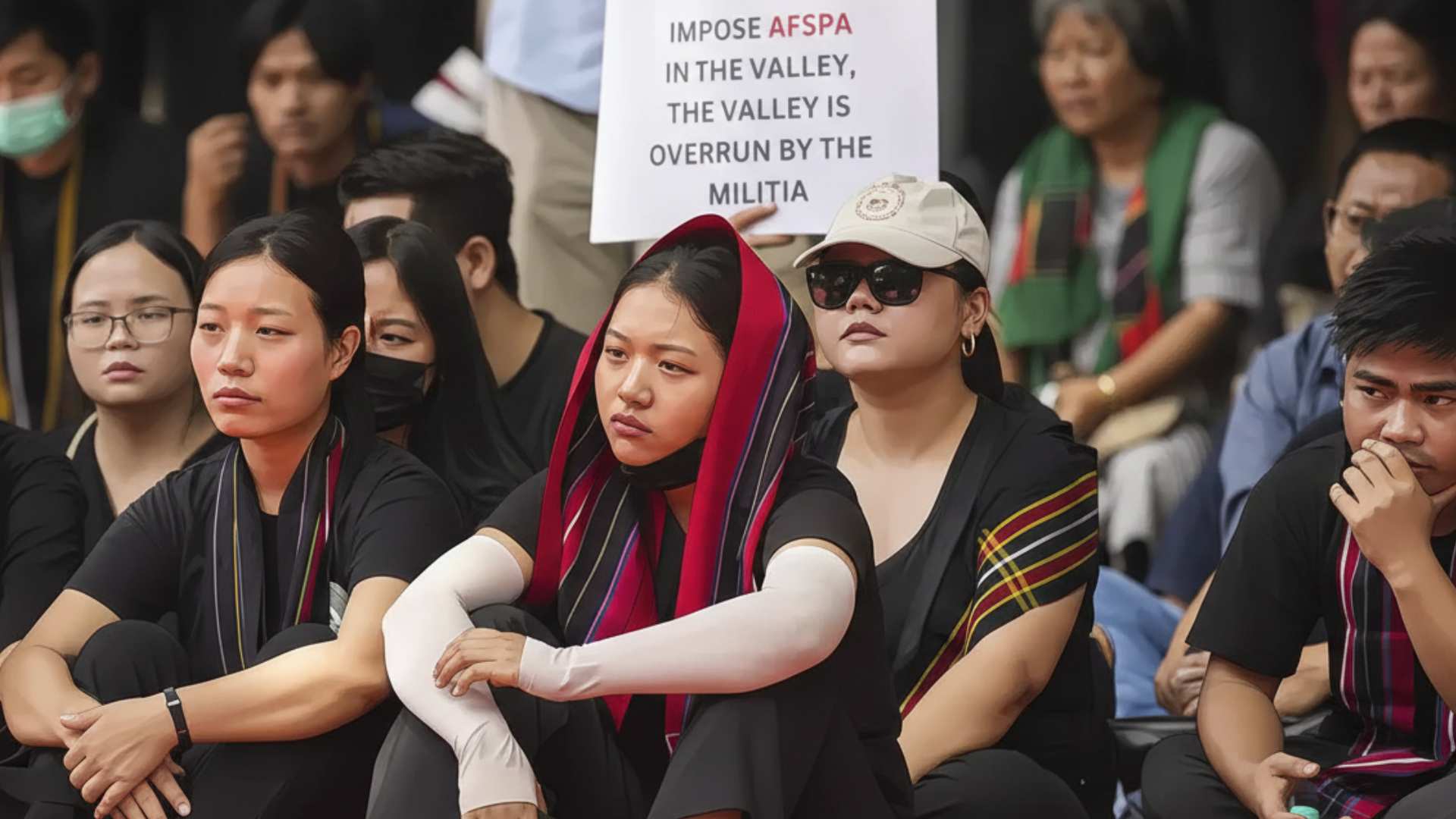
Safety First: Healing Touch for Manipur's Troubled Community

Manipur requires a compassionate approach to break the cycle of violence and rebuild trust among its diverse communities for lasting peace.
4 mins read
Healing Manipur through empathy and shared spaces.
Not Started

1.Post-Conflict Governance in Manipur

Manipur, a northeastern State of India, has recently emerged from a prolonged period of ethnic violence and President’s Rule, highlighting deep-seated socio-political challenges. Violence erupted on May 3, 2023, between the majority Meitei community in the Imphal Valley and the Kuki-Zo tribal communities in the hill districts, resulting in over 250 deaths and around 60,000 displaced persons. Subsequent skirmishes between Kuki-Zo and Naga communities further complicated the security situation.

The newly formed government, sworn in February 4, 2026, comprises Chief Minister Yumnam Khemchand Singh (Meitei) and two Deputy Chief Ministers, Nemcha Kipgen (Kuki-Zo) and Losii Dikho (Naga), reflecting an attempt to ensure representative governance across ethnic lines. However, security concerns have restricted Ms. Kipgen from attending the Assembly in Imphal, emphasizing the fragile trust and ongoing tensions.

Effective governance in post-conflict societies requires balancing representation, security, and reconciliation. Ignoring these factors risks perpetuating cycles of violence and undermining institutional legitimacy.


2. Issue: Ethnic Polarization and Community Distrust

Manipur’s conflict reflects structural ethnic polarization, where historical grievances, competition over land, resources, and political representation exacerbate mistrust between communities. The Kuki-Zo tribes, concentrated in hill districts, have limited access to state institutions dominated by Meiteis, while incidents of inter-tribal skirmishes highlight the complexity of multi-layered ethnic tensions.

Impacts:

  • Heightened insecurity in Kuki-dominated districts, limiting mobility of leaders and officials.
  • Displacement of tens of thousands, creating humanitarian and administrative challenges.
  • Erosion of trust in state institutions, particularly the BJP-led government.

“Harmony does not mean sameness; it means respecting distinct identities while strengthening the bonds that allow us to live together.” — Nemcha Kipgen

Ethnic distrust impedes policy implementation and prolongs social instability. Building confidence through dialogue and protective measures is essential for sustainable peace.


3. Governance and Security Measures

Buffer zones between communities, particularly in conflict-prone districts, are being maintained as a temporary safety measure. Ms. Kipgen emphasizes a careful, empathetic approach, acknowledging the trauma experienced by all affected populations. The government faces the challenge of restoring mobility, trust, and inclusive governance while preventing further flare-ups.

Policy measures:

  • Deployment of security forces and controlled access to volatile areas.
  • Maintenance of buffer zones to prevent immediate confrontations.
  • Appointment of Deputy Chief Ministers from minority communities to enhance political representation.

Prioritizing security alongside representative governance can stabilize post-conflict regions, enabling gradual reconciliation and community dialogue.


4. Pathways to Peace and Social Cohesion

Ms. Kipgen advocates a community-centred reconciliation framework, emphasizing recognition of shared Manipuri identity while respecting cultural distinctiveness. Key elements include:

  • Inclusive dialogue that allows each ethnic group to voice grievances on their terms.
  • Promotion of shared spaces, cultural heritage, languages, and social institutions to reinforce bonds across communities.
  • Recognition that inter-community cooperation is essential for the safety and development of future generations.

“Our shared spaces, tribal heritage, cultural values, languages, faith traditions, social institutions, and our future, especially the future of our children, bind us together.” — Nemcha Kipgen

Reconciliation rooted in empathy, dialogue, and recognition of common ground strengthens social cohesion, reducing the likelihood of renewed violence.


5. Challenges in Implementation

  • Persistent security concerns limit mobility of leaders like Ms. Kipgen, affecting governance effectiveness.

  • Inter-community mistrust and lingering grievances hinder trust-building measures.

  • Political rhetoric and administrative delays can exacerbate divisions, undermining reconciliation efforts.

Implications:

  • Delayed restoration of civic normalcy and economic recovery.
  • Potential for renewed ethnic clashes if community confidence is not rebuilt.
  • Weak enforcement of peace agreements can perpetuate cycles of displacement and insecurity.

Ensuring effective governance in multi-ethnic conflict zones requires proactive security planning, conflict-sensitive administration, and continuous community engagement.


6. Way Forward

For long-term peace in Manipur, a multi-pronged strategy is required:

  • Facilitate safe mobility of political leaders and officials across communities.
  • Strengthen community dialogue platforms for grievance redressal and trust-building.
  • Implement inclusive development programs that address economic disparities between Meitei and tribal districts.
  • Promote cultural preservation and inter-community understanding, including education and media initiatives that reduce ethnic bias.
  • Maintain temporary security arrangements like buffer zones until confidence and trust are restored.

“A rhetoric of hate has no winners. The cycle of violence has to be broken.” — Nemcha Kipgen

Peacebuilding in ethnically diverse regions necessitates coordinated governance, sustained dialogue, and inclusive development to prevent relapse into violence.


Conclusion

The Manipur case underscores the importance of ethnic-sensitive governance, where security, representation, and reconciliation must operate in tandem. Ms. Kipgen’s approach — emphasizing empathy, shared heritage, and political inclusion — provides a framework for restoring trust and social cohesion. Sustainable peace requires continuous engagement with all communities, proactive administrative measures, and culturally informed policy interventions, ensuring the State can recover from the scars of ethnic violence and build a stable, inclusive future.

Quick Q&A

Everything you need to know

Causes: The ethnic violence in Manipur erupted due to long-standing tensions between the Meitei community in the Imphal Valley and the Kuki-Zo communities in the hill districts. These tensions stem from historical grievances, competition over land and resources, political representation, and cultural differences. The situation was exacerbated by a lack of trust in government mechanisms and periodic flare-ups that escalated into widespread violence.

Consequences:

  • Loss of human life: More than 250 people were killed.
  • Mass displacement: Around 60,000 individuals were forced to leave their homes.
  • Socio-political impact: The violence strained inter-community relations and complicated governance, leading to President’s Rule in the state for a prolonged period.
  • Emerging tensions: Skirmishes began between Kuki-Zo and Naga communities as well, demonstrating the fragility of peace in the region.

Overall, the violence highlighted the deep-rooted socio-ethnic fault lines and the urgent need for reconciliation, trust-building, and conflict-sensitive governance in Manipur.

Representation and trust: Nemcha Kipgen hails from the Kuki-Zo community and represents a bridge between the hill tribes and the Meitei-majority government. Her presence in the cabinet ensures that the perspectives and grievances of minority communities are heard at the highest level of decision-making.

Conflict-sensitive approach: She advocates for buffer zones and a cautious approach to normalising movement and governance in sensitive areas, prioritizing safety before political symbolism. This reflects an understanding that trust must precede reconciliation.

Empathy-driven leadership: Kipgen approaches peacebuilding like a mother, emphasizing listening to each community’s pain and fostering recognition of shared cultural, social, and historical bonds. Her leadership demonstrates that effective conflict resolution requires empathy, patience, and acknowledgement of distinct identities, which is critical in a multi-ethnic, post-conflict context like Manipur.

Buffer zones are designated areas that temporarily separate conflicting communities to prevent immediate confrontations and reduce the likelihood of violence. In Manipur, these zones can provide a secure environment for displaced individuals and ensure that tensions do not escalate in contested areas.

Mechanism for trust-building:

  • Safe spaces allow communities to rebuild social and economic stability without fear.
  • They provide the government and civil society time to implement reconciliation programs, monitor local security, and engage in dialogue.
  • Buffer zones can act as transitional arrangements until deeper, long-term solutions such as inter-community dialogue, joint development projects, and shared governance structures are effective.

By maintaining buffer zones while gradually promoting confidence-building measures, the state can prevent the recurrence of violence and create conditions conducive to coexistence.

Historical grievances: Each community in Manipur has historical claims over land, political authority, and cultural identity, creating persistent competition and suspicion.

Political representation: Disproportionate representation in governance and administration often leads to feelings of marginalization, particularly among hill tribes like Kuki-Zo and Naga communities. The delayed establishment of trust in local governance amplifies conflict.

Socio-economic disparities: The Imphal Valley and hill districts differ significantly in infrastructure, education, and economic opportunities. Disparities fuel resentment, migration-related tensions, and resource competition.

These factors, combined with episodic flare-ups and weak conflict resolution mechanisms, create a self-perpetuating cycle of violence, highlighting the need for comprehensive, inclusive, and community-sensitive approaches to governance.

Buffer zones: As proposed by Nemcha Kipgen, maintaining buffer zones in sensitive areas has prevented immediate clashes between Meitei and Kuki-Zo communities, ensuring safety and reducing fear among displaced populations.

Inclusive government representation: Appointment of deputy chief ministers from Kuki-Zo and Naga communities alongside a Meitei chief minister provides symbolic and practical recognition of minority communities in governance.

Community engagement: Efforts are being made to promote dialogue between communities, highlight common cultural and social bonds, and encourage recognition of shared spaces. These include inter-community forums, cultural events, and local conflict resolution initiatives aimed at rebuilding trust and fostering coexistence.

Challenges: Restoring peace in Manipur faces multifaceted obstacles:

  • Security concerns limit the mobility of political leaders like Nemcha Kipgen, undermining effective governance and confidence-building efforts.
  • Deep-seated mistrust between communities makes dialogue and reconciliation slow and fragile.
  • Socio-economic inequalities and competition over resources fuel continued resentment, particularly in rural hill districts.
  • Potential emergence of new flashpoints, such as conflicts between Kuki-Zo and Naga communities, complicates peace efforts.

Limitations: Political representation alone cannot resolve structural disparities. Buffer zones, while necessary for immediate security, are temporary measures and must be complemented by long-term social, economic, and institutional reforms. Effective peacebuilding requires sustained government engagement, civil society participation, and a focus on inclusive development, education, and inter-community trust-building programs.

Manipur offers insights into the dynamics of ethnic conflict and the complexities of post-conflict governance:

  • Ethnic fault lines: The Meitei majority in the Imphal Valley and tribal communities such as Kuki-Zo and Nagas in hill districts have distinct historical, cultural, and economic identities, creating fertile ground for conflict.
  • Post-conflict governance: The imposition of President’s Rule, followed by a power-sharing government including representatives from all major communities, illustrates the importance of inclusive governance in rebuilding legitimacy and trust.
  • Reconciliation mechanisms: Measures like buffer zones, community dialogue, and recognition of shared spaces demonstrate the need for a combination of security, political representation, and social cohesion initiatives.
  • Lessons for policy: Manipur highlights that ethnic violence in India often requires multidimensional approaches that integrate security, political inclusivity, economic development, and trust-building to achieve sustainable peace.

The state exemplifies the delicate balance between respecting distinct identities and fostering collective co-existence, providing a template for managing similar multi-ethnic conflicts elsewhere in the country.

Attribution

Original content sources and authors

Sign in to track your reading progress

Comments (0)

Please sign in to comment

No comments yet. Be the first to comment!