
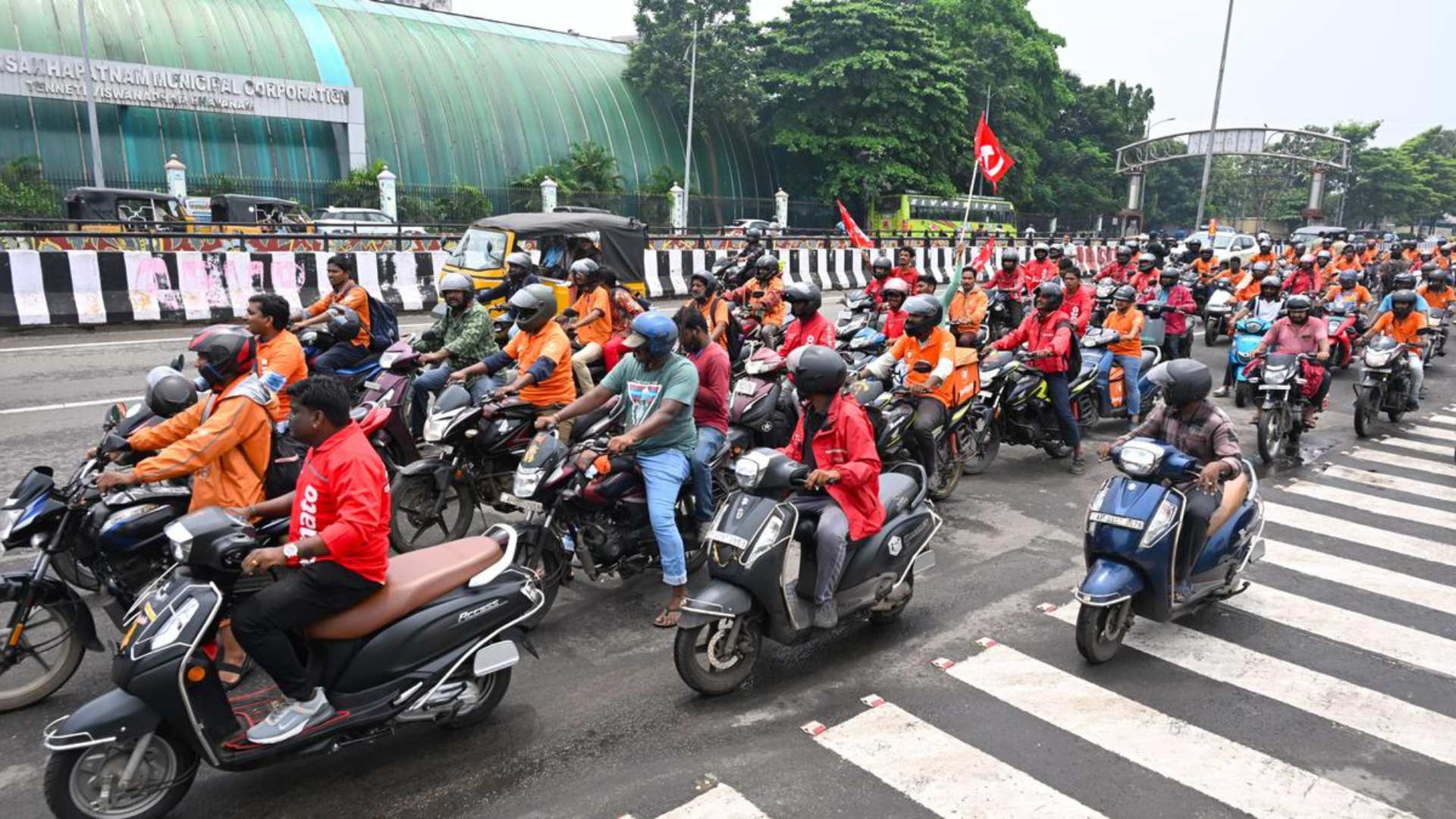
1. Gig Economy and the Illusion of Choice
The gig economy is often projected as a space of flexibility and freedom, where workers can choose when and where to work. In theory, this autonomy distinguishes gig work from traditional employment. However, the editorial highlights a paradox: when all available platforms offer similar pay structures and conditions, choice becomes illusory.
In a low-employment opportunity context like India, gig work has emerged as a significant absorber of surplus labour. For workers with limited formal skills, platforms have filled a critical employment gap. Consequently, the debate shifts from freedom of choice to compulsion driven by lack of alternatives.
This framing has governance implications. If policymakers accept “some job is better than no job” uncritically, it risks normalising sub-optimal labour standards. Over time, this can institutionalise precarity and weaken the incentive for platforms to improve work conditions.
“Development consists of the removal of various types of unfreedoms that leave people with little choice and little opportunity.” — Amartya Sen, Development as Freedom
The core governance logic is that labour markets shaped by scarcity distort bargaining power. Ignoring this imbalance risks entrenching exploitation as a structural feature rather than a transitional phase of economic development.
2. Gig Worker Discontent: Nature and Causes
Despite gratitude for employment, gig workers express dissatisfaction with remuneration and work conditions. As documented in OTP Please by Vandana Vasudevan, workers report steadily declining service fees, opaque incentive structures, and algorithm-driven controls over their time and movement.
The opacity of payment systems undermines trust between workers and platforms. While flexibility in scheduling is valued, algorithmic monitoring that tracks availability and rest blurs the boundary between autonomy and surveillance.
Importantly, workers recognise that switching platforms does not meaningfully improve outcomes, as business models across firms converge. This creates a “race to the bottom” dynamic, where competition focuses on consumer prices rather than worker welfare.
“Labour is not a commodity.” — Karl Polanyi, The Great Transformation
From a development perspective, dissatisfaction without exit options leads to silent compliance rather than productive engagement. If unaddressed, this can manifest in periodic unrest without systemic reform.
3. Consumer Position in the Gig Economy Debate
Consumers are central beneficiaries of quick commerce and food delivery services. Convenience, speed, and affordability have driven widespread adoption, reinforcing platform growth. However, consumer awareness of worker exploitation remains limited and weakly translated into behavioural change.
Platforms have attempted to humanise delivery partners by sharing profiles or centring them in advertising narratives. These measures aim to foster empathy and encourage tipping, thereby indirectly supplementing worker incomes.
Yet, the editorial suggests that consumer solidarity remains shallow. While there is episodic sympathy during adverse conditions like rain, it does not translate into consistent support or willingness to absorb higher costs.
“Every act of consumption is also a moral and political act.” — Pope Francis, Laudato Si’
The governance insight is that ethical consumption cannot be assumed in price-sensitive markets. Without institutional nudges, consumer conscience alone is insufficient to correct labour imbalances.
4. Tipping Culture and Its Structural Limits
Tipping has emerged as a partial mechanism to ease gig worker distress. However, India is not a tipping-intensive society. Unlike the United States, where delivery app tips average 15–20%, tipping in India generally remains around 5–10%.
Higher tips are situational rather than systemic, increasing during inclement weather or physically demanding deliveries. Notably, larger orders attract a lower percentage of tips, indicating that tipping is not perceived as a proportional responsibility.
This places limits on tipping as a redistributive tool. Over-reliance on voluntary consumer behaviour risks shifting responsibility away from platforms and obscuring the need for structural pay reforms.
Comparative perspective:
- US platforms: 15–20% average tips
- India platforms: 5–10% average tips
“The challenge is not just creating jobs, but creating decent jobs.” — International Labour Organization (ILO)
The developmental logic is that informal income supplementation cannot substitute for fair wage design. Ignoring this risks legitimising ad-hoc welfare in place of enforceable standards.
5. Scheduling, Flexibility, and Algorithmic Control
Flexibility in scheduling is one of the most cited positives of gig work. Evidence from the MIT Sloan Management Review (Winter 2025) indicates that 44% of gig workers emphasised schedule as important, compared to 13% among enterprise software professionals.
Gig workers also reported higher satisfaction with their schedules (84%) than business consulting executives (27%). This reflects the value of temporal autonomy, especially for workers managing multiple responsibilities.
However, the editorial points out a contradiction: algorithmic systems closely monitor worker behaviour, including rest patterns. This erodes genuine flexibility and creates stress, undermining the very advantage that attracts workers to gig platforms.
Key data:
- Schedule importance: 44% gig workers vs 13% enterprise professionals
- Positive perception of schedule: 84% gig workers vs 27% consultants
“Technology is neither good nor bad; nor is it neutral.” — Melvin Kranzberg
From a policy standpoint, flexibility without safeguards becomes control by another name. Ignoring algorithmic governance risks converting autonomy into disguised supervision.
6. Scale of Employment and Policy Dilemmas
The gig and quick commerce sector has generated 7.7 million jobs and is projected to reach 23.5 million by 2030, according to former NITI Aayog CEO Amitabh Kant. This scale makes the sector economically and politically significant.
Given that many Indian gig workers depend on platform work as their primary livelihood, disruptions or heavy-handed regulation could affect employment levels. At the same time, unchecked platform practices can degrade labour standards at scale.
This creates a policy dilemma: balancing job creation with worker protection, without undermining the viability of platform-based business models.
Employment figures:
- Current jobs: 7.7 million
- Projected by 2030: 23.5 million
“Growth without equity is socially destabilising.” — Joseph E. Stiglitz
The governance challenge lies in managing growth with dignity. Ignoring either employment generation or worker welfare risks long-term instability and loss of trust in reform.
7. Emerging Regulatory and Industry Responses
The government’s move to discourage “10-minute delivery guarantees” signals recognition of safety and labour concerns. Such nudges aim to recalibrate incentives away from extreme speed that burdens delivery partners and compromises road safety.
Platforms have experimented with consumer engagement strategies, such as visible tipping prompts and delivery partner narratives. However, these remain fragmented and voluntary.
The editorial suggests that an industry-wide approach—combining humane scheduling, transparent pay systems, and explicit encouragement of tipping—may offer incremental relief without sudden cost shocks.
The development logic is incrementalism with coordination. Ignoring collective approaches risks piecemeal fixes that fail to alter underlying incentives.
Conclusion
The gig economy sits at the intersection of employment generation, consumer convenience, and labour welfare. While it has created millions of jobs, persistent worker discontent highlights structural imbalances in power and pay.
“The test of progress is not whether we add more to the abundance of those who have much; it is whether we provide enough for those who have too little.” — Franklin D. Roosevelt
A calibrated mix of regulation, platform responsibility, and informed consumer participation is essential to ensure that economic dynamism does not come at the cost of dignity of labour.
.jpeg)
.jpeg)