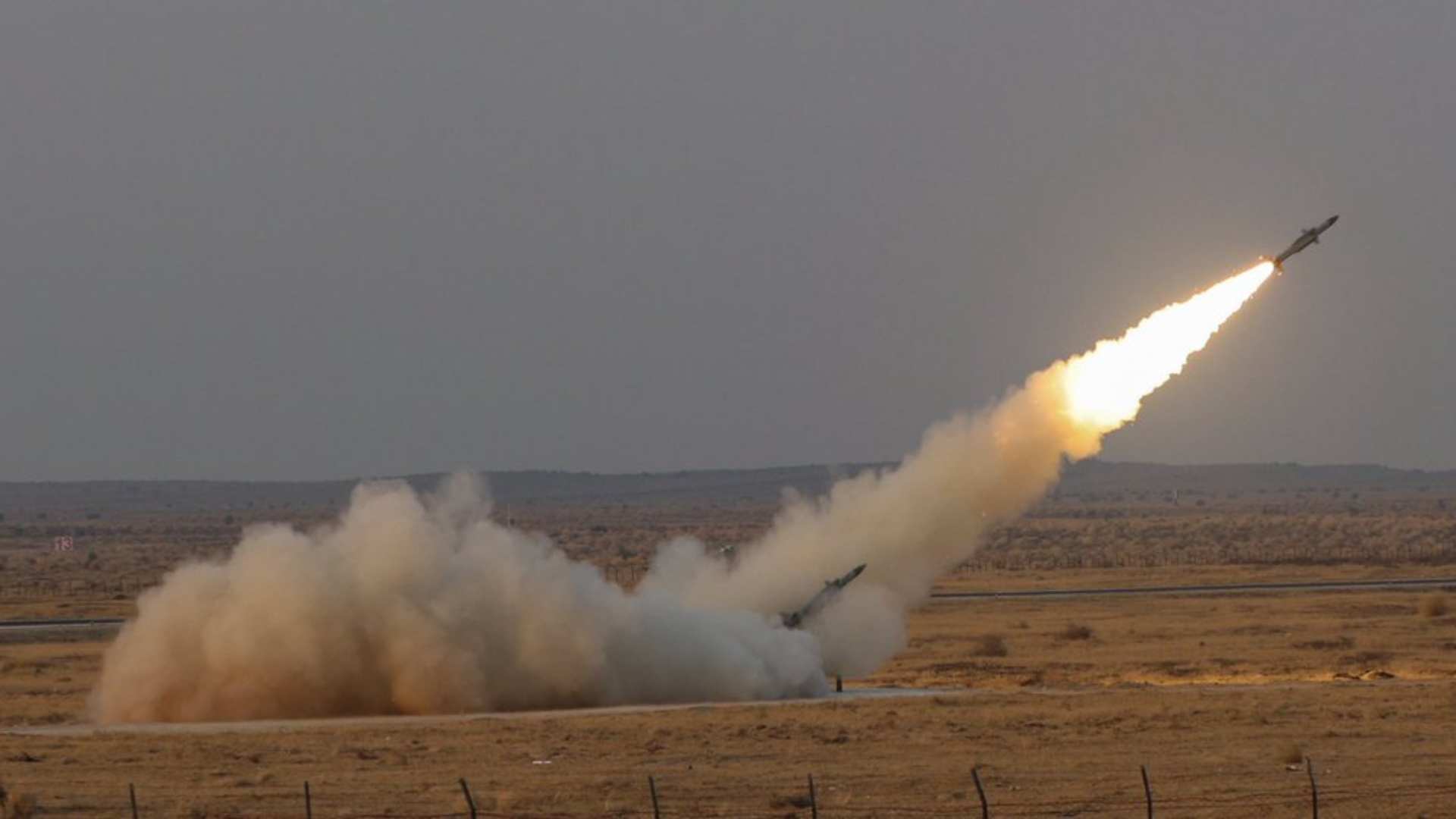
IAF Unveils Real-World Combat Readiness at Vayushakti

The Exercise Vayushakti offers insights into IAF's execution of Operation Sindoor in simulated realistic battle conditions.
PT
pocketias team
3 mins read
IAF showcases firepower at Vayushakti
Not Started

What is Exercise Vayushakti?

Exercise Vayushakti is a major Indian Air Force (IAF) firepower demonstration conducted at the Pokhran Field Firing Range, Rajasthan.

What was new in 2026?

For the first time:

  • Missions were executed as part of a single evolving combat scenario
  • Instead of isolated drills, the exercise simulated a realistic battlefield environment
  • Operations were conducted in both day and night conditions

Why this matters

Modern wars are not fought in separate compartments (strike, defence, rescue). They are dynamic, simultaneous, and information-driven. The shift reflects India’s move toward network-centric and integrated warfare doctrine.


Scale and Participation

More than 130 aircraft participated.

Fighter Aircraft:

  • Rafale
  • Mirage 2000
  • Su-30 MKI
  • MiG-29
  • Jaguar

Transport & Special Ops Platforms:

  • C-130J
  • C-17
  • C-295
  • Mi-17

Indigenous Platforms:

  • ALH Dhruv
  • LCH Prachand

Why this is significant

India operates a multi-origin fleet (French, Russian, American, European, Indigenous). Successfully integrating them demonstrates:

  • High interoperability capability
  • Operational flexibility
  • Strategic autonomy
  • Mature command-and-control systems

This reduces vulnerability arising from dependence on any one supplier nation.


Precision Strike Demonstration

Aircraft conducted:

  • Precision-guided munition strikes
  • Long-range air-to-ground targeting
  • Coordinated offensive operations

Strategic meaning

Modern deterrence relies on precision rather than volume of firepower.

Precision strikes:

  • Reduce collateral damage
  • Help manage escalation
  • Enhance international legitimacy
  • Signal calibrated use of force

This aligns with the concept of “dominating the escalation ladder” — achieving objectives without uncontrolled war expansion.


Integrated Air Defence Operations

Air defence was demonstrated through:

  • Indigenous Akash missile system
  • Israeli Spyder missile system
  • Army’s L-70 anti-aircraft guns
  • Coordination between airborne and ground systems

Why this is important

India faces:

  • Drone threats
  • Cruise missile threats
  • Ballistic missile threats
  • Cross-border aerial incursions

Layered air defence increases survivability and enhances deterrence.

This also reflects progress toward integrated theatre commands and joint operations between Army and Air Force.


Special Forces & Urban Operations

Garud Special Forces and Army Para SF:

  • Inserted via Mi-17 helicopters
  • Conducted simulated urban hostage rescue
  • Followed by assault landings and evacuation

Strategic relevance

Air power is no longer only about aerial combat.

It now includes:

  • Special operations support
  • Counter-terror missions
  • Rapid deployment
  • Casualty evacuation

This enhances India’s ability to respond to:

  • Terror incidents
  • Cross-border contingencies
  • Hybrid warfare

Night Combat Capability

The exercise included:

  • Precision night strikes
  • Night air defence integration
  • Night air-landed operations

Why night capability matters

Dominance in night warfare:

  • Denies adversaries temporal advantage
  • Multiplies operational flexibility
  • Enhances deterrence credibility

Advanced avionics and night vision technology signal technological maturity.


Jointmanship and Multi-Domain Operations

The exercise reflected integration of:

  • Air Force
  • Army air defence
  • Special Forces
  • Transport & logistics units

Broader significance

India is moving from service-specific planning toward joint operational doctrine, essential for:

  • Theatre command reforms
  • Faster mobilisation
  • Reduced duplication
  • Better resource utilisation

This is crucial in a two-front threat scenario.


Strategic Messaging

Exercise Vayushakti serves multiple audiences:

Domestic:

  • Demonstrates preparedness
  • Reinforces public confidence

Regional adversaries:

  • Signals readiness and capability
  • Strengthens deterrence posture

Global:

  • Positions India as a capable military power

Military exercises are not just training — they are instruments of strategic communication.


Themes

  • Shift from platform-centric to network-centric warfare
  • Precision over mass destruction
  • Importance of interoperability
  • Integration of indigenous defence systems
  • Escalation control in limited conflicts
  • Air power as an enabler of comprehensive national power

Conclusion

Exercise Vayushakti 2026 marks India’s doctrinal shift toward integrated, technology-driven and precision-based warfare. In an era where conflicts are fast, hybrid, and multi-domain, preparedness lies not in numerical strength alone but in seamless coordination, speed, and calibrated force application. The exercise reinforces the Indian Air Force’s central role in safeguarding national security and strengthening strategic deterrence.

Quick Q&A

Everything you need to know

Exercise Vayushakti 2026 marked a qualitative shift in India’s air combat training by simulating a dynamic, real-time battlefield environment instead of conducting isolated drills. For the first time, multiple missions—offensive strikes, air defence, special forces insertion, and humanitarian operations—were executed as part of a single evolving operational scenario. This reflects a move from platform-centric training to network-centric and mission-oriented warfare.

The participation of over 130 aircraft, including Rafale, Su-30 MKI, Mirage 2000, C-130J, and indigenous platforms like ALH Dhruv and LCH Prachand, demonstrated multi-domain capability. Integration of air and ground-based systems such as Akash and Spyder missile systems further underscored layered air defence preparedness.

Strategically, the exercise validates the IAF’s doctrine of “Achook, Abhedya, Sateek” (Unerring, Impenetrable, Precise). It signals readiness to dominate escalation scenarios and reinforces air power as a key instrument of India’s deterrence posture.

Modern conflicts are characterised by hybrid threats, rapid escalation, and multi-domain operations. Traditional siloed exercises do not adequately prepare forces for the complexity of contemporary battlefields. Scenario-based simulations replicate fog-of-war conditions, requiring commanders to adapt to evolving intelligence, cyber inputs, and kinetic engagements simultaneously.

The Russia-Ukraine conflict, for instance, has shown how air defence integration, drone warfare, and precision strikes can alter battlefield dynamics rapidly. Similarly, India faces potential two-front contingencies, making integrated preparedness crucial.

Realistic training enhances interoperability between services, reduces response time, and improves joint decision-making under stress. Therefore, exercises like Vayushakti are not symbolic displays but essential instruments for operational validation and deterrence credibility.

Jointmanship refers to seamless coordination between the Army, Navy, and Air Force. In Vayushakti 2026, integration was visible in coordinated air defence operations involving IAF aircraft, Army air defence guns, and missile systems like Akash and Spyder. Special forces from the IAF’s Garud unit and Army Para SF conducted combined operations.

Multi-domain integration ensures that air, land, and increasingly cyber and space assets operate as a unified force. This reduces redundancy, improves intelligence sharing, and maximises combat efficiency. The United States’ Joint All-Domain Command and Control (JADC2) concept illustrates how integrated networks enhance battlefield dominance.

For India, with diverse platforms sourced from multiple countries, interoperability is critical. Effective jointmanship enhances deterrence by demonstrating coordinated, high-impact response capabilities.

Large-scale exercises serve as both operational rehearsals and strategic signalling tools. By showcasing precision strikes, night operations, and rapid deployment capabilities, the IAF communicates readiness to adversaries. Such demonstrations reinforce deterrence by denial—convincing adversaries that aggression will be costly and ineffective.

However, there are potential downsides. Frequent high-visibility exercises may escalate regional tensions or be interpreted as aggressive posturing. Additionally, exercises must balance transparency with operational secrecy to avoid revealing tactical vulnerabilities.

Overall, when calibrated carefully, exercises like Vayushakti enhance deterrence credibility, validate doctrine, and reassure domestic audiences of preparedness. They are integral to comprehensive national power, provided they align with diplomatic objectives.

The participation of Rafale (France), Su-30 MKI and MiG-29 (Russia), C-130J and C-17 (USA), and indigenous platforms like ALH Dhruv reflects India’s multi-source procurement strategy. This diversification reduces overdependence on any single supplier and strengthens strategic autonomy.

However, operating diverse platforms poses logistical and interoperability challenges, including maintenance complexity and varied weapon systems. Exercises like Vayushakti test integration across these systems, ensuring operational cohesion.

The increasing role of indigenous systems such as Akash missile systems and LCH Prachand highlights progress under the ‘Aatmanirbhar Bharat’ initiative. This blend of imported and indigenous assets reflects a pragmatic strategy combining immediate capability with long-term self-reliance.

First, I would institutionalise lessons-learned mechanisms to feed operational insights into procurement and doctrine updates. Post-exercise analysis can identify capability gaps in air defence, night operations, or logistics.

Second, expand joint exercises with friendly foreign nations to enhance interoperability and strategic partnerships, similar to exercises like Cope India and Red Flag. This strengthens diplomatic signalling alongside military preparedness.

Third, integrate cyber and space components more explicitly into future drills, reflecting evolving warfare domains. By aligning training with emerging threats and technological innovation, India can sustain credible deterrence and reinforce its role as a stabilising power in the region.

Attribution

Original content sources and authors

Sign in to track your reading progress

Comments (0)

Please sign in to comment

No comments yet. Be the first to comment!