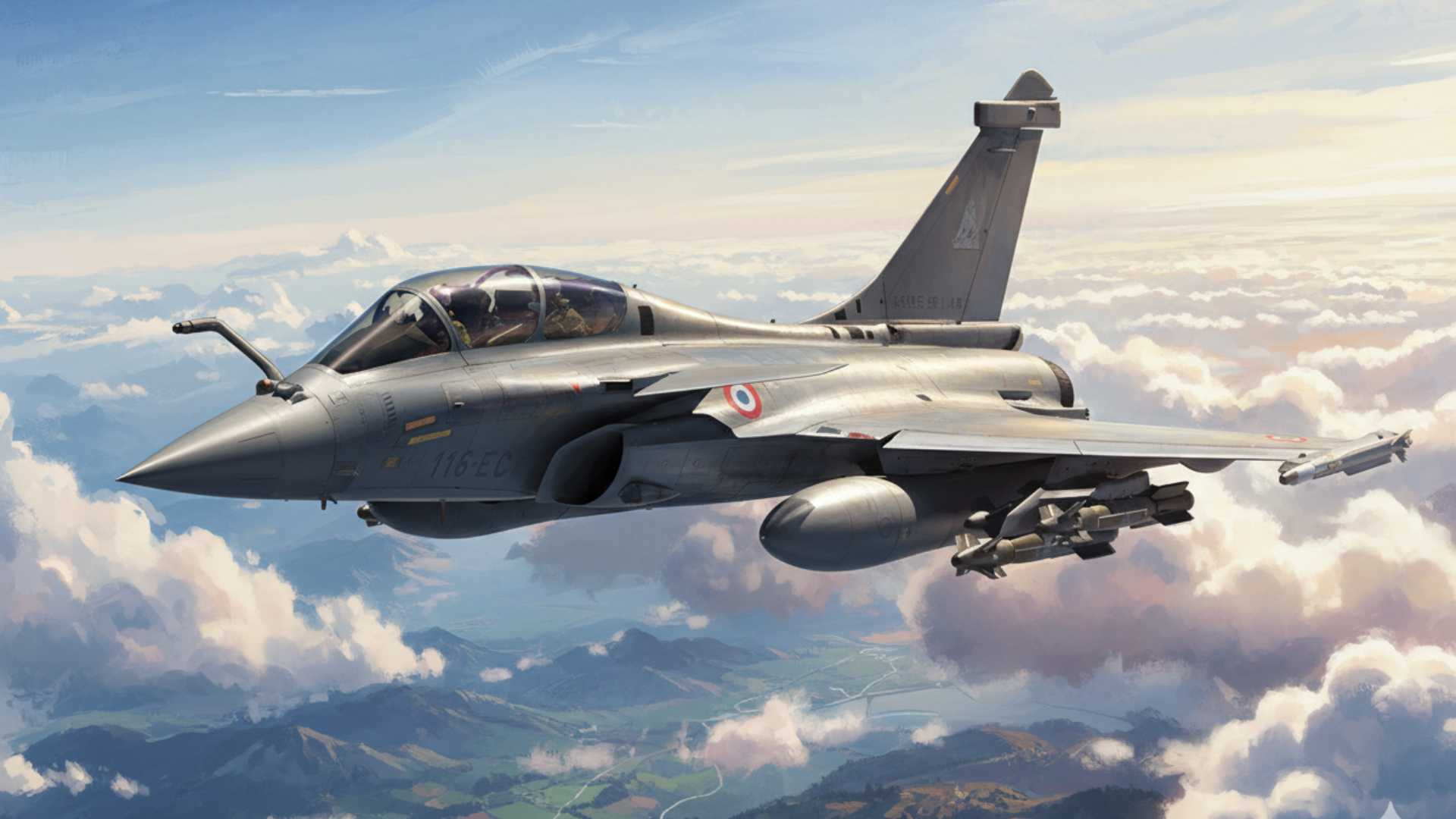
1. Strategic Context: Strengthening India’s Air Power Through MRFA Procurement
The Defence Acquisition Council (DAC) has granted Acceptance of Necessity (AoN) for procurement proposals worth ₹3.60 lakh crore, including 114 Multi-Role Fighter Aircraft (MRFA) — Rafale jets for the Indian Air Force (IAF). This marks one of the largest defence acquisition approvals in recent years and signals a major step toward modernising India’s air combat capability.
The decision comes at a time when the IAF’s operational strength has fallen to 29 fighter squadrons, significantly below the sanctioned strength of 42 squadrons. The retirement of the MiG-21 in September and the impending phase-out of ageing platforms such as early variants of MiG-29, Jaguar, and Mirage 2000 have created capability gaps.
The majority of the 114 MRFA jets are proposed to be manufactured in India, reflecting an alignment with the broader push for indigenisation and self-reliance in defence production. This procurement aims to restore numerical strength while also enhancing qualitative superiority.
“The procurement of MRFA will enhance the capability of undertaking air dominance roles across the spectrum of conflict and significantly boost the deterrence capabilities of IAF with long range offensive strikes.” — Defence Ministry Statement
The strengthening of air power directly contributes to deterrence, territorial integrity, and crisis response capability. If squadron depletion continues without replacement, it risks strategic vulnerability and weakens India’s capacity to manage two-front contingencies.
Key Data:
- Total proposals cleared: ₹3.60 lakh crore
- MRFA procurement: 114 aircraft
- Current IAF squadrons: 29
- Sanctioned strength: 42 squadrons
2. Capability Enhancement: Combat Missiles and AS-HAPS
Alongside MRFA acquisition, AoN has been approved for Combat Missiles and Air-Ships Based High-Altitude Pseudo-Satellite (AS-HAPS) systems.
The Combat Missiles are designed to enhance stand-off ground attack capability, enabling deep-strike operations with high precision. Stand-off capability reduces pilot risk and increases survivability by allowing engagement from beyond enemy air defence systems.
The AS-HAPS platforms are intended for persistent Intelligence, Surveillance and Reconnaissance (ISR), Electronic Intelligence (ELINT), telecommunications, and remote sensing. High-altitude pseudo-satellites bridge the gap between satellites and drones, offering long-endurance surveillance at lower cost compared to space-based systems.
These additions signify a shift from mere platform acquisition to network-centric and information-dominant warfare capabilities.
Modern warfare increasingly depends on precision and information superiority rather than sheer numbers. Failure to invest in ISR and stand-off systems can result in strategic blindness and operational disadvantage during high-intensity conflict.
Functional Roles:
Combat Missiles:
- Deep-strike capability
- High-accuracy stand-off attacks
AS-HAPS:
- Persistent ISR
- Electronic Intelligence
- Telecommunications support
- Remote sensing for military operations
3. Joint Force Modernisation: Army and Navy Upgrades
The DAC approvals extend beyond the IAF and encompass capability upgrades for the Army and Navy, reflecting a tri-service modernisation approach.
For the Indian Army, clearance has been granted for procurement of Anti-Tank Mines (Vibhav) and overhaul of vehicle platforms including Armoured Recovery Vehicles (ARVs), T-72 tanks, and BMP-II Infantry Combat Vehicles. These measures aim to enhance battlefield survivability and extend the service life of existing platforms.
The Navy has received clearance for:
- 04 MW Marine Gas Turbine-based Electric Power Generator (under Make-I category of DAP 2020)
- Additional P8I Long Range Maritime Reconnaissance Aircraft
The Marine Gas Turbine project seeks to reduce dependency on foreign manufacturers and promote self-reliance in naval power generation systems. The P8I aircraft will strengthen anti-submarine warfare (ASW), maritime surveillance, and maritime strike capability, crucial in the Indian Ocean Region (IOR).
Integrated modernisation across services enhances jointness and deterrence. Neglecting one service domain can create asymmetrical vulnerabilities, especially in an era of hybrid and multi-domain warfare.
Army Upgrades:
- Anti-Tank Mines (Vibhav) for mechanised force denial
Overhaul of:
- T-72 Tanks
- BMP-II
- Armoured Recovery Vehicles
Navy Upgrades:
- 04 MW Marine Gas Turbine (Make-I category)
- P8I Long Range Maritime Reconnaissance Aircraft
4. Self-Reliance and Defence Industrial Policy
A significant feature of the MRFA procurement is that the majority of aircraft are expected to be manufactured in India. This aligns with the objectives of:
- Atmanirbhar Bharat
- Defence Acquisition Procedure (DAP) 2020
- Indigenous manufacturing under Make-I category
Local production enhances technology transfer, supply-chain development, employment generation, and reduces long-term import dependence. It also strengthens India’s strategic autonomy in defence procurement.
The Marine Gas Turbine approval under the Make-I category reflects policy emphasis on indigenously designed and developed defence systems funded partly by the government.
Defence indigenisation reduces strategic vulnerability arising from external supply disruptions. Without domestic manufacturing capacity, geopolitical shifts can directly impact operational readiness.
5. Strategic and Geopolitical Implications
The approval of Rafale procurement comes shortly before the visit of French President Emmanuel Macron, highlighting the strategic depth of India–France defence cooperation.
France has emerged as a key defence partner, particularly in aerospace and maritime domains. Continued collaboration strengthens India’s diversification of defence partnerships, reducing overdependence on any single supplier nation.
Enhanced air dominance, deep-strike capability, and maritime surveillance collectively contribute to India’s deterrence posture in a volatile regional security environment.
Defence partnerships are not merely transactional but strategic instruments of foreign policy. Failure to cultivate diversified partnerships may limit diplomatic leverage and technology access.
Conclusion
The DAC’s clearance of ₹3.60 lakh crore worth of defence proposals marks a comprehensive push toward capability enhancement, indigenisation, and tri-service modernisation. By addressing squadron shortages, upgrading legacy systems, and strengthening ISR and maritime capacities, India is reinforcing both deterrence and strategic autonomy.
Sustained focus on timely implementation, indigenous production, and joint operational integration will determine whether these approvals translate into long-term national security resilience and defence preparedness.