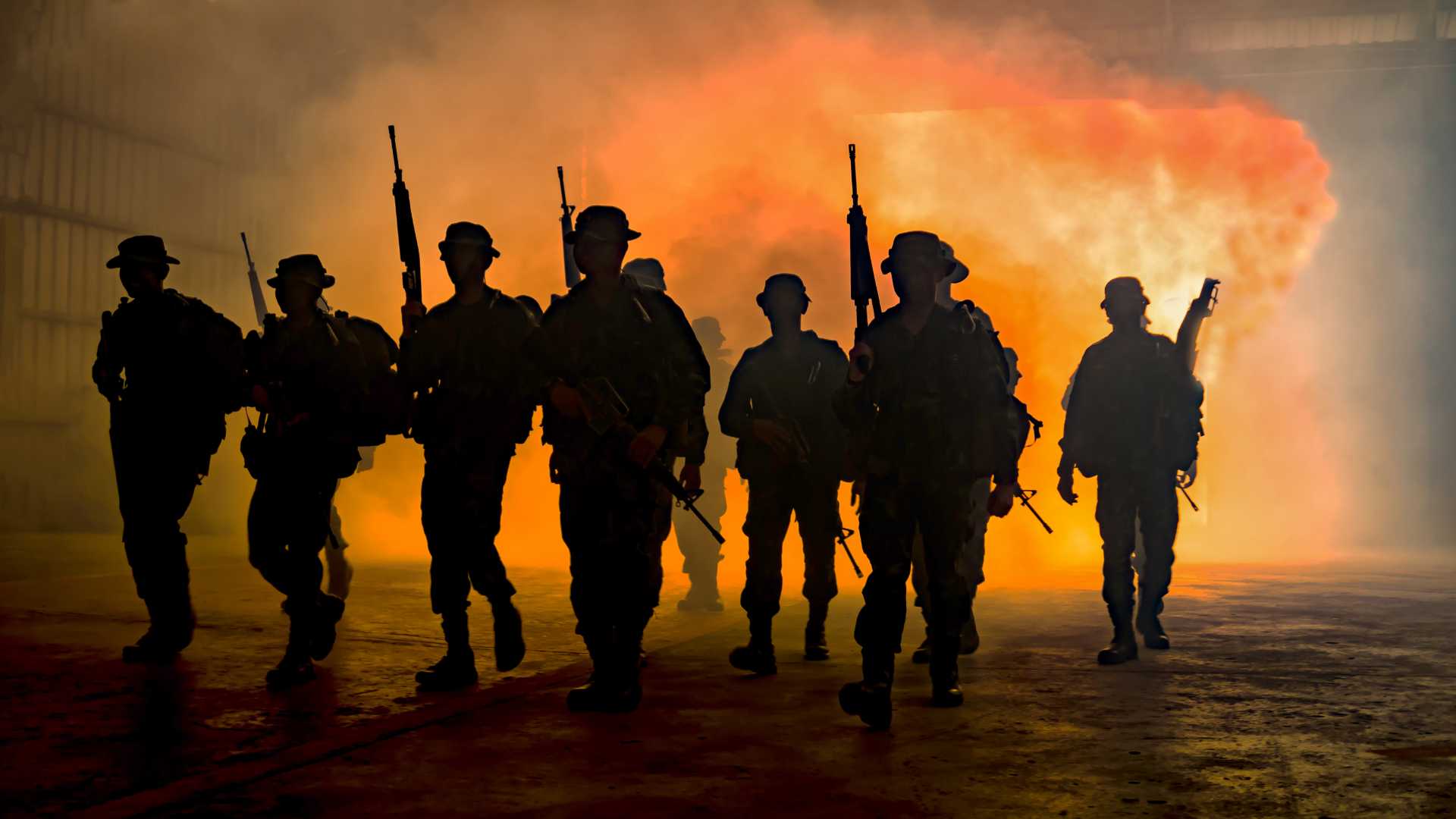
1. Operation Sindoor: Tactical Execution, Restraint, and Sovereignty
Admiral Samuel J. Paparo, Commander of U.S. Indo-Pacific Command (INDO-PACOM), commended the tactical execution of Operation Sindoor, particularly the seriousness with which its lessons were evaluated. His remarks reflect recognition of India’s operational competence in handling a security crisis triggered by the Pahalgam attack.
He described the triggering event as grave and deserving of “tremendous reverence,” while refraining from detailed commentary on operational specifics. By terming it a sovereign matter, he reinforced the principle of non-interference in sensitive security decisions of partner nations.
Importantly, he praised the restraint shown during the operation, emphasizing escalation control in a volatile regional environment. In South Asia, where nuclear deterrence dynamics are present, calibrated response is crucial to prevent conflict spirals.
“One never knows when a crisis may emerge. Maintaining a strong deterrent posture is critical.” — Admiral Samuel J. Paparo
The emphasis on tactical competence combined with restraint reflects the dual requirement of credible deterrence and escalation management. Ignoring this balance could either weaken deterrence credibility or risk uncontrolled conflict escalation.
- Governance and Strategic Significance:
- Reinforces India’s image as a responsible security actor.
- Highlights importance of post-operation introspection and learning.
- Strengthens India’s credibility in crisis management in nuclearised neighbourhood.
2. Changing Nature of Warfare: Kill Chains and Technological Transformation
Admiral Paparo underscored that modern long-range weapons rely on complex “kill chains” integrating sensors, communications, propulsion systems, warheads, and seekers. This indicates that warfare today is system-centric rather than platform-centric.
He noted that geography is no longer as decisive as in the past. Advances in space-based assets, information systems, propulsion technologies, and seeker technologies have diffused capabilities across states, reducing traditional geographic advantages.
This reflects the transition from territorial warfare to multi-domain warfare, where space, cyber, and electromagnetic domains are integral to operational success. Mastery of information flows and system integration determines effectiveness.
The governance implication is clear: national security now depends on technological ecosystems and inter-domain integration. Failure to invest in these areas may erode deterrence despite strong conventional forces.
- Key Features of 21st Century Warfare:
- Integration of sensors and shooters (“kill chain” concept)
- Space and counter-space operations
- Electronic warfare
- Low observability (stealth)
- Artificial Intelligence-enabled targeting and survivability
- Information dominance
- GS Linkages:
- GS3: Defence technology and indigenisation
- GS2: International security architecture
- Essay: Technology as a force multiplier in geopolitics
3. Chinese-Origin Weapons and Deterrence Dynamics
The reference to Chinese-origin weapons used by Pakistan during Operation Sindoor highlights the evolving regional military balance. It points to growing defence cooperation between China and Pakistan, particularly in advanced weapons systems.
Admiral Paparo’s stress on vigilance and readiness suggests that crises can emerge unpredictably in a technologically competitive environment. This reflects the need for sustained preparedness rather than episodic responses.
In this context, deterrence is not merely about force levels but about capability integration and rapid operational readiness. Constant assessment of adversarial capabilities becomes essential.
The logic is that in an era of rapid technological diffusion, complacency can quickly undermine deterrence credibility. Without vigilance, capability gaps may widen before they are recognised.
- Strategic Implications:
- Deepening China–Pakistan defence cooperation
- Need for India to strengthen indigenous R&D
- Importance of joint intelligence and technology sharing
- Reinforcement of deterrence posture in Indo-Pacific
4. Artificial Intelligence as a Defence and Development Enabler
Admiral Paparo praised India’s vision of leveraging Artificial Intelligence (AI) for the benefit of people in the 21st century, while acknowledging its significant defence applications. INDO-PACOM, he noted, is already at the forefront of AI-enabled military operations.
AI enhances lethality, survivability, situational awareness, and decision-making speed in conflict scenarios. At the same time, its civilian applications intersect with governance, development, and economic competitiveness.
For India, AI becomes both a strategic technology and a development tool. Defence cooperation in AI thus serves dual objectives: security enhancement and technological advancement.
Integrating AI into defence without parallel civilian ecosystem development may limit long-term strategic autonomy. Conversely, ignoring AI risks strategic obsolescence in future conflicts.
- Areas of AI Cooperation:
- ISR (Intelligence, Surveillance, Reconnaissance)
- Autonomous systems
- Decision-support systems
- Data analytics in maritime domain awareness
- GS Linkages:
- GS3: Emerging technologies and internal security
- GS2: India–U.S. strategic partnership
- Essay: Ethical and strategic dimensions of AI
5. India–U.S. Defence Partnership: Expanding Scope
Admiral Paparo described the India–U.S. security relationship as being on a “steep upward trajectory.” The partnership has expanded across platforms, exercises, and technological collaboration.
He cited major defence procurements and collaborations:
- Apache helicopters (agreement in 2018)
- MQ-9 platforms
- GE-414 engines
- P-8I aircraft
- MH-60 Romeo helicopters
These acquisitions reflect a shift from buyer-seller dynamics to deeper interoperability and co-development frameworks.
Joint exercises such as Tiger Triumph, Malabar, Cope India, and RIMPAC enhance operational familiarity and interoperability across services. Such engagements strengthen deterrence credibility in the Indo-Pacific.
Institutionalised exercises and platform compatibility build long-term strategic trust. Without sustained engagement, partnerships may remain transactional rather than structural.
- Broader Implications:
- Strengthening Quad architecture
- Enhancing maritime security in the Indo-Pacific
- Facilitating defence industrial cooperation
- Supporting India’s role as a net security provider
6. Maritime Domain Awareness and the Indian Ocean Region (IOR)
Admiral Paparo recognised India as a major contributor to security in the Indian Ocean Region (IOR). Maritime domain awareness (MDA), including undersea domain awareness, remains a critical pillar of bilateral cooperation.
The IOR is central to global trade, energy flows, and strategic competition. Effective MDA ensures monitoring of surface and subsurface activities, countering piracy, illegal fishing, and strategic intrusions.
India’s geostrategic location and naval capabilities make it a pivotal actor in securing sea lanes of communication (SLOCs). Cooperation with the U.S. enhances information-sharing and maritime surveillance capabilities.
Inadequate maritime awareness could expose critical sea lanes to disruption, undermining economic security. Therefore, MDA is both a defence and developmental imperative.
- Strategic Importance of MDA:
- Protection of SLOCs
- Countering grey-zone activities
- Submarine detection and undersea monitoring
- Disaster response and humanitarian assistance
Conclusion
Admiral Paparo’s remarks reflect a broader strategic convergence between India and the United States in the Indo-Pacific. Operation Sindoor underscores the importance of tactical precision, restraint, and continuous learning in crisis management.
Simultaneously, evolving warfare technologies, AI integration, and maritime security cooperation indicate that future security will be shaped by technological depth and institutional partnerships. For India, strengthening technological capabilities while deepening strategic autonomy-oriented partnerships will be central to sustaining its role as a responsible and capable regional power.