1. Commissioning of INS Anjadip: Strategic Context
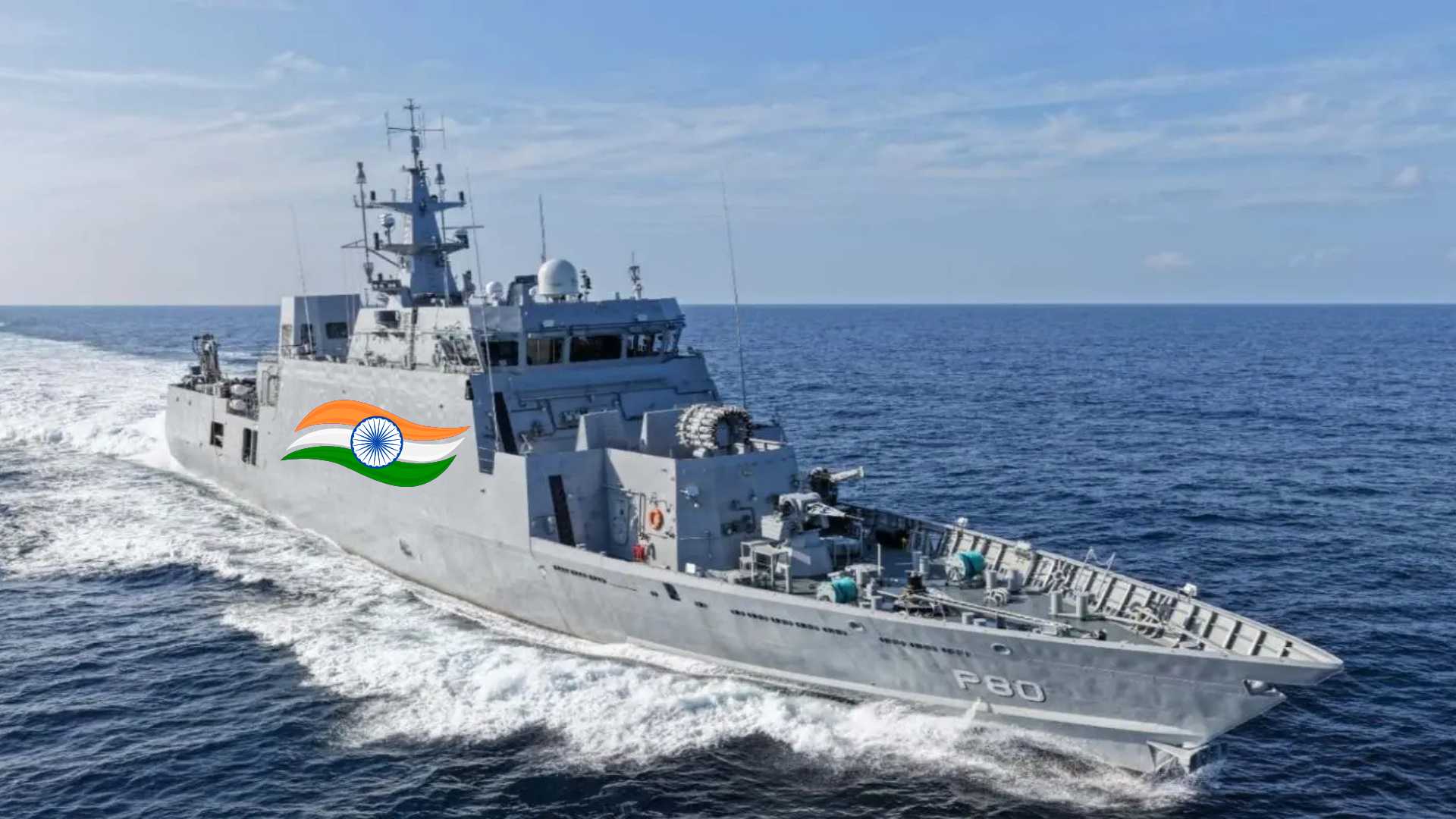
INS Anjadip was commissioned on February 27, 2026, at Chennai Port by the Chief of the Naval Staff, Admiral Dinesh K. Tripathi. It is the third of eight vessels being constructed under the Anti-Submarine Warfare Shallow Water Craft (ASW-SWC) project. The ship took approximately 4 years and 2 months to complete, reflecting the growing pace of indigenous naval shipbuilding.
The Ministry of Defence signed the contract with Garden Reach Shipbuilders & Engineers (GRSE) on April 29, 2019. Keel laying commenced on June 17, 2022, at Kattupalli shipyard, and the vessel was launched on June 13, 2023. This timeline demonstrates the structured phases of modern naval shipbuilding—contracting, keel laying, launch, and commissioning.
The commissioning of INS Anjadip comes at a time when India faces increasing maritime security challenges in the Indian Ocean Region (IOR), including submarine proliferation and expanding naval footprints of extra-regional powers. Enhancing shallow-water anti-submarine capability is therefore critical for coastal defence and sea denial.
The induction of specialised ASW vessels strengthens India’s layered maritime security architecture. Without dedicated shallow-water platforms, coastal zones remain vulnerable to stealth submarines, potentially undermining deterrence and maritime sovereignty.
2. Technical Features and Combat Capabilities
INS Anjadip is a 77-metre-long shallow water craft equipped with an indigenous Anti-Submarine Warfare (ASW) weapons and sensor package. It includes the Hull Mounted Sonar (HMS) Abhay, Lightweight Torpedoes, and ASW Rockets, designed for detecting and neutralising underwater threats.
The ship uses a high-speed water-jet propulsion system, enabling speeds up to 25 knots. This propulsion system enhances manoeuvrability and stealth, particularly in noisy and shallow coastal waters where traditional large destroyers face operational constraints.
Designed specifically for the littoral combat environment, the vessel can eliminate background noise and detect “silent” diesel-electric or midget submarines hiding in shallow seabeds. In addition to ASW roles, it is capable of coastal surveillance, Low-Intensity Maritime Operations (LIMO), and Search and Rescue (SAR).
Key Features:
- Length: 77 metres
- Speed: 25 knots
- Propulsion: Water-jet system
- Sonar: Indigenous Hull Mounted Sonar Abhay
- Armament: Lightweight Torpedoes and ASW Rockets
Technological specialization in shallow-water ASW fills a critical operational gap. If coastal detection capacity remains weak, adversarial submarines can exploit littoral vulnerabilities, threatening ports, sea lanes, and critical maritime infrastructure.
3. Why “Dolphin Hunter”? Operational Significance
INS Anjadip is nicknamed the “Dolphin Hunter” due to its specialised sonar capabilities that function on acoustic principles similar to dolphins. The Hull Mounted Sonar Abhay enables detection, tracking, and neutralisation of enemy submarines in complex coastal waters.
Unlike large destroyers that struggle in noisy littoral environments, this vessel is engineered for stealth operations in near-shore areas. Its ability to filter background noise enhances detection of low-signature diesel-electric submarines.
The water-jet propulsion further increases manoeuvrability, enabling the ship to “weave” through compact coastal corridors effectively. This agility is crucial in safeguarding high-traffic maritime zones such as Tamil Nadu and Puducherry coastlines.
Specialised platforms tailored for littoral warfare enhance operational efficiency and resource optimisation. Ignoring the distinct operational demands of shallow waters could dilute overall naval preparedness.
4. Strategic and Historical Significance of the Name “Anjadip”
The ship is named after Anjadip Island off Karwar in north Karnataka. The name carries historical resonance as the island witnessed decisive naval action during Operation Chutney (December 1961), which contributed to the liberation of Goa.
Admiral Tripathi emphasised that the name reflects “resolve, valour, bold action and safeguarding national maritime interests.” It also marks INS Anjadip as the successor to the last of the Petya-class corvettes, which served from 1972 to 2003.
“That spirit of resolve, valour, bold action and safeguarding national maritime interests at any cost— is the enduring legacy that this Anjadip carries forward.” — Admiral Dinesh K. Tripathi
Naming conventions in naval tradition often reinforce institutional memory and continuity, linking modern platforms to historical missions and national milestones.
Symbolism in defence institutions fosters morale, continuity, and strategic culture. Without such institutional memory, armed forces risk weakening the intangible elements of cohesion and identity.
5. India’s Naval Strength and Modernisation Trajectory
As of February 2026, the Indian Navy operates approximately 145–150 commissioned ships and submarines, though the number fluctuates due to commissioning and decommissioning cycles.
In a significant development, the Navy is on track to commission 19 warships in 2026, marking the highest number in its history. This indicates a strong push toward maritime modernisation amid evolving security dynamics in the Indo-Pacific.
The ASW-SWC project aligns with India’s broader maritime strategy, including coastal security post-26/11, blue water aspirations, and maintaining credible deterrence in the Indian Ocean Region.
Modernisation Indicators:
- Fleet strength: 145–150 vessels
- Planned commissioning in 2026: 19 warships (record high)
Fleet expansion combined with capability specialisation enhances sea control, sea denial, and deterrence. If modernisation slows amid rising regional naval competition, India’s maritime leverage in the Indo-Pacific could weaken.
6. Governance and Strategic Implications
The construction of INS Anjadip by GRSE, Kolkata, underscores the role of indigenous shipyards in defence production. It reflects alignment with self-reliance objectives and domestic capacity building in high-technology sectors.
Enhanced ASW capabilities strengthen:
- Coastal security architecture
- Protection of Sea Lines of Communication (SLOCs)
- Maritime domain awareness
- Deterrence against submarine incursions
Given increasing submarine activity in the Indian Ocean Region, especially by extra-regional powers, shallow-water ASW platforms are central to India’s layered maritime defence doctrine.
Strengthening indigenous maritime capabilities reduces external dependence and enhances strategic autonomy. Neglecting domestic defence manufacturing would increase vulnerability in times of geopolitical stress.
Conclusion
INS Anjadip represents a critical step in strengthening India’s anti-submarine and coastal defence capabilities. By combining indigenous technology, specialised littoral design, and historical symbolism, it reflects both operational readiness and strategic continuity.
As India expands its naval fleet and deepens its role in the Indo-Pacific, sustained investment in specialised platforms like ASW shallow water crafts will be essential to safeguard maritime interests, ensure credible deterrence, and reinforce strategic autonomy in the long term.