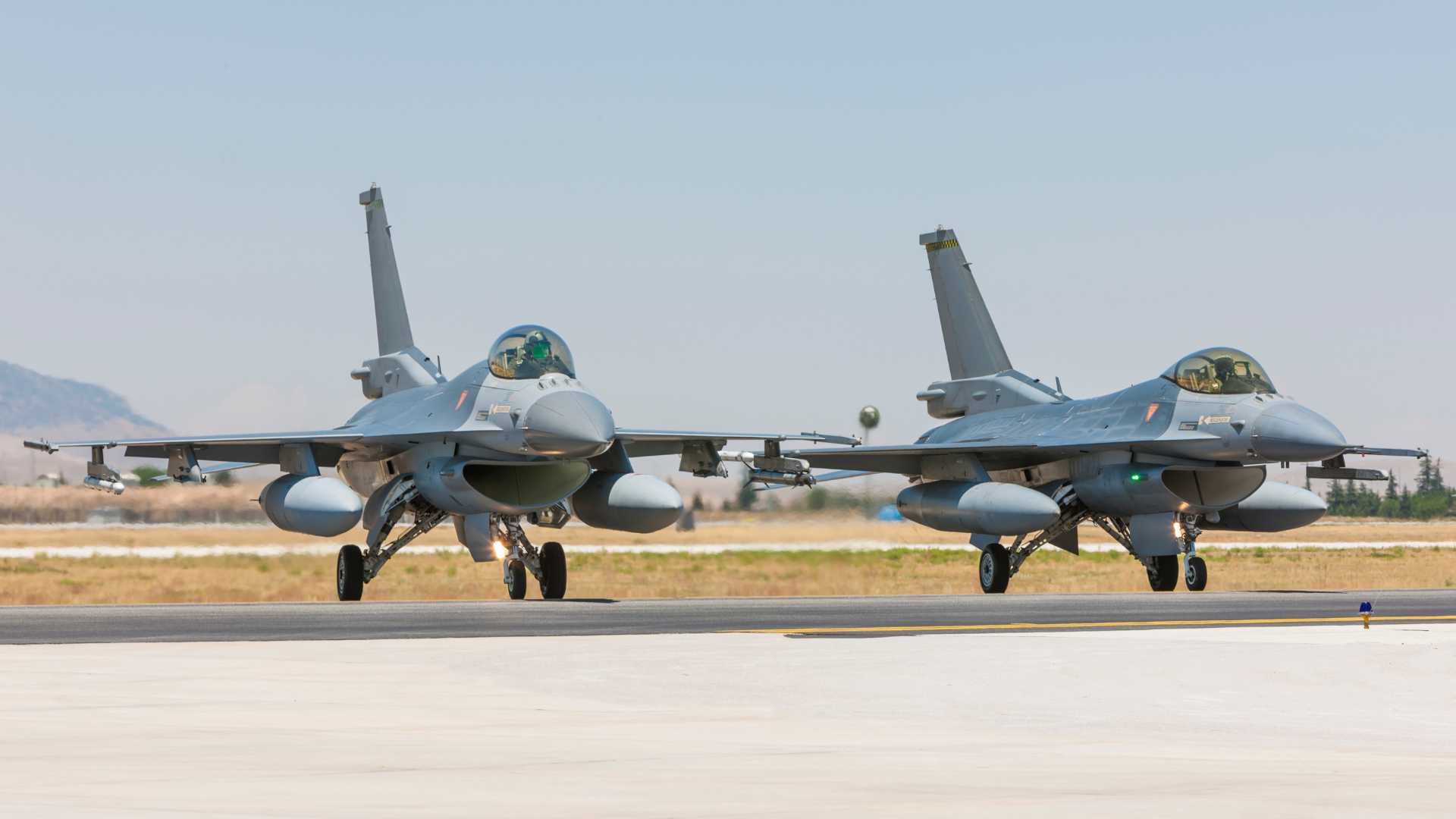
1. Rafale as the “Hero” of Operation Sindoor
The IAF leadership highlighted the Rafale’s decisive role in Operation Sindoor, with Air Marshal Nagesh Kapoor calling it the “hero” of the operation. The aircraft’s performance has reinforced the case for expanding India’s Multi-Role Fighter Aircraft (MRFA) fleet as part of long-term airpower modernisation. This underscores the strategic need to maintain a technological edge in contested airspaces.
The statement also aligns with the ongoing debate on India’s fighter squadron shortfall and the urgency to induct advanced platforms for high-tempo operations. The IAF’s focus on “newer generation aircraft” demonstrates a shift towards network-centric capabilities, precision targeting, and deeper strike potential. If delays persist, operational readiness during crises may weaken.
The uncertainty over alleged strikes on Pakistan’s Kirana Hills reflects the opacity surrounding cross-border operations, yet the IAF reiterated its focus on terror and military infrastructure. This reinforces India’s stated counter-terrorism doctrine while avoiding escalation narratives. Clarity in such communication strengthens India’s deterrence posture.
Maintaining advanced MRFA capabilities ensures air superiority during crises; ignoring fleet modernisation risks capability gaps, weakened deterrence, and slower response cycles in future contingencies.
- Key Fact: Rafale credited as the “hero” of Operation Sindoor.
- Decision Pending: MRFA acquisition still under deliberation.
2. Targeting in Operation Sindoor
IAF leadership clarified that operations focused solely on terror infrastructure and military installations across the border. Statements distancing the force from speculative claims about explosions in Pakistan’s Kirana Hills help maintain operational credibility.
This reflects India’s calibrated approach to cross-border force projection—achieving tactical objectives while managing escalation. Such calibrated strikes reinforce counter-terror deterrence against non-state actors operating from hostile territories.
The mention of “videos presented by their people” acknowledges the information warfare layer inherent in India-Pakistan tensions. Managing narrative battles has become inseparable from kinetic operations. Failure to counter misinformation can distort public understanding and affect diplomatic messaging.
Clear targeting logic strengthens India’s deterrent messaging; neglecting information management may allow adversarial narratives to dominate, weakening strategic communication.
Focus Areas:
- Strikes on terror camps
- Strikes on military installations
3. Vayu Shakti Exercise: Demonstrating Integrated Firepower
The upcoming Vayu Shakti exercise at the Pokharan range will showcase the IAF’s high-tempo, integrated strike capabilities. Scheduled for February 27, the event serves as a platform to demonstrate rapid response potential, especially significant after the 88-hour confrontation under Operation Sindoor.
The exercise involves 120+ air assets, including 77 fighter jets, highlighting India’s capability to project coordinated airpower near sensitive borders. Inclusion of platforms like Rafale, Su-30MKI, Mirage-2000, MiG-29, Jaguar, and LCA Tejas presents a spectrum of India’s current combat aviation ecosystem.
Helicopters such as Apache, Chinook, LCH Prachand, and ALH complement air-to-ground operations, while transport aircraft like the C-295 make their debut. This broad participation depicts networked jointness that modern air warfare demands.
Exercises like Vayu Shakti enhance readiness and interoperability; neglecting such drills risks operational silos and slower mobilisation during real conflict.
Assets Participating:
- 120+ total aircraft
- 77 fighter jets
- Debut: C-295 transport aircraft
4. Firepower Demonstration: Scale and Precision
The exercise will deploy 277 weapons, detonate 12,000 kg of explosives, and conduct 43 events engaging 23 targets. This scale reflects the IAF’s intent to display precision-strike capability—a core requirement in limited, high-intensity conflicts.
Surface-to-air systems like Akash and SpyDer, along with short-range loitering munitions and CUAS (Counter-Unmanned Aerial Systems), represent India’s expanding defensive envelope. These systems underscore the need to counter emerging threats like drones, swarms, and low-cost aerial intrusions.
Integration with the Army—via M-777 howitzers, L-70 guns, and Special Forces—highlights joint operations, a key mandate after the ongoing reforms toward theatre commands. Jointness enhances mission success and reduces operational redundancies. Without it, multi-domain coordination may collapse during combat.
Large-scale live-fire drills strengthen joint preparedness; ignoring integrated rehearsals may create coordination failures during real-world contingencies.
Key Numbers:
- 277 weapons deployed
- 12,000 kg explosives
- 43 events, 23 targets
5. Significance for National Security & IAF Modernisation
The emphasis on Rafale performance and MRFA procurement debates is linked to India’s long-term force structure planning. As air threats evolve—from drones to hypersonic weapons—the IAF must maintain superiority through induction, integration, and training.
Vayu Shakti’s timing, post-Operation Sindoor, enhances confidence-building within the strategic community. It signals India’s preparedness to execute high-precision, rapid operations near volatile borders. A well-modernised IAF also strengthens India’s diplomatic leverage during crises.
High-end airpower is central to strategic stability; ignoring modernisation risks eroding deterrence and complicating India’s regional security posture.
Conclusion
The article highlights the IAF’s evolving airpower posture—balancing operational credibility, fleet modernisation, and joint force integration. Rafale’s performance in Operation Sindoor and the scale of Vayu Shakti emphasise India’s commitment to technologically advanced, rapid-response air operations. Strengthening these capabilities is essential for long-term deterrence, preparedness, and strategic autonomy in a volatile neighbourhood.