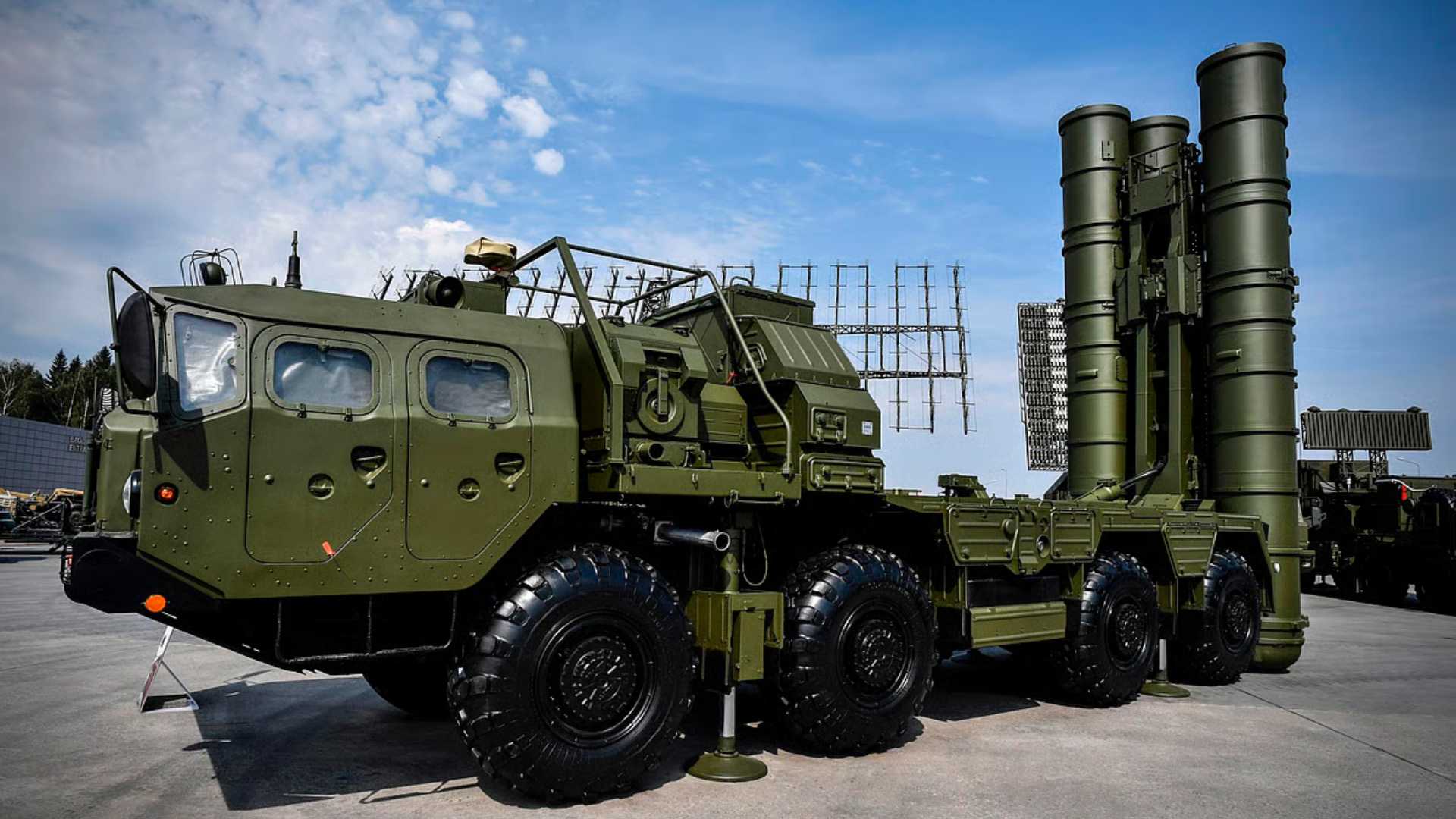
Accelerated S-400 Deliveries Enhance India's Air Defence

India's procurement of the S-400 air defence system signifies a strategic boost to national security and military readiness.
G
Gopi
5 mins read
India to Receive Final S-400 Units from Russia by November

Introduction

India's S-400 'Sudarshan Chakra' — one of the most consequential and diplomatically complex defence acquisitions in India's history — is nearing full induction. The deal survived sustained US pressure under CAATSA, validated India's strategic autonomy doctrine, and proved its combat worth during Operation Sindoor.

"Out of the remaining two S-400 systems, one will be delivered next month and the last one by November this year." — Senior Ministry of Defence Official, 2026

ParameterDetail
Deal value$5.43 billion
Units operational3 of 5
Pending deliveriesApril & November 2026
Earlier projected delayUntil 2027
Cause of delayRussia–Ukraine war; supply chain disruptions

Background and Context

The S-400 Deal — Key Facts:

ParameterDetail
Deal signedOctober 2018
Contract value$5.43 billion
Squadrons ordered5
Units delivered & inducted3 (operational)
Pending deliveries2 (April & November 2026)
Indian designation'Sudarshan Chakra'
Additional missiles approved288 missiles at ₹10,000 crore (DAC, 2026)

Why Deliveries Were Delayed:

  • Russia–Ukraine war (February 2022) disrupted Russian defence supply chains and diverted manufacturing capacity.
  • Global sanctions on Russia complicated logistics and payment mechanisms.
  • Earlier projections had indicated final delivery could extend to 2027 — now expedited.

Technical Capabilities of the S-400

The S-400 Triumf (NATO: SA-21 Growler) is Russia's most advanced long-range surface-to-air missile system.

CapabilitySpecification
Maximum engagement range400 km
Altitude coverageUp to 30 km
Simultaneous targetsUp to 36 targets; 72 missiles in flight
Threat types addressedFighter jets, ballistic missiles, cruise missiles, drones, hypersonic targets
Radar detection rangeUp to 600 km
MobilityRoad-mobile; rapid deployment
Missiles (multiple types)40N6 (400 km), 48N6 (250 km), 9M96 (120 km), 9M96E (40 km)

The system's multi-layered missile options allow it to engage threats across a wide altitude and range spectrum simultaneously — a significant upgrade over India's previous air defence capabilities.


Strategic Significance for India

1. Layered Air Defence Architecture: India faces a two-front aerial threat — from Pakistan (fighter jets, cruise missiles) and China (ballistic missiles, drones, stealth aircraft). The S-400 provides the long-range outer layer of India's emerging integrated air defence network, complementing shorter-range systems like Akash, SPYDER, and Barak-8.

2. Operational Validation — Operation Sindoor: The S-400's combat debut during Operation Sindoor — where it intercepted incoming missiles and drones — provided real-world validation of its effectiveness in the subcontinent's threat environment. This is significant: it transitions the system from a strategic deterrent to a proven operational asset.

3. Deterrence Value: With a 400 km engagement range, India's S-400 batteries can track and engage aerial platforms deep inside adversary territory without crossing borders — a powerful deterrence signal, particularly along the northern and western frontiers.

4. West Asian Conflict Context: The ongoing West Asian conflict has demonstrated the centrality of air defence systems in modern warfare — with missile and drone swarms overwhelming traditional point-defence systems. India's accelerated S-400 completion is strategically timed.


Diplomatic Complexity: The CAATSA Dimension

The Countering America's Adversaries Through Sanctions Act (CAATSA, 2017) mandates US sanctions on any country making "significant transactions" with Russia's defence sector. India's S-400 purchase technically qualifies.

India's position:

  • India sought and has effectively received a de facto waiver — the US has not imposed sanctions, recognising India's strategic importance in the Indo-Pacific and its defence diversification trajectory.
  • India has argued that legacy defence dependence on Russia (70%+ of military hardware historically) cannot be unwound overnight.
  • The episode reinforced India's strategic autonomy doctrine — the refusal to subordinate defence decisions to alliance pressures.

Broader implication: India's navigation of the CAATSA challenge has set a precedent for how middle powers can resist coercive unilateral sanctions regimes while maintaining relations with multiple major powers.


India's Defence Procurement Context

The S-400 acquisition sits within India's broader defence modernisation framework:

  • Defence Acquisition Procedure (DAP) 2020 — prioritises 'Atmanirbhar Bharat' (self-reliance) with categories favouring domestic production.
  • Defence Acquisition Council (DAC) — apex body for procurement approvals; cleared 288 additional S-400 missiles (₹10,000 crore) in early 2026.
  • India is simultaneously pursuing domestic air defence development (Project Kusha — long-range SAM) to reduce future dependence on foreign systems.

Challenges and Concerns

1. Single-Vendor Dependence: Five squadrons from a single foreign supplier creates vulnerability — as Russia–Ukraine disruptions demonstrated. Maintenance, spare parts, and missile replenishment depend on geopolitical stability in the supplier country.

2. Interoperability: Russian-origin systems use different communication protocols and data links than Western platforms India is increasingly acquiring (Apache, Chinook, F/A-18 evaluations, MQ-9B drones). Integration into a seamless network-centric air defence architecture is a technical challenge.

3. Technology Transfer Limitations: Unlike some defence deals, the S-400 contract reportedly has limited technology transfer provisions — constraining India's ability to indigenise components or develop next-generation capabilities based on the platform.


Conclusion

India's S-400 acquisition is more than a defence procurement — it is a statement of strategic intent. It demonstrates India's willingness to absorb diplomatic pressure to secure its national security interests, its commitment to maintaining diversified defence partnerships, and its recognition that credible air defence is non-negotiable in an era of missile-drone warfare. The system's combat validation during Operation Sindoor further cements its strategic value. However, India must simultaneously accelerate Project Kusha and other indigenous air defence programmes to reduce long-term dependence on single foreign suppliers — ensuring that strategic autonomy in diplomacy is matched by self-reliance in defence technology.

Quick Q&A

Everything you need to know

Overview of the System: The S-400 Triumf is a long-range surface-to-air missile (SAM) system developed by Russia, designed to detect, track, and neutralise a wide range of aerial threats. It can engage targets at distances of up to 400 km, including fighter aircraft, ballistic missiles, cruise missiles, and drones. In Indian service, it is referred to as ‘Sudarshan Chakra’, symbolising precision and destructive capability.

Operational Capabilities: The system integrates advanced radar, command-and-control systems, and multiple types of interceptor missiles, enabling it to handle simultaneous multi-target engagements. It can track hundreds of targets and engage several at once, making it a critical component of layered air defence.

Strategic Importance: For India, the induction of S-400 significantly strengthens its air defence shield against adversaries like China and Pakistan. For instance, during Operation Sindoor, the system reportedly played a key role in intercepting incoming threats, demonstrating its effectiveness. Thus, the S-400 enhances India’s deterrence capability, survivability of critical assets, and overall airspace security.

Geopolitical Context: The expedited delivery of the remaining S-400 units comes amid heightened tensions in West Asia and ongoing border challenges with China. In such a scenario, delays in critical defence acquisitions can create vulnerabilities in India’s air defence preparedness.

Operational Readiness: With three units already deployed, the induction of the remaining two will enable India to establish a more comprehensive and layered air defence network. This ensures better coverage of sensitive regions, including border areas and strategic installations.

Strategic Significance: Timely delivery also reflects the strength of India-Russia defence cooperation, despite global disruptions like the Russia-Ukraine war. For example, supply chain issues had earlier pushed timelines to 2027, but their resolution demonstrates mutual commitment. Thus, timely delivery is crucial for maintaining deterrence credibility, operational preparedness, and strategic partnerships.

Concept of Layered Defence: Modern air defence relies on a multi-layered approach, where different systems operate at varying ranges and altitudes to neutralise threats. The S-400 forms the outermost layer, capable of engaging targets at long distances before they reach critical zones.

Integration with Other Systems: The S-400 works in conjunction with other systems such as Akash missiles, Barak-8, and close-in weapon systems. While S-400 handles long-range threats, these systems address medium and short-range targets, ensuring comprehensive coverage.

Illustrative Example: In a potential conflict scenario, the S-400 can intercept enemy aircraft or missiles at long range, while inner layers handle any residual threats. This was evident in Operation Sindoor, where the system contributed to neutralising incoming threats.

Outcome: Such integration enhances reaction time, interception success rates, and redundancy, making the overall defence system more resilient and effective.

Primary Causes: The delays in S-400 deliveries were largely due to global supply chain disruptions and the impact of the Russia-Ukraine war. The conflict diverted Russia’s defence production capacity and affected logistics, leading to extended timelines.

Systemic Challenges:

  • Dependence on Imports: India’s reliance on foreign defence suppliers exposes it to external disruptions
  • Geopolitical Risks: Sanctions and conflicts can affect defence cooperation
  • Logistical Constraints: Complex systems require coordinated manufacturing and delivery processes

Broader Implications: These delays highlight the need for greater self-reliance under the ‘Atmanirbhar Bharat’ initiative. For example, developing indigenous air defence systems could reduce dependency on external suppliers.

Conclusion: While the expedited delivery now mitigates immediate concerns, the episode underscores the importance of diversifying defence partnerships and strengthening domestic manufacturing capabilities.

Strategic Benefits: The S-400 significantly enhances India’s air defence capability and deterrence posture. Its long-range interception ability provides a strategic advantage against adversaries, while its multi-target engagement capacity ensures robustness in complex threat environments. Additionally, it strengthens India-Russia defence ties.

Limitations and Concerns:

  • High Cost: The $5.43 billion deal represents a significant financial commitment
  • Dependency: Continued reliance on Russian systems may limit diversification
  • Interoperability Issues: Integration with Western systems can be challenging
  • Sanctions Risk: Potential exposure to U.S. CAATSA sanctions

Balanced Perspective: While the system offers immediate operational advantages, it does not substitute the need for indigenous capability development. For instance, India’s investment in DRDO-led air defence systems must continue alongside such imports.

Conclusion: The S-400 is a force multiplier, but its long-term value depends on how effectively India integrates it into a broader strategy of self-reliance and diversified defence partnerships.

Case Study – Operation Sindoor: The S-400 system demonstrated its operational effectiveness during Operation Sindoor, where it played a critical role in intercepting and neutralising incoming aerial threats, including missiles and drones. This real-world application highlights its capability to function under high-pressure combat conditions.

Key Observations:

  • High Interception Rate: The system successfully neutralised multiple threats simultaneously
  • Rapid Response: Advanced radar and tracking systems enabled quick detection and engagement
  • Multi-layer Coordination: Worked alongside other defence systems to ensure comprehensive coverage

Strategic Lessons: The operation underscores the importance of integrated air defence systems in modern warfare. It also validates India’s investment in advanced technologies to counter evolving threats such as drones and precision-guided missiles.

Conclusion: This example illustrates that the S-400 is not just a theoretical asset but a proven operational tool, reinforcing India’s ability to safeguard its airspace and maintain strategic deterrence.

Attribution

Original content sources and authors

Sign in to track your reading progress

Comments (0)

Please sign in to comment

No comments yet. Be the first to comment!